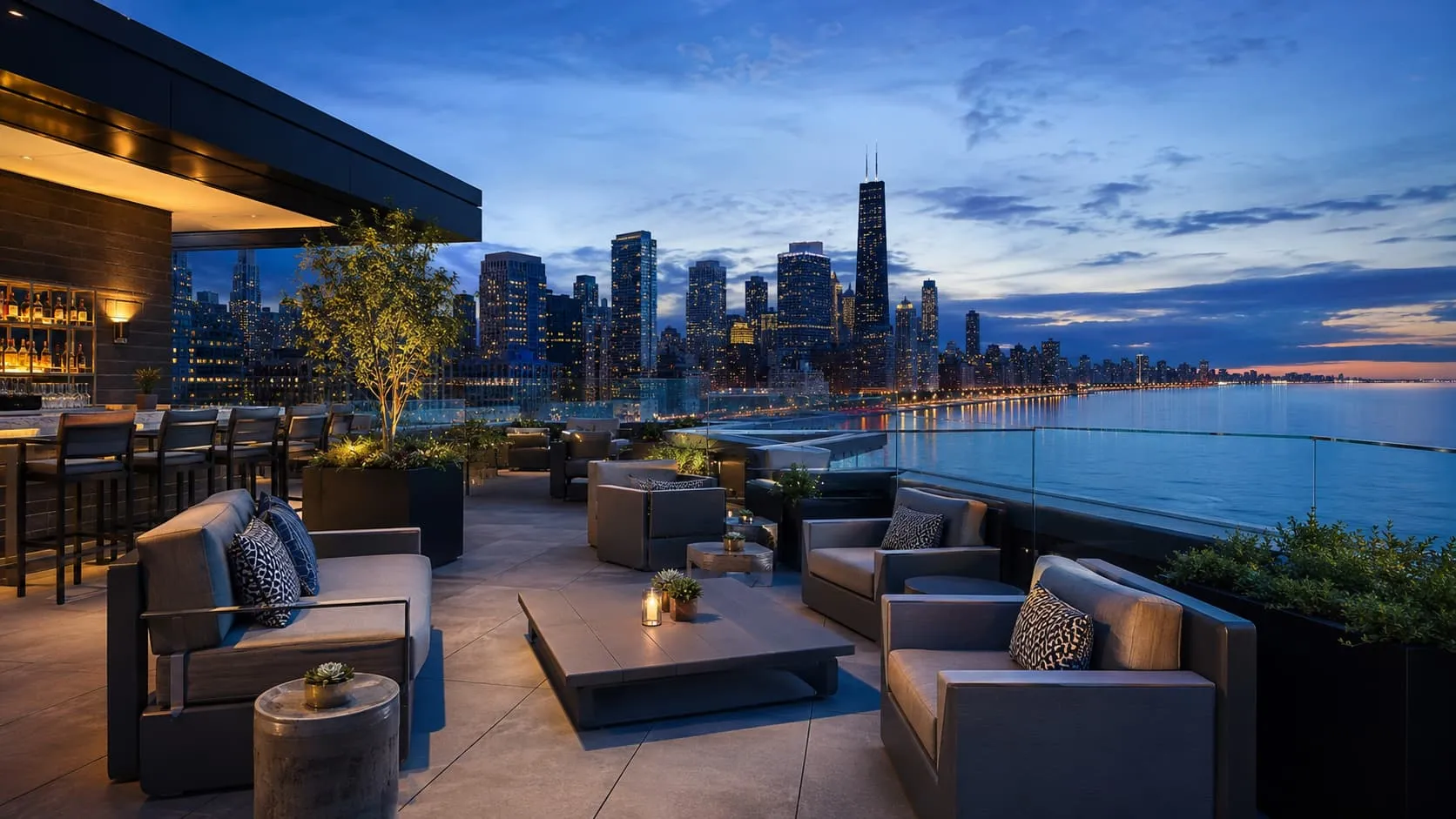
Your renovation window is six weeks. Your convention block starts in seven. And the FF&E quote you're holding lists a fourteen-week lead time. That's the Chicago problem in three sentences. Between the McCormick Place convention calendar, the River North dinner rush, and the constant churn of architectural-tour guests rolling in off the Chicago River, your property runs twelve months a year whether you're ready or not. Hotel renovation furniture Chicago projects fail when owners treat them like a design exercise. They succeed when you treat them like a logistics operation with a hard deadline and zero margin for surprise.
FF&E Timelines: Why Chicago Renovations Run Tight
The McCormick Place convention calendar is the single biggest scheduling constraint most Chicago hotel owners underestimate. Three million-plus attendees annually, with bookings that ripple across the South Loop, Fulton Market, and into the West Loop and River North corridors. A property anywhere along that stretch may have a usable renovation window of six to ten weeks between major events. Your FF&E timeline has to work backward from that date, not forward from a comfortable manufacturing schedule.
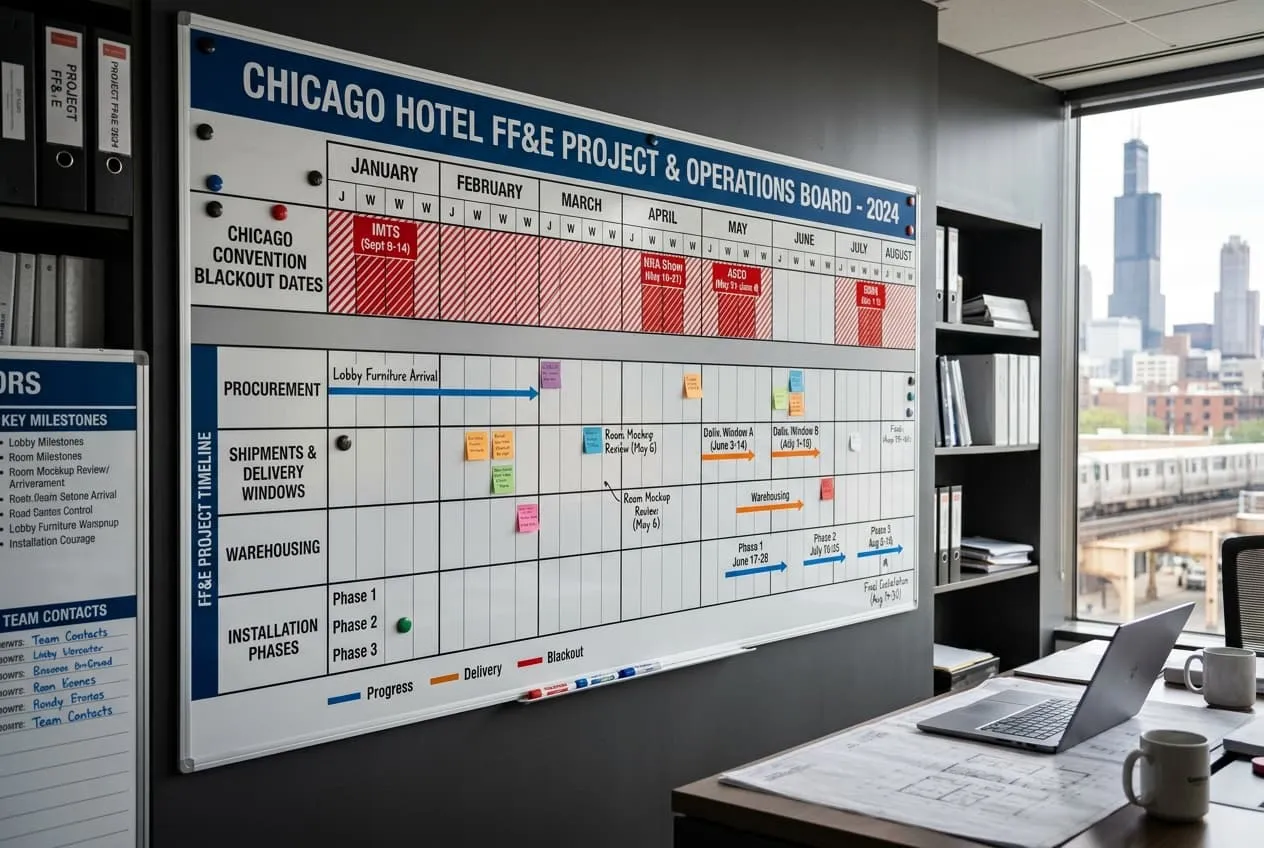
For hotel renovation furniture Chicago projects, engage your supplier twelve to sixteen weeks ahead of your target installation date for custom upholstery, eight to ten weeks minimum for casegoods. Anything shorter means paying rush premiums or settling for in-stock pieces that don't meet your brand standards. Work with suppliers who stage inventory at regional distribution points that buffer is the difference between hitting your opening date and calling your revenue manager with bad news.
Phased Delivery: Keeping Rooms Operational While You Renovate
Full-floor shutdowns are a revenue decision, not just a scheduling one. In a market as competitive as Chicago's, most properties can't absorb that hit. The practical model is a rolling renovation: ten to twenty rooms at a time, cycling through the property over two to three months. Revenue keeps flowing; the work keeps moving.
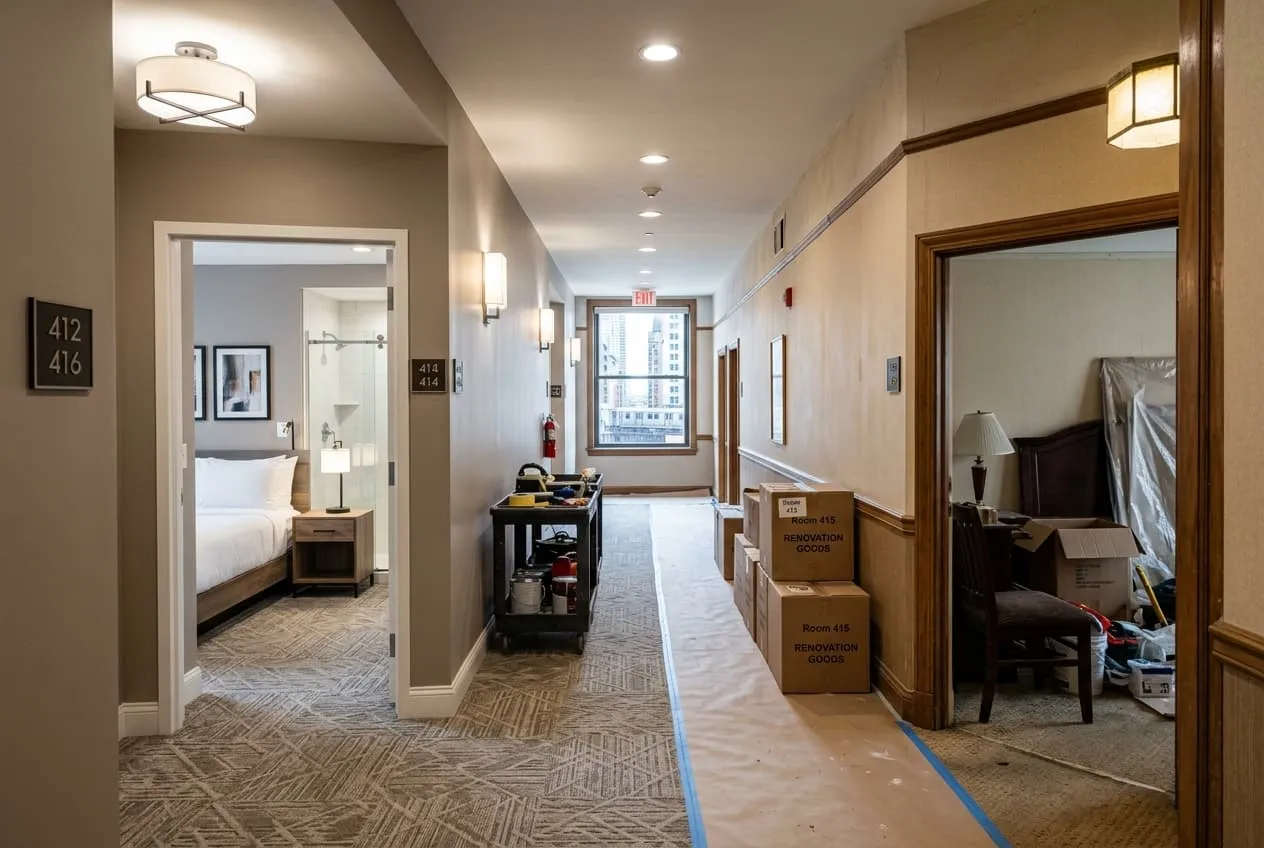
Phased delivery puts real pressure on your supplier. They need to hold inventory between drops, coordinate batches around your housekeeping and engineering schedules, and execute without disrupting occupied floors. At River North boutique hotels where freight elevator access is limited and street-level deliveries require city permits, the logistics layer compounds fast. The same applies to properties along the Michigan Avenue corridor and in the Loop, where loading dock access is often shared, time-restricted, or both.
Build a 48-hour buffer between each room batch. That window covers punch-list corrections, touch-ups, and the coordination gap between your installer and housekeeping. Suppliers who can't accommodate phased holds or who require full payment before any delivery should raise a flag before you sign anything.
Brand Standards and Sourcing: What Chicago Flagged Properties Face
If your property operates under a flag, renovation furniture can't just look right it has to pass brand standard audits. Major flags operating on Michigan Avenue, in the Gold Coast, and across the Loop have documented requirements around mattress specifications, casegoods construction, upholstery grades, and hardware finishes. Sourcing furniture that clears all those boxes while staying inside your renovation budget is the central tension of every FF&E project.
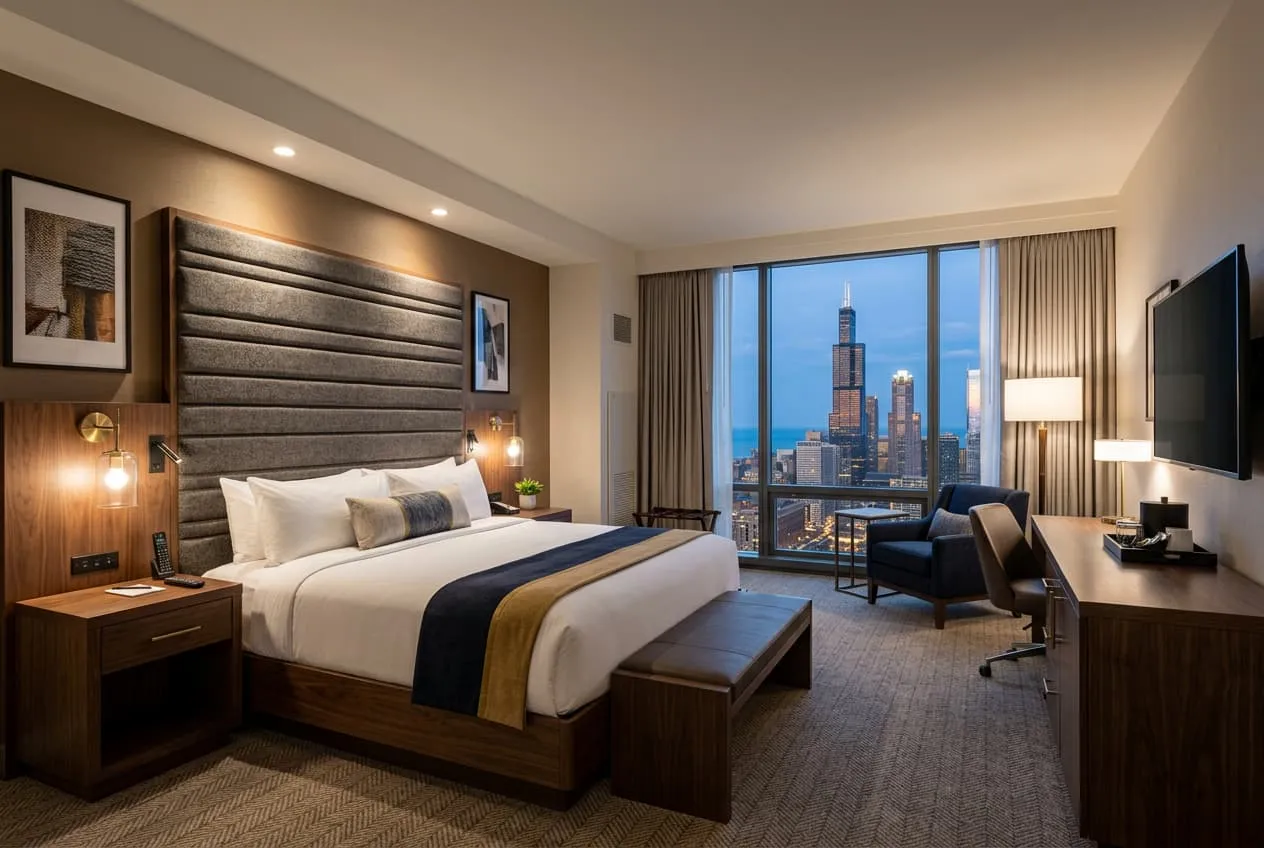
The shortcut is working with suppliers who already carry compliance records for the brands active in your market. A supplier who has run FF&E through a Marriott or Hilton approval process for a comparable Chicago property cuts weeks off your timeline. You're not building the compliance documentation from scratch, and your project manager isn't chasing spec sheets during the review period.
Independent properties in Wicker Park, Fulton Market, and the West Loop face different pressure. Brand standard audits aren't the issue design expectations are. Guests booking boutique hotels in those corridors are paying specifically for a look that stands apart from the flag properties downtown. Every piece in the room needs to carry that identity. Generic casegoods and spec-grade upholstery read immediately as shortcuts, and in those neighborhoods, shortcuts get reviewed.
Four-Season Logistics: Chicago's Climate and Your FF&E Plan
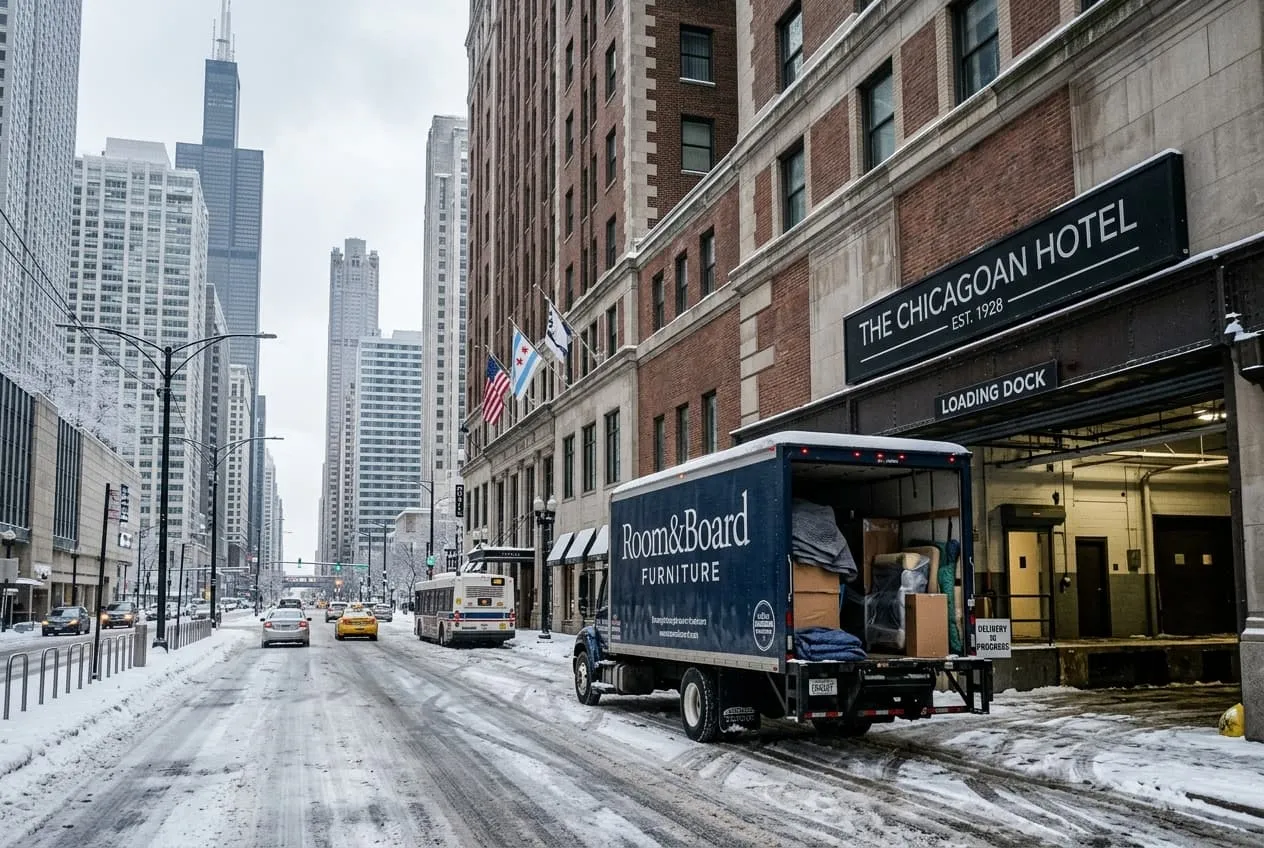
Chicago winters are a logistics variable that suppliers in warmer markets routinely miss. Lake-effect snow events can delay freight by days. Loading docks at older Michigan Avenue and South Loop properties ice over and become inaccessible. Temperature swings stress wood furniture that hasn't acclimated before installation. A supplier who primarily operates in mild-climate markets won't flag any of this on their own.
For hotel renovation furniture Chicago projects running in Q1 or Q4, build climate contingency into your plan. Store furniture in a climate-controlled facility close to the property rather than leaving it staged on a truck or in an unheated dock. Solid wood casegoods need time to acclimate to the humidity levels inside the building skip that step and you're looking at warping and joint failures within the first season. Ask explicitly. Suppliers with Chicago experience will know what you're talking about. Suppliers without it will give you a vague answer.
Renovating a Chicago property is a logistics exercise as much as a design one. The right furniture for your market arrives when it's supposed to, meets the specs your brand requires, survives the delivery conditions your city creates, and gets your rooms back online before the next convention week fills your lobby. Get the operations right and the design follows. Get the operations wrong and nothing else matters.
Planning hotel renovation furniture for your Chicago project? Share your specs and quantities and we will build pricing around your actual program. Request a quote to get numbers for your space.