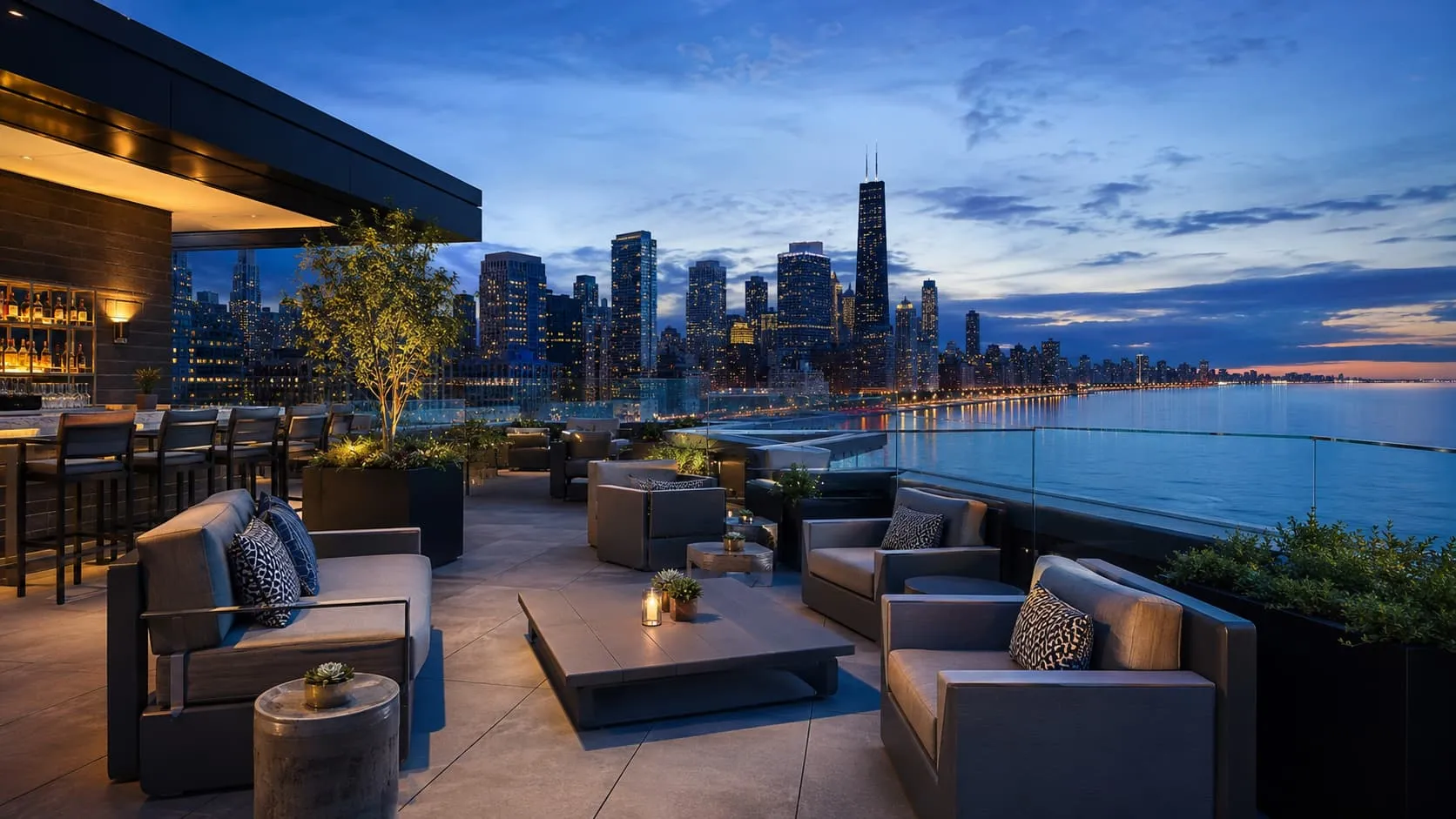
Your bar opens in twelve weeks. The contractor is behind. Your lead times on custom upholstery just came back at fourteen weeks. And you're trying to figure out which barstools will still look right after two thousand covers, not just in the opening photos. That's the real problem Chicago bar and lounge operators face not picking something beautiful, but picking something that survives the market's pace without forcing a costly mid-season replacement. On a busy River North Friday, you might seat a United Center post-game surge, a McCormick Place convention overflow, and a Michigan Avenue hotel crowd that expects Soho House comfort at Wrigleyville speed. The furniture in the middle of all that has to earn its place structurally before it earns it aesthetically.
What Chicago Bar Operators Actually Need From Their Seating
River North sets the benchmark for bar and lounge design in this city. The density of hospitality concepts per block is extraordinary, and the competition for repeat guests means operators invest heavily in atmosphere. But atmosphere built on furniture that wobbles, stains, or splits inside the first season is money thrown away and in a market where Fulton Market and the West Loop are adding new concepts every quarter, you don't get a second chance on first impressions.
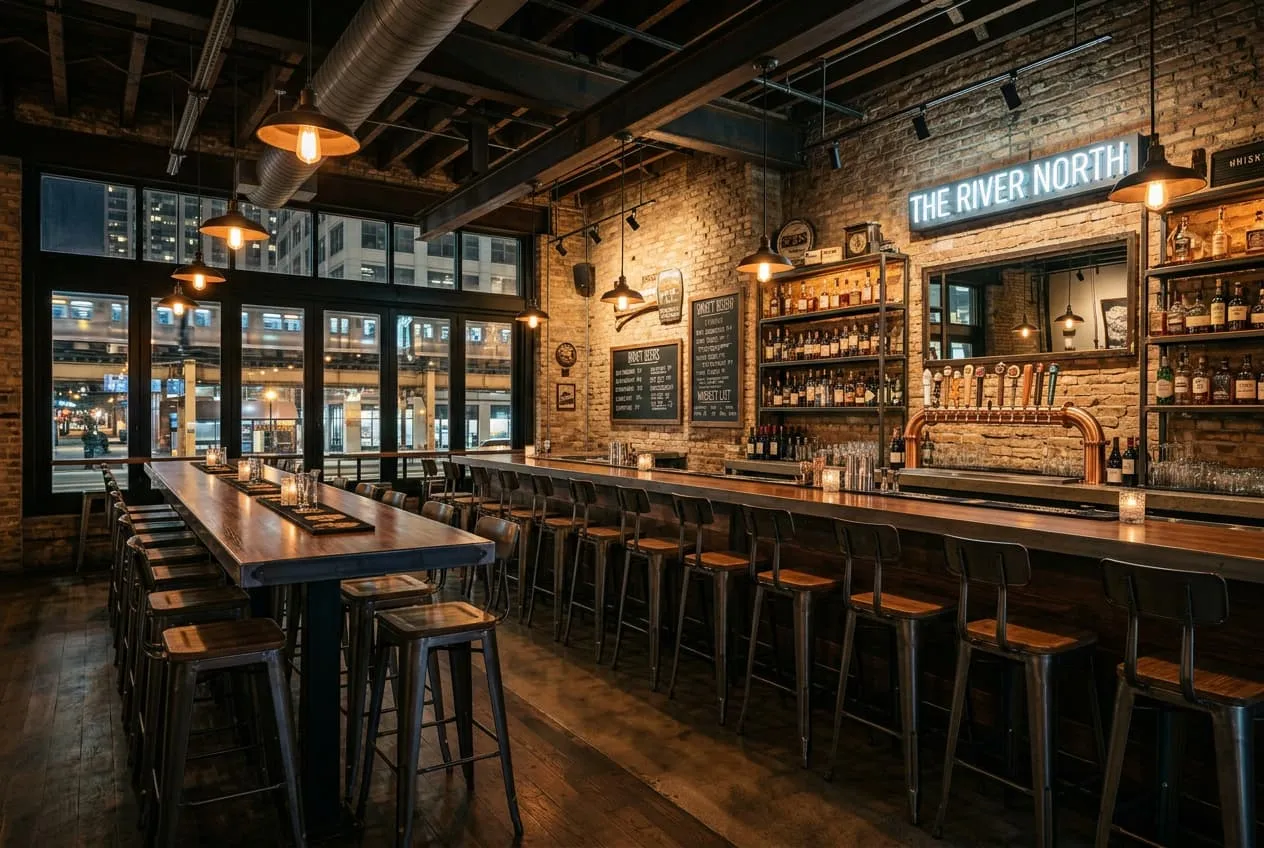
For commercial barstools, spec frames rated for contract use: welded steel or solid hardwood with reinforced joints, not the lighter-gauge material that passes on price and fails on the floor. Seat heights need to match your specific rail height, which varies significantly between pub-style bars, hotel lobby bars, and high-top cocktail lounges. Standard barstools run 28 to 30 inches, but measure your counter before ordering a half-inch mismatch kills the ergonomics of an otherwise well-designed bar. Stack this against weight ratings: contract barstools should handle at least 300 lbs with a built-in safety margin, and the better ones go to 500 lbs. In a high-volume River North bar running four to five seat turns a night, that structural tolerance is not a spec-sheet detail. It's the difference between furniture that lasts three years and furniture that gets replaced after one.
Lounge Seating Built for Volume and Style
Lounge seating hits a different pressure point. In cocktail lounges and hotel lobby bars along Michigan Avenue and through the South Loop, the expectation is comfort that photographs well and holds up under daily use. That means upholstered pieces in performance fabrics or contract vinyls that resist spills, clean quickly, and don't pill or crack after a full season of service.
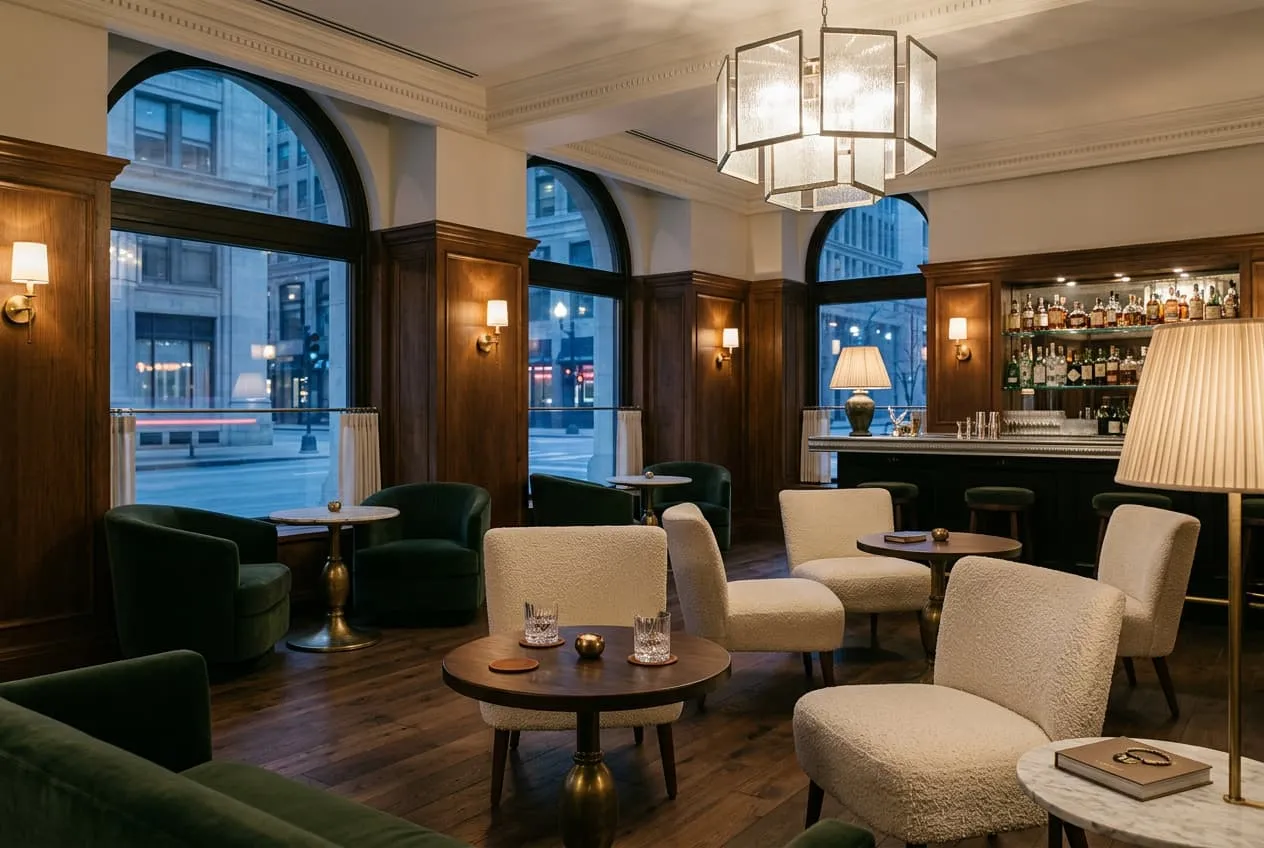
Performance fabrics have improved dramatically in the last five years. You can now get contract-grade upholstery with the texture and warmth of residential material but with a surface that wipes clean after a beer spill or a dropped Old Fashioned. For Chicago specifically, architectural context matters more than it does in most markets. The city's most celebrated bars and lounges operate in converted industrial spaces in Wicker Park, historic Michigan Avenue buildings, ground-floor hotel lobbies in the Loop, and the raw-material loft environments that define Fulton Market. Furniture that reads as too residential or too generic will undercut the room. Look for lounge chairs and sectional pieces with clean lines, visible structural elements steel legs, exposed wood frames and upholstery in neutral or jewel tones that complement the architecture rather than compete with it. A velvet accent chair that works in a Gold Coast townhouse looks wrong against Fulton Market brick. Get the context right before you get attached to a finish.
High-Tops and Outdoor Seating for a Four-Season City
High-top tables are workhorses in Chicago bar culture. They handle the casual standing-around function, accommodate groups who don't want to commit to a booth, and let operators shift room configuration quickly during a busy service. For indoor use, spec bases with leveling glides, heavy enough to resist tipping under lean weight, and tops in materials that clean without streaking laminate, solid surface, or sealed wood all perform well depending on your aesthetic and price point.
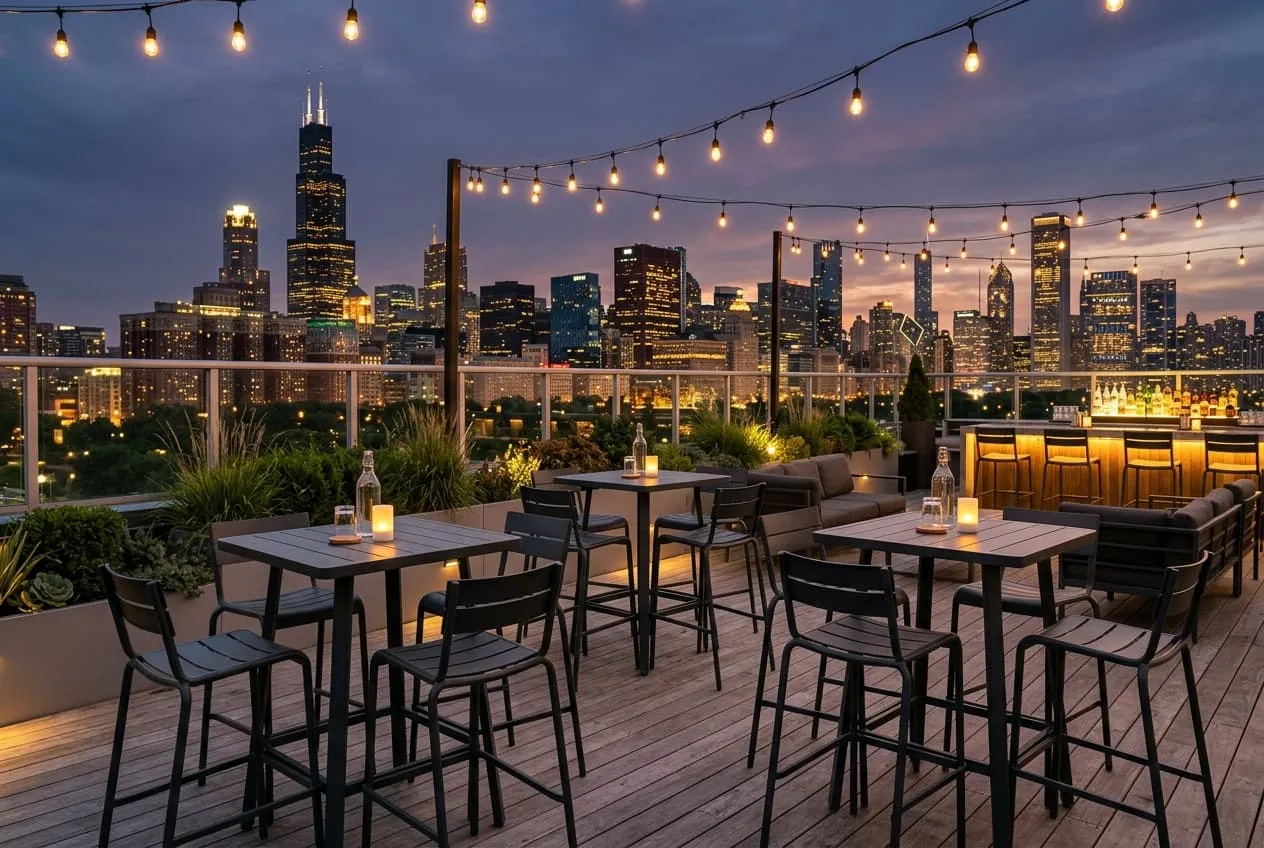
Outdoor seating in Chicago is a distinct procurement challenge. The city has four genuine seasons, and a patio program running from late April through October needs furniture that survives spring rain, summer heat, and early October cold without warping, fading, or corroding. West Loop rooftop decks and Wicker Park sidewalk patios both demand the same answer: powder-coated aluminum. It's light enough to stack and store through winter, resistant to rust, and available in finishes that hold color through UV exposure. Resin wicker works for lounge-style outdoor spaces but requires more maintenance and doesn't store as cleanly. Whatever you choose, invest in protective covers or dedicated storage before the first hard freeze unprotected outdoor furniture on a Chicago rooftop will not survive to the following season in any condition worth putting in front of guests.
Sourcing and Lead Times in the Chicago Market
The McCormick Place convention calendar creates surges in the local hospitality market that ripple through ingredient sourcing, staffing, and furniture timelines alike. If you're outfitting a new venue or doing a major refresh whether you're opening in the South Loop, repositioning a River North space, or building out a new concept in Wicker Park don't wait until ninety days before opening to spec your seating. Contract furniture lead times run eight to sixteen weeks for custom upholstery and finishes. Smaller manufacturers and specialty pieces push longer. Operators who start the process late end up choosing from whatever's in stock, which is rarely the right fit for the room they've designed.
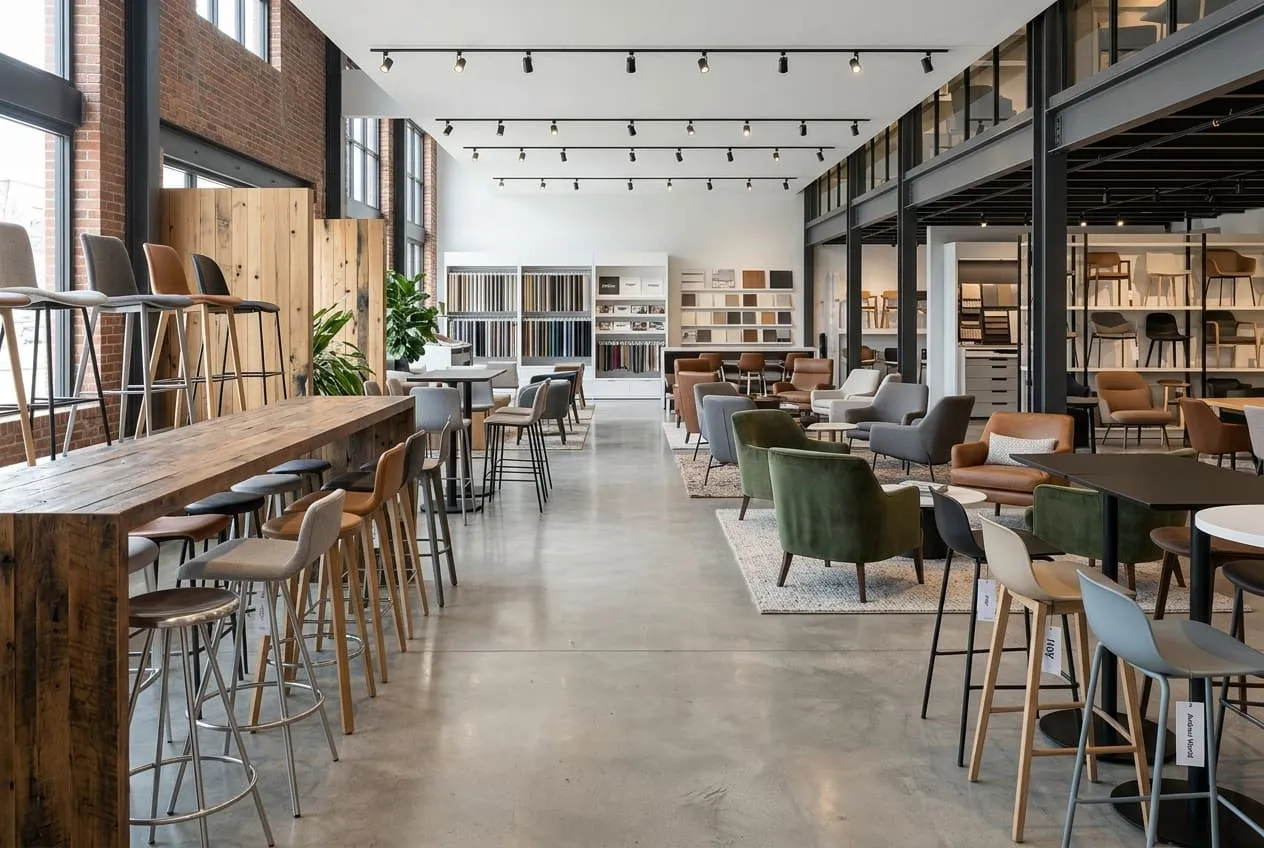
Chicago has a strong network of contract furniture dealers and showrooms, concentrated in the Fulton Market and West Loop corridors where the design industry has settled. Working with a local dealer gives you the ability to sit in pieces before committing, review fabric samples under your actual lighting conditions, and build a service relationship for reorders and warranty issues. For larger operators running multiple locations across the city say, a group with properties in River North, the Loop, and McCormick Place adjacency direct-source relationships with manufacturers reduce per-unit cost significantly, but require higher order minimums and active lead time management. Neither path is wrong. The mistake is treating furniture procurement as a last-mile logistics problem instead of an early-stage planning decision.
The initial cost difference between contract-grade and residential-grade furniture is real and easy to see on a quote sheet. The replacement cost on underbuilt pieces in a high-volume Chicago bar is harder to see until you're doing it usually eighteen months in, during a slow January, with a rushed reorder and a floor that's out of commission for a week. Buy for your worst-case cover count, not your average Tuesday. Work with suppliers who understand the Chicago market's pace, get lead times in writing before you commit, and treat the furniture spec as part of the opening plan, not the tail end of it.
Tell us about your Chicago bar and lounge furniture needs and we will turn your quantities, finishes, and timeline into a firm quote. Request a quote whenever you are ready to compare.