You are staring down a twelve-week lead time, a River North ballroom that needs to flip from a Saturday gala to a Sunday corporate breakfast, and a budget that does not leave room for a second order when the first chairs fail in year three. That is the reality for banquet and event operators in Chicago. Between McCormick Place absorbing hundreds of conventions a year, the Fulton Market and West Loop hotel corridor competing for private buyouts, and Michigan Avenue luxury properties chasing corporate incentive business, this market does not reward vague procurement decisions. Venues here run three different event formats in the same room inside 48 hours. The furniture either keeps pace with that or it becomes the reason your operations director is filing damage reports every quarter. Choosing the right banquet event furniture Chicago venues need means getting specific about durability, stackability, weight ratings, and storage math before the purchase order goes out.
What Chicago Event Venues Actually Need From Their Furniture
The turnover pressure in Chicago is not theoretical. A venue in the South Loop running three events a week needs furniture that staff can move fast without straining their backs or scuffing restored terrazzo floors. That means examining chair weight, dolly compatibility, and how many units stack safely before you hit a tipping risk. Folding tables need to collapse smoothly and lock open firmly a wobbly table at a gala in a Loop hotel ballroom is a liability issue, not just an inconvenience.
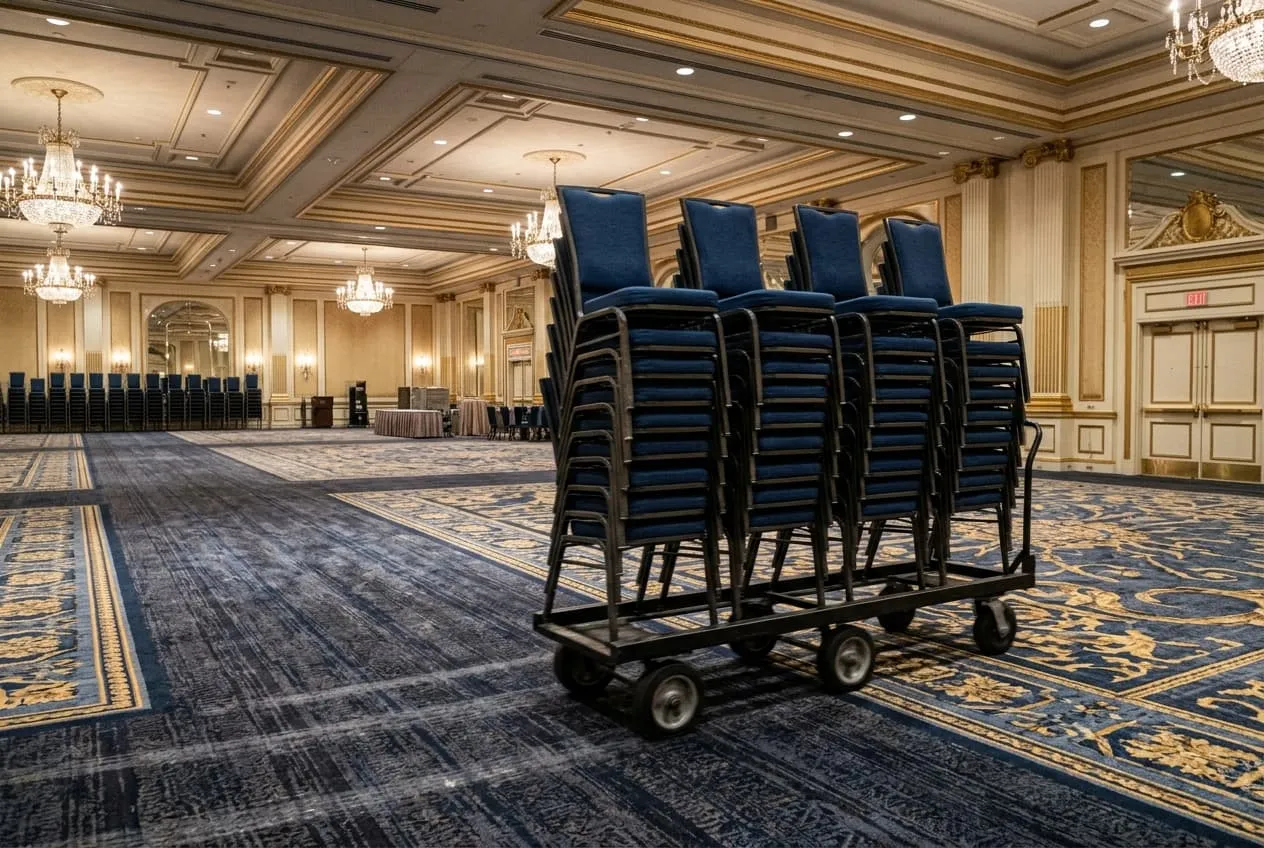
Banquet chairs in this market have to handle both formal and informal setups. Chiavari chairs remain the standard for weddings and galas at Magnificent Mile properties and boutique event spaces tucked into Wicker Park brownstones. Padded stack chairs handle the volume work: corporate events, association meetings, McCormick Place overflow rooms, and conference breakouts in West Loop loft venues. The best banquet event furniture Chicago buyers invest in threads the needle between both demands something that photographs well in a Fulton Market venue's Instagram grid and still survives a freight elevator and four years of hard use.
Weight ratings matter more than most buyers expect at first. Several of Chicago's older grand ballroom properties in the Loop and along South Michigan Avenue have floor load considerations that directly affect how furniture gets staged, stacked, and stored. Verify weight specs before a large order, especially if you are restoring a historic property where the original structural load limits were never designed for modern banquet density.
Folding Tables and Flexible Configurations
The sixty-inch round banquet table is the Chicago hospitality workhorse. Sixty-inch rounds seat eight comfortably, seventy-two-inch rounds seat ten, and venues running high-volume events need enough of both to mix configurations without renting. Properties near McCormick Place in particular run constant hybrid setups part gala dinner, part conference breakout and the round inventory has to support that without a gap.
Beyond rounds, you need rectangular folding tables for registration desks, buffet lines, cocktail setups, and classroom-style conference layouts. A hotel near the river in River North or along the Riverwalk might rotate through a dozen different table configurations in a single week. Tables that fold to a narrow profile or nest compactly make a real operational difference when your storage room is a basement corridor and your freight elevator has limited clearance dimensions.
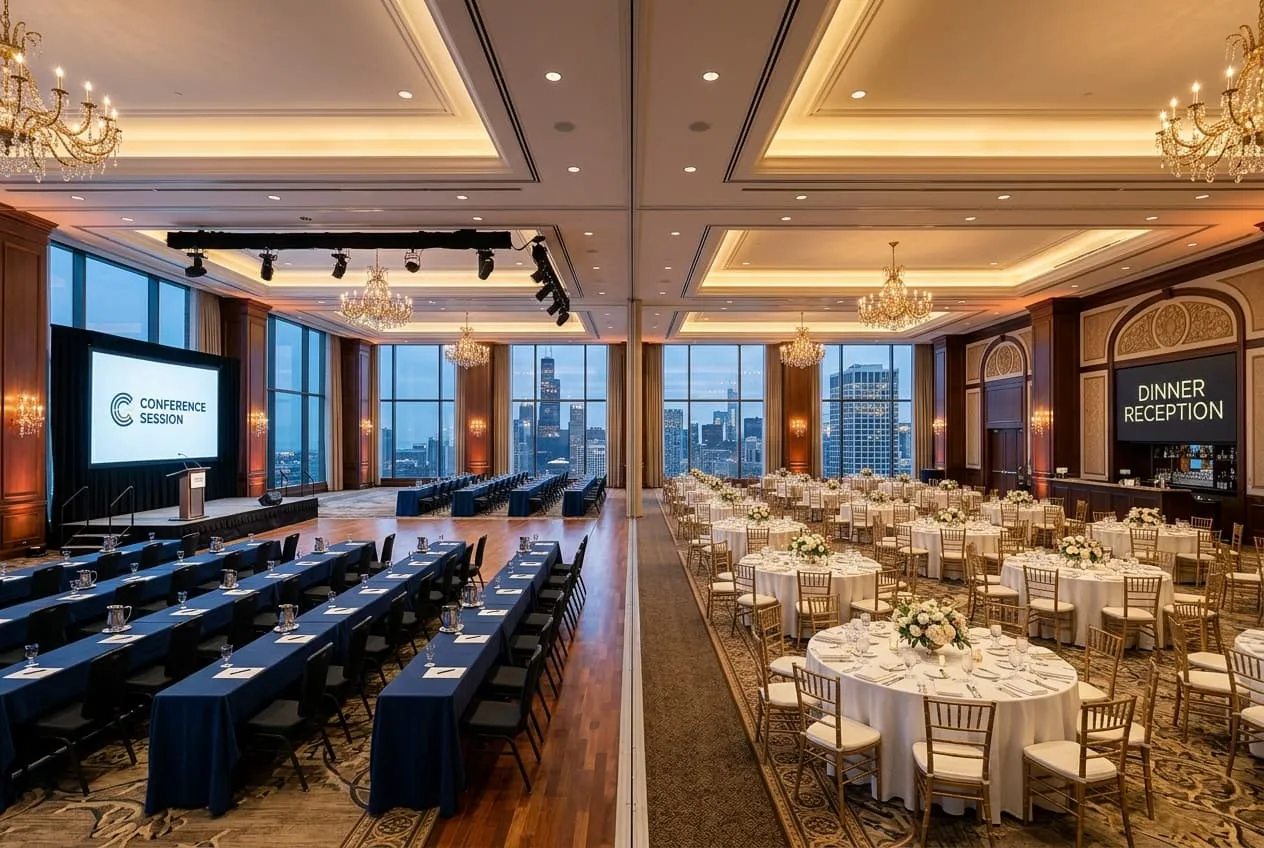
Some Chicago venues particularly in the Fulton Market and West Loop, where converted industrial spaces run both sit-down dinners and cocktail receptions in the same footprint have started investing in adjustable-height folding tables that convert between seated and cocktail height. The flexibility reduces rental dependency and simplifies setup logistics without requiring a second furniture line.
Storage and Logistics: The Hidden Cost in Banquet Operations
Storage is invisible until it becomes a crisis. At Chicago-scale banquet operations dozens of events a month across a large property, or shared event space across multiple floors the storage footprint of your furniture is as operationally important as how it looks on the floor.
Chair dollies, table carts, and correct stacking configurations are not optional add-ons. They are the difference between a ninety-minute turnaround and a three-hour setup delay that throws your entire event schedule off. Buy purpose-built transport carts from your furniture supplier. Aftermarket options rarely match the geometry of the chairs they are supposed to carry. Chairs transported incorrectly develop joint failures and wobble faster, which compresses your replacement cycle and turns a ten-year asset into a five-year problem.
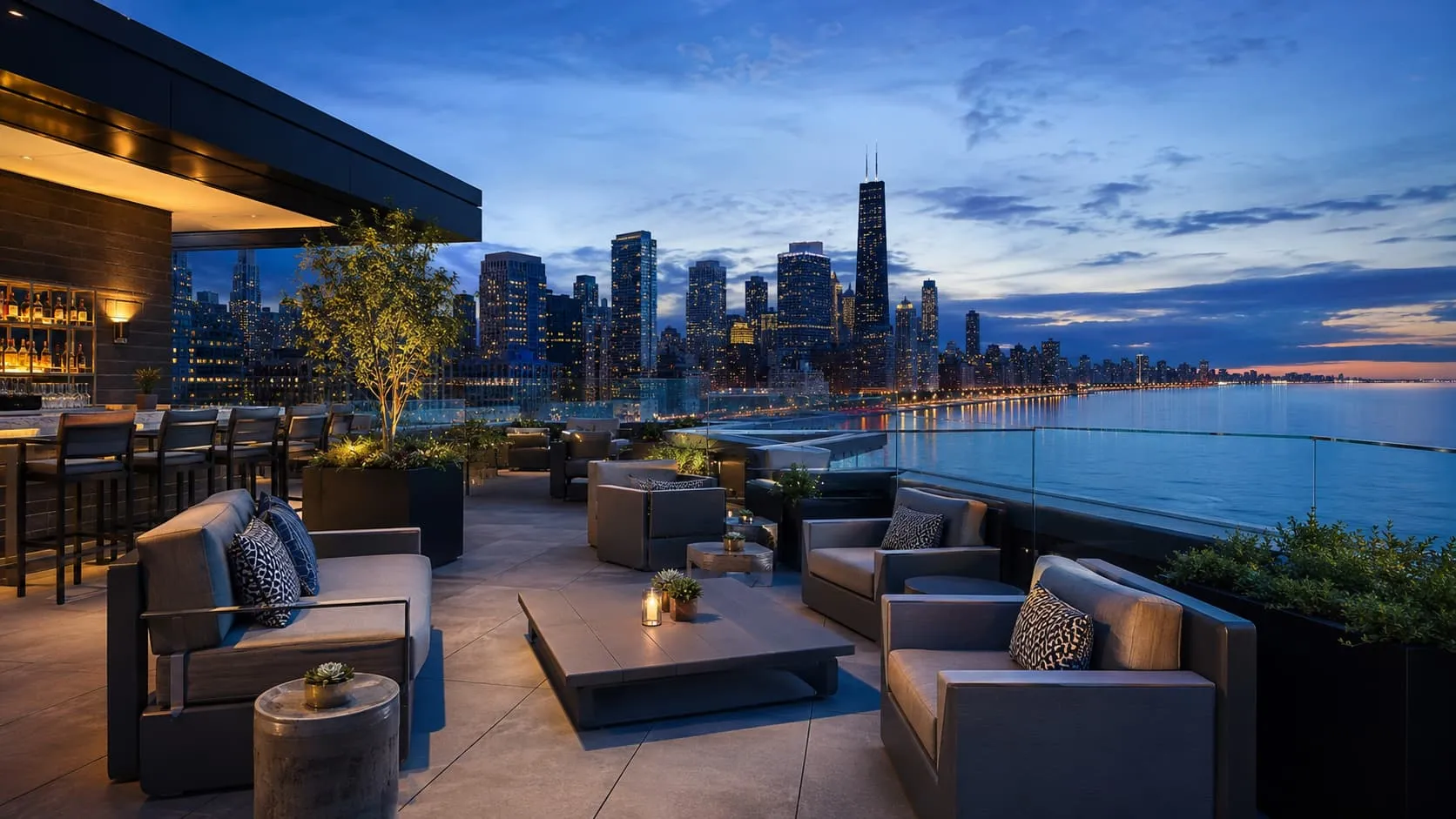
Chicago's four-season climate adds another layer for properties running outdoor events on terraces, rooftop spaces, or Riverwalk-adjacent patios. Furniture that lives in climate-controlled ballrooms most of the year but gets pressed into lakefront rooftop service from May through September needs to handle both environments without the frame corroding or the upholstery fading. Specify aluminum frames and UV-stable fabric for any units that will see regular outdoor exposure this is not a detail to sort out after you have already taken delivery.
Choosing a Supplier for Banquet Event Furniture Chicago Properties
Procurement for a Chicago banquet operation should go through a contract furniture supplier, not a retail or big-box channel. Contract suppliers are built for bulk orders, have realistic lead times built into their quoting process, and coordinate delivery to a loading dock rather than a front entrance. They carry commercial-grade warranty coverage that retail sources cannot match, and they understand the difference between a residential chair and one rated for 250,000 cycles of commercial use.
Ask specifically about their experience with hospitality accounts in major convention markets. A supplier who has outfitted properties near McCormick Place, worked with the Michigan Avenue hotel corridor, or serviced the boutique event venues coming online in Fulton Market understands what Chicago operations actually demand. References from comparable Chicago properties not just hospitality accounts in general are worth requesting before you commit.
Budget planning has to account for full lifecycle cost, not unit price. A chair that costs thirty percent less upfront but needs replacing in four years instead of ten is the more expensive chair. Factor in replacement cycles, warranty terms, and per-unit shipping costs for reorders. Suppliers that quote low on product but ship from a warehouse with a three-week lead time and no Chicago distribution presence will cost you during a rush reorder before a major McCormick Place overflow weekend.
Get the right supplier in place before you finalize specs. A contract furniture partner who understands Chicago's market the event density, the storage constraints, the mix of historic ballrooms and new-build loft venues will save you money and operational headaches that no unit price discount can compensate for.
We quote banquet and event furniture for Chicago operators against their own layouts and order sizes rather than a generic sheet. Request a quote and we will put together pricing for your property.