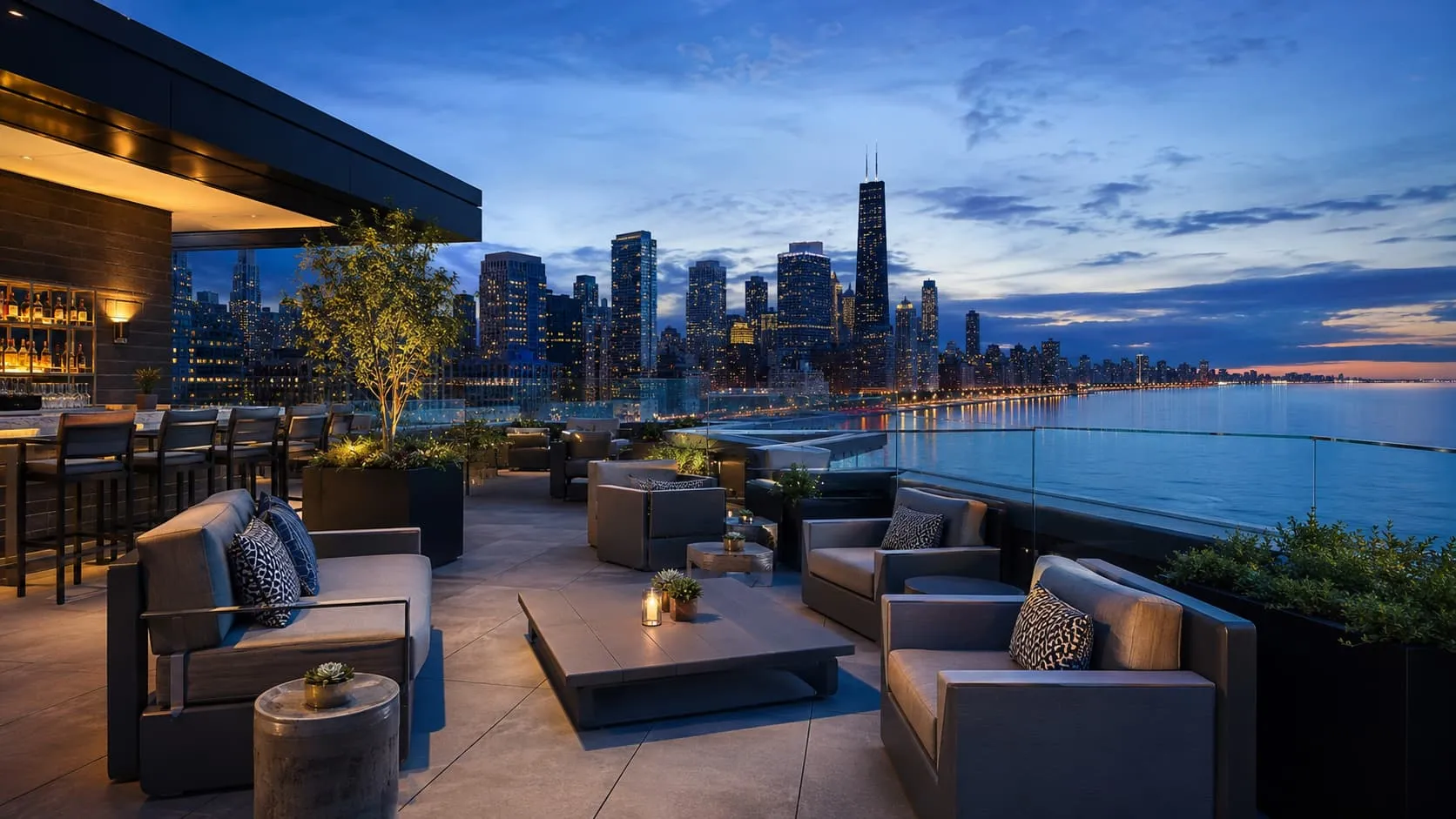
You have five months to make your outdoor program pay for itself. For a River North restaurant, that means every sidewalk seat needs to be in service by early May and still looking sharp through a packed October. For a Michigan Avenue hotel terrace or a Fulton Market rooftop bar, the stakes are higher: guests are comparing your outdoor experience against competitors on the same block. The commercial patio furniture Chicago operators lose sleep over is not the upfront cost it is the replacement cycle. Frames that rust through by March, cushion fabric that fades to gray by August, and resin that cracks its first winter mean you are back to zero before the investment has paid out. That is the problem worth solving before you buy.
Climate Is the Starting Point, Not an Afterthought
Chicago's outdoor dining season runs roughly May through October, with aggressive fringe months on either end. Lake Michigan keeps humidity high in summer and amplifies wind chill once temperatures drop. Any commercial patio furniture Chicago establishments invest in needs to be rated for that full range not just fair-weather conditions.
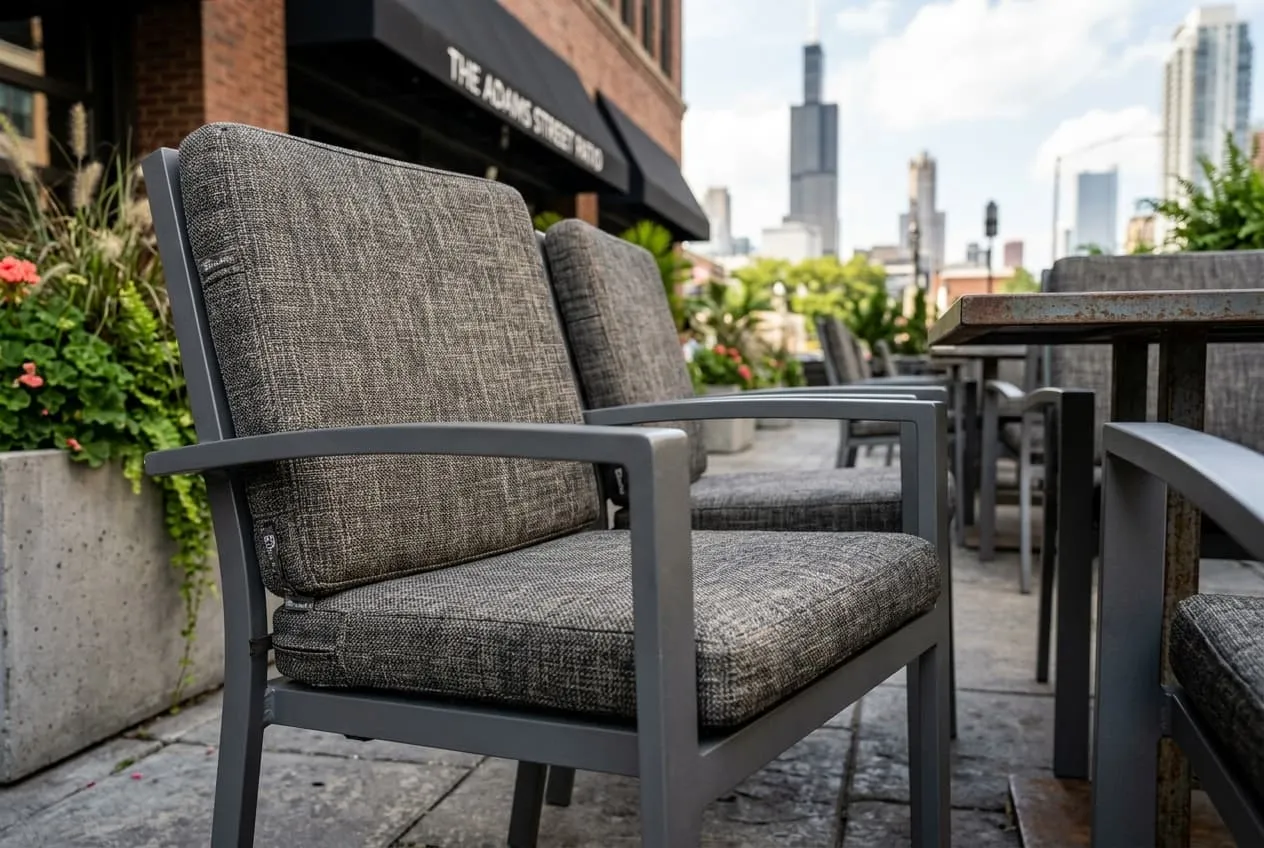
Aluminum is the dominant frame material for a reason. It does not rust, handles freeze-thaw cycles without cracking, and is light enough for staff to move and stack efficiently at the end of each season. Powder-coated steel is viable but demands diligent inspection every spring to catch any coating breach before moisture gets in. Wrought iron looks sharp on a Gold Coast terrace but adds significant weight to your storage and restacking labor a cost that compounds over years.
For cushioned seating, Sunbrella fabric has become the industry standard in Chicago's outdoor hospitality market. It resists mold and mildew, which matters in a city with wet springs and humid summers. It cleans quickly between covers, which matters during a Friday-night rush on a Wicker Park sidewalk patio. And it holds color against UV well enough that your patio looks sharp through September rather than washed out by July.
Storage Planning Is Part of the Purchase Decision
Whether you are buying for a ground-level patio in the West Loop, a rooftop in Fulton Market, or a courtyard space in the South Loop, your storage situation determines what furniture format makes sense. Stackable chairs that nest four to six high take up a fraction of the floor space of non-stackable alternatives. Folding tables cut your off-season footprint further. These are not minor conveniences: for many Chicago operators, a bad storage configuration means leaving furniture outside longer than it should be, which accelerates wear and shortens the usable lifespan of every piece.
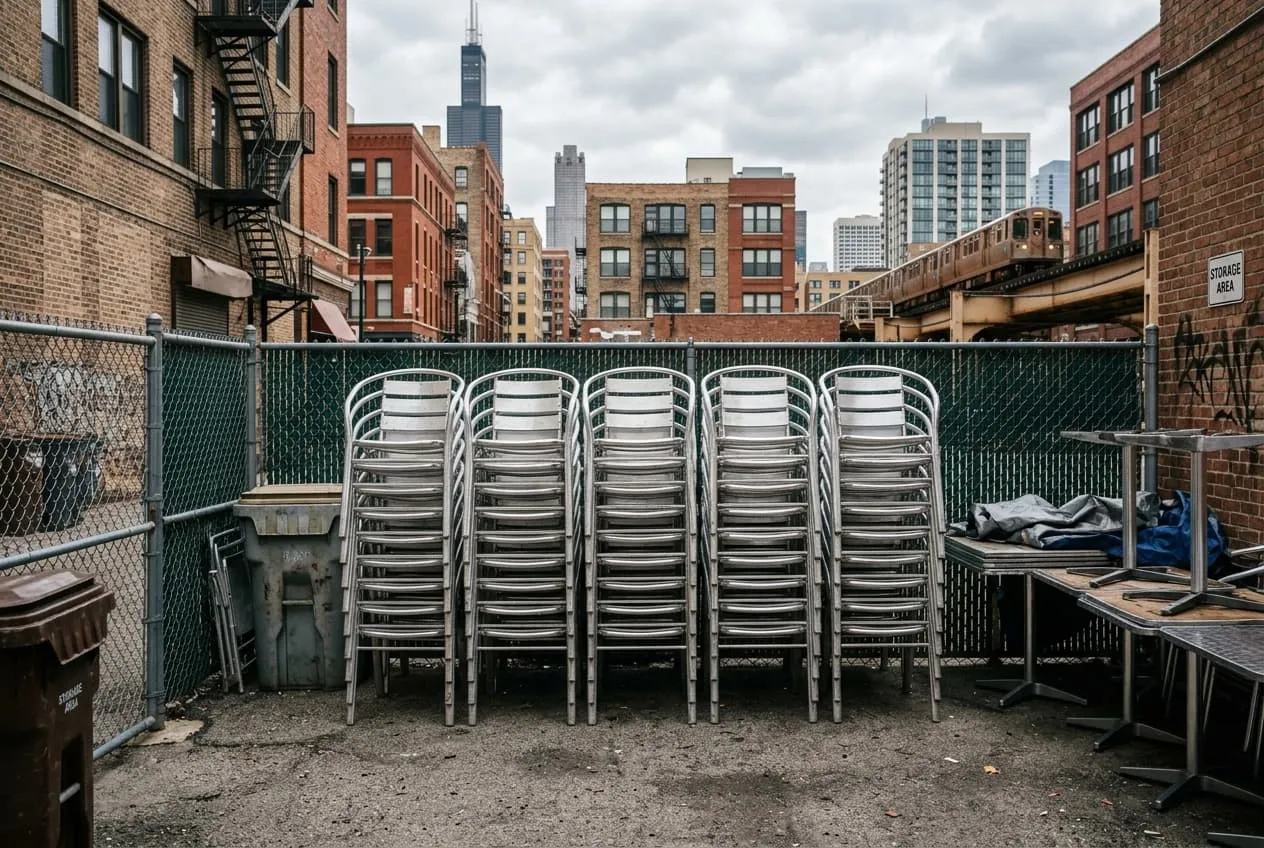
McCormick Place convention hotels deal with a different version of this problem. Their outdoor event spaces run hard during convention season, then need full furniture turnover and storage for winter months when event volume drops. At that scale, the cost difference between a furniture line that stacks efficiently and one that does not translates to real labor hours and storage costs across a five-year cycle.
Spec the storage math before you commit. Your supplier should be able to give you the stack height for each chair model, the table nest depth, and whether covers are available for stacked pieces left outdoors during transitional months. If they cannot answer those questions, that tells you something.
Matching Furniture to Your Venue Type
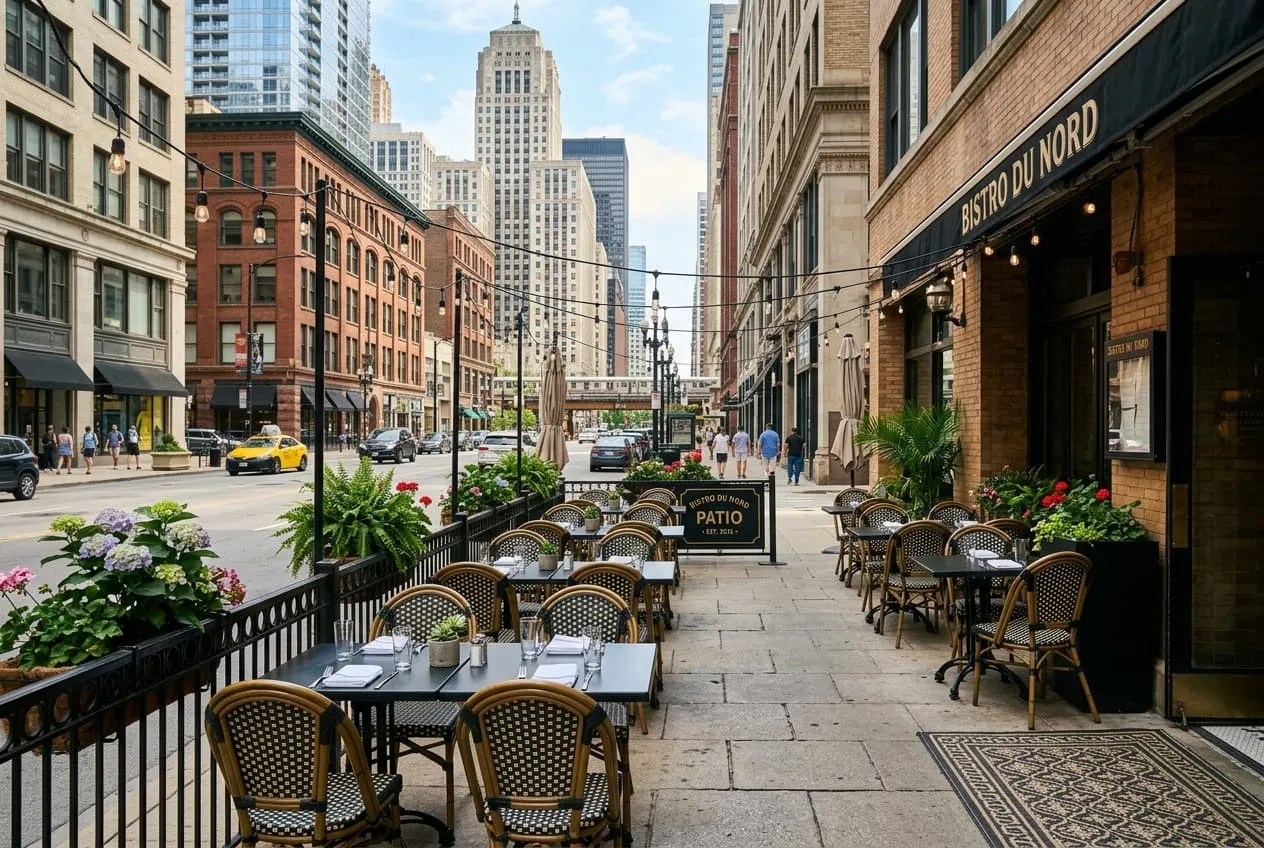
River North is one of the densest restaurant corridors in the Midwest. On a summer weekend, every available sidewalk seat is a revenue seat. The furniture there tends toward bistro-style: compact footprint, easy to reconfigure for party size, fast to clean between turns. Operators are not optimizing for lounge comfort they are optimizing for covers per hour. The Loop and Michigan Avenue corridor runs a similar calculus for lunch-focused operations where turnover speed matters more than dwell time.
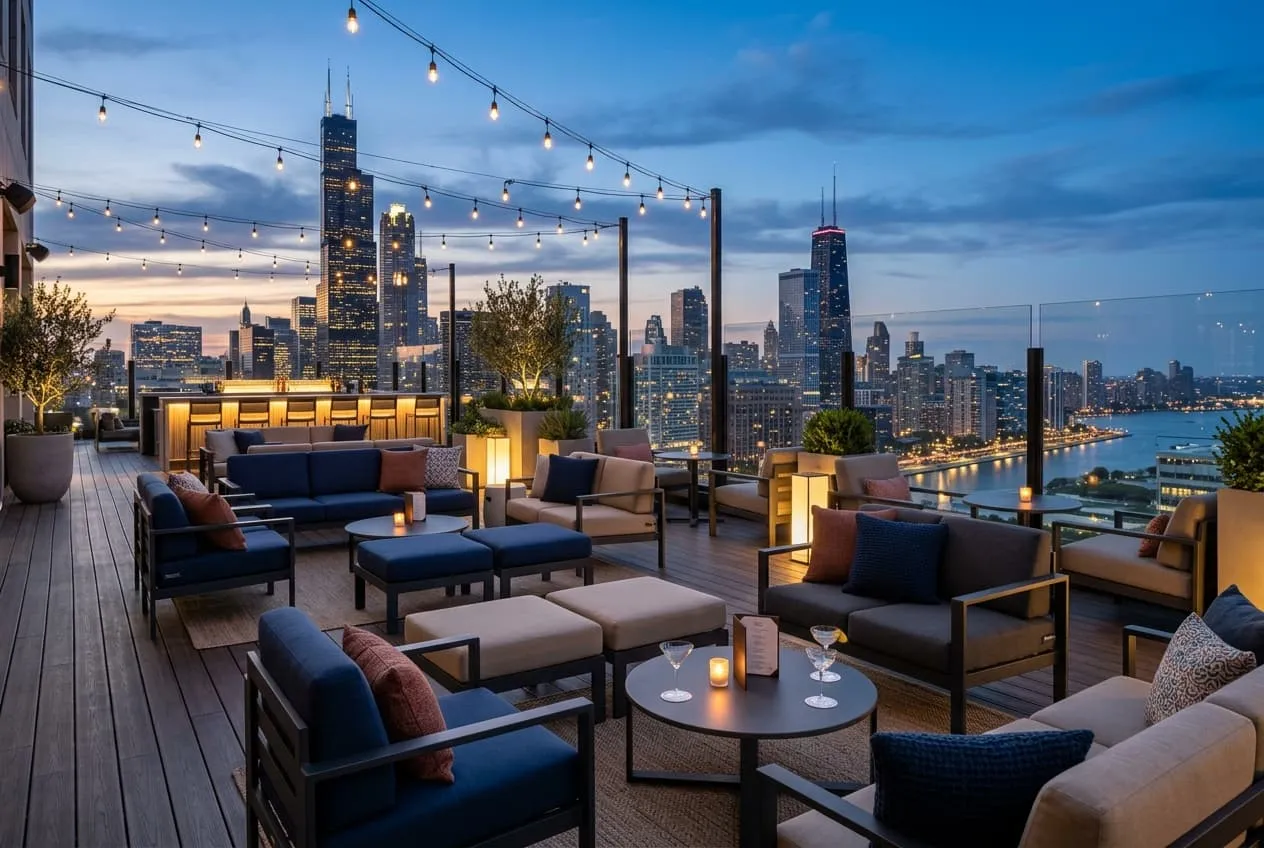
Michigan Avenue luxury hotels operate differently. Their terraces and rooftop bars are positioning plays as much as revenue centers. Guests expect upholstered seating, heavier frames, and a visual standard that matches a four-star interior. The per-piece cost is higher, but dwell time and average check justify it. Sunbrella-covered modular sofas, deep-seat club chairs with aluminum bases, and teak or teak-look side tables are common in those environments.
The Wicker Park, Andersonville, and Logan Square neighborhoods run more casual, higher-volume formats. Neighborhood patios here prioritize durability and ease of cleaning over aesthetic ambition. Commercial resin wicker over aluminum frames hits the right price-to-durability ratio for that segment holds up through the season, cleans fast, and does not require the maintenance overhead of natural materials.
What to Ask Your Supplier Before You Commit
Buying commercial patio furniture from a supplier who can show you physical samples before you commit matters more than most operators realize. Cushion firmness changes with cold. Frame joints that look solid at room temperature can loosen under repeated freeze-thaw stress. Handling the actual product before purchase is worth the extra step especially for a 60-seat patio order where a mistake across the full run is expensive to fix.
Push on warranty terms specific to outdoor commercial use, not just residential outdoor use. Commercial warranties typically cover frame defects but exclude fabric fading and cushion compression. Read that fine print. Ask whether the supplier stocks replacement parts domestically: a broken armrest joint in July should not come with a six-week overseas lead time.
Ask about lead times before you need them. Chicago's outdoor season starts fast a late-April delivery delay can cost you three weeks of May revenue on a busy Fulton Market patio. Suppliers who warehouse domestically and can ship in two to three weeks versus eight to twelve from overseas are worth a price premium when the calendar is tight.
Finally, ask about volume pricing tiers. A 60-seat patio order is a meaningful size for most commercial furniture lines, and suppliers should be offering better per-unit pricing than a residential retail customer sees. If they are not, you are negotiating with the wrong vendor.
Choosing commercial patio furniture for a Chicago hospitality operation is a longer-term decision than the upfront quote suggests. The climate, the storage math, and your venue's positioning all shape what actually works. Get those variables right before purchase and your outdoor program runs profitably for years. Get them wrong and you are repricing a full replacement cycle after two seasons and doing it again in a rush before your next May opening.
If you are sourcing commercial patio furniture for your Chicago property, the fastest way to real numbers is to tell us what you need. Request a quote with your quantities and timeline.