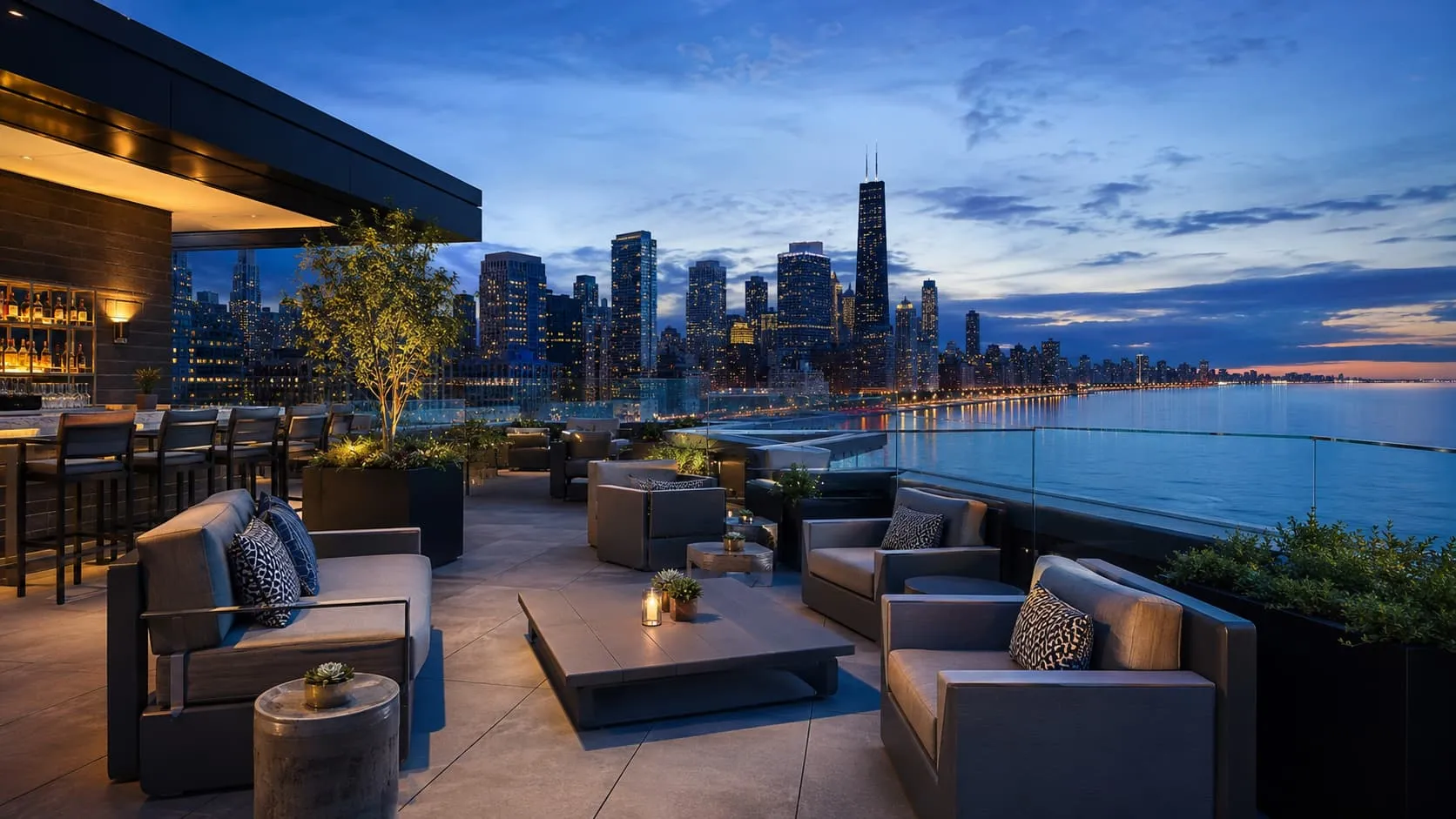
Your lobby seating is failing and you already know it. The foam is compressing, the upholstery is pilling along the armrests, and you are looking at a mid-contract replacement that was not in the budget. Chicago's hotel market does not forgive that kind of oversight. River North boutiques compete directly with Michigan Avenue flagships for the same traveler. Convention groups rolling in from McCormick Place need a place to drop into that actually holds up under daily commercial punishment. Leisure guests checking into a Fulton Market property on a Friday night expect a lobby that feels intentional, not assembled from closeout inventory. Getting hotel lobby furniture Chicago right is not a decorative decision it is an operational one, and the lead time and durability decisions you make now determine what your lobby looks like in year three.
Why Chicago's Convention Traffic Changes the Durability Equation
McCormick Place draws over three million visitors annually, making Chicago one of the top convention markets in the country. That volume flows directly through hotel lobbies South Loop and West Loop properties absorb the bulk of it. A guest room gets used by one person at a time. Your lobby seating gets used by dozens simultaneously, throughout the day and into the night, by people in business attire, casual wear, and everything in between.
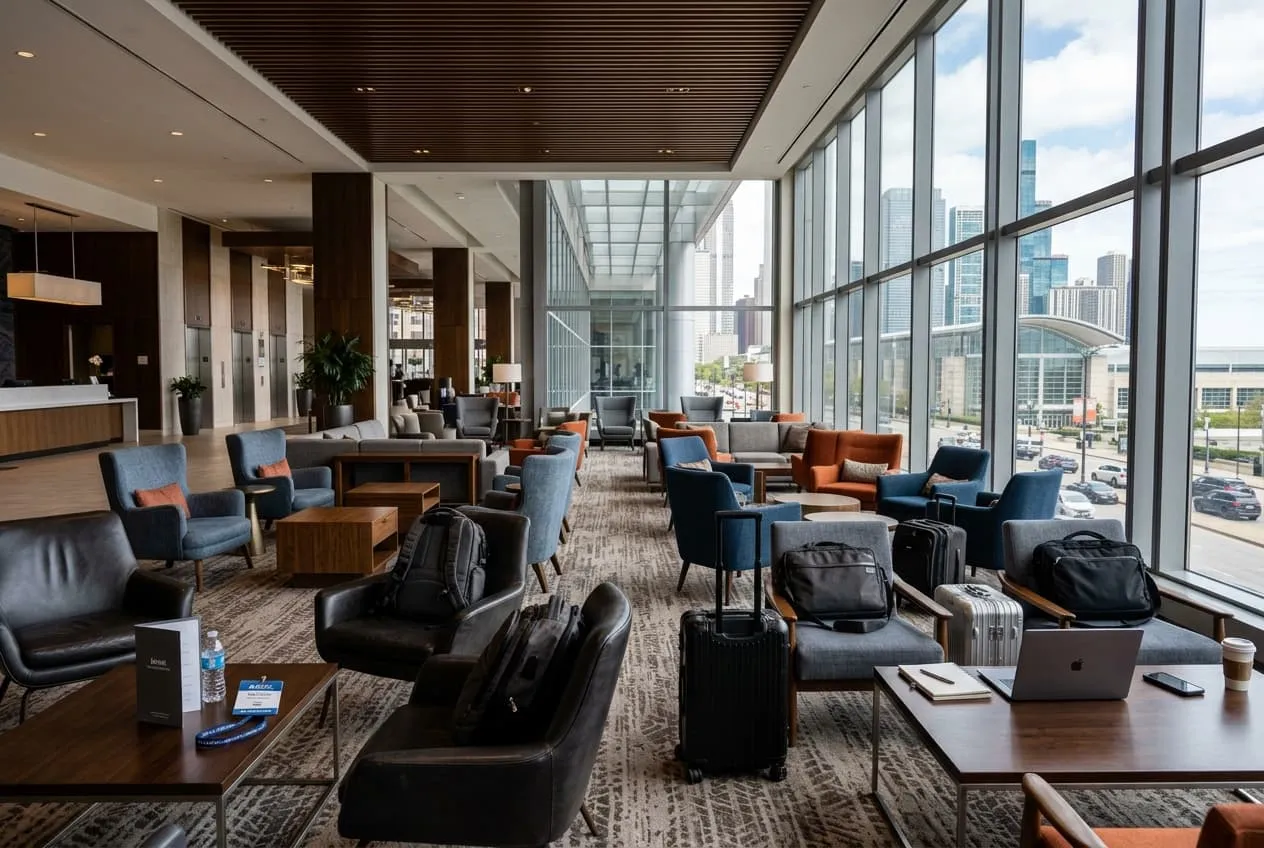
Contract-grade hotel lobby furniture Chicago is built for exactly this kind of punishment. The key metrics are rub count ratings on upholstery fabric (look for 50,000 double rubs or higher for heavy traffic areas), frame construction using kiln-dried hardwood or welded steel, and cushion foam density that does not compress flat after six months of continuous use. For properties adjacent to the convention campus or anywhere along the South Loop corridor feeding McCormick these specs are baseline requirements, not upgrades. Budget pieces at the 15,000 double-rub tier look fine in a showroom and fail within a year of real convention traffic.
Lead times matter here too. Contract-grade manufacturers ship on 8-14 week cycles for custom orders. If you are mid-renovation and sourcing furniture on a four-week timeline, your options narrow fast. Working with a hospitality-focused contract supplier means getting into the production queue early, not scrambling for in-stock alternatives that were not spec'd for your space.
First Impressions and Brand Alignment in a Competitive Market
Michigan Avenue is lined with properties that have invested heavily in lobby identity. Walk into any well-run hotel between the Chicago River and Oak Street Beach and the furniture is doing work beyond providing a place to sit the scale, upholstery palette, and layout are declaring who this hotel is for.
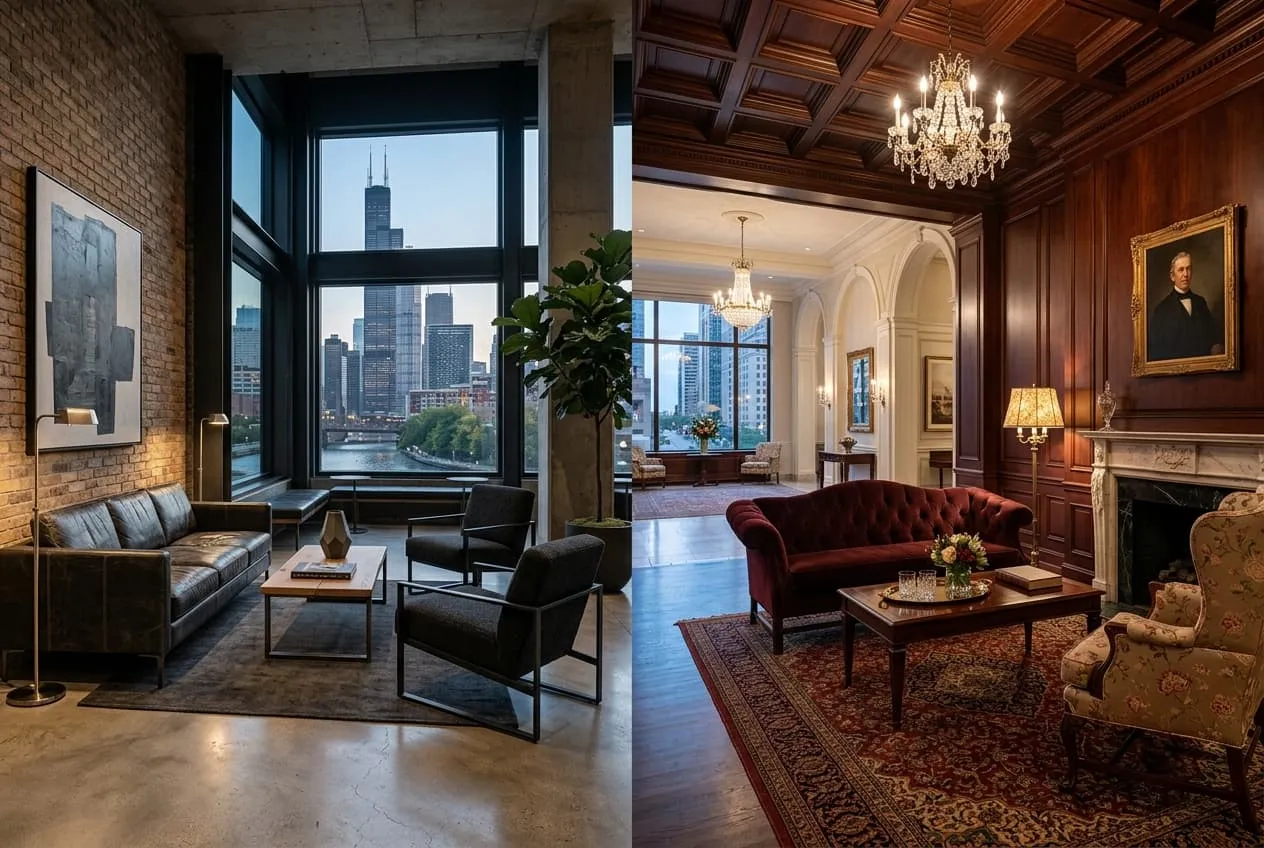
Hotel lobby furniture Chicago suppliers who work with hospitality clients will ask about brand positioning before they discuss SKUs. Are you targeting architecture-tour groups looking for design-forward accommodations in the West Loop? Business travelers who need a lobby that doubles as a secondary workspace in the Loop? Leisure guests who want warmth and character in a Wicker Park boutique? The answer changes what you buy. A River North property with exposed brick and steel might lean into deep-toned velvet lounge chairs and raw-edge side tables. A convention-adjacent property near the South Loop might prioritize modular seating that reconfigures quickly for small-group gatherings between morning sessions and dinner breaks.
Your lobby furniture should reflect the same intentionality your room design does. If they feel mismatched, guests notice even if they cannot articulate why and it shows up in your reviews.
Reception Area Seating and the Check-In Experience
The zone immediately around your front desk is often the most under-designed area in a hotel lobby. Guests waiting to check in, or waiting for a companion to check in, need somewhere to land without blocking traffic flow. This is particularly acute at busy Magnificent Mile and Fulton Market properties where check-in queues can back up during peak convention arrival windows.
Reception area chairs in this context need to be lighter weight for easy repositioning, high enough that guests can stand without effort after a long travel day, and finished in materials that wipe clean fast. Spills happen constantly near check-in counters. Fabric that requires professional cleaning after every incident is not practical hotel lobby furniture Chicago operators can rely on at scale.
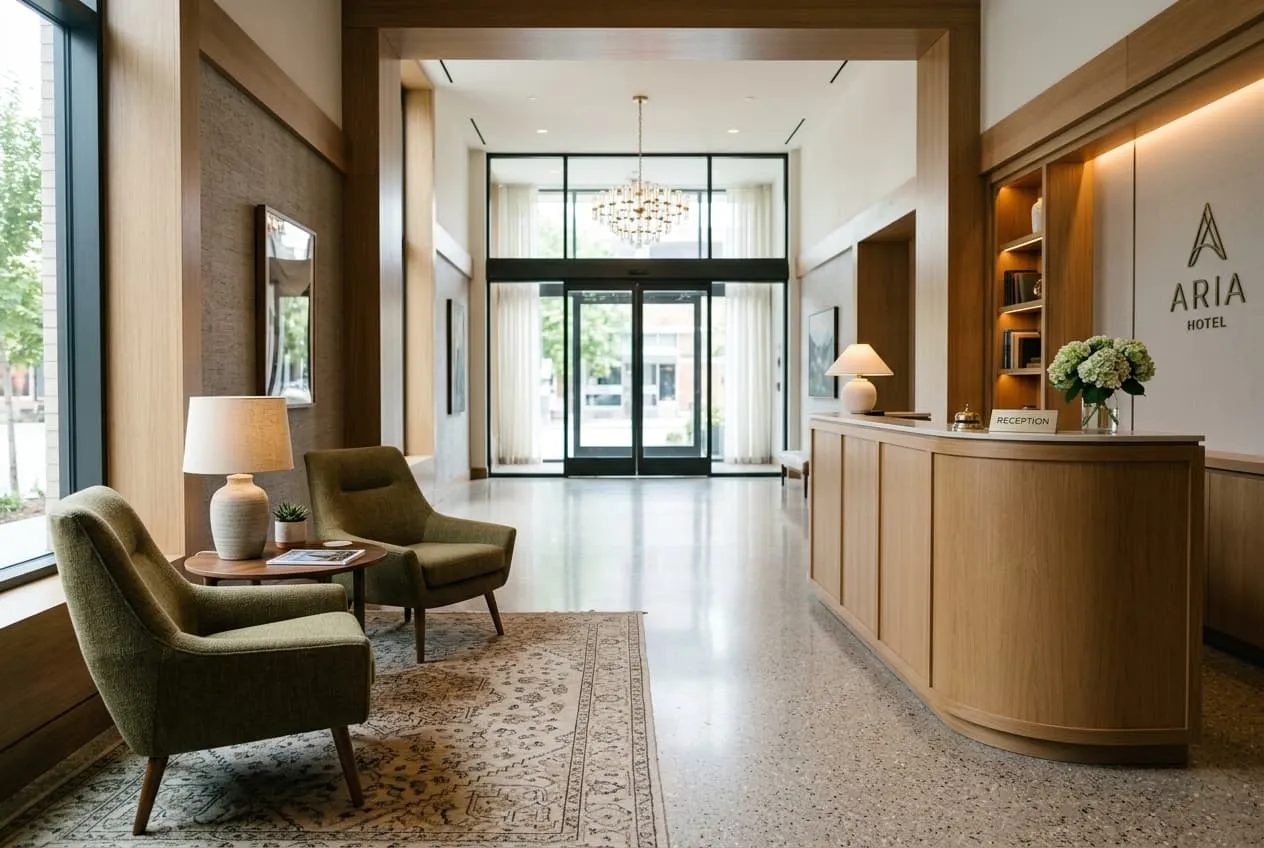
A pair of upholstered accent chairs flanking a small side table accomplishes this cleanly it gives waiting guests a defined, comfortable zone without crowding the reception desk sightlines or creating visual clutter. In lobbies where the front desk faces the entrance directly, this arrangement also signals a hospitality-forward intention from the moment someone walks through the door.
Four-Season Durability and Lobby Transition Zones
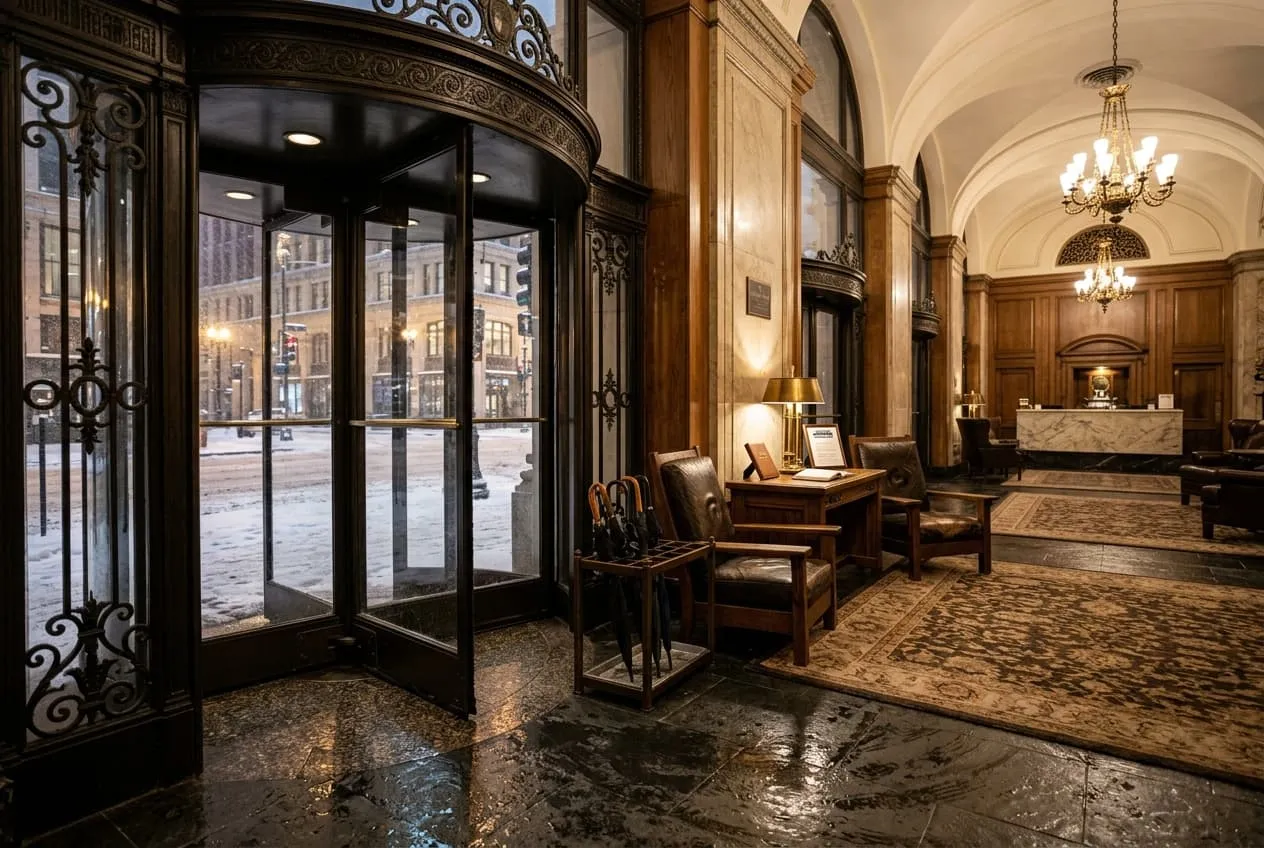
Chicago winters are not a minor material consideration. From November through March, your lobby is the first warm space guests enter after walking through wind off Lake Michigan or cutting across a frozen Millennium Park plaza. Wet boots, damp coats draped over chair arms, and sidewalk salt tracked in on luggage wheels this is what your transition zone furniture actually lives with.
Properties along Michigan Avenue, in the Loop, and anywhere near the lakefront face this more intensely than inland markets. Materials for hotel lobby furniture Chicago in these zones need to be specified accordingly. Performance fabrics treated for moisture resistance, or leather and faux-leather upholstery that wipes clean with a damp cloth, hold up where standard contract fabric fails. Area rugs in transition zones take a disproportionate beating and should be specified separately from main seating areas commercial-grade polypropylene or wool-blend rugs with heavy backing resist the seasonal abuse that leaves residential-grade options looking worn by spring.
For properties with street-level restaurants or bars feeding into the lobby common in Fulton Market and River North developments there is often overflow seating that needs to bridge the gap between dining chairs and lounge furniture. Coordinating these zones under a consistent material palette makes the full space feel cohesive even when the functional zones are distinct.
Choosing a Supplier Who Understands Hospitality Scale
Sourcing hotel lobby furniture Chicago through a contract-grade supplier rather than a retail showroom changes the outcome significantly. Contract suppliers work with purchase orders, not one-off transactions. They understand lead times for hospitality projects, can accommodate COM (customer's own material) specifications for custom upholstery, and offer warranty coverage written for commercial use conditions not residential ones.
Furnishing a lobby is a program, not a single purchase: lounge chairs, side tables, benches, occasional stools, and potentially custom signature pieces for a feature area near your entrance or elevator bank. A supplier with hospitality experience builds that program coherently, flags spec issues before they become field problems, and supports you when something needs replacement mid-contract without disrupting the rest of the floor plan. That matters most during Chicago's heaviest convention seasons, when a failing bench in a McCormick-overflow lobby is a guest experience problem, not just a procurement inconvenience.
Chicago's hotel market rewards properties that invest in quality common area design. The guests who choose your property over the one down the block in River North, on the Magnificent Mile, or in the emerging South Loop corridor often make that call based on how your public spaces feel. Hotel lobby furniture Chicago done right is a competitive advantage that compounds over the life of your contract, not just at the ribbon-cutting.
Pricing for hotel lobby furniture in Chicago depends on quantities, finishes, and your delivery window, so a project-specific quote beats any list figure. Request a quote to get yours.