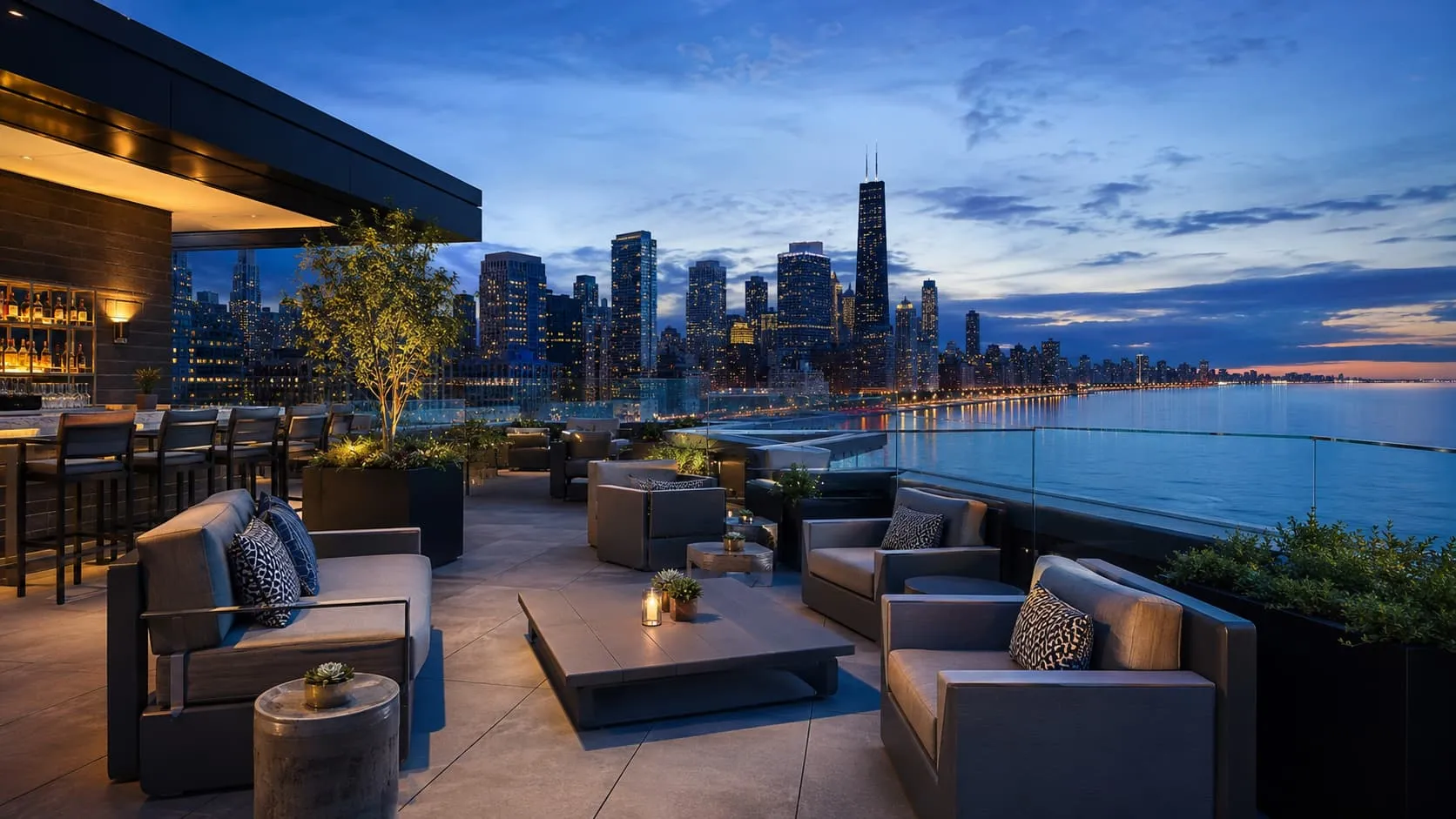
Your renovation schedule is set. Your opening date is locked in. And you just found out your lead times are 18 weeks minimum. That's the moment most Chicago hospitality operators realize they started procurement too late. Whether you're refreshing guestrooms at a McCormick Place convention hotel, building out a new concept in Fulton Market, or fitting a rooftop bar in the West Loop, FF&E procurement runs on its own clock and it doesn't bend for your ribbon cutting. Getting the furniture right means understanding that clock, what drives costs in this specific market, and how to avoid the coordination failures that derail projects months before opening day.
What FF&E Actually Covers (and What It Doesn't)
FF&E stands for furniture, fixtures, and equipment. In a hotel context, that means guestroom beds, lobby seating, restaurant chairs, reception desks, and lighting fixtures. In a restaurant, it covers banquette seating, bar stools, dining tables, and host stands. What it does not cover is OS&E operating supplies and equipment: linens, dishware, smallwares, cleaning supplies, uniforms.
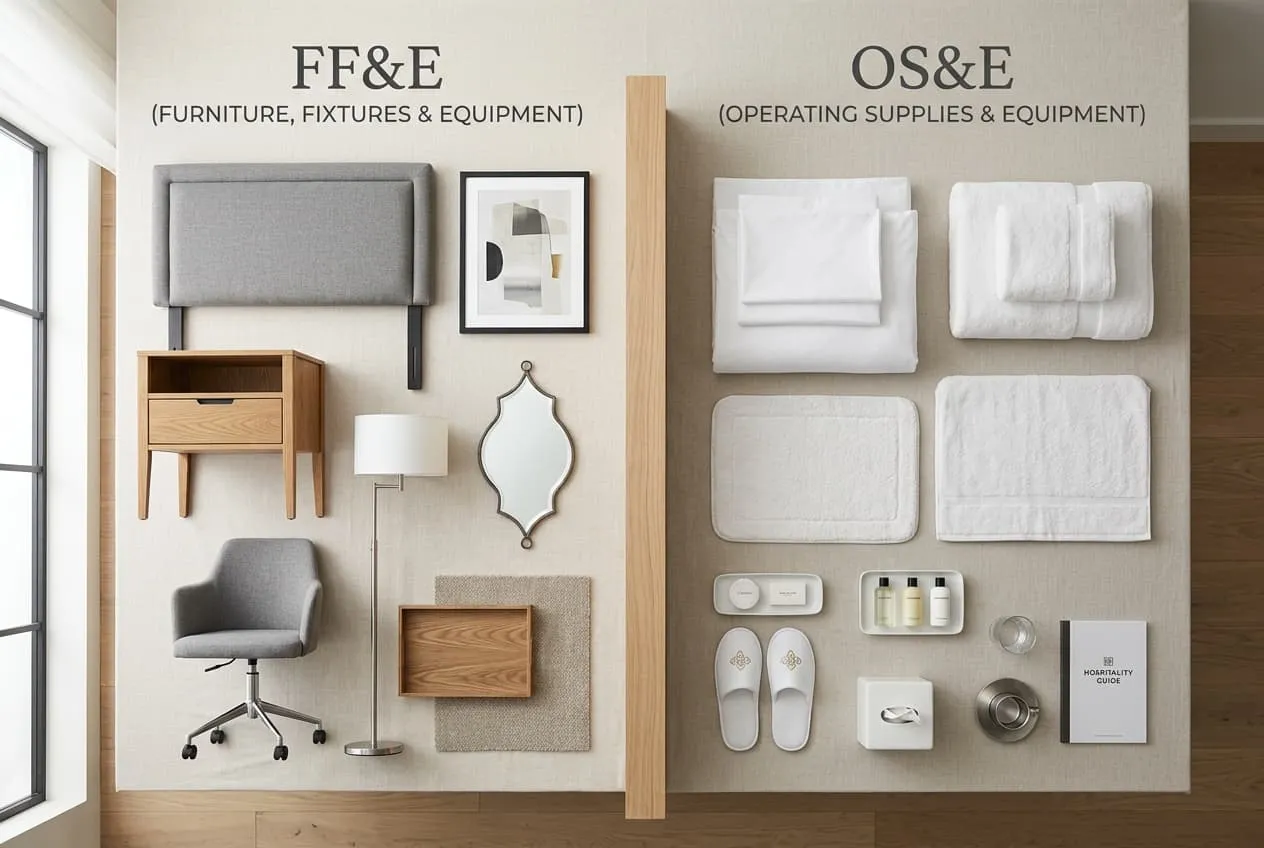
The distinction matters because FF&E and OS&E are managed by different people on different timelines. FF&E is a capital expenditure depreciated over years. OS&E is an operating cost replenished continuously. On a large Chicago hotel project a Michigan Avenue flagship or a 400-room South Loop property the FF&E budget can run into the millions, while OS&E is a separate line owned by the operations team.
Knowing where the line is drawn helps you ask the right questions when working with suppliers. A contract furniture vendor handles FF&E. Your linen supplier handles OS&E. Mixing up who you're calling for what wastes everyone's time.
How the Procurement Process Works in Chicago
FF&E procurement Chicago projects typically follow four stages: specification, bidding, purchasing, and delivery coordination. Your interior designer or FF&E consultant sets the specifications dimensions, materials, finishes, durability ratings. Those specs go out to suppliers and dealers for bids.

In Chicago, you'll often work through local dealers or rep groups who carry lines from multiple manufacturers. That layer exists because manufacturers like Bernhardt Hospitality, Kimball, or Falcon don't sell direct to individual properties. The dealer relationship matters for lead time negotiation, freight coordination, and handling issues when pieces arrive damaged.
Timing is everything. Standard lead times for contract furniture run 12 to 20 weeks from order to delivery. Custom pieces can push that to 30 weeks or longer. For a Michigan Avenue property with a hard opening date, that math has to work backwards from the ribbon cutting, not forwards from when you feel ready to order. For a Wicker Park boutique hotel or a dense River North restaurant block with a lease start date, the pressure is exactly the same. Procurement that starts late is the single most common reason hospitality openings slip in this city.
Chicago-Specific Factors That Affect Your Budget
A few things about Chicago make FF&E procurement more demanding than in smaller markets and more expensive if you don't plan for them.
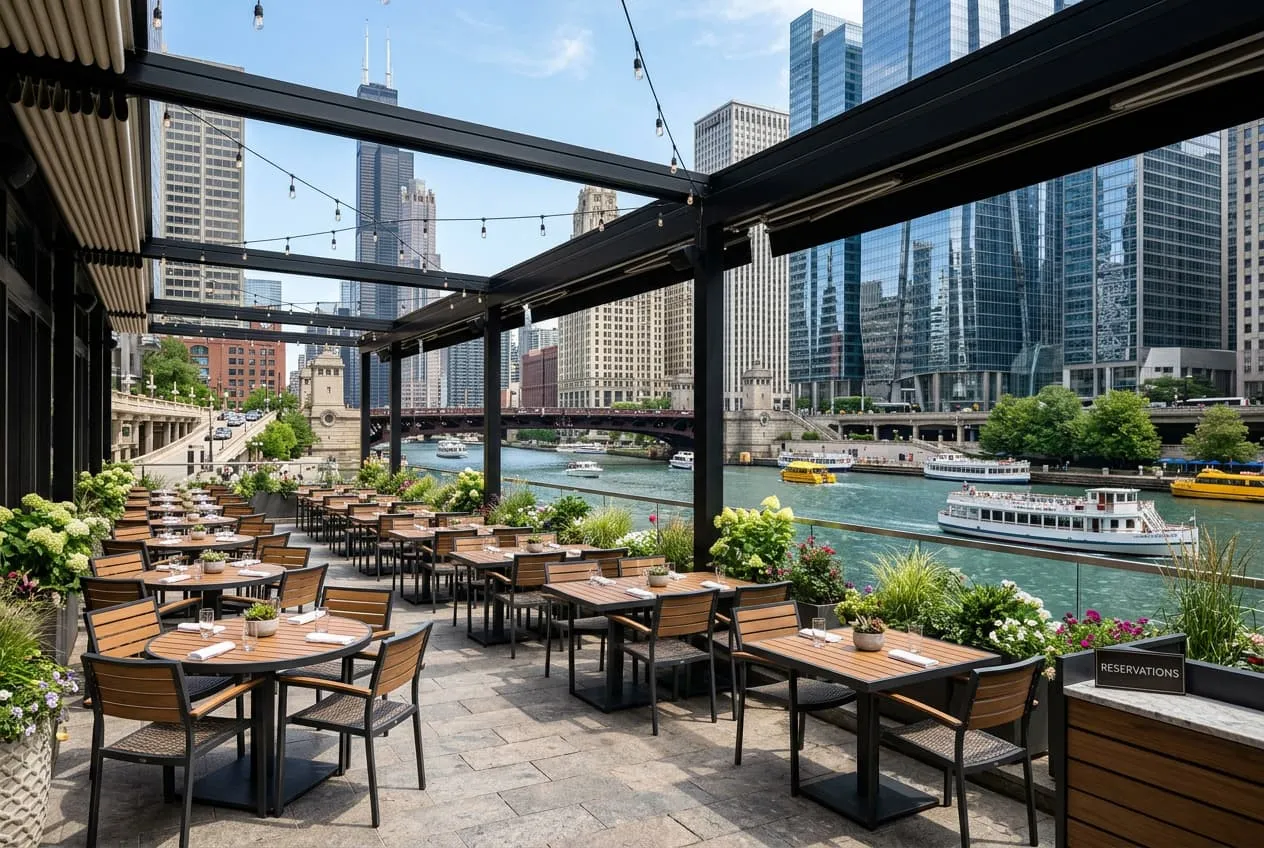
Four-season outdoor dining is a serious consideration for restaurants along the Chicago Riverwalk, rooftop venues in the West Loop, or patios in Wicker Park. Outdoor contract furniture in Chicago has to handle freeze-thaw cycles, lake wind, and summer humidity. That narrows your product options and pushes costs up compared to warmer markets where standard commercial outdoor grades are sufficient.
Chicago's architectural identity is strong, and design-forward operators take it seriously. Fulton Market and West Loop hospitality concepts have set a high visual bar operators there regularly specify custom or semi-custom pieces rather than standard catalogue items. The same is true for boutique hotels in the Loop and River North restaurant groups competing on interior design as a differentiator. Custom and semi-custom work increases lead times and requires tighter coordination between your designer and procurement team. Build that time into your schedule or it will take it anyway.
Freight and logistics into the city add cost that first-time buyers consistently underestimate. Delivering to a high-rise hotel on Michigan Avenue, navigating the loading dock situation in a dense River North building, or coordinating a phased delivery into a South Loop property still under construction is nothing like delivering to a suburban site. Factor in freight, white-glove delivery, storage if your site isn't ready, and installation labor when you're building your FF&E budget. Those line items regularly surprise buyers who price only the furniture itself.
Working With Designers and Suppliers Together
The most efficient FF&E projects are the ones where the designer and the procurement team are talking to each other from day one not sequentially. When designers hand off a spec sheet and walk away, you lose the ability to value-engineer without compromising design intent. When procurement teams buy without designer input, you get furniture that works on paper but looks wrong in the space.
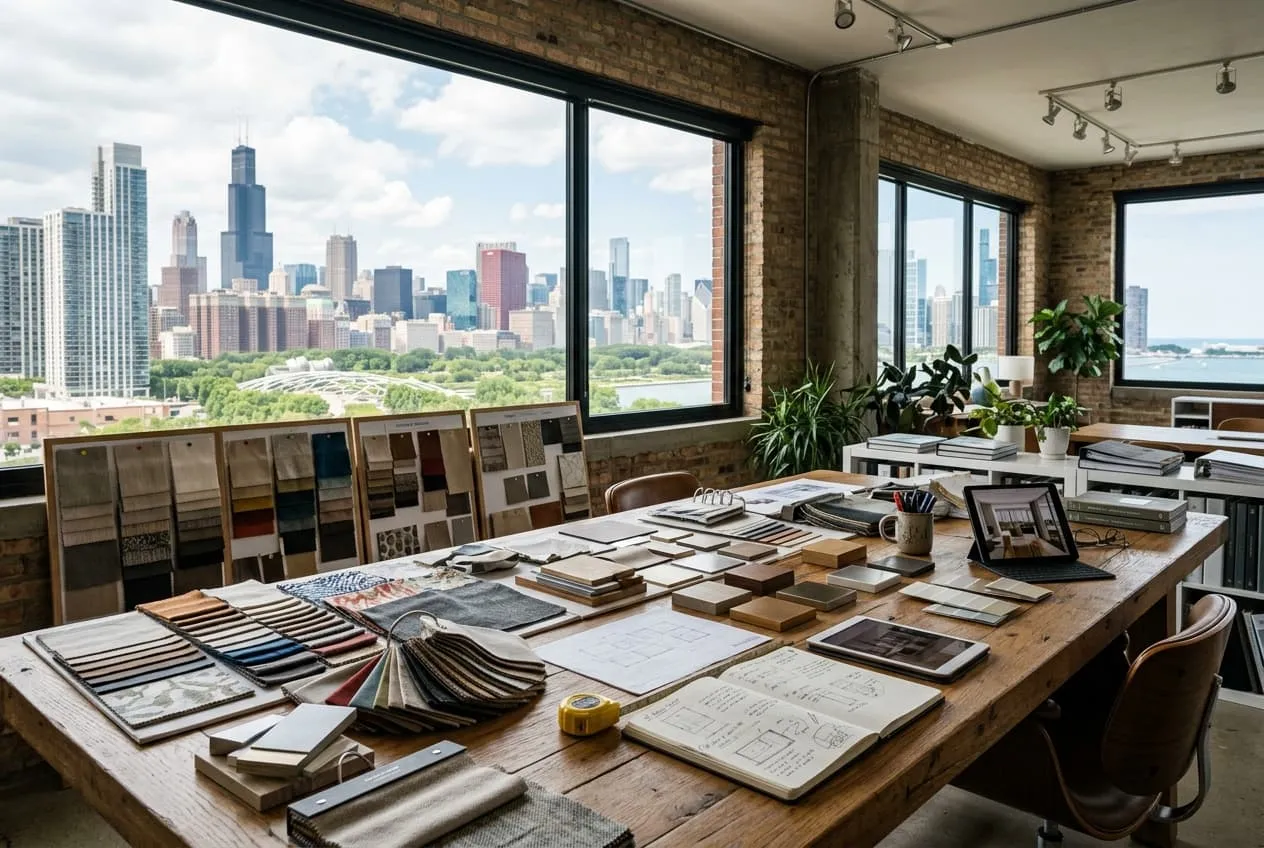
For larger Chicago projects a full convention hotel refresh near McCormick Place, a multi-outlet restaurant group opening in the Loop many operators bring in a dedicated FF&E procurement consultant who sits between the design and purchasing functions. For smaller projects, the interior designer often manages procurement directly, taking a purchasing fee or marking up the furniture.
Either way, get clarity on who owns each decision before the project starts. Who approves substitutions when a specified piece is discontinued? Who signs off on finishes when a sample looks different from the rendering? Who calls the freight company when a delivery window gets pushed? Those questions come up on every project. The properties that handle them cleanly are the ones that defined the decision-making structure early before a 14-week lead time piece goes on order and someone realizes the finish was never confirmed.
Whether you're outfitting a 300-room convention hotel near McCormick Place, a 60-seat restaurant in Fulton Market, or a boutique property in Wicker Park, the fundamentals are the same: start early, specify clearly, coordinate across your team, and build freight and installation into your budget from the beginning not as an afterthought once the furniture is already on a truck.
Ready to source contract furniture for your Chicago hospitality project? Explore our full range of commercial furniture built for the demands of the city's hotel and restaurant market.
Pricing for FF&E in Chicago depends on quantities, finishes, and your delivery window, so a project-specific quote beats any list figure. Request a quote to get yours.