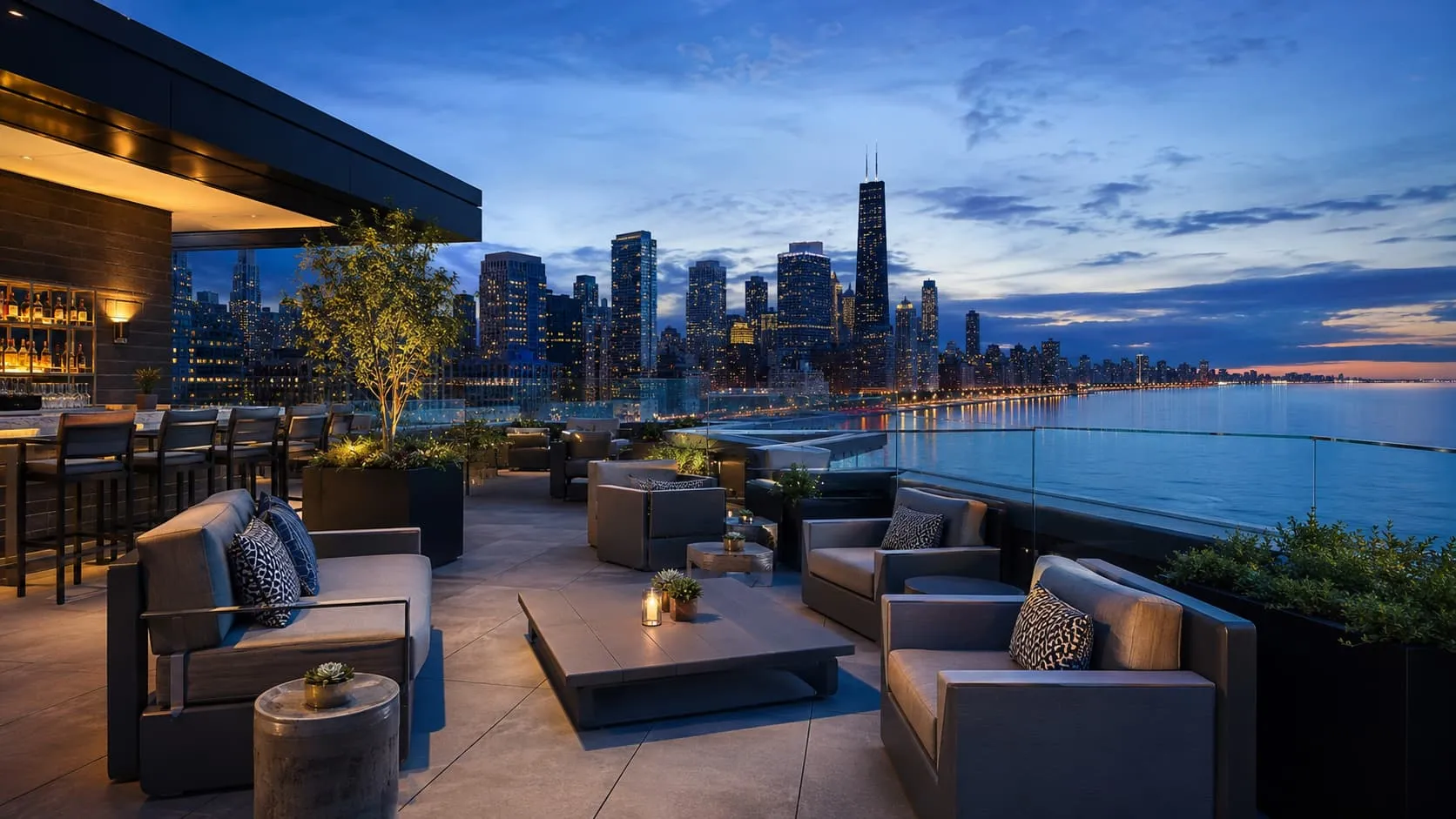
You ordered furniture that looked right in the showroom. Eight months later, the joints are loose, the upholstery is pulling at the seams, and you are staring at a replacement budget you did not plan for. This is the most common mistake boutique hotel owners in Chicago make specifying furniture by appearance rather than by construction. A River North property drawing a heavy restaurant crowd needs different specs than a West Loop boutique catering to design-week visitors, but both share the same core problem: finding contract-grade pieces built for real hospitality punishment, in quantities a 40-room property can actually order, without ending up with something generic that kills the room.
Why Chicago's Market Creates Specific Furniture Demands
The convention volume running through Chicago changes the durability math for every hotel in the city. McCormick Place drives one of the highest sustained event calendars in North America, and boutique properties throughout the Loop, South Loop, and River North absorb overflow occupancy during major runs. That means your lounge seating, lobby chairs, and guestroom pieces are being used by people who did not choose your property for its intimacy they chose it because the Marriott was full. They will not be gentle.
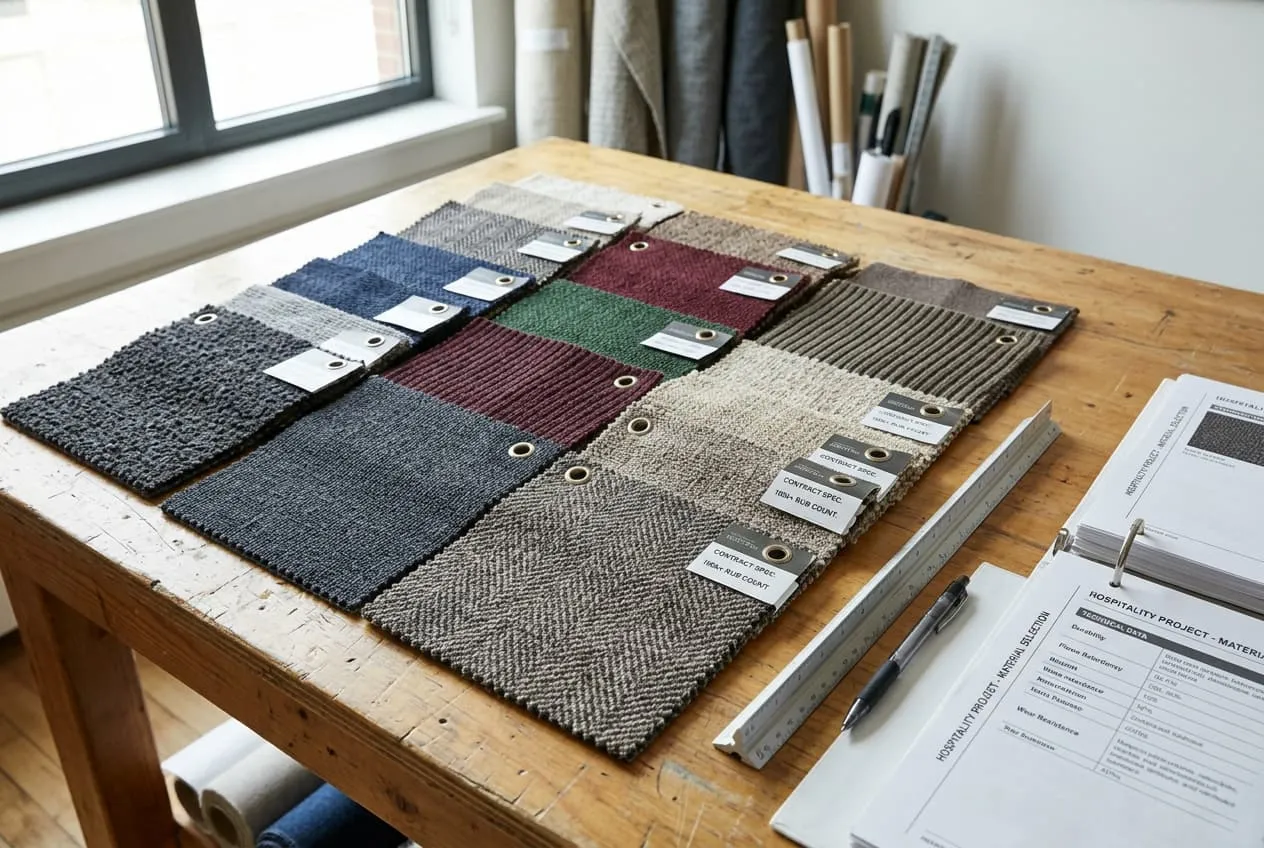
Residential furniture fails fast under these conditions. Frames crack, joints loosen, and fabric degrades on a timeline that turns a bargain purchase into a capital expense problem within two seasons. Boutique hotel furniture Chicago sourcing demands contract-grade construction: hardwood frames, eight-way hand-tied or sinuous spring systems, and upholstery rated above 30,000 double rubs. The trap is that most manufacturers at this construction level are tooled for large orders. Working through that constraint finding suppliers who will run 40 units without burying you in a minimum order problem takes deliberate sourcing, but those suppliers exist.
Cohesion Without Uniformity: The Boutique Design Problem
The defining characteristic of a boutique property is that it does not look like a chain hotel. Achieving that across 40 or 60 rooms without producing visual chaos requires more discipline than most owners expect going in. The solution is almost never a matching furniture suite it is a materials palette. Select two or three upholstery fabrics, a consistent wood tone or metal finish, and a consistent silhouette weight, then vary the actual pieces within those constraints.
A Wicker Park boutique might anchor its palette in walnut tones and deep jewel-toned velvet, pulling from the neighborhood's vintage warehouse DNA while staying current. A Fulton Market property in a converted meatpacking building might lean into raw steel frames with warm leather, letting the industrial bones of the space do the work. A Streeterville property near Navy Pier could go entirely the other direction: white oak, linen textures, something that references the lakefront without being literal about it. The palette creates coherence. The variation within it creates character.
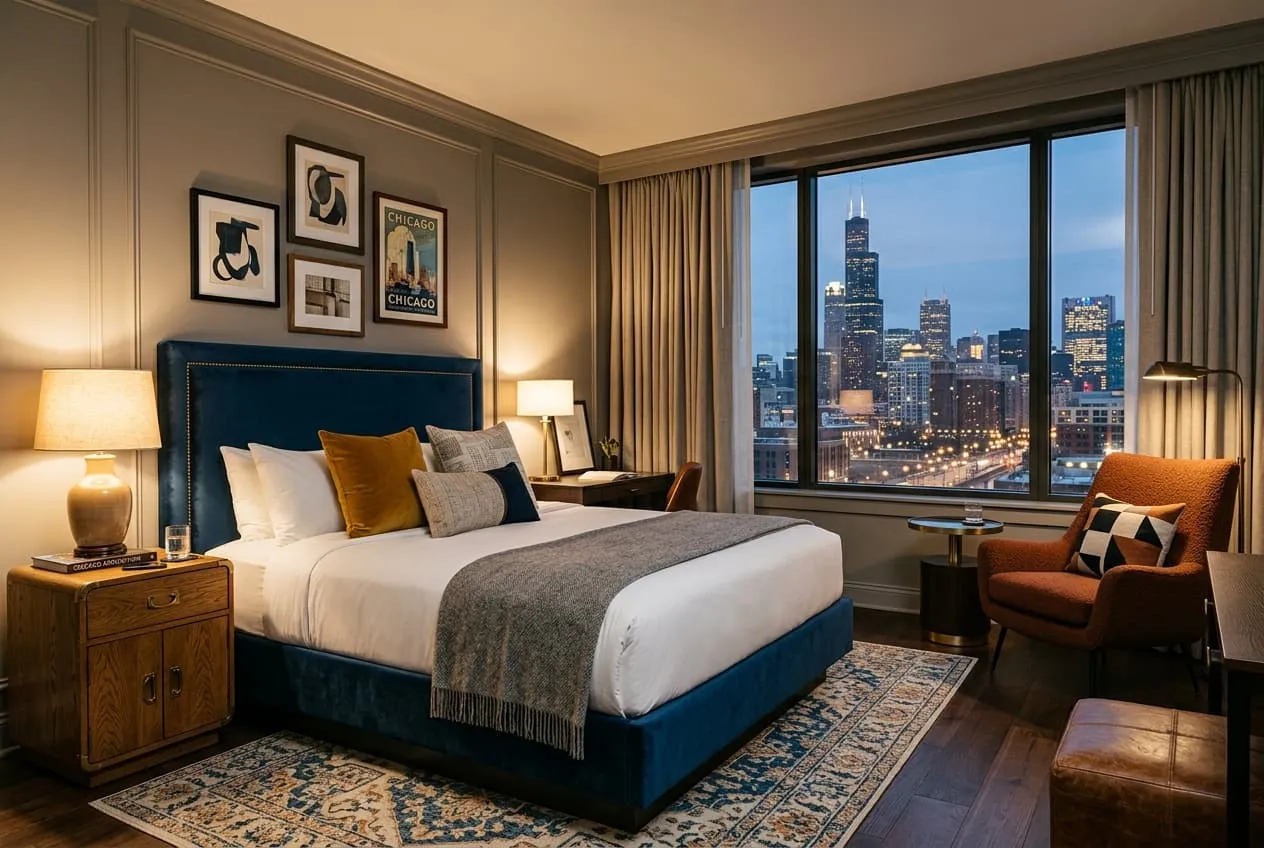
Custom upholstery earns its value here. A supplier who takes a standard contract frame and applies your COM fabric lets you tie a room together without ordering a matching suite that reads as catalog-sourced from thirty feet away. Even modest customization a different leg finish, a fabric swap, a modified arm height separates your rooms from the properties you are actually competing against for repeat bookings.
Finding Suppliers Who Work at Boutique Scale
The boutique hotel furniture Chicago sourcing landscape breaks into three practical paths. The first is going direct to smaller contract manufacturers who specialize in hospitality and accept lower minimums. These suppliers are real, often Midwest-based, and some will run as few as 10 to 20 units per SKU. The trade-off is longer lead times and less name recognition neither of which matters if the construction is right and the timeline fits your renovation schedule.
The second path is working through a hospitality furniture dealer or purchasing agent with existing manufacturer relationships. A dealer can aggregate your order alongside other small-scale hospitality projects, giving you access to larger manufacturers at quantities you can actually buy. There is a margin layer involved, but it frequently nets out even once you factor in the specification errors and reorder costs it prevents.
The third path is the vintage and custom route, which several Chicago boutique properties have used to real effect. Chicago has a serious base of furniture makers and upholsterers concentrated in Fulton Market, Pilsen, and parts of the West Loop who produce small-batch custom pieces to whatever spec you bring them. This works best for statement pieces: a lobby settee, a custom headboard program, a distinctive bar counter with built-in seating. For high-turnover items like desk chairs and side tables, contract sourcing is more practical. The two approaches are not mutually exclusive, and the most distinctive properties tend to use both.
Four-Season Demands: Outdoor and Transitional Spaces
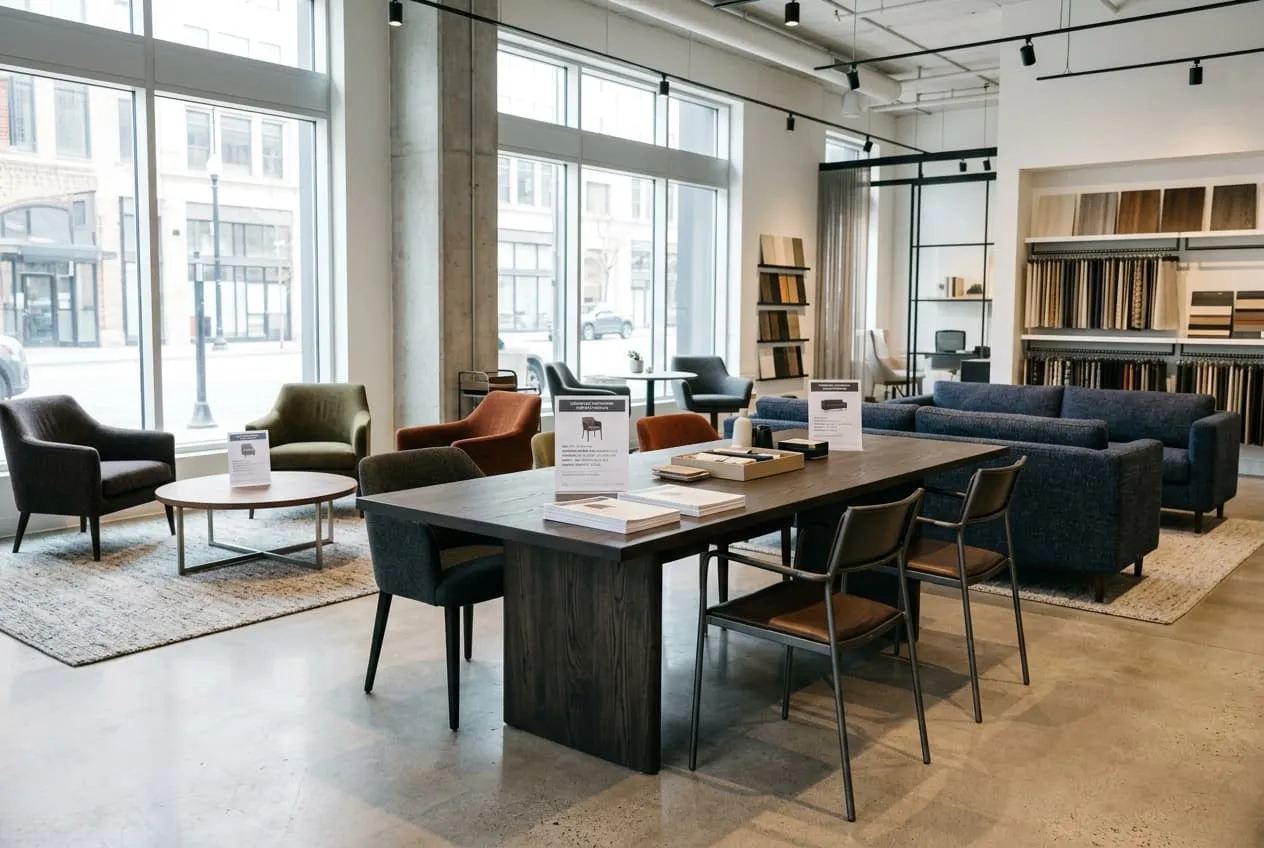
Chicago's outdoor dining season is compressed and brutal on furniture. Properties with rooftop bars along Michigan Avenue, courtyard setups in the West Loop, or sidewalk cafe configurations on Wicker Park's Milwaukee Avenue corridor face a specific challenge: outdoor contract furniture that looks considered during a six-month window and survives storage or exposure during winters that genuinely destroy materials.
Powder-coated aluminum frames with sling or solution-dyed acrylic fabric are the standard for good reason. They resist rust, clean quickly after a Chicago spring rain, and the fabrics hold their color against UV and moisture at a level that teak or wicker cannot sustain through a full freeze-thaw cycle. For transitional spaces covered patios, indoor-outdoor lobbies common in newer West Loop and South Loop properties look for pieces that read as interior-quality without relying on materials that fail when humidity swings or temperature drops hit them unexpectedly.
Boutique hotel furniture Chicago buyers who spec for the full seasonal cycle, not just the summer setup, end up with outdoor programs that look deliberate year-round rather than abandoned by October. A rooftop bar that still looks sharp in November, even when closed, signals attention to detail that guests notice and remember.
Sourcing furniture for a boutique hotel in Chicago is a more specific problem than general commercial procurement. The city's convention volume, its neighborhood-by-neighborhood design identity, its climate, and its hospitality character all shape what actually survives and what fails. Getting the spec right before the order ships saves the kind of money that is very hard to recover from at boutique scale.
Ready to spec boutique hotel furniture for your Chicago project? Send us the details and we will price it around your requirements. Request a quote to start.
Related reading
- Hotel lobby chairs in Chicago
- Hotel fixtures and furniture sourcing in Chicago
- What is contract furniture
- Commercial furniture vs retail
- Hospitality furniture supplier guide
- Boutique hotel lounge chairs
- Hotel sofas and loveseats
- Hotel headboards
- Commercial furniture in Illinois
Our take
The neighborhood identity section is the strongest part of this post, but it leaves out a constraint that specifically bites Chicago boutique properties: many of the buildings that give Wicker Park, Fulton Market, and the West Loop their character are conversions of warehouse and meatpacking structures that were never built to receive furniture. Freight elevators are undersized or absent, loading is alley-only, and interior doorways and stairwells were sized for a different era. That turns piece dimensions into a gating spec, the same way it does in any heritage renovation. A lobby settee or an oversized headboard that clears the design review can still fail to reach the room it was made for.
The practical move is to verify passage before specifying anything large, and to lean on the custom sourcing path the post already recommends to order statement pieces that assemble in place rather than arrive as a single unit.
The bottom line: Right for a boutique operator sourcing at 40 to 60 rooms who wants contract construction without a matching suite. Confirm freight-elevator and doorway clearances in a converted building before committing to oversized lobby or casegoods pieces.