
Toronto is Canada's largest hospitality market, and it operates like three markets at once. On Yorkville's Bloor Street, Four Seasons guests expect the same standard they would find in Paris or Singapore. Twelve blocks south on King West, boutique operators are outfitting properties for entertainment industry regulars, film crews during TIFF, and the clientele that fills Soho House on a Wednesday night. Six blocks east in the Financial District, business hotels are running corporate accounts for Bay Street firms and rotating conference groups through the Metro Toronto Convention Centre. These guests have almost nothing in common, and the furniture requirements of the operators serving them reflect that gap. If you are sourcing hotel furniture for a Toronto property, the supplier conversation has to start with your tier and your guest before it gets anywhere near a product catalogue.
Yorkville: Where Furniture Becomes Part of the Brand Promise
The Yorkville corridor sets the benchmark for luxury hospitality in Toronto. Properties in this pocket of the city are competing directly with international flagships. Guests arriving at the Four Seasons or the neighboring independent properties on Avenue Road are comparing their experience against the best hotels in London, New York, and Dubai. Furniture that reads as slightly off, a headboard that sits two centimeters too low, a case piece in a veneer that photographs as cheap under natural light, is noticed immediately by guests at this price point.
For Yorkville properties, contract furniture sourcing is not primarily a durability conversation. The durability baseline is assumed. The real work is aesthetic specification: custom upholstery in fabrics that photograph well and hold their hand through years of cleaning, millwork and casegoods in finishes that align with heritage materials in century-old buildings that have been carefully restored, and loose seating that functions in suites where a single chair might be worth more in visual impact than an entire floor of a budget property.
Suppliers serving this tier need to demonstrate experience with luxury project specifications. Ask for portfolio examples from comparable projects before any conversation about product lines. A supplier who has worked on a luxury residential development in Rosedale is closer to the right partner than one who has only outfitted extended-stay properties near Pearson Airport.
Lead times in this category commonly run sixteen to twenty-four weeks for custom or semi-custom casegoods. Any supplier telling you otherwise on bespoke pieces is not being straight with you.
King West and the Distillery District: Design-First, Operationally Ruthless
The King West and Queen West corridors attract a different buyer entirely. Operators here are not chasing international luxury travelers. They are building properties for guests who know what a good hotel looks like and are extremely quick to say so on every review platform available to them. The Ace Hotel model, the Soho House aesthetic, the design sensibility you find at independents around the Distillery District: these properties compete on atmosphere and character, and furniture is the primary vehicle for both.
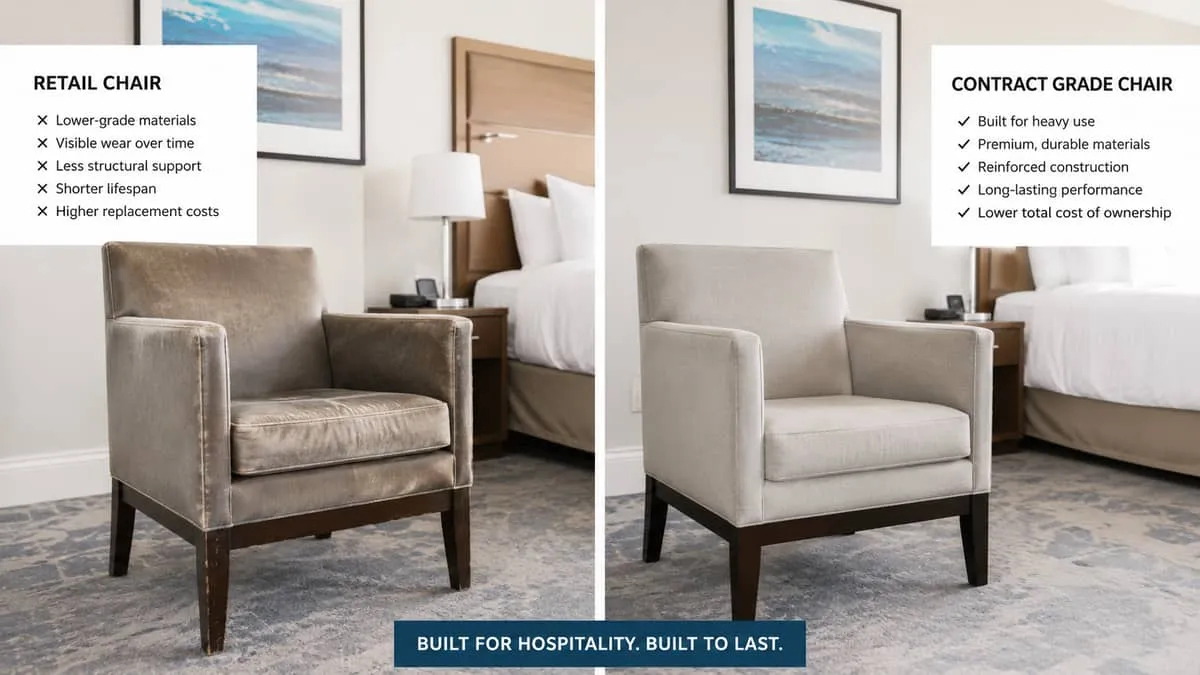
What makes King West procurement complicated is the combination of high design expectations with operational reality. These properties take hard use. Entertainment industry guests, corporate creative teams, conference overflow from TIFF, and weekend travelers from the 905 corridor are cycling through these rooms constantly. A vintage-look leather lounge chair that cannot withstand daily occupancy cleaning without cracking within eighteen months is a budget line item that management will be defending inside two years.
The right furniture for this market sits at the intersection of design intent and commercial grade construction. That means sourcing from suppliers who can offer contract specifications on pieces that genuinely look curated rather than institutional. Double-rub ratings of 50,000 or higher on upholstery fabrics are the floor, not a premium upgrade. Metal joinery on case pieces needs to be reinforced beyond residential standards. Finishes need to survive the cleaning protocols that housekeeping runs in a busy boutique property.
For operators in this corridor, a supplier who only carries generic contract lines is the wrong partner. So is a design-forward supplier without real hospitality experience. You need both. They exist, and they are worth taking the time to find.

The Financial District Corridor: Durability at Scale, on a Schedule
The stretch of hotels running through the Financial District from Union Station up to the convention centre is its own procurement category. Bay Street corporate accounts, government delegations, and the conference groups that rotate through the Metro Toronto Convention Centre year-round mean these properties are running occupancy numbers that would exhaust a boutique property's furniture inventory in half the expected lifespan.
This is where the durability conversation is most direct. A guestroom chair in a Financial District business hotel may be sat in by two to three different guests per day for fifty weeks a year. Foam compression, fabric wear, and finish degradation happen faster than operators who have not tracked this carefully tend to expect. The procurement cycle for properties in this corridor should not be driven by visible failure. By the time furniture looks worn, it has already been degrading the guest experience for months.
For this tier, suppliers need to demonstrate the ability to work at volume and on a schedule. Financial District properties frequently manage renovations floor by floor while maintaining occupancy. That means phased delivery, tight coordination with property management on installation windows, and a supplier who has done this before and can document the process.
Minimum order quantities are less of a concern at this scale, but lead time management is critical. A business hotel that commits to a floor renovation before booking a group contract needs its furniture on site when construction clears, not two weeks after. Get lead time commitments in writing, and build your construction schedule backward from the delivery date, not forward from the contract signing.
Toronto's New Supply Problem and Why Aging Furniture Is a Competitive Risk
Toronto has been one of the most active hotel development markets in North America for the past decade. New properties have opened in every corridor of the city, from Harbourfront to Midtown, and supply growth has put pressure on established operators in ways that are easy to underestimate when you are inside a property that feels stable.
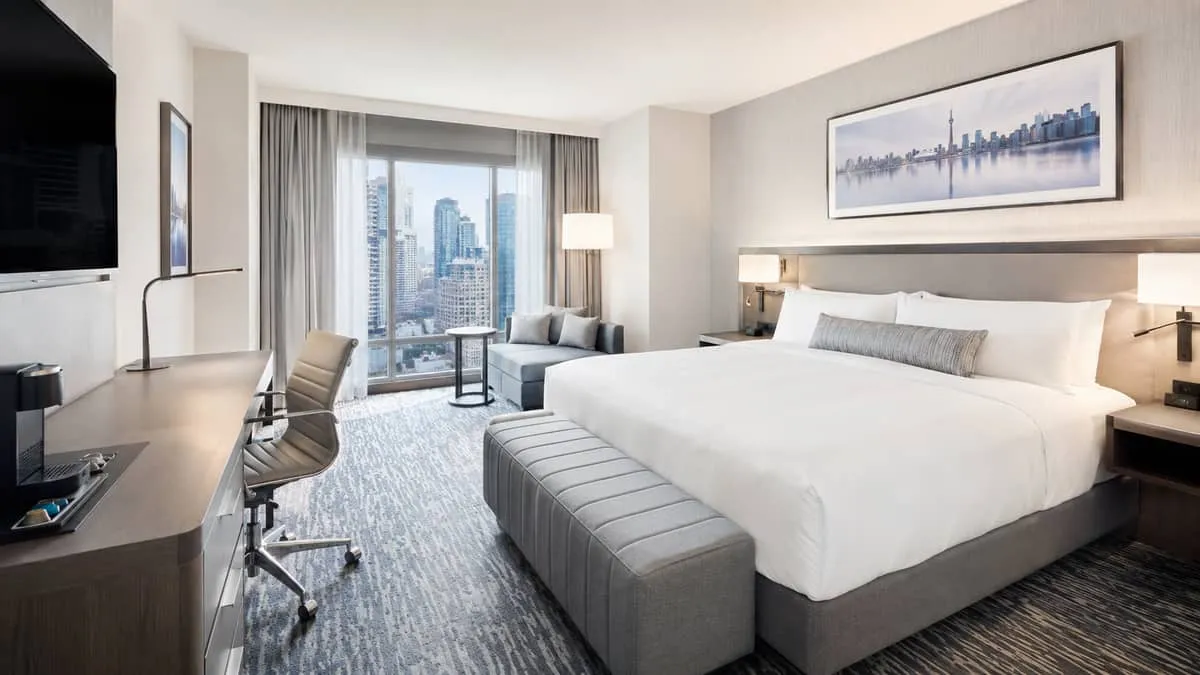
When a new boutique opens two blocks away with fresh furniture, current millwork, and upholstery in colors that reflect current design trends, the property across the street that has not refreshed its guestrooms in six years starts losing the comparison on every review platform. Toronto guests, particularly the international travelers who arrive for TIFF, financial summits at the MTCC, or tech conferences at Enercare Centre, are not making decisions in a vacuum. They are comparing options across multiple properties before they book, and the photography matters.
This is the market argument for treating furniture procurement as an ongoing capital planning function rather than a crisis response. The operators who budget for phased refreshes on a seven to ten year cycle, by floor, by room category, or by the highest-visibility public spaces first, maintain competitive positioning without the cash flow shock of a full property renovation. Suppliers who work regularly with Toronto properties understand this model and can support it with product continuity commitments: the ability to reorder matching pieces years later so a phased refresh does not look like a patchwork.
Choosing a Hotel Furniture Supplier in Toronto: What the Evaluation Actually Looks Like
Toronto gives buyers access to local showrooms, regional distributors for major North American manufacturers, and direct-import options that have become more accessible as procurement has moved online. This range of options is useful, but it also creates noise in the evaluation process.
A local dealer with a King West showroom can offer the tactile benefit of seeing pieces in the material and finish before you commit. For a Distillery District property with a specific heritage palette, walking through a showroom with samples in hand beats looking at digital renders. The local relationship also means someone who can be on site when delivery arrives and flag issues before they become installation problems.
For larger projects, particularly full openings or multi-floor renovations at Financial District properties, the major North American manufacturers, brands like Kimball Hospitality, Bernhardt Hospitality, and suppliers at that tier, typically reach Toronto buyers through dealer networks. Your hotel furniture supplier in Toronto may carry lines from several of these manufacturers, which gives you access to tested specifications, documented commercial ratings, and manufacturer warranties without managing international procurement directly.
The evaluation criteria that matter most are straightforward. Hospitality-specific project experience is non-negotiable: ask for references from comparable property types in comparable markets, not general contract furniture work. Lead time transparency matters more than the quoted price, because a supplier who compresses your timeline estimate and then misses delivery will cost you more than a competitor whose pricing was slightly higher. And coordination capability for phased delivery matters at any scale: a supplier who has only done full-property drops will struggle with the floor-by-floor reality of Toronto properties managing occupancy during renovation.
Starting the Conversation Earlier Than Feels Necessary
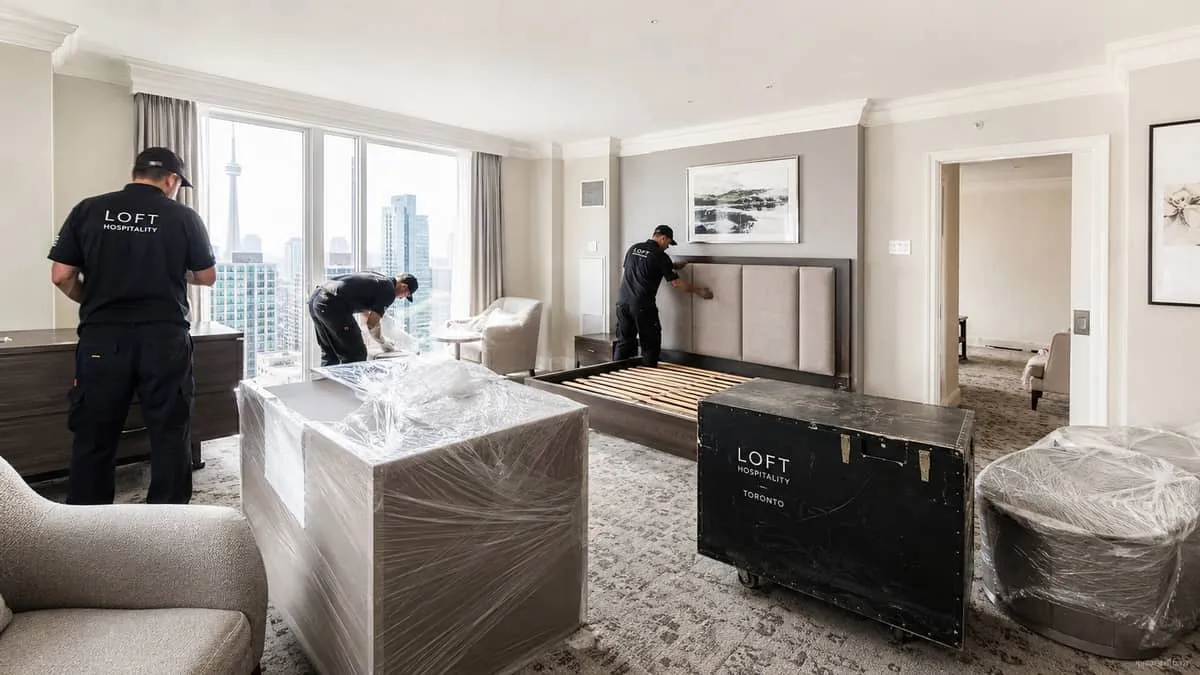
The most consistent procurement mistake Toronto operators make is starting the supplier conversation too late. Contract furniture timelines are not retail timelines. Custom casegoods for a Yorkville property carry lead times measured in months, not weeks. Semi-custom upholstery for a King West boutique still requires fabric memo approvals, prototype sign-offs, and production scheduling before a single piece ships. Even in-stock contract lines need to be verified against current availability before you commit to a schedule.
If you are planning a hotel opening, a full-floor renovation, or a phased refresh program for any Toronto property, the supplier relationship should be active before your design intent is final. The right supplier will tell you which of your spec'd pieces carry the longest lead times, which substitutions are available if a particular line has availability issues, and how to structure phased delivery against a construction calendar that will shift.
Toronto's hospitality market does not slow down for operators who are behind on their procurement timelines. TIFF comes in September regardless of whether your renovation finished on schedule. Bay Street corporate accounts renew in Q1 regardless of whether your Financial District rooms are refreshed. The calendar is fixed. The furniture lead time is the variable you can control, but only if you start early enough to actually control it.
Planning hotel furniture for your Toronto project? Share your specs and quantities and we will build pricing around your actual program. Request a quote to get numbers for your space.