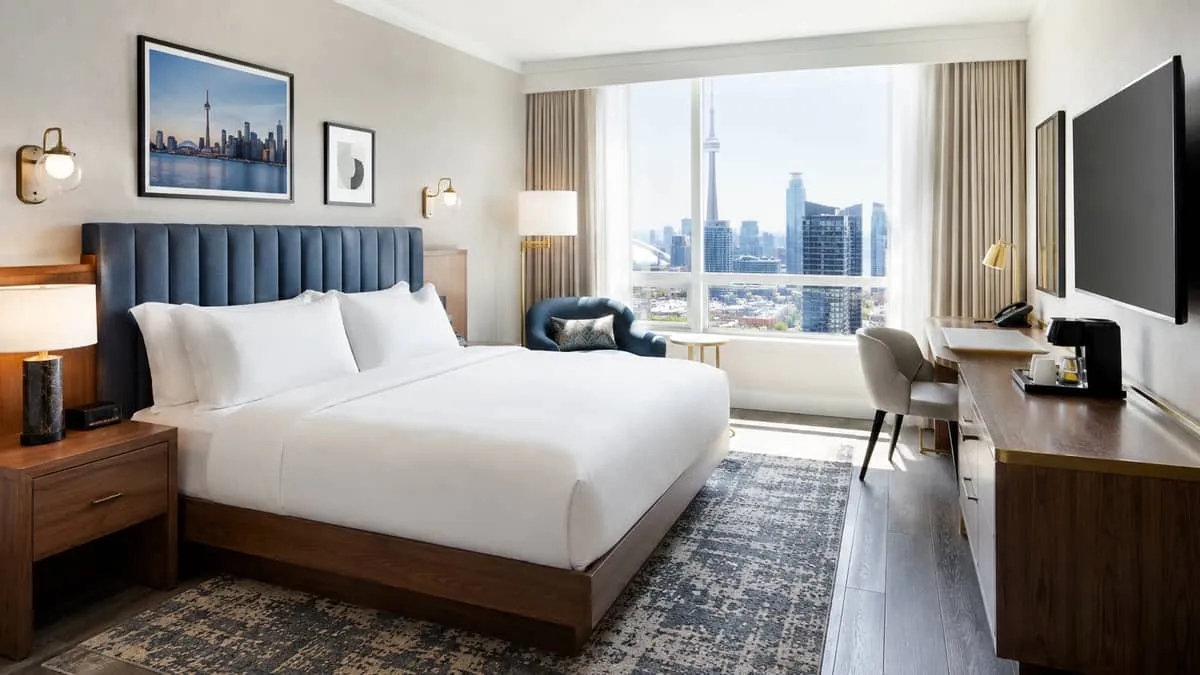
Toronto's boutique hotel market crossed a threshold when Ace Hotel opened on King West and Soho House established its membership club a few blocks away. Those two properties didn't just add rooms to the city's inventory. They validated a guest profile that already existed: design-literate, media-connected, accustomed to quality, and extremely likely to post what they see. For operators opening or renovating boutique properties in this market, that validation comes with a direct implication. The furniture in your rooms is no longer just a product specification. It is a marketing asset, photographed and shared by guests before checkout.
This is Canada's largest hospitality market. It draws TIFF industry delegates, Bay Street finance, tech workers from the Waterfront cluster, international visitors using Toronto as an entry point, and a dense local creative class that stays at boutique hotels for anniversary dinners and weekend staycations. That mix puts the design bar higher than most Canadian cities. A guest who regularly walks past the Four Seasons on Bay Street or has been to the Soho House rooftop has calibrated expectations. They notice cheap upholstery. They notice hardware that wobbles. They definitely notice when a room that charges $350 a night looks like a furnished apartment from a big box store.
Sourcing boutique hotel furniture in Toronto means navigating that reality from day one of your procurement process.
The Three Visual DNA Codes That Run This Market
Toronto's boutique hotel scene does not have one aesthetic. It has distinct microclimates shaped by neighbourhood, guest type, and the buildings that were there first.
Distillery District: Heritage Industrial. The Distillery District's Victorian-era distillery buildings set an aesthetic framework that every hotel in that pocket either leans into or consciously reacts against. The brick, the heavy timber, the original iron fixtures. Properties here typically run a palette of raw and reclaimed materials: blackened steel frames, oak with an open grain finish, concrete-look surfaces, leather upholstery in cognac or charcoal. The furniture should feel like it belongs to the building rather than being dropped into it. Chunky proportions work here. Thin-profile Scandinavian pieces tend to disappear against the visual weight of exposed brick and timber ceiling.
King West and Queen West: Cocktail Bar Meets Hotel. West of Spadina, the dominant influence is Toronto's best cocktail bar scene, which shaped the design vocabulary of the restaurants and hotels that followed. Moody lighting, rich fabrics, mixed metals. Properties in this corridor compete against some of the most visually polished hospitality interiors in Canada. Lounge seating with deep cushioning, velvet or boucle upholstery, brushed brass hardware, and case goods with a darkened walnut or ebonized finish signal that you belong in this neighbourhood. The aesthetic is theatrical without being gaudy. Guests here are going out at night; the room is the opening and closing act.
East End Creative: Neighbourhood Hotels for Local Guests. The emerging pocket of boutique properties in Leslieville, Riverside, and the stretch east toward the Beaches targets a different guest profile: the Toronto creative class staying close to home, often for a genuine staycation, who will judge the property by local standards rather than international hotel chain standards. These guests want authentic, not polished. They respond to furniture with character, natural materials, and local maker references. The design conversation is less about luxury and more about integrity. Mid-century forms with solid wood frames, organic textiles, and restrained colour palettes read well here.
Understanding which of these three codes your property is operating in is the single most important decision you make before talking to any furniture supplier.
Why Toronto Guests Make Furniture a Direct Revenue Factor
In most Canadian hospitality markets, furniture quality affects guest satisfaction scores and repeat booking rates. In Toronto, it also affects your organic social reach, press coverage, and rate validation in a way that is more acute than in Calgary or Ottawa or even Montreal.
Toronto has a large population of professional content creators, lifestyle journalists, interior design consultants, and architecture critics who stay at boutique hotels and post about them. Vogue Living, Azure Magazine, and local design press actively cover boutique properties. A room that photographs well generates coverage you cannot buy. A room that photographs badly generates the opposite.
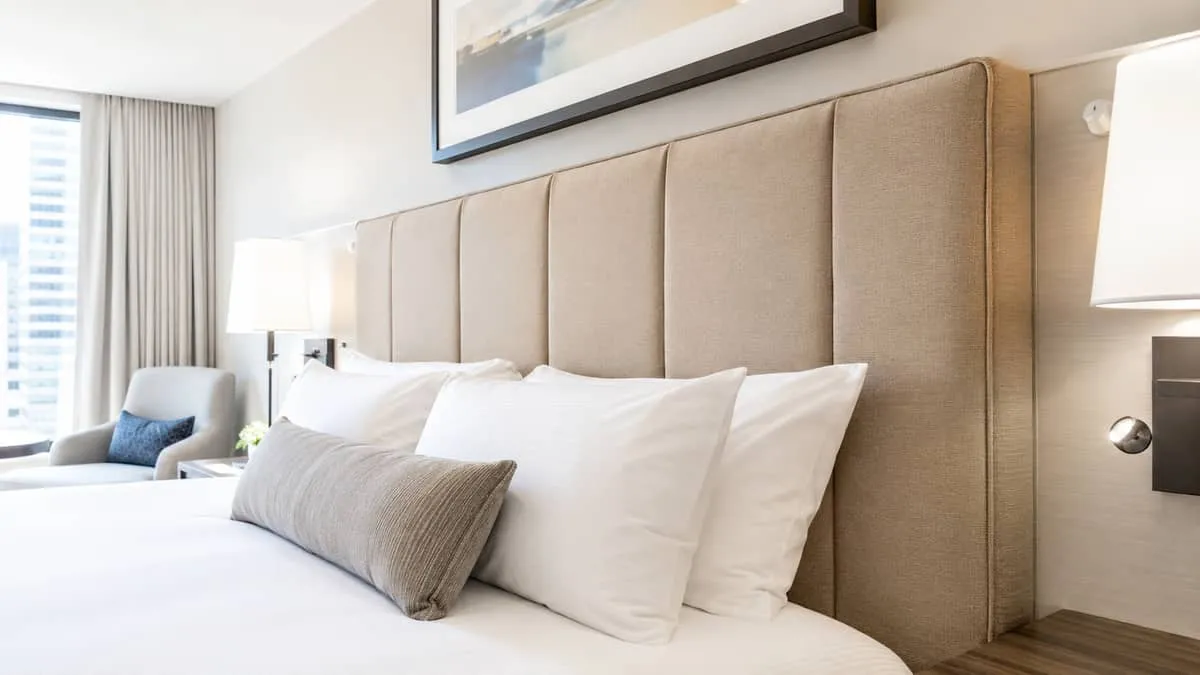
The practical implication for furniture procurement is that you are not just specifying for durability and comfort. You are specifying for how a piece reads at 1080p on a phone screen, how it looks behind a guest sitting on the bed with their laptop, how the headboard frames a portrait photo. Seams matter. Hardware matters. The way an upholstered chair picks up ambient light from a window matters.
This is not a reason to prioritize aesthetics over contract-grade construction standards. A chair that photographs beautifully and fails structurally in 14 months is a disaster. But it is a reason to evaluate furniture with a camera in mind alongside a rub count and a load rating.
Guestroom Specifications for Toronto's ADR Range
Toronto's boutique market runs a wide ADR range, from mid-tier Queen West properties sitting around $200 to $250 per night through to Yorkville-adjacent boutique rooms crossing $400 and above. The specification decisions for each tier are meaningfully different, and the city's guests are calibrated enough to notice when the room doesn't match the rate.
At the $200 to $280 range, the priority is cohesion and material honesty. A solid wood bed frame with a clean joint finish, a fabric headboard with a double-welted seam, and contract-grade case goods in a finish that reads intentional rather than generic will carry the room. At this tier, custom fabric orders on a handful of upholstered pieces are worth the cost because they create visual differentiation that guests can actually feel and see. Frame construction matters: eight-way hand-tied spring upholstery is not necessary at this price point, but a hardwood frame with corner blocking and glued joints is the baseline for anything that will see two-plus years of commercial use.
At the $300 to $400-plus range, guests who have stayed at the Four Seasons Yorkville or at Soho House are doing a direct comparison in their minds. The specification at this tier requires full-grade-A or -B upholstery fabric with a rub count above 30,000, solid case goods with dovetail or box joint drawer construction, and hardware that has real weight. Pressed metal hardware reads immediately as cheap at this price point. Die-cast zinc or solid brass hardware is not a luxury; it is a baseline expectation for the guest demographic.
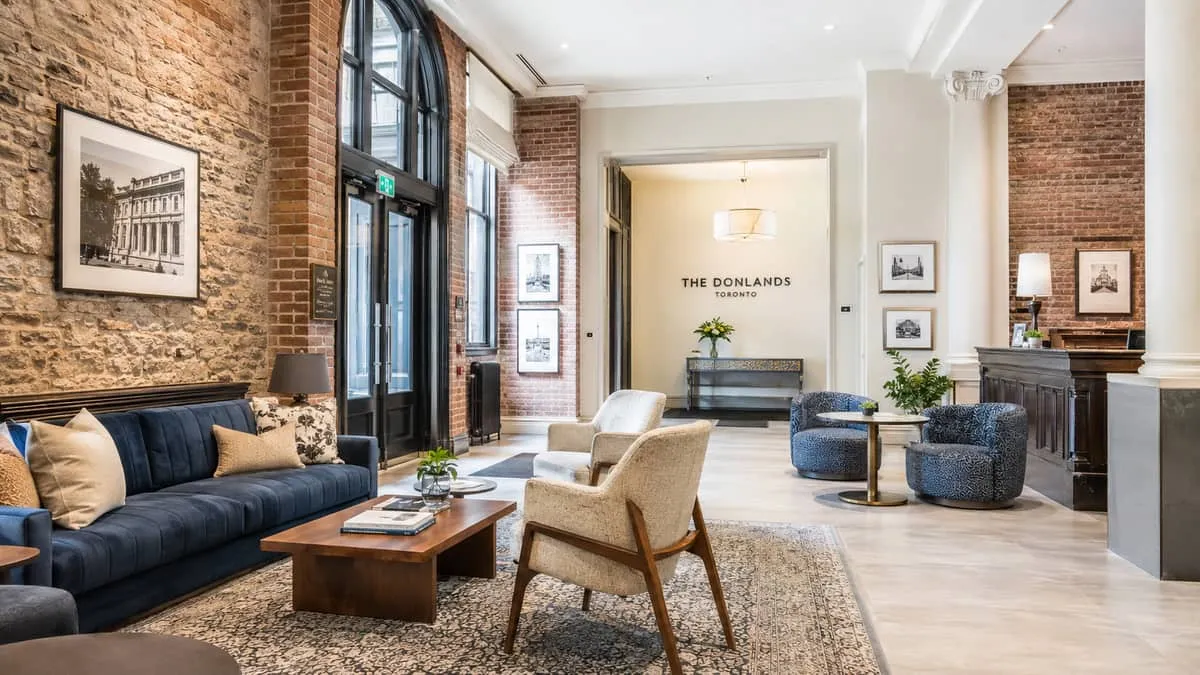
A consistent error in Toronto boutique procurement is over-investing in the lobby and under-investing in the guestroom. The lobby gets photographed for the website and sets the first impression. But the room is where a guest spends the night, and it is what they post at 11pm when they have nothing else to look at. Allocate your FF&E budget to reflect that reality.
Heritage Buildings and the Structural Reality of Renovation Procurement
A significant share of Toronto's boutique hotel inventory lives in heritage buildings. The Distillery District properties, the converted warehouses south of King, the Victorian rowhouse conversions in Cabbagetown and Parkdale. These buildings create procurement constraints that a ground-up build does not have.
Doorways in heritage buildings are frequently non-standard. Elevator access is often limited or absent. Ceiling heights vary room to room, which means a bed frame or armoire that works in a standard 9-foot ceiling room may overwhelm a room with 8-foot heritage ceilings. Before finalizing any case goods specification in a heritage renovation, confirm your floor plan dimensions room by room and your access route from loading dock to each floor.
Lead times are a related complication. Toronto's construction and renovation permitting environment means heritage projects routinely run behind schedule. A furniture supplier that can phase delivery, hold production, or shift a ship date by four to six weeks without a penalty structure is genuinely valuable in this market. Ask that question directly before committing to any supplier relationship: how do you handle delivery delays caused by site readiness issues? The answer will tell you whether they have worked with Toronto boutique renovations before.
Working With Suppliers at Boutique Project Scale
A 28-room boutique property on Queen West is not a small project by any personal measure. It represents a serious capital commitment and months of planning. But in the contract furniture supply chain, it is a small project. The major hospitality FF&E suppliers that handle Marriott renovations and convention hotel builds are calibrated for 200-plus room orders. Their minimums, their lead time assumptions, and their account management structures often don't work for boutique clients.
This is where operators get into procurement trouble. They approach a major showroom in the Toronto design district, get a quote, and either find the minimums don't work for their quantities, or find that service evaporates once the contract is signed because their account isn't large enough to prioritize.
The more productive path is suppliers who specifically work the boutique hospitality and restaurant sector. These operations understand COM (customer's own material) orders at lower minimums. They carry replacement parts for frames they sold three years ago, which matters enormously when you need to reupholster a chair seat rather than replace the whole frame. They have handled phased deliveries into heritage buildings before and know what elevator access means for packaging spec.
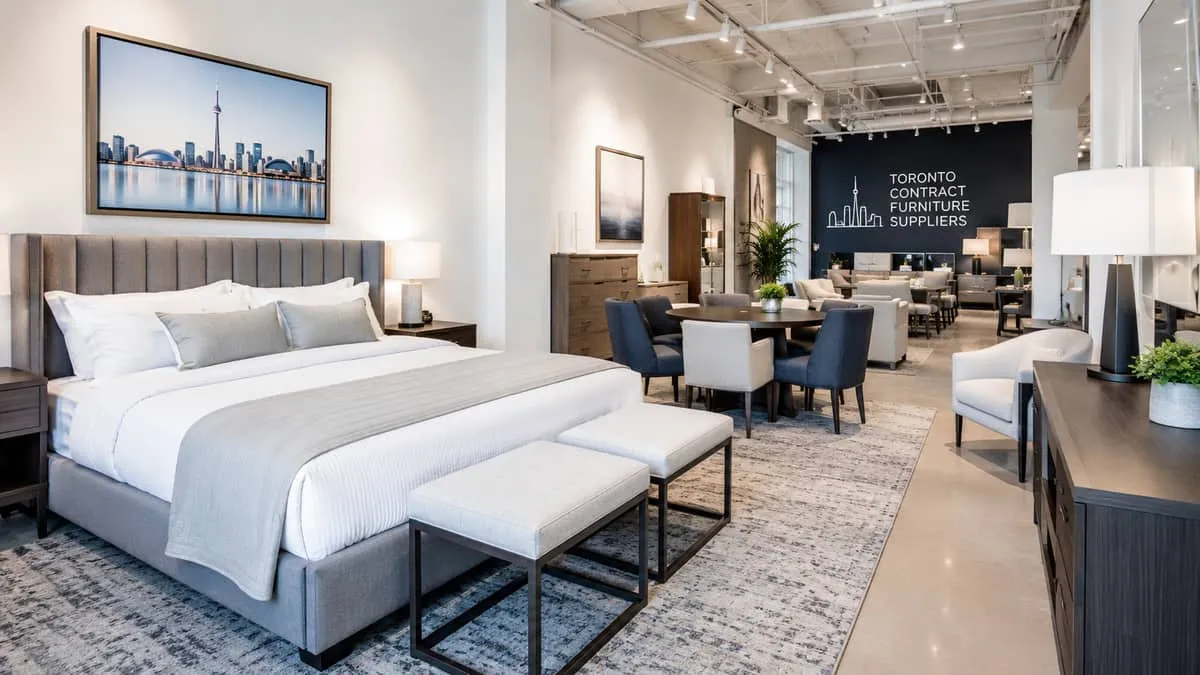
When evaluating any supplier for a Toronto boutique project, ask these questions and pay close attention to how fluently they answer. What is your minimum order quantity per SKU? Can you accommodate phased delivery during an active renovation? What is your lead time from COM fabric approval to delivery? Do you stock structural replacement parts for your frames? What is your policy if a piece arrives damaged? Suppliers who work the boutique market regularly answer these questions without hesitation because they deal with them constantly.
The TIFF Effect and High-Rotation Durability Planning
Toronto's hospitality market has demand peaks that stress furniture beyond what average annual occupancy numbers suggest. TIFF in September fills every boutique property in the city at elevated rates, often with industry guests who work long hours, bring equipment, and use rooms intensively. Major conventions at the Metro Toronto Convention Centre, trade shows at Enercare Centre, and the ongoing corporate travel market from Bay Street create additional high-rotation demand periods throughout the year.
The practical implication is that durability calculations should not use average occupancy as a baseline. If your property runs 70 percent annual occupancy but spikes to 100 percent for six weeks a year, the pieces in highest-contact positions (lounge chairs, desk chairs, upholstered ottomans, bed frames) need to be specified for the spike, not the average.
Rub count minimums for high-contact upholstery in this context should start at 30,000 Wyzenbeek and ideally exceed 50,000 for anything in a seat position. Frame construction for seating should be kiln-dried hardwood with corner blocking. Avoid particleboard in any structural component in case goods at hotel use volumes. These are not luxurious specifications, they are the commercial baseline for pieces that will see genuine commercial use in a market with genuine demand.
Cohesion Across a Mixed Palette
Toronto boutique properties rarely run a single style. The most successful ones in the Distillery District or along King West are deliberately layered: a raw industrial frame from one era, a mid-century upholstered chair from another, case goods with a contemporary finish. That mix reads as sophisticated when it's controlled. It reads as unfinished when it drifts.
The variable that holds a mixed palette together is finish temperature. Cool-toned metals and grey-wash woods can coexist with warm brass and honey-toned oak if one temperature dominates and the other serves as a deliberate accent. The failure mode is sourcing pieces at different project stages where each seemed fine individually but they fight each other in the finished room. This happens frequently in boutique renovations where procurement is spread across multiple budget releases.
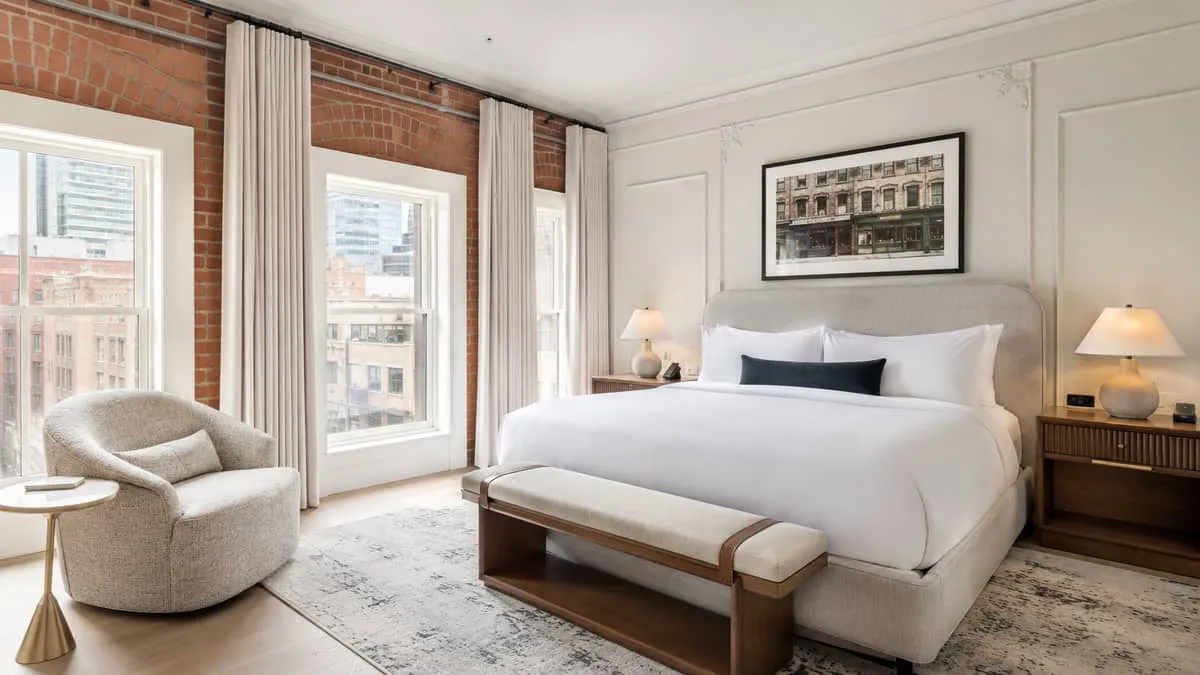
Anchoring your finish palette before procurement begins prevents this. Two wood tones maximum, one metal finish family, one or two upholstery fabrics that repeat across multiple pieces in different forms. From within that structure, you can vary silhouette and scale without losing coherence. A boucle fabric that appears on a headboard, an accent chair, and a window bench ties a room together even when every other piece differs.
Custom upholstery is proportionally more accessible for boutique operators than most assume. Because you are ordering smaller quantities, a COM order on a specific fabric does not carry the same cost premium it does for a large-scale chain procurement. It can be the most efficient way to create visual differentiation in your rooms because no other property in the city will have that exact piece in that exact fabric.
The Procurement Sequence That Works
Toronto boutique hotel operators who navigate furniture procurement well tend to follow a consistent sequence. The design concept and neighbourhood code comes first. Supplier selection happens second, filtered by boutique project experience, COM policy, lead time transparency, and minimum order compatibility. Specification happens third, with durability standards set by use intensity and price tier, not by what the designer prefers in the abstract.
The operators who struggle tend to reverse the order, finding furniture they like first and then discovering mid-project that lead times are incompatible, minimums don't work at their scale, or the pieces don't hold up under commercial use because they were specified from a retail or hospitality-adjacent source that doesn't carry genuine contract-grade construction.
In a market where Ace Hotel, Soho House, and the Four Seasons have raised the visual bar for every property that follows, boutique operators in Toronto are competing on design quality whether they intend to or not. The guest pool is too design-literate and too connected to let that competition happen by accident. Furniture procurement, treated as a strategic decision rather than a late-stage logistics problem, is one of the clearest ways to close that gap.
Pricing for boutique hotel furniture in Toronto depends on quantities, finishes, and your delivery window, so a project-specific quote beats any list figure. Request a quote to get yours.