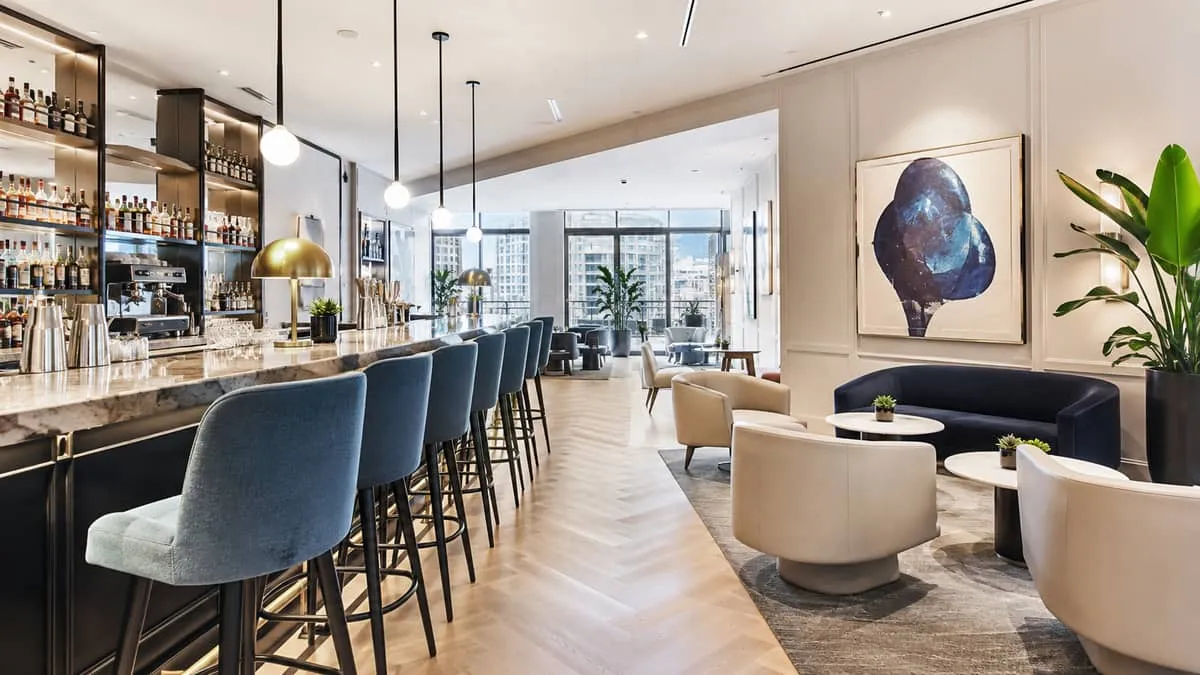
Toronto runs one of the most demanding bar and lounge markets in North America. On a Saturday night, King West venues are processing 500 covers before midnight, Yorkville hotel bars are at capacity with TIFF guests and Bay Street regulars sharing the same room, and rooftop bars from the Entertainment District to Liberty Village are packed through a season that operators squeeze for every possible revenue week between May and October. The furniture serving these environments takes punishment that most cities never put their pieces through.
The challenge for Toronto operators is that the city's bar scene doesn't fit one template. You're looking at high-volume nightlife venues on King West that need furniture built like tank plating, intimate craft cocktail bars in Kensington Market or Parkdale where the character of a chair is part of the brand, and hotel rooftops in the Entertainment District where the piece has to look great in a photo while surviving four seasons of Toronto weather. Each of these formats has different requirements, and sourcing the wrong furniture for your format is an expensive mistake.
King West at Volume: What 500 Covers Does to a Barstool
The King West and Queen West corridors operate at a scale that exposes every weakness in a furniture specification. Venues in this stretch, think the club-forward bars between Bathurst and Spadina, are running back-to-back seatings with minimal turnover time and guests who have had a few drinks by the time they arrive. On a busy Saturday, a single barstool might seat twelve different people. Multiply that across a 150-seat venue and you understand why contract-grade isn't optional.
Contract-grade, in a practical Toronto context, means furniture tested and rated for commercial hospitality use. For frames, this means welded steel or mortise-and-tenon hardwood joinery, not dowels or pocket screws that work loose after six months of stress. Footrests on barstools are the first thing to go on consumer-grade pieces because guests stand on them, lean into them, and hook their heels over the edge for hours. A commercial footrest is a welded steel ring or a solid hardwood rail finished with a protective cap.
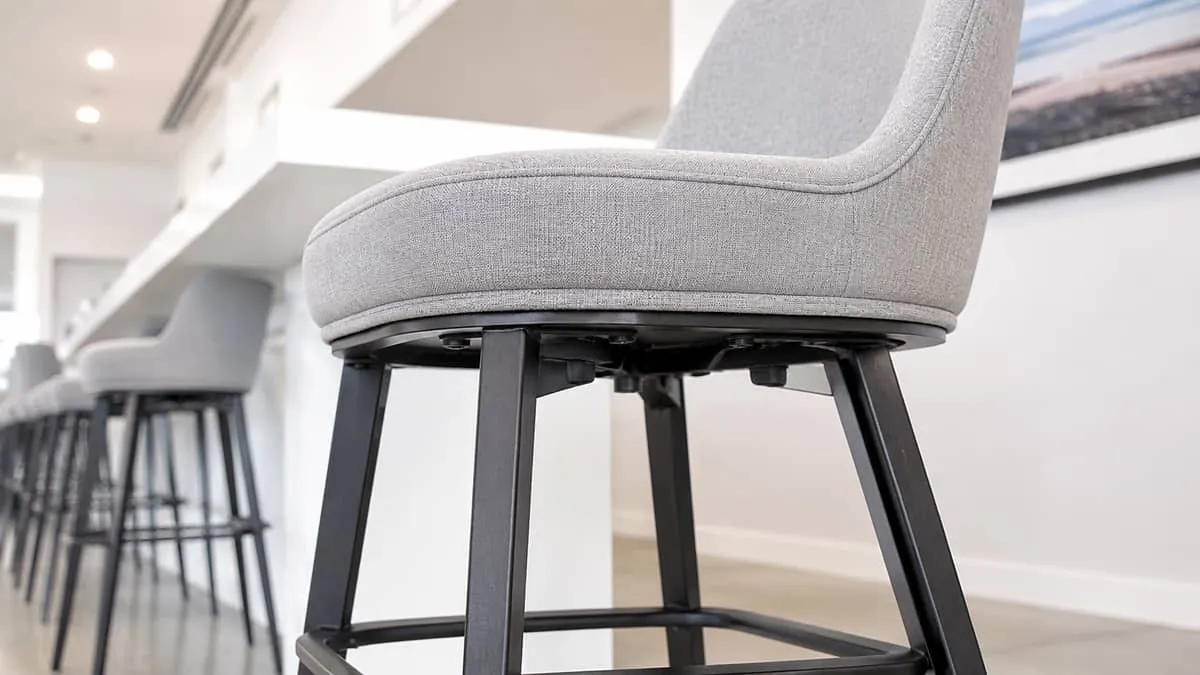
For King West venues doing 1,000 covers on a weekend, upholstery is where the math becomes stark. Consumer vinyl starts cracking at high-use contact points within a year. Commercial-grade contract vinyl, rated for 100,000 double-rub abrasion resistance, maintains its appearance for three to five years under the same conditions. The cost difference per seat is real, but it's small compared to the cost of re-upholstering or replacing 80 barstools eighteen months into operation.
Powder-coated steel bases hold up under the spills, cleaning chemicals, and drag damage that happen in a fast-moving bar environment. Brushed or matte black finishes hide scuffs better than polished chrome in nightlife settings. For high-top tables in this format, cast iron bases with laminate or solid wood tops are standard for a reason: they're heavy enough that guests don't shift them out of position every time someone squeezes past, and they clean quickly between seatings.
The King West operator doesn't need furniture that whispers sophistication. They need furniture that's still presentable at 1:30 AM on the 400th consecutive night of service.
Kensington and Parkdale: Furniture as Atmosphere
Craft cocktail culture in Toronto has concentrated in Kensington Market, Parkdale, Roncesvalles, and pockets of Dundas West, and these venues operate on a completely different logic. Covers are lower, check averages are higher, and the guest is paying as much for the experience of the space as for what's in the glass. At a well-run Kensington bar, the wrong chair breaks the room.
These venues tend to favor aged or reclaimed aesthetics, mixed materials, and seating that signals comfort and intention. Low-profile lounge chairs clustered near windows. Banquette seating along a brick wall. Bar seating with curved backs and upholstery in deep jewel tones or worn leathers. The visual language is deliberate and specific.
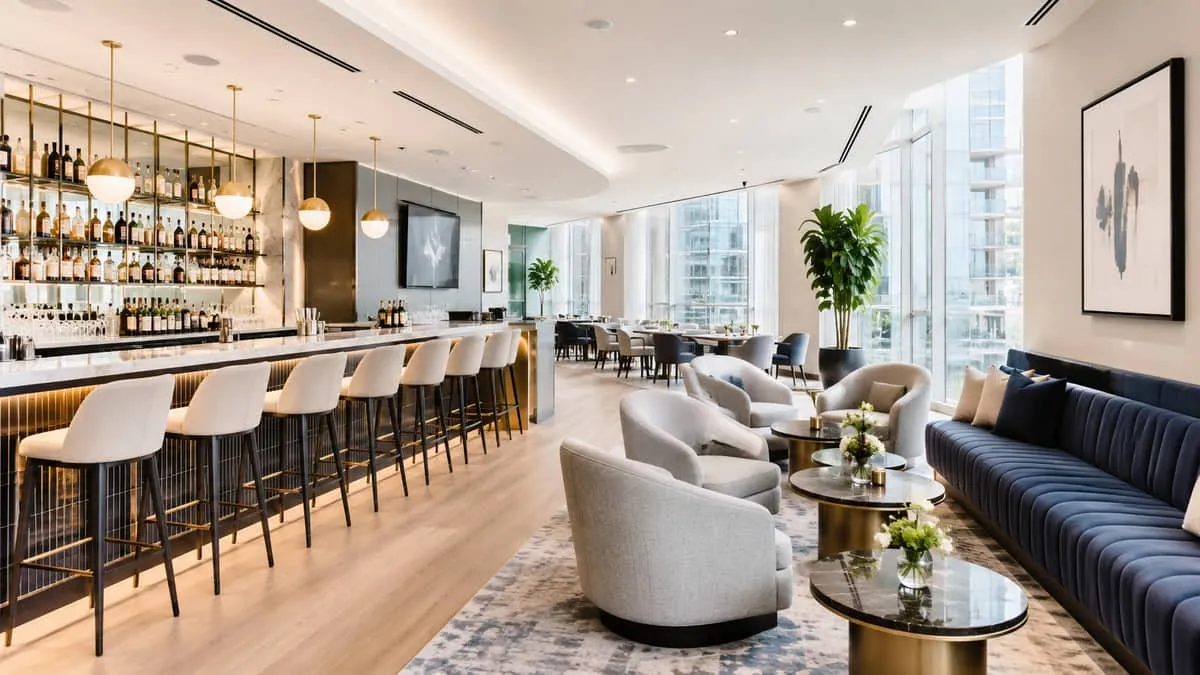
The sourcing challenge for this format is finding pieces with genuine character that are still rated for commercial use. A lounge chair that looks like it came from a 1970s Italian hotel lobby needs to perform like a commercial piece or it won't last a Parkdale winter season. Key specifications to check: the frame material underneath the aesthetic finish, the foam density in seat cushions (commercial is typically 1.8 lb/cubic foot or higher), and whether the upholstery fabric is rated for hospitality use rather than light residential.
Velvet and bouclé fabrics are popular in Toronto's premium cocktail bars right now, particularly in Yorkville hotel bars and the upscale lounge spaces in Soho House's King West property. These materials photograph well, create the right atmosphere in low light, and communicate a price point to guests before they open the menu. The specification requirement is a commercial-grade application: the fabric needs a Martindale or Wyzenbeek abrasion rating suitable for heavy commercial use, typically 30,000 rubs or above, and ideally a stain-resistant treatment applied at the fiber level rather than as a surface coating.
Seating density matters differently here. A craft cocktail bar is building dwell time, not maximizing covers. Generous spacing between tables, lower seating that encourages guests to settle in, and a mix of two-tops and small group configurations all serve the concept. The furniture layout in this format is part of the pacing strategy.
Hotel Rooftops and the Entertainment District: Four Seasons, One Furniture Spec
Toronto's rooftop bar market has grown significantly as hotels in the Entertainment District and Yorkville compete for the same guest. The Ace Hotel, boutique properties near the Distillery District, and the hotel corridor along Blue Jays Way all share a challenge: outdoor furniture that holds up through a Toronto spring, summer, and fall season while remaining photogenic enough to drive social media traffic.
This is the most technically demanding furniture specification in the Toronto bar market. The piece has to be weather-rated, commercially durable, and visually strong enough to anchor an Instagram post. These three requirements don't always point to the same product.
For frames, aluminum is the standard for outdoor hospitality in Toronto's climate. It doesn't rust, handles the freeze-thaw cycle better than steel, and is light enough for staff to reconfigure quickly when weather changes. All-weather wicker over aluminum frames works for lounge seating and has become a near-universal aesthetic in upscale Toronto rooftop settings. Teak is a premium option that weathers gracefully but requires end-of-season oiling and proper storage.
Cushion fabrics for Toronto rooftop use need to be solution-dyed acrylic or a comparable outdoor-rated material. The solution-dyed process means the color runs through the fiber rather than sitting on the surface, so UV exposure doesn't fade the fabric unevenly over a season. Quick-dry foam or open-cell foam wrapped in outdoor fabric is the right cushion construction: guests will sit on furniture that hasn't fully dried after a morning rain, and solid foam that traps water develops mildew within weeks.
High turnover is a real consideration on hotel rooftops during peak season. From the Jazz Festival through TIFF and into the fall, a well-positioned Entertainment District rooftop is doing multiple seatings in an evening. Tables need to be stable enough that they don't tip when guests lean, but light enough to move efficiently. The weight-to-stability equation for outdoor hospitality tables often points toward aluminum frames with heavy stone or poured concrete tops: stable due to mass, manageable because the frame is light.
The visual requirement matters here in a way it doesn't in a King West nightlife venue. Hotel rooftop furniture is photographed constantly, by guests and by the venue's own marketing. Pieces need to look good from multiple angles, in both daylight and evening lighting, and they need to maintain their appearance through a season of continuous use.
What Contract-Grade Means for a Venue Doing 1,000 Covers on a Saturday
The term contract-grade is used loosely in furniture sales. For a Toronto bar doing significant weekend volume, it has a specific meaning that's worth pinning down before you write a purchase order.
Contract-grade frames are rated for structural integrity under repeated commercial use. The test standard most relevant for bar seating is BIFMA (Business and Institutional Furniture Manufacturers Association), which applies load and cycle testing to simulate years of use under commercial conditions. A barstool rated to BIFMA standards has been tested for seat load, back load, and footrest stress at cycles representing normal commercial use. This is the baseline for any seating going into a high-volume Toronto venue.
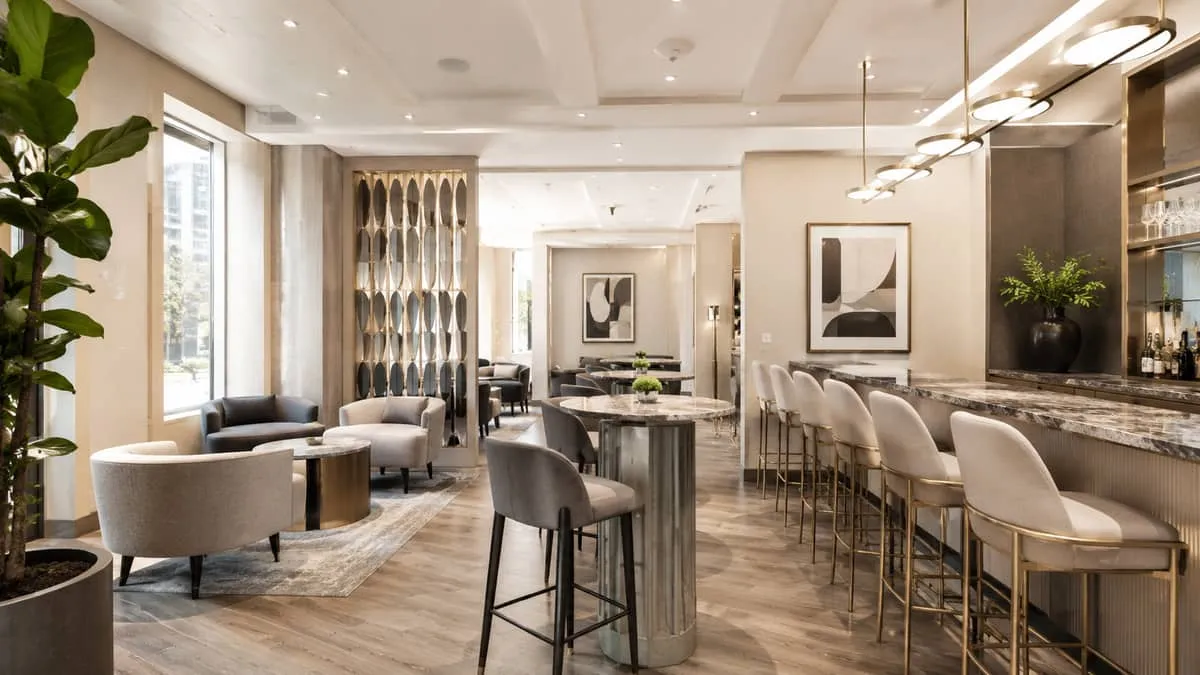
Contract-grade upholstery means the fabric or vinyl has been independently tested for abrasion resistance, colorfastness, and in outdoor applications, UV stability and mildew resistance. The Wyzenbeek double-rub test is the North American standard: heavy commercial applications require 30,000 double rubs minimum, with severe-use environments calling for 100,000 or above. For a Toronto nightlife venue, minimum 100,000 rubs on any upholstered surface that will contact guests regularly is a reasonable floor.
Warranties are the practical expression of contract-grade claims. A legitimate commercial furniture supplier should offer a minimum five-year warranty on frames and a minimum two-year warranty on upholstery under commercial use conditions. Suppliers who hedge on commercial use warranties are telling you something about the product's actual durability.
Lead times are another factor Toronto operators consistently underestimate. Custom or semi-custom commercial furniture from quality suppliers typically runs 8 to 16 weeks from order to delivery. For venues on a renovation-to-opening schedule, that means furniture needs to be ordered well before the construction phase is complete. Operators who leave furniture sourcing until the final month frequently end up paying premium rates for in-stock product that wasn't their first choice, or delaying their opening.
Toronto's Design Trajectory and Where Furniture Fits
The industrial aesthetic that defined the King West explosion of the early 2010s has largely run its course. Exposed ductwork, Edison bulbs, and raw steel are being replaced by warmer material palettes: natural oak, brushed brass, deep greens and burgundies, curved silhouettes that signal comfort rather than edge. Operators at Soho House and the boutique hotels in the Distillery District have led this shift, and it's filtering down through the market.
For furniture sourcing, this transition means a different product mix than even five years ago. Curved barrel chairs and round-back barstools are displacing the straight-back industrial stool. Mixed wood and metal tables are more common than all-metal high-tops. Upholstery in textured fabrics is competing with the plain vinyl that dominated utilitarian bar design.
The constraint that doesn't change with the aesthetic trend is durability. Regardless of whether the piece is a curved velvet club chair in a Yorkville hotel bar or a powder-coated steel stool in a Scotiabank Arena-adjacent sports lounge, the commercial rating requirements are the same. Toronto's density of venues and year-round operational calendar means furniture gets used hard, and the market is experienced enough that operators recognize the cost of under-specifying.
Getting the Specification Right Before You Order
Toronto operators who have been through a furniture replacement cycle know the questions to ask before committing to an order. The ones doing it for the first time often don't. Before signing a purchase order for bar or lounge furniture in this market, the practical checklist covers: frame material and construction method, upholstery abrasion rating and stain resistance treatment, warranty terms under commercial use conditions, lead time relative to your opening date, and whether the supplier has experience with licensed hospitality environments in Ontario.
For venues in the planning or renovation phase, the specification process should start with a clear brief covering seating heights, capacity targets, aesthetic direction, and maintenance expectations. A commercial furniture supplier with genuine hospitality experience will use that brief to match you to products that perform in your specific format, whether that's a high-volume King West venue that needs everything in contract vinyl and welded steel, a Kensington craft cocktail bar building atmosphere with aged leather and reclaimed wood, or a hotel rooftop in the Entertainment District balancing photogenic design with four-season durability.
The furniture decision in Toronto's bar market is a business decision as much as a design one. The city's volume and competitive intensity mean that under-specified pieces don't just look worn, they fail at the wrong moment and require replacement on a timeline that disrupts operations. Getting the specification right at the start is the lower-cost path.
For Toronto properties comparing bar and lounge furniture options, project-specific pricing tells you more than any published range. Request a quote and we will scope it to your space and volume.