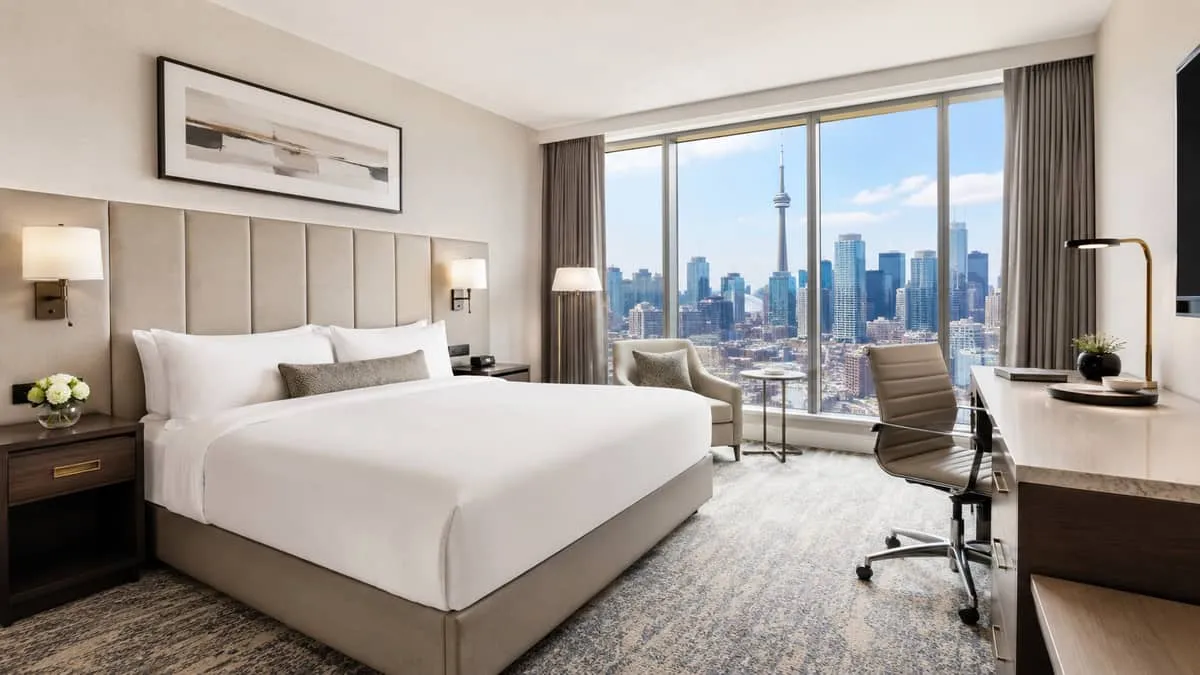
Toronto's hospitality market never really goes quiet. Between TIFF packing out Yorkville every September, convention traffic filling the Metro Toronto Convention Centre and Enercare Centre through spring and fall, and the steady pull of King West, Queen West, and the Distillery District drawing both leisure and corporate travelers year-round, properties here operate under a level of demand pressure that leaves almost no window for extended closures. That pressure shapes everything about how owners and developers approach hotel renovation furniture in Toronto. You're not just choosing finishes and fabrics. You're coordinating a supply chain around an occupied building, often floor by floor, sometimes room by room, without losing revenue you cannot afford to give back.
Toronto is also Canada's most active new hotel supply market. Flagship properties have opened along the Financial District corridor and in the King West entertainment zone with enough regularity that older properties feel the pressure to renovate well before their physical product has actually failed. The cycle in this market runs roughly five to seven years, driven not by wear and tear alone but by competitive positioning. A property that renovated in 2018 is already losing rate and occupancy to newer supply in 2025. That dynamic creates a procurement environment unlike any other Canadian city.
Renovating Around TIFF, Convention Season, and Summer Tourism
The Toronto calendar creates specific renovation blackout periods that every FF&E plan has to account for before a single purchase order is placed.
TIFF runs for ten days in early September and concentrates an enormous amount of high-rate demand in the Yorkville and Entertainment District properties. Hotels along Bloor Street West, Bay Street, and the King Street corridor fill with talent, production executives, international press, and festival-goers who expect a premium product and will write about it publicly if they don't find one. Taking rooms offline during TIFF is not just a revenue decision, it's a brand decision. A partial renovation that leaves unfinished corridors or temporary furniture in place during the festival is visible to exactly the guests you least want to disappoint.
Convention season runs roughly from September through November and again from March through May, concentrated at the Metro Toronto Convention Centre and extending into the hotel blocks along Front Street and the hotel corridor between Union Station and the waterfront. These periods lock up room blocks months in advance and create occupancy floors that make individual-room renovation scheduling nearly impossible unless it's been built into the group contract from the start.
Summer occupancy in Toronto peaks from late June through Labour Day, driven by Harbourfront programming, Rogers Centre events, and the city's outdoor dining culture, which draws considerable visitation to properties with patio access near the St. Lawrence Market and along the waterfront. Downtown properties in particular run high occupancy throughout this window.
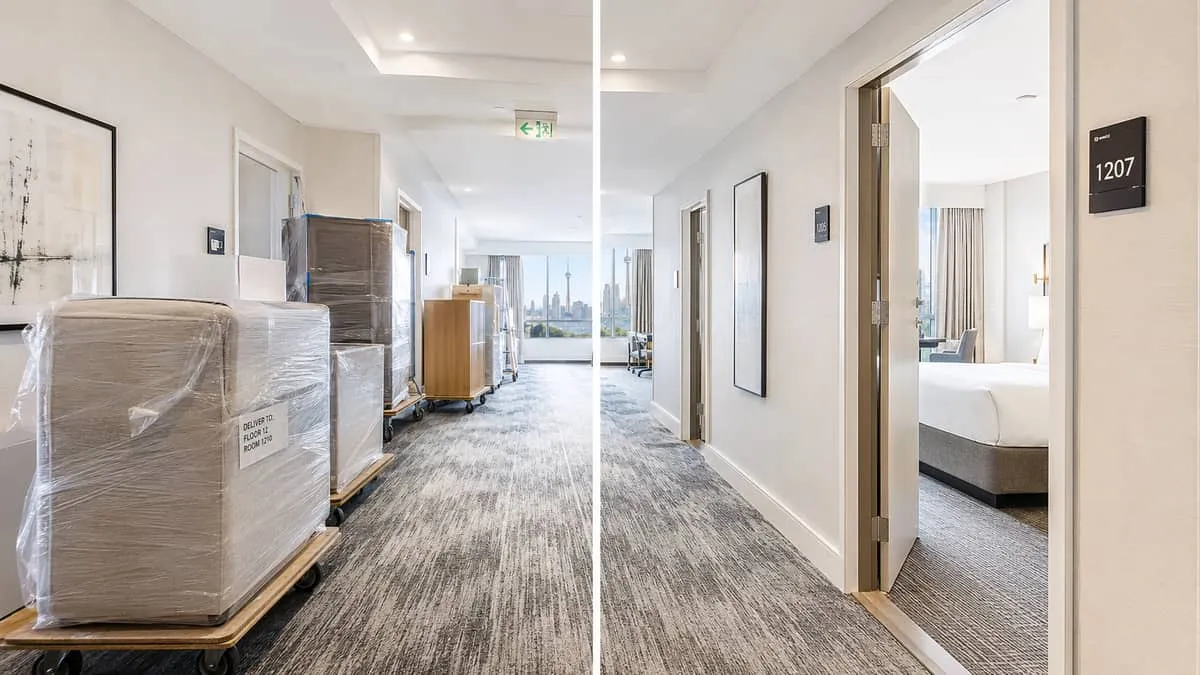
The practical consequence is that meaningful renovation activity, meaning more than cosmetic refreshes in public spaces, concentrates in roughly two windows per year: January through early March, and late November through mid-December. Those windows are short, they're cold, and the construction market in Toronto is tight enough that general contractors and trades are often booked well in advance. If your FF&E supplier cannot commit to delivery inside those windows, your renovation gets pushed to the next cycle.
How Phased Delivery Works in a 400-Room Downtown Property
Most Toronto properties cannot afford to take an entire floor, let alone an entire building, offline for the duration of a renovation. The economics don't work, and lenders or brand partners often won't allow occupancy to drop below a certain threshold. This pushes most operators toward phased renovations, which creates a specific set of logistical demands on the furniture supplier.
At a large downtown property, a rolling renovation typically works on a block of eight to twelve rooms at a time. The GC and FF&E team move through the floor in sequence, clearing out old furniture, completing the physical renovation, and bringing in new product before releasing rooms back to the front desk. The interval between phases depends on construction pace, not on a calendar, which means the furniture supplier has to hold inventory and release it on a schedule that can shift week to week.
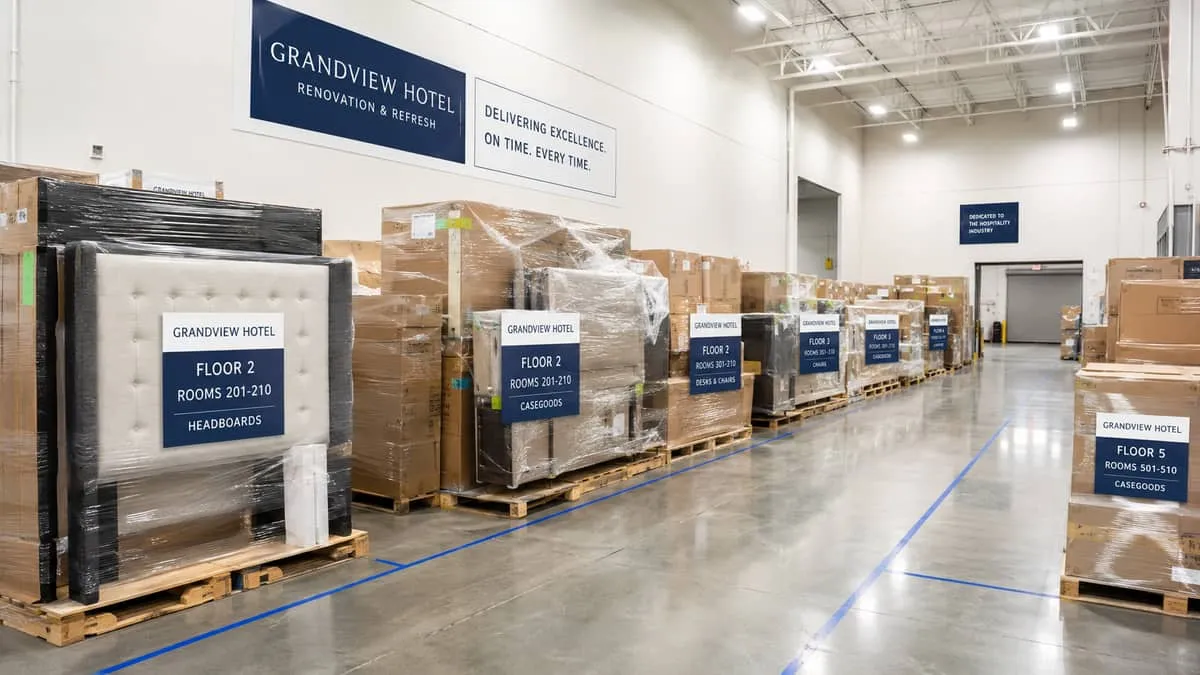
Phased delivery means your supplier needs the capacity to hold inventory, stage shipments by floor and room type, and coordinate with your receiving team on a rolling basis. Not every contract furniture manufacturer can do this. Some operate on a ship-everything-at-once model that works fine for new builds but creates chaos on an occupied property. Furniture staged in a loading dock or back-of-house corridor for four months accumulates damage and blocks operations. When you're evaluating suppliers for hotel renovation furniture in Toronto, ask directly about their capacity to stage and hold product between delivery phases, and get that commitment in writing.
You'll also need clarity on how furniture is protected in transit and during storage. Soft goods, headboards, upholstered chairs, and ottomans pick up damage quickly in a construction environment. Specify wrapped delivery, coordinate carefully with your GC on access routes through the building, and build room-by-room inspection into your handover process before each phase is released to the rooms inventory.
For properties in the Financial District hotel corridor, where loading dock access is restricted by building management and city traffic regulations, delivery scheduling has to be coordinated weeks in advance. A supplier unfamiliar with downtown Toronto's logistics infrastructure will cost you time and money getting the process established.
Lead Times in Canada's Most Expensive Construction Market
The lead time problem catches a lot of ownership groups off guard, especially those coming from residential development where furniture delivery is measured in weeks rather than quarters. Contract-grade hospitality furniture typically runs 14 to 20 weeks from confirmed order to delivery under normal conditions. Custom upholstery, proprietary millwork, or any specification tied to a brand standard can push that timeline past six months.
Toronto's construction costs are among the highest in Canada, running 20 to 30 percent above national averages for commercial renovation work in the downtown core. In that context, the cost of a delayed FF&E delivery is not just the carrying cost of dark rooms. It's the labor cost of trades standing down while they wait for furniture that didn't arrive, the cost of rescheduled inspections, and the revenue impact of a property that can't release renovated rooms back into the system before the next demand peak hits.
Work backwards from your target reopening date, account for the blackout periods described above, and place your FF&E purchase orders earlier than feels necessary. Build in a buffer for customs clearance if any pieces are sourced from overseas manufacturers, which is common for luxury-tier specifications. Coordinate with your project manager so delivery windows land after flooring and paint are complete but before final inspections. Getting this sequence right requires starting the FF&E conversation at the same time as the design conversation, not after the GC has already set the schedule.
Specification Standards Across Toronto's Hotel Segments
Toronto's hotel market spans a wider range of product types than most Canadian cities, and the FF&E specification requirements differ considerably across segments.
The luxury tier concentrated in Yorkville, anchored by the Four Seasons on Bay Street and extending through the boutique properties along Bloor and Cumberland, operates at price points where the physical product has to support rates of $400 to $700 and above. Furniture specifications at this level involve custom millwork, high-thread-count upholstery, stone surface work, and technology integration that adds considerable complexity to the FF&E scope. Durability requirements are still paramount, but the specification language is driven as much by aesthetic positioning as by operational longevity.
The select-service and extended-stay tier clustered near Pearson International, along the 401 corridor, and in submarkets like North York and Mississauga operates under franchise brand standards that govern everything from case goods construction to mattress specifications to the exact dimensions of the desk work area. Brand standards add a compliance layer to every FF&E decision. The brand will have approved vendors, specified finishes, minimum durability requirements, and in many cases a prototype room requirement before a full renovation rollout is approved. Working with a supplier who understands these standards and has documented experience delivering compliant product to flagged properties saves significant time during the review process.
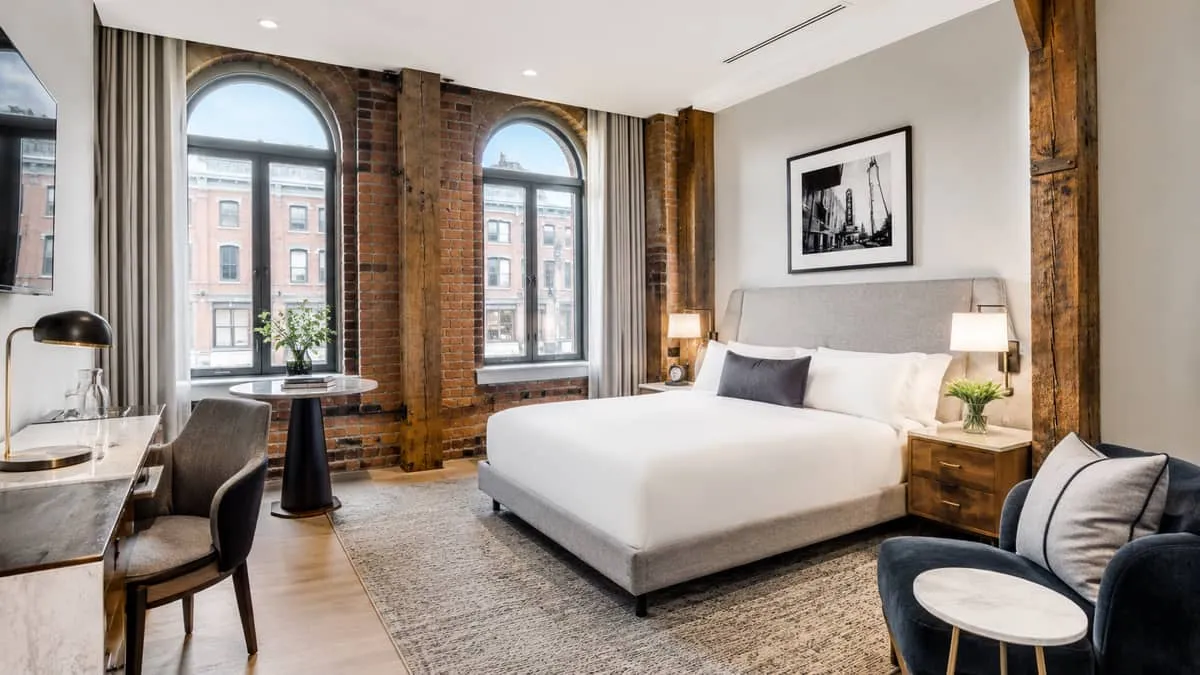
The boutique segment is concentrated in the Distillery District, on Queen West, in Kensington Market adjacent areas, and in the entertainment zone along King Street. These properties are competing on experience rather than brand affiliation, and their FF&E decisions reflect that. Boutique hotels in Toronto's heritage building stock face additional constraints, including floor load limitations in converted Victorian and Edwardian commercial buildings, dimensional constraints in older elevator cores that limit what can be moved in assembled, and a design requirement to work with, not against, the building's existing character. Every piece of furniture contributes to or detracts from the story the property is telling. That requires a supplier relationship built on more than price and lead time.
Budgeting for FF&E in the Toronto Market
FF&E costs vary considerably depending on segment and scope, but there are useful benchmarks for the Toronto market specifically. A select-service property renovation typically runs between $8,000 and $15,000 per key in furniture and fixtures alone, not including technology or signage. Full-service and upper-upscale renovations run from $18,000 to $25,000 per key. Luxury renovations in Yorkville or the Financial District can exceed $30,000 per key once you account for custom millwork, high-specification soft goods, and the coordination premium that comes with working in a complex occupied building.
These numbers matter because the risk of under-specifying, particularly on durability, is higher in Toronto than in smaller markets. A property running 75 to 85 percent annual occupancy puts significantly more cycles on its furniture than a property averaging 55 percent. Soft goods that might last eight years in a lower-utilization property can show wear in four years in a high-demand downtown Toronto hotel. The cost of a second renovation cycle inside the five-to-seven-year competitive renewal window is a budget catastrophe.
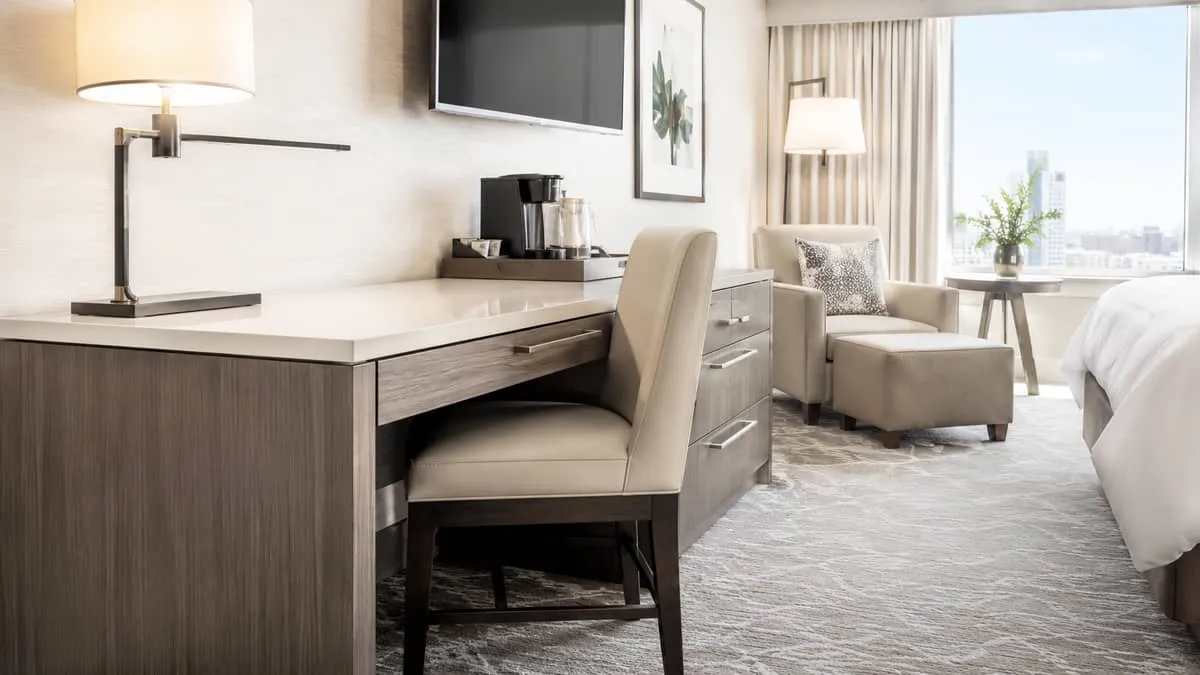
Get accurate quotes from multiple suppliers, specify contract-grade product with documented warranty terms and construction standards, and build a contingency of 10 to 15 percent into your FF&E budget. The labor cost to reinstall furniture that has failed or been specified incorrectly is significant in Toronto's trades environment, and the revenue impact of rooms that don't hold up is immediate and visible in your review scores.
Timing Your Renovation Around Toronto's Competitive Calendar
Toronto's hospitality market rewards properties that are well-positioned when demand peaks. The properties that capture the rate premium during TIFF, during the major convention periods, and during the summer tourism window are the ones whose physical product was renovated during the preceding shoulder season with enough lead time to resolve any punch list items before the demand surge arrives.
A renovation that misses its window, or delivers a compromised product because the FF&E process wasn't managed carefully, is a competitive disadvantage in a market with very little patience for mediocrity. Guests at Soho House and the Ace Hotel on King West set a benchmark for what the entertainment corridor is expected to deliver. Guests at boutique properties in the Distillery District expect a physical product that reflects the character of the neighborhood. Getting the FF&E right is not optional in this environment, it's the baseline requirement for staying in the rate conversation.
If you're planning a property upgrade in Toronto and want to work through the FF&E timeline, specification requirements, and phased delivery logistics specific to your property type and location, reach out and we'll walk you through the process from first purchase order to final room inspection.
Pricing for hotel renovation furniture in Toronto depends on quantities, finishes, and your delivery window, so a project-specific quote beats any list figure. Request a quote to get yours.