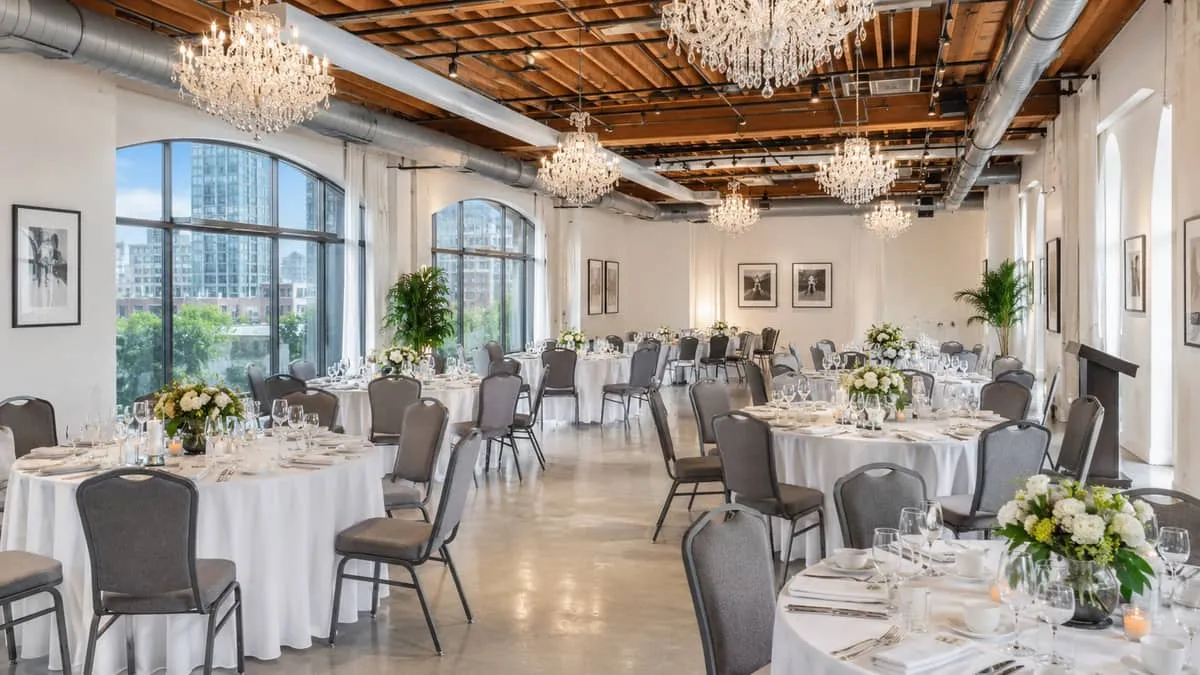
Toronto is Canada's largest hospitality market, and its event calendar does not pause. Between the Metro Toronto Convention Centre running major trade shows and international conferences year-round, the TIFF film festival transforming Yorkville and King West into a global media event every September, the Financial District's continuous corporate gala calendar, and a destination wedding market that draws couples from across Ontario and the northeastern United States, the demands placed on event venue furniture here are unlike anything operators face in smaller Canadian cities. Volume is relentless, configurations change daily, and the quality bar in Toronto's premium corridors is high enough that furniture condition is a visible signal of event prestige.
If you manage or spec furniture for a Toronto event space, whether that is a ballroom inside a Financial District hotel, a venue in the Distillery District, or a multi-purpose hall servicing the convention centre hotel corridor, this is what you need to understand before you buy.
The Metro Toronto Convention Centre Hotel Corridor and the High-Volume Problem
The hotels clustered around the Metro Toronto Convention Centre, from the Fairmont Royal York to the properties along Front Street and Lower Simcoe, operate in a league of their own when it comes to banquet furniture throughput. A major trade show at the MTCC can generate 50,000 attendees over three days, and the surrounding hotel ballrooms and meeting rooms absorb a significant share of the ancillary event load: awards dinners, breakout sessions, sponsor activations, and post-show receptions.
For these properties, the defining constraint is not aesthetics. It is logistics. A ballroom that seats 800 for a gala on Thursday night may need to reconfigure into a 600-person conference setup with classroom tables on Friday morning. That means thousands of chairs moving on trolleys, tables folding down and loading onto carts, and a small crew making it happen in a window that is often under four hours. Furniture that does not stack cleanly, does not roll without damage, or requires two people to manage safely adds hours to a flip and cost to every event.
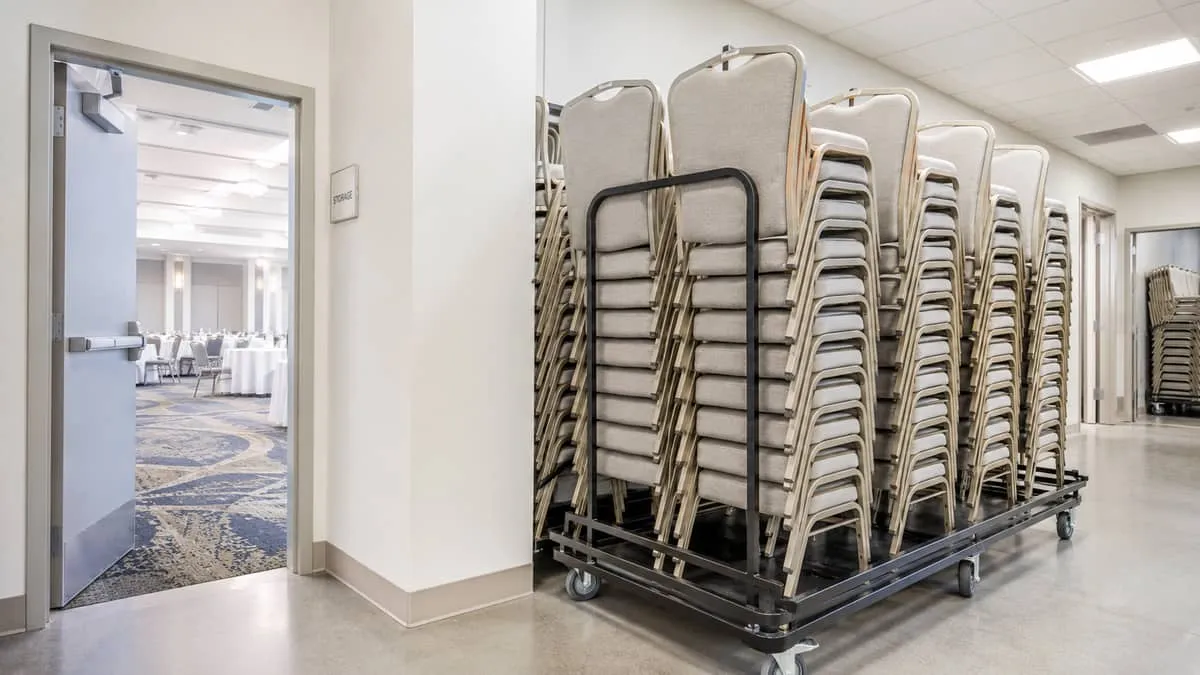
Contract-grade stackable chairs rated for this kind of use stack 8 to 12 high on standard trolleys. Steel frames with welded cross-bracing hold their geometry under repeated stacking without the joints loosening over time. Chair trolleys matched to the specific chair model move 20 to 30 units at a time safely, which is not a convenience feature for a 50,000-square-foot ballroom, it is a throughput requirement. Banquet tables in this context need locking leg mechanisms that hold flat under full place settings and load into vertical carts cleanly enough that one person can manage a cart of 12 tables without assistance.
If you are furnishing a property in the MTCC corridor, buy the trolley system at the same time as the furniture. The venues that skip this step end up with chairs dragged across floors and tables leaned against walls because the storage room was never designed for the volume the business demands.
TIFF Season and the Four-Hour Transformation
Every September, Toronto's event market shifts into a different gear. The Toronto International Film Festival concentrates global media attention on a corridor running from the TIFF Bell Lightbox on King Street West up through the hotel district to Yorkville. Venues that spend the rest of the year doing corporate dinners and weddings suddenly need to run film industry screenings, press junkets, sponsor activations, and black-tie dinners, sometimes in the same room on the same day.
The Soho House on King Street West, the hotel venues along Wellington and Adelaide, and the boutique event spaces in the King West corridor face the same operational pressure during TIFF: a room needs to transition from a cinema-style screening configuration to a seated dinner for 200 in a window of three to four hours. That is not a hypothetical scenario. It is the actual operating reality for every venue in that zone during festival week, and the furniture inventory you carry determines whether you can take those bookings or have to turn them down.
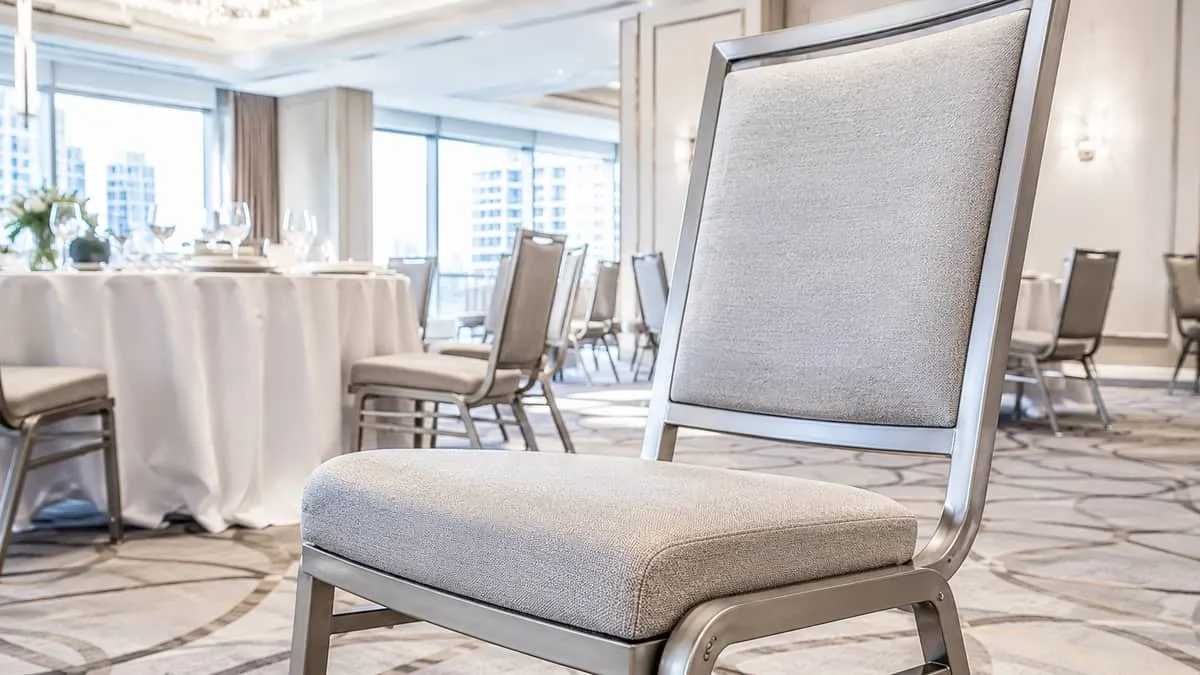
Chairs for a screening setup need to read as finished, not as folding chairs you pulled from a storage room. Padded banquet chairs with a upholstered back panel and a tight-woven fabric in a neutral tone work across both contexts. They are appropriate at a press dinner where the guest list includes international press and talent, and they break down and stack efficiently enough to support a room flip under time pressure. High-density foam in the seat matters here more than people expect. A chair that looked fine in the showroom but compresses flat after six months of daily use reads as tired in a room full of industry guests who spend their careers in premium spaces.
For the table inventory, venues running TIFF events benefit from keeping a mix of 60-inch rounds for seated dinners and cocktail-height folding tables for reception formats, plus a set of 6-foot rectangles for registration and buffet runs. The cocktail table is often the piece that gets purchased as an afterthought and should not be. A reception-height folding table that wobbles under a full bar setup or shows a laminate edge that is chipping after one season reflects directly on the venue's presentation to a client that is comparing it to spaces in Los Angeles and London.
Yorkville and the Financial District: Where Furniture Quality Is a Client Signal
The corporate gala market in Toronto's Financial District and the destination event market in Yorkville operate at a price point where furniture condition and finish are actively noticed by guests. A law firm hosting its annual gala at a venue on Bay Street or a luxury brand running a product launch dinner at a Four Seasons Yorkville event space is presenting the evening as a reflection of its own standard. The furniture in the room contributes to that signal, and experienced guests in these markets notice when it does not meet it.
This does not mean banquet chairs need to look like restaurant chairs. It means the finish needs to be consistent, the upholstery clean and intact, and the overall presentation intentional. A steel-framed banquet chair with a brushed chrome or matte black finish and a velvet or faux-leather seat reads appropriately in a Yorkville ballroom. The same chair with a visible weld seam at the frame join, a seat pad that has gone flat, or a fabric that has pilled from repeated cleaning does not, and in these markets, you will hear about it.
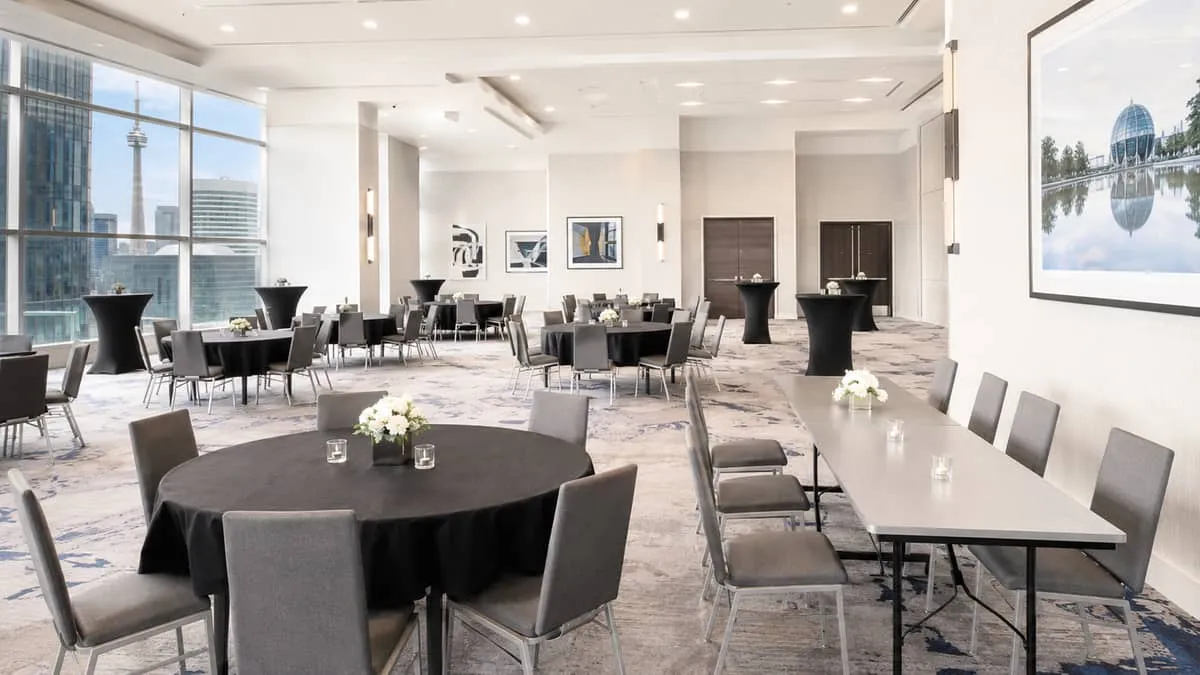
For the table inventory in these settings, 60-inch and 72-inch round folding tables covered with linen are the standard for seated dinners. The table quality that matters most in this context is top flatness and edge finish. A table top that has developed a bow in the centre from moisture penetration through a low-quality laminate will show through a linen on a formal place setting. MDF core tops with a high-pressure laminate surface resist moisture and heat better than particleboard alternatives, and the edge banding quality determines how long the perimeter of the top looks clean. For venues running galas every weekend through the May to October peak season, a table top that holds up through that volume is not a premium consideration. It is a basic requirement.
Specialty table formats add booking flexibility that pays off quickly in Toronto's premium market. Serpentine tables for curved buffet runs, half-rounds for capping rectangular table configurations, and cocktail-height options for pre-dinner reception programming allow a venue to present more sophisticated event designs to planners who are comparing multiple proposals.
The Distillery District and Boutique Venue Considerations
The Distillery District operates as a destination event market unto itself, drawing weddings, corporate events, and brand activations to its heritage industrial spaces year-round. The properties here, including venues in the restored Victorian industrial buildings along Trinity Street and Parliament Street, face a furniture challenge that differs from the large hotel ballroom context: smaller rooms, irregular footprints, heritage architectural details that compete with furniture aesthetics, and a clientele that is deliberately choosing a non-traditional space and expects the furnishings to match that intention.
For these venues, chair selection involves a different calculus than pure stackability. A bamboo or beech wood folding chair with a natural finish reads more appropriately in a brick and timber heritage space than a standard commercial steel banquet chair. Crossback chairs, which have become a fixture in the boutique event market across North America, work well in this context and stack efficiently enough for operational use when sourced at contract grade rather than residential. The key is buying crossbacks that are frame-reinforced at the joint where the back meets the seat rail, because that is consistently where residential versions fail under commercial use.
Table formats in heritage spaces often favour a farmhouse or trestle aesthetic for wedding markets, supplemented by standard rounds for corporate events. Suppliers who carry both categories allow a Distillery District venue to serve both client types from a single inventory rather than renting supplemental furniture for every booking that falls outside their standard setup.
Storage Systems and the Full Equipment Picture
The furniture purchase that most Toronto operators underestimate is the storage and transport system. Chair trolleys, table carts, and a well-designed storage room layout determine how long a room flip takes, how much wear the furniture absorbs between events, and whether a small crew can operate independently or requires additional staffing for every reconfiguration.
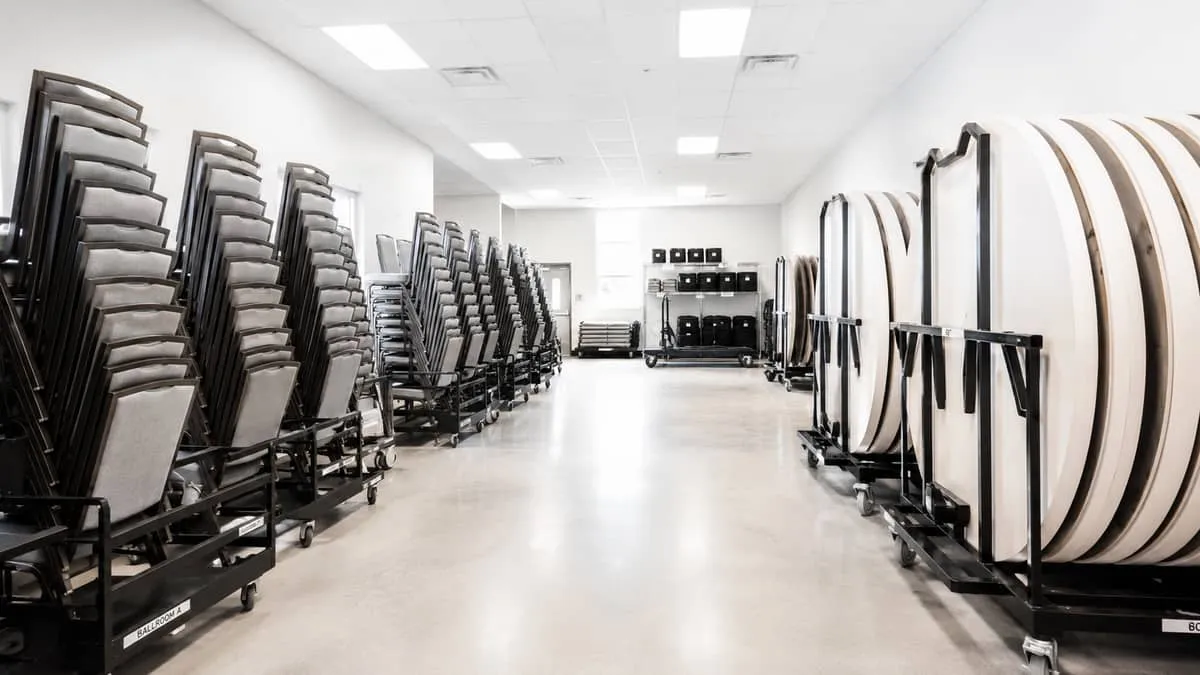
For a venue running five to seven events per week, which is a realistic operating cadence for a hotel ballroom in the Financial District or a convention centre property during peak season, furniture that is moved without proper trolleys absorbs compounding damage. Chair feet scratch. Frame finishes chip. Table tops develop edge damage from being leaned against walls. None of these are dramatic failures, but the cumulative effect after a season is furniture that looks significantly more worn than its age and usage warrants, and that is a cost that shows up either in accelerated replacement cycles or in client feedback.
When evaluating suppliers for banquet event furniture in Toronto, confirm that the supplier carries trolleys and carts designed to the specific dimensions of the furniture models you are purchasing, not generic alternatives. Confirm that the trolley load rating matches your actual move volumes, and that the wheel configuration is suited to the flooring in your storage corridor. These are not afterthought details. For a venue doing significant event volume, the storage system is part of the furniture investment.
Specifying for Your Toronto Operation
The right specification for banquet event furniture depends on variables specific to your venue: your typical event formats, the room dimensions you are working with, your storage capacity, your crew size during flips, and the client tier your programming is aimed at. A convention centre hotel on Front Street and a boutique Distillery District venue are both Toronto operators, but they need substantially different furniture solutions.
A supplier with genuine experience in the Canadian hospitality market will engage with those variables rather than offering a standard catalogue recommendation. That means understanding the difference between a venue that runs 300-person corporate galas every week and one that runs 60-person destination weddings on weekends. It means knowing which chair profiles and table formats are in stock in Canada and available on reasonable lead times, which matters when you are opening a new space or replacing a failed inventory mid-season.
Toronto's event market is large enough and competitive enough that operators who invest in the right furniture specification from the start are the ones who build reputations for flawless execution. The furniture does not win the event business on its own, but it is consistently part of the picture when a venue earns or loses a repeat booking.
If you are evaluating options for your Toronto venue, work with a supplier who can walk through the full system: chairs, tables, specialty formats, trolleys, and storage. Connect with a team that sources at contract grade and understands what volume use in this market actually requires. Getting the specification right the first time costs less than replacing underperforming furniture after a season of heavy use.
Pricing for banquet and event furniture in Toronto depends on quantities, finishes, and your delivery window, so a project-specific quote beats any list figure. Request a quote to get yours.