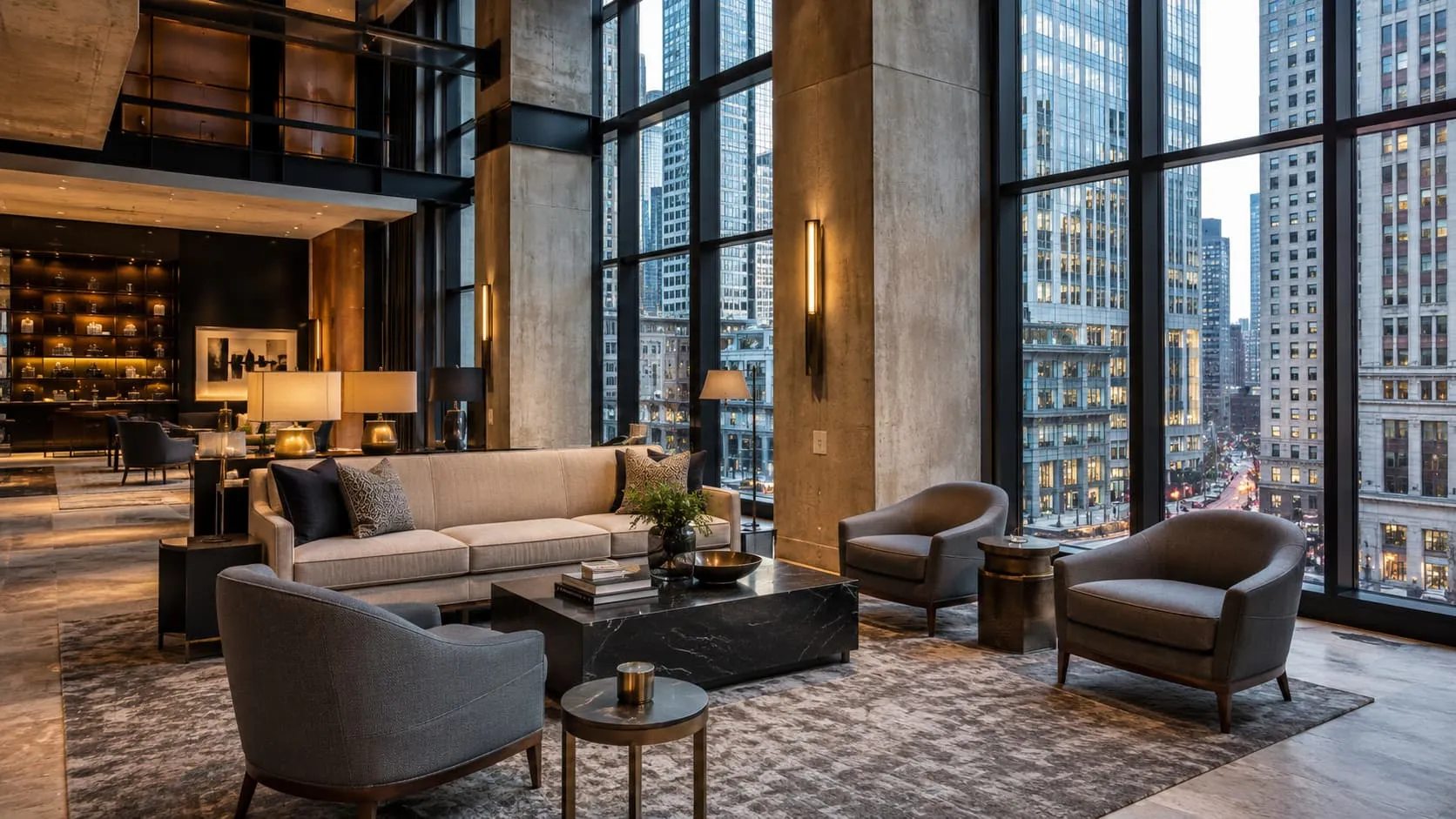
New York runs on hospitality. Over 60 million visitors move through this city every year, and the boutique hotel sector is where the most consequential design decisions get made. Let me walk you through what makes this market different. Unlike the Times Square flagships that lean on volume and brand recognition, boutique properties in neighborhoods like the West Village, NoMad, Dumbo, and the Lower East Side compete entirely on atmosphere. The furniture is not incidental to that atmosphere. It is the atmosphere. If you are outfitting a boutique property in this city, you already understand what sourcing boutique hotel furniture New York style actually demands: compressed square footage, brutal real estate costs per foot, guests who have seen everything, and renovation cycles that arrive faster than you planned for.
Why New York Boutique Hotels Need a Different Approach
Here is what most standard contract furniture programs get wrong: they are built for scale. They assume you are ordering 200 identical rooms for a suburban conference hotel outside Columbus or Charlotte. Boutique properties in New York almost never work that way. You might be outfitting 38 rooms, each with slightly different footprints because the building was a Greenpoint warehouse conversion or a pre-war townhouse on the Upper West Side. That means you need suppliers who can operate at limited quantities, adapt to non-standard room dimensions, and still deliver pieces that meet genuine contract-grade durability standards not residential-grade pieces dressed up with hospitality language.
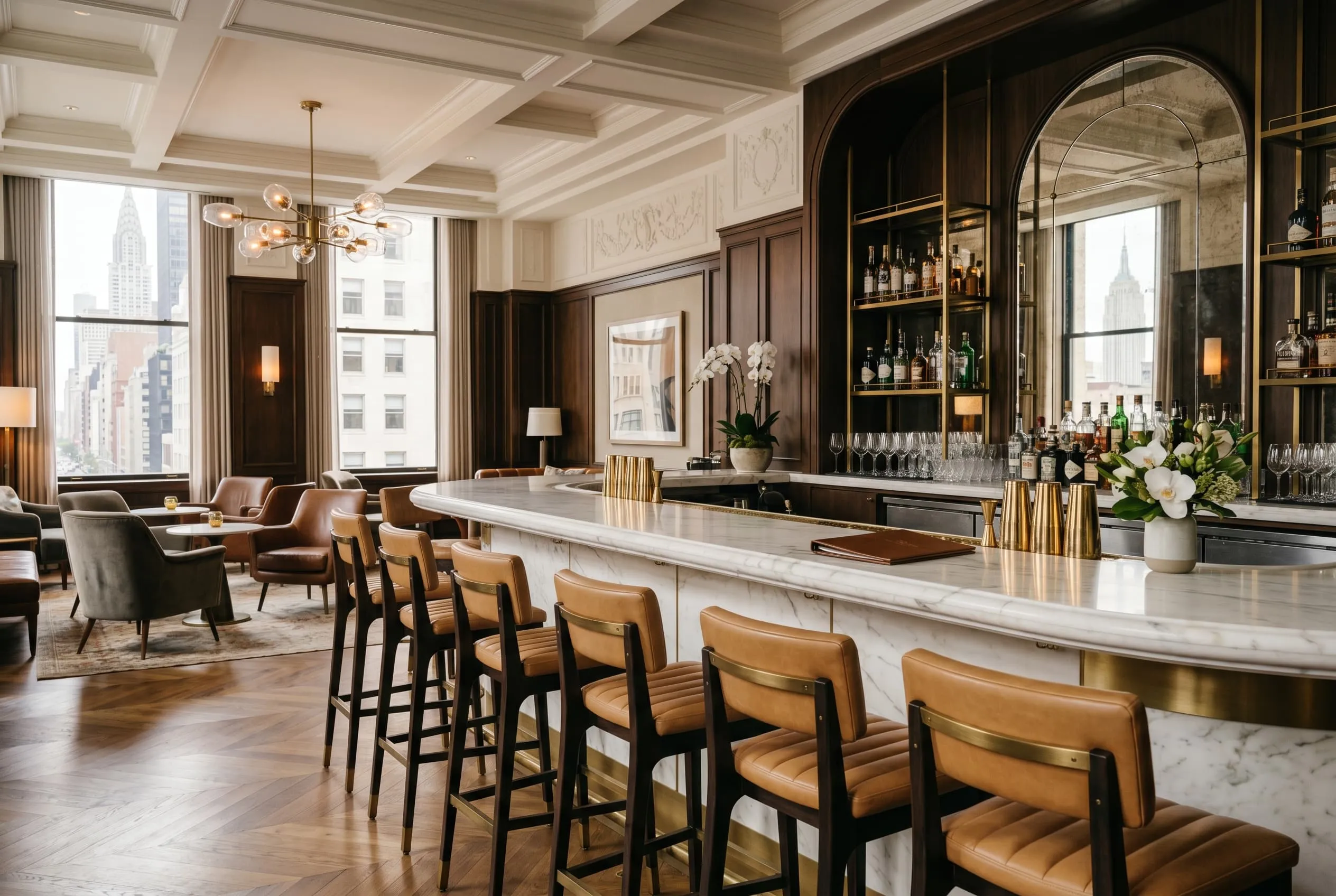
That durability point matters more in New York than almost anywhere else in the country. Manhattan and Brooklyn boutique properties run occupancy rates well above the national average for most of the calendar year, and the wear patterns are relentless. Furniture that photographs beautifully at install but shows meaningful wear by month eight is not a design failure. It is a procurement failure. Every upholstered piece, every desk chair, every lobby banquette needs to be specified for heavy commercial use from the start not optimized for how it will look in the press photos.
Design Cohesion Across Mixed Sources
The strongest boutique hotel furniture New York projects rarely come from a single manufacturer. Let me walk you through what a realistic sourcing mix looks like. You are more likely combining a custom upholstery program for headboards and seating, casegoods from a contract supplier with reliable lead times, and accent or lighting pieces sourced from local makers the Brooklyn Navy Yard has a growing cluster of furniture and design studios, and the Garment District showrooms along Sixth Avenue are worth knowing if you are not already working with them.
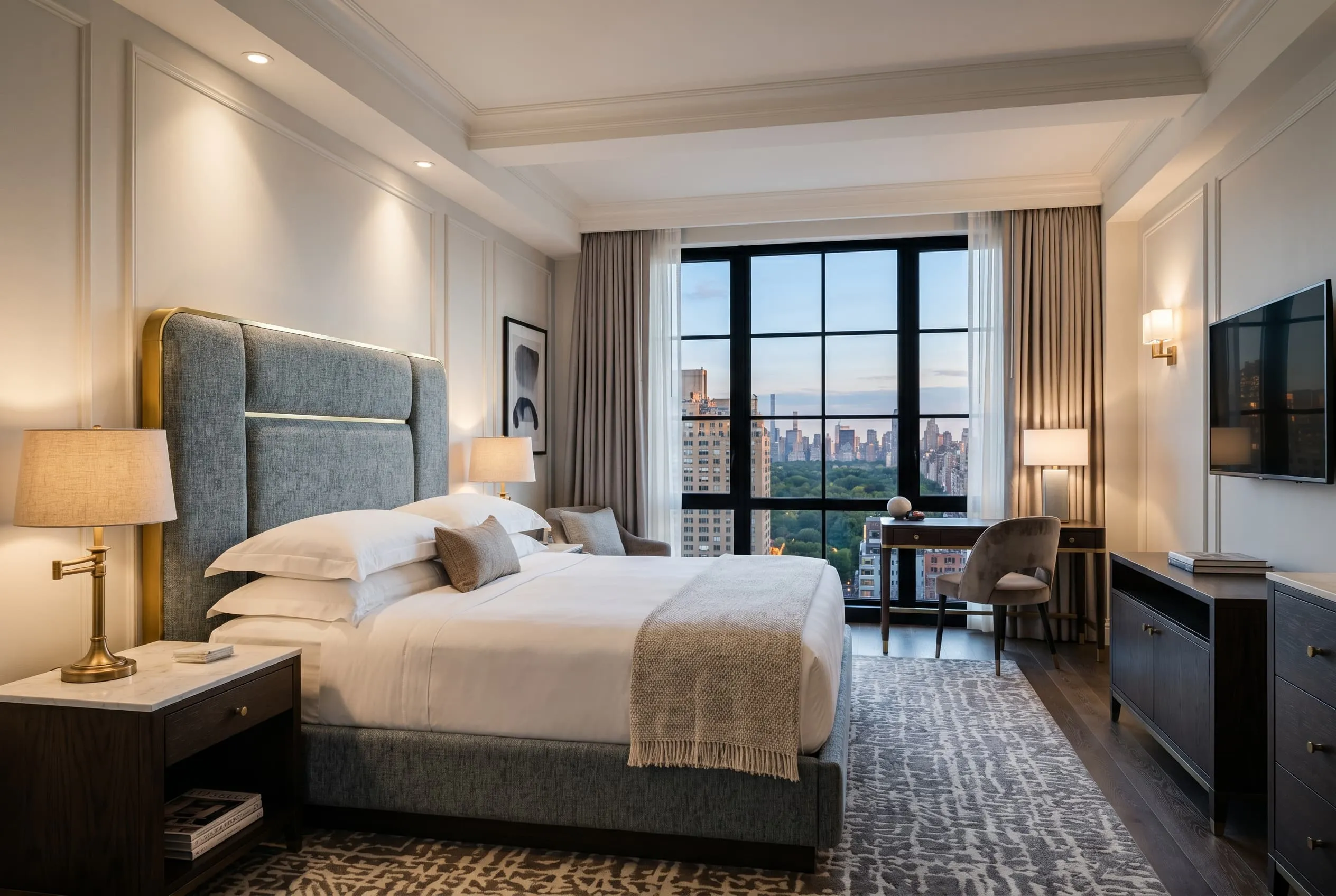
Making that mix feel intentional rather than assembled is entirely a function of pre-sourcing discipline. It starts with locking down a clear material palette before you approve a single piece. If you commit to a warm white oak veneer across all casegoods and a consistent fabric family for all upholstered pieces, you create enough visual logic that a guest reads the room as designed rather than accumulated. New York boutique guests skew design-literate. They know what a considered room feels like, and they notice immediately when something is off.
Work with your FF&E consultant or interior designer to finalize that palette before you go to market. It protects you from the most common procurement mistake: approving individual pieces that each look compelling in isolation but create a confused, unfocused reading when installed together in the same room.
Finding Suppliers Who Work at Boutique Scale
One of the practical friction points with boutique hotel furniture New York sourcing is that many large contract manufacturers set minimum order quantities that effectively exclude smaller projects. If you are outfitting 32 rooms, you may not clear the threshold for custom upholstery programs requiring 50-unit minimums. That is a real constraint and worth knowing before you invest time building a specification around a supplier who cannot actually serve your project.
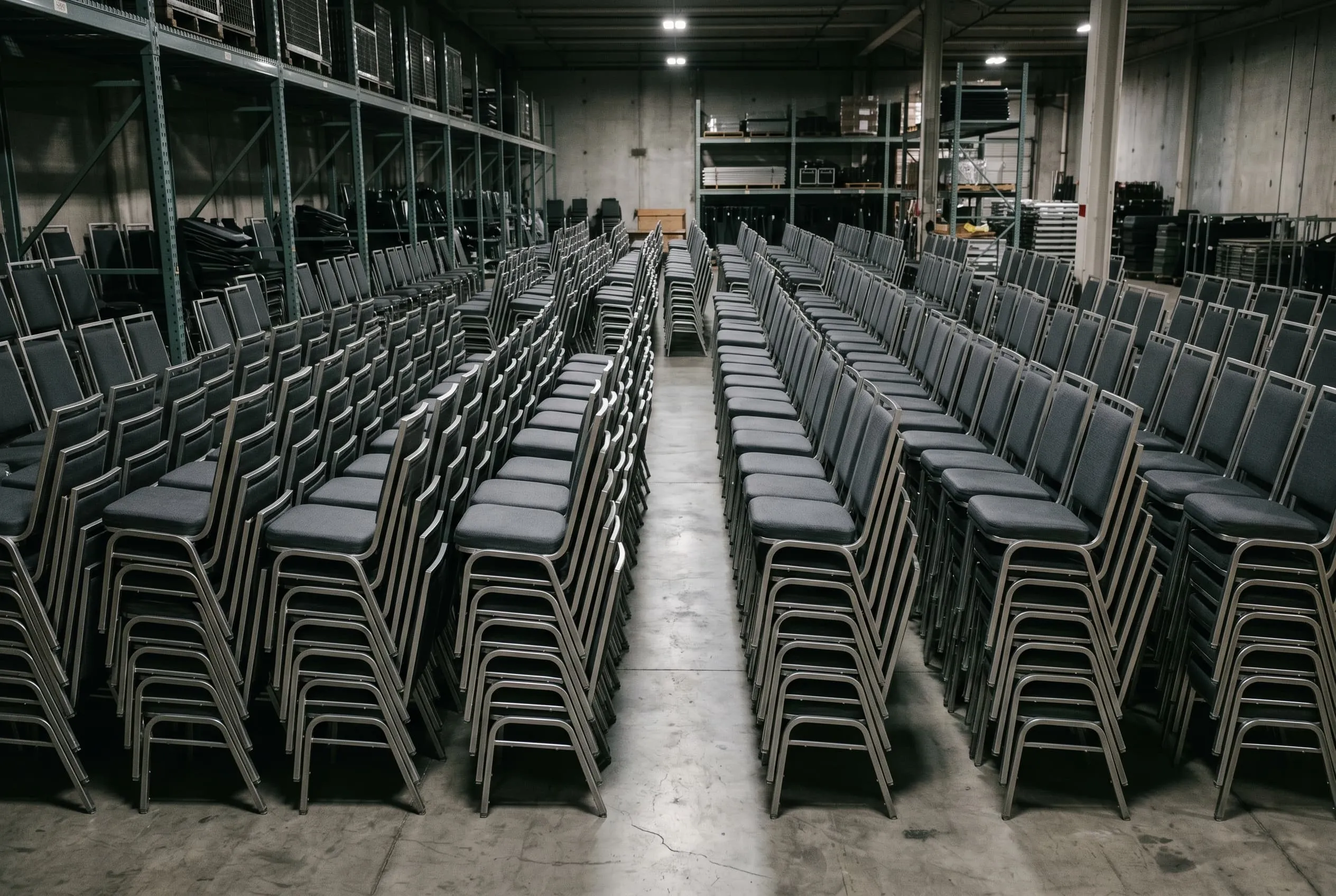
There is a specific category of suppliers built for exactly this situation. Look for manufacturers and importers whose portfolios include independent hotels, restaurant groups, and multi-family residential projects. These suppliers are accustomed to smaller quantities, faster specification cycles, and the mix-and-match purchasing behavior that boutique projects require. They are not going to push back when you need 18 units of one chair and 12 of another.
The New York area has a meaningful concentration of these suppliers particularly in the contract furniture showrooms on the East Side of Manhattan and in the commercial districts in Long Island City. If you are not already attending BDNY, the annual boutique and design hospitality show at the Javits Center, put it on your calendar. It is specifically oriented toward independent and boutique hotel buyers, not the mega-chain procurement teams that dominate Hospitality Design or NEWH events. One day walking that show will do more for your supplier network than six months of cold outreach.
Planning for the Renovation Cycle
High occupancy and a fiercely competitive market mean New York boutique hotels refresh their interiors on a faster cycle than properties in lower-demand cities. If you are opening a property now, here is what you need to know about planning for the refresh that is already coming: the right time to think about year seven is during initial procurement, not when you are already behind.
Lead time transparency: Specify frames and casegoods built to last the full cycle, while treating upholstery as the variable you will swap on a shorter rotation. Require COM-ready construction on all upholstered pieces from the start so reupholstery is straightforward when the time comes no hidden frames, no proprietary fabric tracks. Keep clean documentation of your original specifications. Knowing the exact frame construction, foam densities, and fabric weights you used the first time makes the next sourcing conversation significantly faster and keeps you from re-solving problems you already solved.
Boutique hotel furniture New York sourcing done well is not just about the opening install. It is about building a program that performs under real New York hospitality pressure, holds up through the occupancy spikes that come with major events the US Open, Art Basel, Fashion Week, the marathon weekends and can be refreshed efficiently when guest expectations shift.
If you are in the planning or specification phase for a New York boutique property, the right supplier relationships and a locked material strategy make every subsequent decision easier and faster.
If you are sourcing boutique hotel furniture for your New York property, the fastest way to real numbers is to tell us what you need. Request a quote with your quantities and timeline.