
New York runs on renovation. The legacy midtown towers around Grand Central are rehabbing guest rooms floor by floor while union contracts are still in effect. Boutique properties are opening in Long Island City, DUMBO, and Gowanus at a pace that doesn't slow down between seasons. Meanwhile, established names in Chelsea, the Meatpacking District, and the Lower East Side are cycling through refreshes to stay competitive in a market where guests have seen everything and settle for nothing. If you are sourcing furniture for a New York hotel, here is what you need to know: this market is unforgiving, and your supplier has to be built for it. A side table that holds up for five years in a suburban market might be replaced in two in a Times Square property turning over 300 rooms a night. The pace here is different. Your supply chain has to match it.
What Makes New York Different for Hotel Furniture Sourcing
Let me walk you through what separates this market from every other city in the country. New York is not just the largest hospitality market in the US it's the most segmented. A union-flagged Midtown property, a design-forward rooftop hotel in Chelsea, and a 30-room independent inn in the West Village are all technically in the same city. But they operate under completely different aesthetic requirements, budget structures, and durability expectations. A hotel furniture supplier in New York who only knows one tier of that market luxury or budget, chain or boutique is going to leave gaps in your project.

Real estate costs shape everything in this sourcing conversation. When you're paying $100-plus per square foot, every piece of furniture has to earn its footprint. Multifunctional design is not a nice-to-have here it's part of the spec from day one. Compact profiles, pieces that read larger than they measure, convertible storage that doubles as surface space. If your supplier isn't pushing back on oversized or impractical designs with Manhattan floor plans in mind, that's a direct signal they don't know this market well enough.
Lead Times, MOQs, and What to Expect Operationally
Lead time transparency is the first thing to nail down with any hotel furniture supplier in New York. Renovation windows here are short and the consequences of missing them are severe. A union hotel in Midtown may have a hard deadline tied to a booking blackout or a brand relaunch event. A boutique property in Williamsburg might be racing toward a summer opening to catch the peak season. Missing that window does not just delay revenue it compounds costs across the entire project.
Standard lead times for contract furniture from domestic suppliers run eight to fourteen weeks. Import orders from overseas manufacturers stretch to twenty weeks or longer once you factor in shipping, customs clearance, and any delays at Port Newark. For projects with a fixed go-live date, that math matters enormously. Ask your supplier upfront what is in stock domestically and what is built to order. Ask where the manufacturing actually happens. Those are not rude questions they are the right ones.
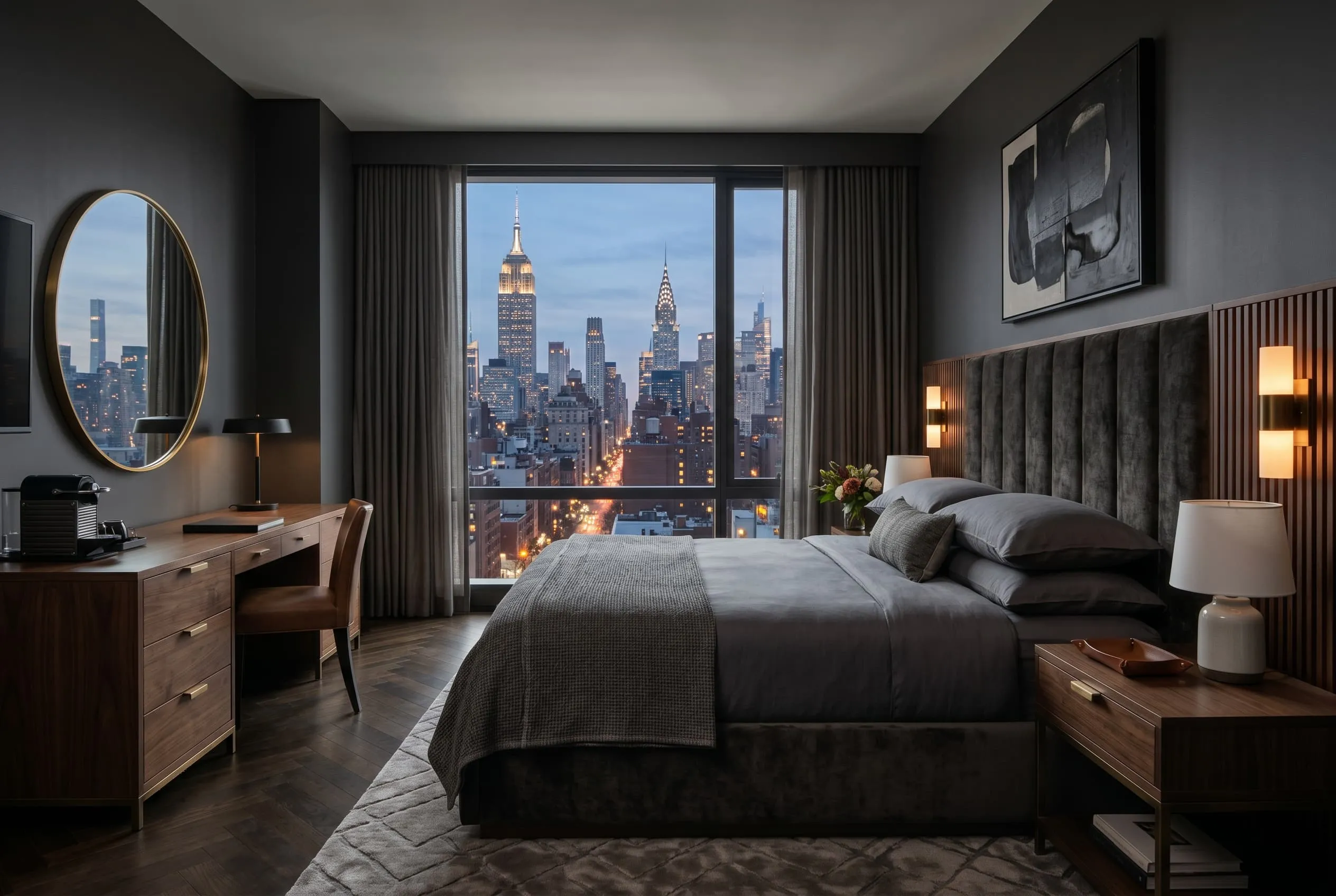
On minimum order quantities, most contract furniture suppliers set MOQs at the piece level. A typical threshold for upholstered seating runs 25 to 50 units. Case goods like dressers and nightstands often have more flexibility. But custom finishes and custom fabrics almost always trigger higher minimums, sometimes significantly higher. If you are furnishing a 30-room boutique property in Astoria or Red Hook, clarify whether the supplier's MOQs are compatible with your project size before you get deep into the spec process. That conversation is a lot easier before you have spent three weeks selecting fabric samples.
Why Retail Furniture Fails in Commercial Environments
Here is what you need to know if you are new to hospitality procurement: retail furniture is not built for commercial use. This is not a matter of degree. It's a matter of category.

A sofa from a consumer retailer is engineered for one household, used intermittently by one or two people over years of light use. A hotel sofa in a New York property even a quiet boutique in the Hudson Valley style, not a Times Square megahotel might see dozens of occupants per week across years of continuous occupancy. The internal frame construction, foam density, fabric abrasion rating, and drawer hardware are all specified to a completely different standard for commercial environments.
Contract furniture meets BIFMA standards or hospitality-specific testing benchmarks that retail products are never subjected to. When you work with a hotel furniture supplier in New York who operates in the contract channel, you're buying into that specification layer. You should be able to ask for product data sheets showing foam ILD ratings, fabric Martindale rub counts, and finish durability specs. If a supplier cannot provide that documentation, that is a red flag. Walk away before you sign a purchase order.
How to Evaluate a Hotel Furniture Supplier in New York
Start with their project portfolio and be specific about what you're looking for. A supplier worth working with in New York will have completed installations across multiple boroughs and multiple property types. Ask for references from projects comparable to yours in scale and budget. A supplier whose entire track record is luxury flagships on the Upper East Side may not understand the constraints of a 45-room independent property in Astoria or a design-forward micro-hotel in Bushwick.

Logistics capability matters as much as product quality in this market. Deliveries in Manhattan are a different operation than anywhere else in the country. Freight elevator scheduling, sidewalk shed permits, off-hours delivery windows in residential-adjacent commercial buildings, coordinating with building management in properties that have union door staff all of that is part of the job. A supplier with in-house white-glove delivery and installation experience specific to New York understands those constraints before the truck leaves the warehouse. A supplier who ships FOB from a distribution center and hands logistics to a third party may not, and you will feel that gap on delivery day.
Finally, look at how they work within the broader project ecosystem. Most hotel renovations in New York run through an interior design firm or a dedicated project management company. A hotel furniture supplier in New York who has established working relationships with that design and PM community is better positioned to keep your project on spec, on schedule, and out of the kind of communication breakdowns that cost you weeks.
The right supplier is not just a vendor. In a market as demanding as New York where the volume is enormous, the timelines are aggressive, and the guests have seen everything they are part of the project team. Vet them like one.
Ready to spec hotel furniture for your New York project? Send us the details and we will price it around your requirements. Request a quote to start.
Related reading
- Commercial hotel furniture: a sourcing guide for every space
- Boutique hotel furniture: specifying a distinctive, durable look
- What is contract furniture
- Commercial furniture vs retail
- Hospitality furniture supplier guide
- Hotel lounge chairs
- Hotel headboards
- Browse full catalog
- Commercial furniture in New York State