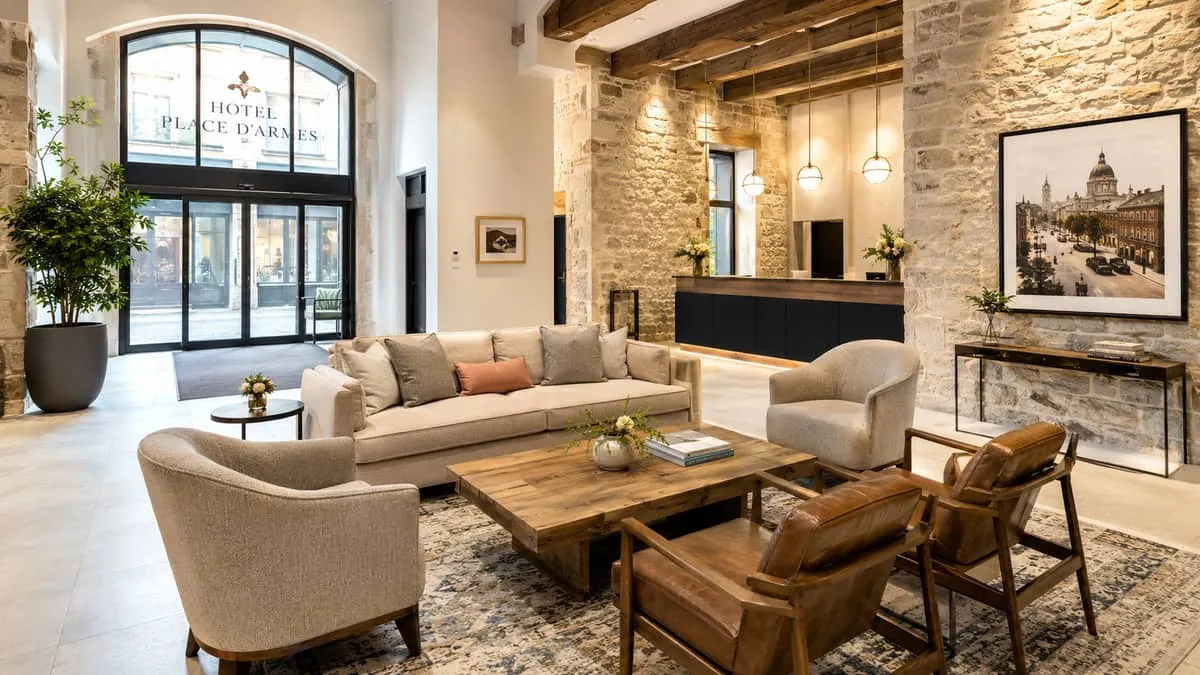
Montreal is Canada's most design-literate hospitality market outside of Vancouver, and it operates differently from every other city in the country. Guests arrive carrying genuine European expectations shaped by time in Paris, Barcelona, and Berlin. The city's signature event calendar, Grand Prix weekend at Circuit Gilles Villeneuve and the Festival International de Jazz de Montréal, draws an international crowd that reads interiors the way locals read menus. Boutique operators in Vieux-Montréal, Griffintown, and the Plateau have responded by treating furniture and finish decisions as core brand decisions, not procurement afterthoughts. If you're sourcing for a Montreal property, you need a hotel furniture supplier who understands why this market is different, not one who applies a generic hospitality formula and hopes it holds.
The Vieux-Montréal Problem: Heritage Architecture and the Weight of the Wrong Choice
Old Montreal is the most demanding furnishing environment in the city. Properties like Hotel Nelligan on Rue Saint-Paul and Auberge du Vieux-Port on Rue de la Commune operate inside 18th and 19th-century stone buildings that were never designed for modern hotel programming. The architecture sets constraints that no amount of procurement budget can override.
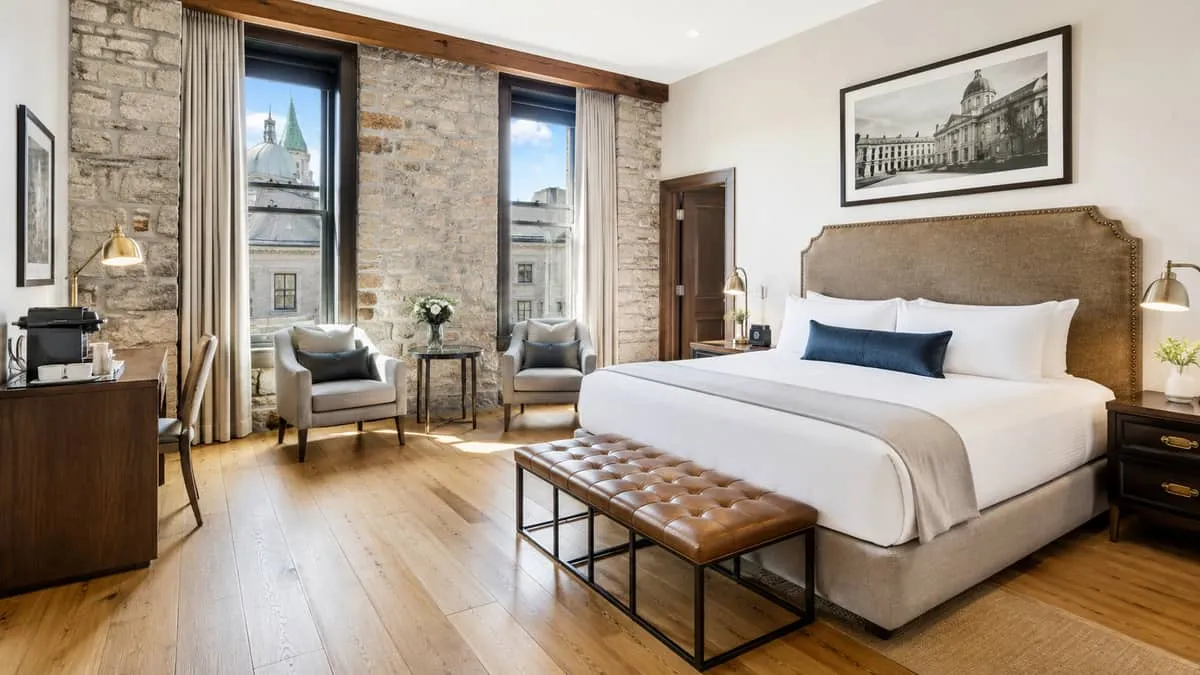
Ceiling heights in heritage rooms frequently run lower than contemporary builds, sometimes substantially so. Exposed limestone walls and heavy timber ceiling beams create an already-dense visual environment. Bring in furniture with the wrong proportions or the wrong visual weight, and you compress the room further. Guests feel it immediately, even if they can't name what's wrong. A substantial king bed frame that would anchor a room in a Griffintown new-build can make a Nelligan-scale heritage room feel like a corridor.
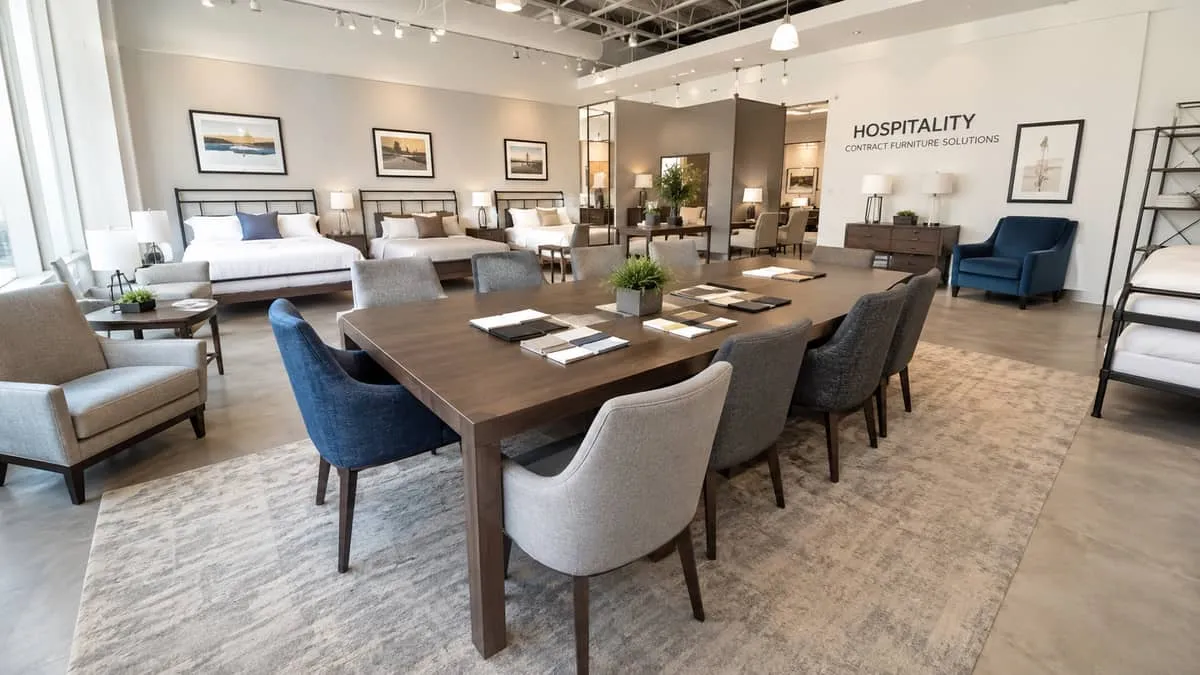
The spec logic for Vieux-Montréal properties requires furniture with lower profiles and restrained visual mass. Beds in the 40 to 44-inch headboard height range tend to work better than the tall platform designs that read well in contemporary builds with higher ceilings. Case goods benefit from tapered or exposed legs rather than boxy bases that visually merge with the floor and add visual bulk. Upholstery in rooms with exposed limestone should lean toward warmer neutrals, deep navies, or muted jewel tones that complement the stone's natural grey and ochre tones rather than fighting them.
Finish language is specific here. Warm-toned oak and walnut perform well against exposed limestone and timber. Cool grey or white lacquer finishes, popular in newer builds, tend to read as jarring against the warmth of the stone. Aged brass and matte black metal accents have become the hardware vocabulary of choice across Vieux-Montréal properties because they reference the building's historical period without tipping into costume territory.
The other constraint that rarely gets mentioned in generic procurement guides is access. Many heritage buildings in Old Montreal have stairwells and doorways that were built before standard North American furniture dimensions existed as a concept. Modular construction on case goods and frames that can be assembled in-room is not a nice-to-have for these projects, it is a functional requirement. A hotel furniture supplier sourcing for Auberge du Vieux-Port or properties on Rue Notre-Dame needs to flag this at the specification stage, not on delivery day.
Griffintown: A Completely Different Conversation
Seven minutes by foot from the cobblestones of Vieux-Montréal, Griffintown operates in a completely different aesthetic language. The former industrial district has developed rapidly over the past decade into a corridor of condo towers, boutique hotel builds, and ground-floor hospitality programming. The buildings are new, the ceilings are generous, and the design sensibility skews contemporary with industrial references drawn from the neighbourhood's manufacturing history.
Furniture for Griffintown properties can carry more visual weight, work with bolder proportions, and experiment more freely with matte and brushed metal finishes that echo the district's industrial bones. Bed frames with heavier bases, dining chairs with more substantial profiles, and lobby furniture with architectural presence all make sense in spaces with higher ceilings and open floor plates.
The guest profile in Griffintown is also younger and more tech-oriented, reflecting the neighbourhood's proximity to Montreal's AI and gaming sectors. Ubisoft's Montreal studio and research institutions like Mila draw a guest demographic that reads interiors for quality signals rather than traditional luxury cues. This shifts the furniture brief toward clean lines, quality materials, and functional intelligence, where charging integration, flexible surface configurations, and durable upholstery that holds up to extended work sessions matter as much as aesthetic appeal.

A good hotel furniture supplier will treat Vieux-Montréal and Griffintown as distinct briefs rather than variations on a generic Montreal hotel template.
Contract Specification Standards That Matter in This Market
Montreal's hospitality operators are sophisticated buyers, and the best ones push suppliers on technical standards rather than taking durability claims on faith. Here is the practical spec framework that applies across the city's hotel furniture procurement.
Seating durability: Upholstery fabrics for hotel guest rooms and lobbies should carry a minimum 100,000 double-rub Wyzenbeek rating. High-traffic lobby seating warrants 150,000 or above. Residential-grade fabrics in the 15,000 to 30,000 range are not appropriate for commercial hospitality use regardless of how they're marketed. Frame construction on seating should use kiln-dried hardwood, mortise-and-tenon or dowel joinery, and corner blocking, not stapled engineered wood composites that loosen after a season of hotel use.
BIFMA compliance: The Business and Institutional Furniture Manufacturers Association standard is the North American benchmark for commercial furniture performance. Any legitimate hotel furniture supplier can provide BIFMA test documentation on request. If they can't, that's a meaningful signal about the product category's suitability for commercial use.
Quebec fire code: FR compliance on upholstered furniture is not optional in Quebec's hospitality environments. Suppliers with genuine Quebec experience understand this requirement and can document fabric and fill compliance as part of the specification package. This affects your ability to pass inspection and your insurance position, so it needs to be confirmed at the selection stage rather than assumed.
Case goods construction: Solid wood or furniture-grade plywood construction on case goods outperforms MDF-core construction in hotel environments where pieces are moved, loaded, and cleaned repeatedly over years. Drawer boxes with dovetail or metal undermount slides perform significantly longer than stapled wood-on-wood construction. Finishes should be catalyzed lacquer or conversion varnish rather than consumer-grade water-based topcoats that wear through under daily cleaning.
Lead times: Built-to-order contract furniture from quality manufacturers typically runs 10 to 18 weeks depending on the product category, manufacturing location, and current production volumes. Custom upholstery or finish specifications can extend this by four to six weeks. For Montreal operators planning refreshes ahead of Grand Prix weekend or the Jazz Festival, working backwards from your target opening date and placing orders with genuine lead time is not optional. Properties that miscalculate lead times and take deliveries during peak season, managing installation crews alongside live hotel operations, pay for that mistake in guest experience and staff stress.
How Bilingual Culture Shapes the Supplier Relationship
Montreal's bilingual reality affects furniture procurement in ways that English-Canadian suppliers who rarely work in Quebec consistently underestimate. French is the primary language of business in Quebec, and operators running properties in Vieux-Montréal or the Plateau deal with staff, inspectors, and regulatory bodies in French as the default mode.
Practically, this means warranty documentation, care and maintenance guides, and any product specification sheets that your housekeeping or maintenance staff will reference should be available in French. In Quebec's regulatory environment, this is not just a courtesy, it is the baseline expectation. A supplier who can only provide English documentation is creating a friction point that compounds every time something needs to be looked up.
Beyond language, there is a design sensibility in this market that distinguishes it from Toronto or Calgary procurement conversations. Montreal's hospitality culture has a genuine European orientation. The city's restaurant scene on the Plateau, in Mile End, and along Little Italy's Saint-Laurent corridor has been shaped by owners and chefs who have spent serious time in France, Italy, and Spain. That influence carries into how hotel operators and their designers approach interior briefs. Furniture that reads as generically North American, mid-market hotel without a clear design point of view, tends to underperform in a Montreal context in the same way that a generic brasserie menu underperforms on a street where every neighbouring restaurant has a genuine culinary identity.
Suppliers with a track record in Quebec understand what Montreal designers are sourcing for and can engage with that brief productively rather than defaulting to catalog standards that work in less design-conscious markets.
Restaurant and Bar Furniture in Montreal's Hospitality Ecosystem
Montreal's food and beverage scene sets its own demanding furniture standard, and hotel F&B operators are competing within that context. The Plateau and Mile End have cultivated one of the most sophisticated restaurant markets in North America, with independent operators who invest seriously in interior design as a component of the dining experience. Little Italy's restaurant corridor maintains trattorias where the furniture has been carefully selected to reinforce a specific atmosphere. Hotel restaurants in this city compete for local covers, not just in-house guests, which means the furniture brief for a hotel dining room or lobby bar needs to meet the standard set by Montreal's independent restaurant community.
For terrasse programming, this matters significantly. Montreal's terrasse culture is not a seasonal afterthought. Outdoor dining from May through September is a core part of the city's hospitality identity, with serious operators running full-service terrasse programs that compete directly with indoor dining in terms of experience quality. Outdoor furniture for a hotel terrasse in this market needs weather resistance appropriate for Quebec's climate, which includes cold shoulder-season mornings and intermittent rain, combined with design quality that holds its own on a street where every neighbouring restaurant terrace is a curated expression of the operator's aesthetic.
Restaurant-grade seating for Montreal hotel F&B typically warrants 150,000 double-rub upholstery on indoor applications and powder-coated or marine-grade aluminum frames on outdoor pieces that can handle seasonal storage and temperature variation. Stack or nest capability on outdoor furniture reduces storage footprint during the off-season, which matters in heritage buildings where storage space is genuinely constrained.
Finding the Right Supplier for a Montreal Property
The qualities that distinguish a capable hotel furniture supplier in Montreal from a generic furniture vendor are consistent across project types. A supplier worth working with can read your floor plans and flag specification issues before they become delivery-day problems. They understand heritage building access constraints and can specify accordingly. They can provide BIFMA documentation and Quebec FR compliance confirmation without making it a difficult conversation. They assign a project rep who stays engaged from specification through installation coordination rather than handing the file to a fulfillment team after the order is placed.
For Vieux-Montréal properties specifically, ask any prospective supplier about their experience with heritage building delivery logistics. Ask whether they have installed in properties on Rue Saint-Paul or Rue de la Commune, where elevator access and stairwell dimensions are consistently challenging. A supplier who has navigated that environment will have a different level of practical knowledge than one whose Montreal references are all new-build Griffintown projects.
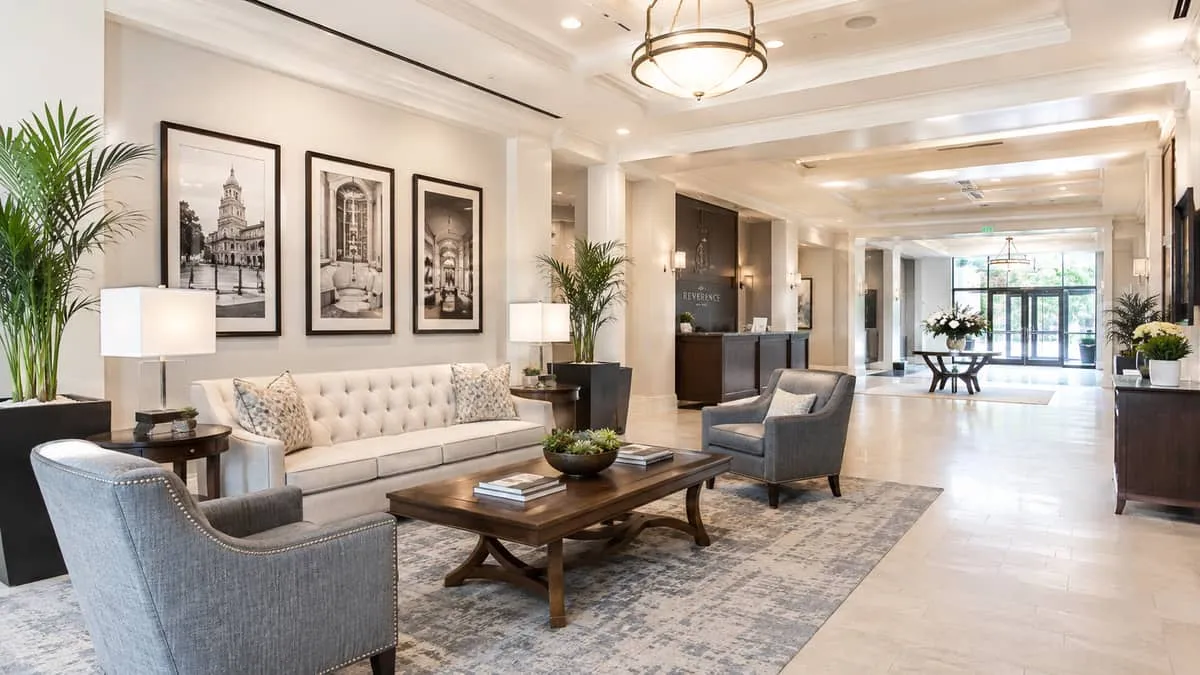
If you're early in the sourcing process, establish three things before your first supplier conversation: your project scope in rooms and categories, your target completion date relative to any peak season programming, and two or three reference properties whose aesthetic represents where you're trying to land. That clarity compresses the specification process significantly and makes it easier to assess quickly whether a supplier's product range and project experience align with your brief.
Montreal's hospitality market rewards operators who make thoughtful interior decisions. The city's guests know the difference.
Every Montreal venue has its own volume, layout, and turnaround demands, and hotel furniture pricing follows from those specifics. Request a quote and we will scope it to your project.