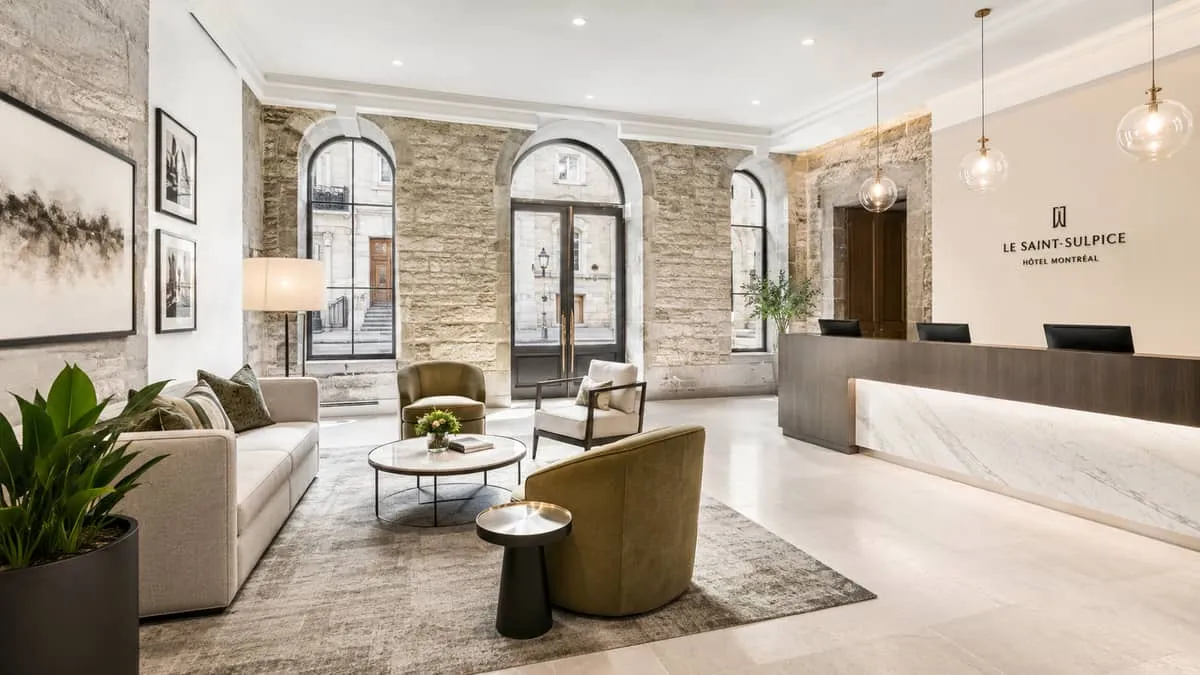
Montreal lobbies are evaluated against a standard most Canadian cities do not face. Guests arriving at Hotel Nelligan or Auberge du Vieux-Port have often just returned from Paris or Barcelona. They are not comparing your lobby to a hotel in Toronto or Calgary. They are comparing it to properties they stayed at in the 7th arrondissement. That is the operating context for hotel lobby furniture in Montreal, and it shapes every sourcing decision a hospitality operator should be making.
This is also a city where the lobby bar is a genuine destination rather than a convenience amenity. Locals book tables at hotel restaurants. People meet in lobby lounges before moving on to dinner in Little Italy or drinks in the Gay Village. During Grand Prix weekend or Jazz Fest, a Vieux-Montreal lobby functions less like a hotel arrival experience and more like a public room that happens to have a front desk in it. The furniture has to hold up to that social load, both physically and visually.
The Materiality Problem in Vieux-Montreal Heritage Hotels
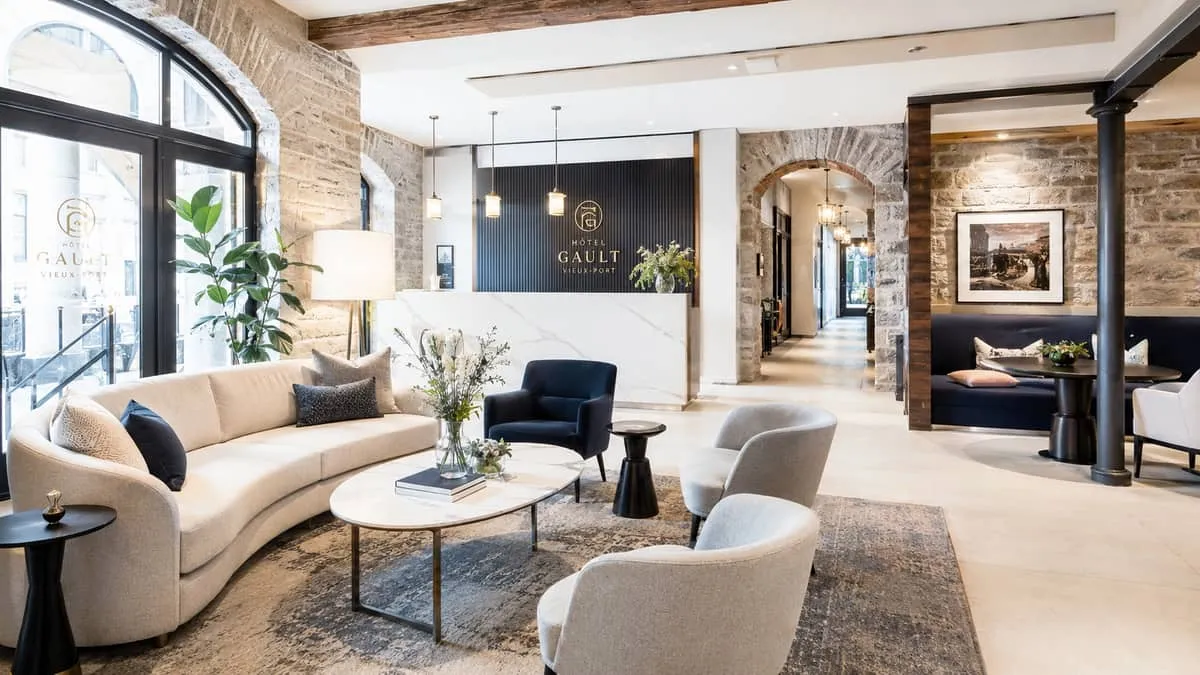
The stone buildings in Vieux-Montreal were constructed in the 17th and 18th centuries. The walls are thick limestone or grey stone rubble masonry, the ceilings are low by contemporary standards, and the proportions were designed for a world before electric light and central heating. When you drop a contemporary lounge chair into that context, you are entering a conversation about materiality whether you intend to or not.
The most common mistake operators make in heritage lobby renovations is sourcing furniture that reads as a neutral, which usually means upholstered pieces in grey or beige with brushed metal frames. In a room with exposed stone, that palette produces a cold, unresolved interior. The grey of the furniture competes with the grey of the walls, and nothing anchors the space. The result looks unfinished even when every individual piece is high quality.
What works better in Vieux-Montreal properties is a warm palette that complements the stone without mimicking it. Cognac leather, warm teak, muted olive linen, or deep jewel-toned velvet all create contrast against the masonry and feel appropriate to the age of the building. Auberge du Vieux-Port handles this well, layering warm wood tones and rich upholstery against the original stone walls in a way that feels deliberate rather than decorative.
Scale is the second challenge. Contemporary lounge furniture is designed for rooms with generous ceiling heights and open floor plans. Heritage properties in Vieux-Montreal often have neither. A sectional sofa that would read as elegant in a modern hotel lobby can feel like it is trying to fill a room it was not designed for when the ceiling is eleven feet and the windows are deep-set. Smaller-format lounge chairs, settees, and armchairs with refined silhouettes tend to read better in these proportions. The goal is furniture that acknowledges the room rather than competing with it.
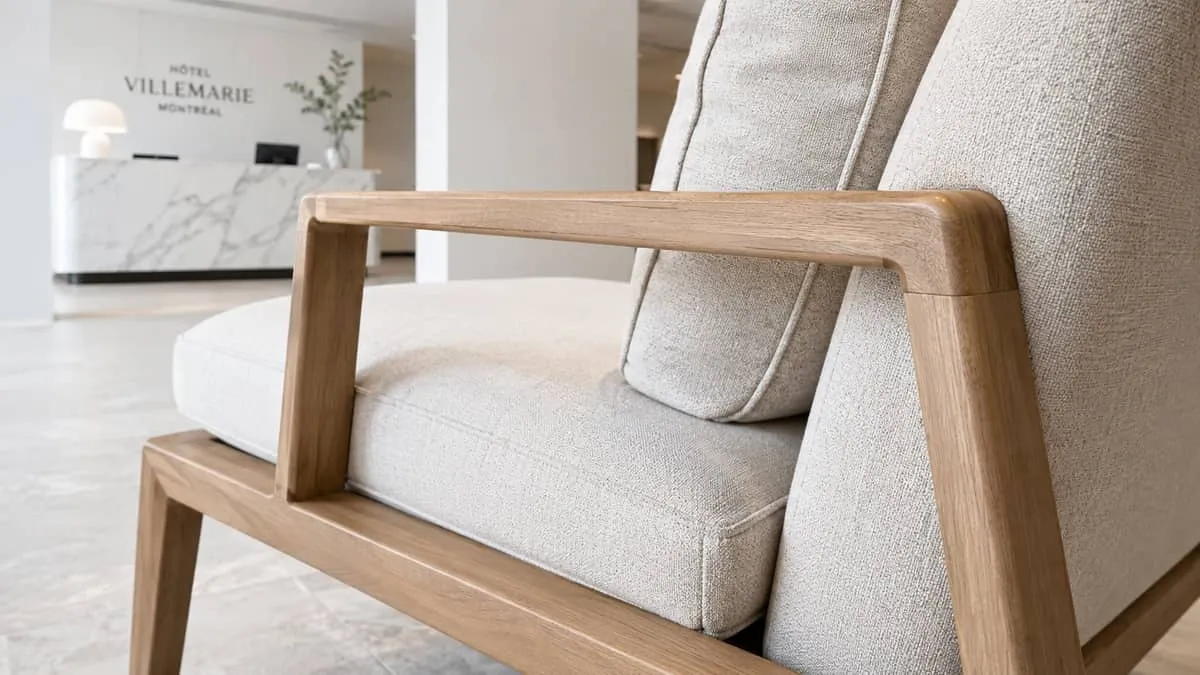
For contract specification in heritage lobbies, the frame and joinery matter more than they do in modern builds. Stone floors and the absence of carpeting mean that anything wobbly or under-built produces audible noise when guests shift their weight, which reads immediately as low quality. Hardwood frames with mortise-and-tenon or dowelled joinery, or welded steel frames with properly finished welds, are the baseline. Foam density in the 1.8 to 2.2 lb per cubic foot range is the minimum that maintains cushion shape through the kind of use a busy Vieux-Montreal lobby sees during peak season.
Griffintown: Contemporary Lobbies for a Tech and Creative Clientele
Griffintown is a different problem entirely. The neighborhood went from industrial wasteland to condo and boutique hotel corridor in under a decade, and the hotels that opened there are serving a clientele that skews younger, works in tech or creative fields, and holds strong opinions about design. The AI and gaming companies that have established significant presences in Montreal (Mila, Ubisoft, and the cluster of AI startups that followed Element AI's early work in the city) have created a professional class that spends time in Griffintown hotels for business meetings, team offsites, and client entertaining.
That clientele reads design fluently. They notice when furniture is slightly off-spec, when an upholstery choice was made by someone who had not thought carefully about how it would age, or when the overall lobby palette signals that someone made safe choices rather than considered ones. The Griffintown lobby aesthetic that works for this audience is not the jewel-tone heritage warmth of Vieux-Montreal. It is quieter, more architectural, and informed by the Scandinavian and Japanese design languages that have become shorthand for serious design sensibility in North American creative culture.
In practice, this means furniture with cleaner silhouettes, visible material quality (solid wood rather than veneer, genuine leather rather than bonded), and an arrangement logic that suggests the space was planned rather than filled. Modular seating systems work well in these lobbies because they signal flexibility and contemporary thinking, and they can be reconfigured for the corporate events and private gatherings that boutique Griffintown properties often host.
Fabric and finish specifications for this market should prioritize durability without visual compromise. High-performance textiles with 100,000 double rub ratings are available in the muted naturals and sophisticated tones that this audience expects. Polyurethane leather alternatives that are easier to maintain than genuine leather in high-traffic zones have improved significantly and are worth specifying in reception seating where daily contact is constant.
The Lobby Bar Problem: Seating That Functions as Both Lounge and Social Space
Montreal has a genuine terrasse culture. From May through September, the city moves significant portions of its social life outdoors, and properties with street-facing patios understand the logic: the terrasse is part of the brand, visible from the street, generating foot traffic and establishing the property's social register. But Montreal also has cold winters, and that outdoor culture does not disappear when the weather closes in. It migrates indoors, and in many hotels, the lobby bar absorbs it.
This creates a specific furniture challenge. Seating that functions well for solo business travelers reading emails does not necessarily function well for a group of four who have come in from the cold after a Jazz Fest show and want to stay for another round. The furniture needs to support both use cases without looking like it was designed for neither.
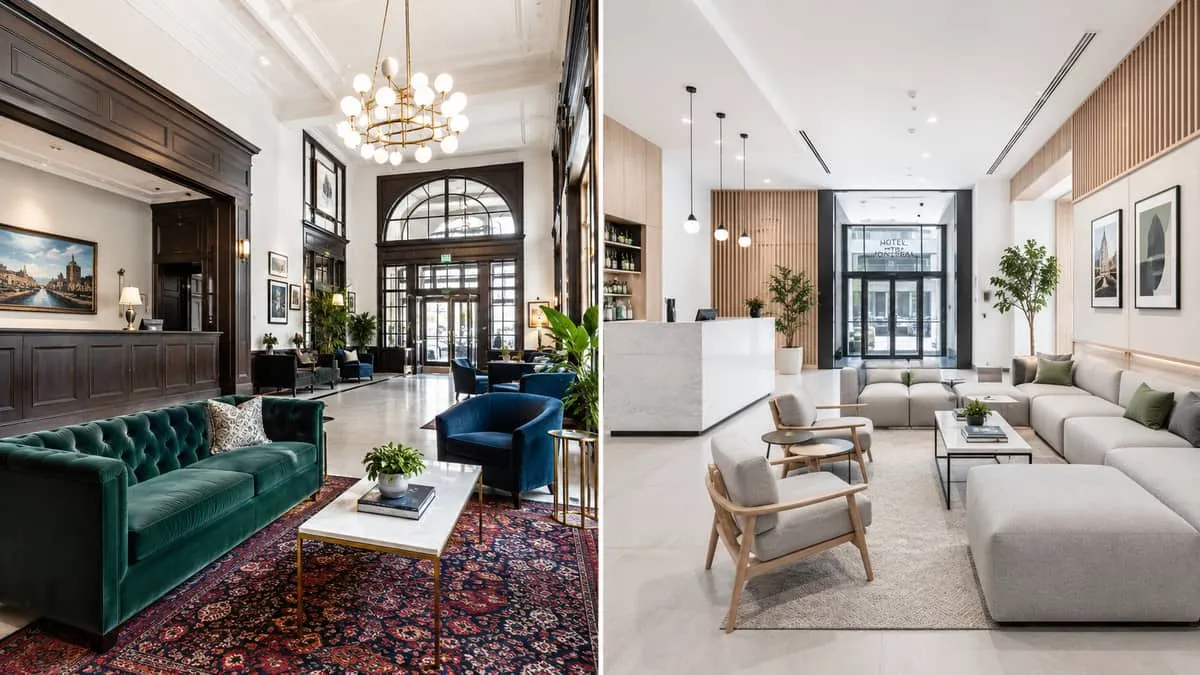
The approach that tends to work in Montreal lobby bars is a zone-based arrangement rather than a uniform seating plan. A set of individual lounge chairs with side tables handles the solo and duo use cases. A lower, wider lounge grouping with a larger coffee table handles the social group. Bar-height seating at a ledge or counter provides an option for guests who want to perch briefly rather than commit to a full seating position. Each zone has its own character but the palette is unified, so the overall space reads as coherent rather than chaotic.
Furniture for lobby bar zones needs to meet a higher durability bar than standard lounge seating. Spills are frequent. Guests in social mode are less careful with glasses and bags. Upholstery in these zones should be moisture-resistant and easy to spot-clean. Crypton, Sunbrella, and comparable high-performance fabrics are appropriate here and are available in finishes that do not look utilitarian or institutional.
Reception Zone Furniture: The Functional Baseline
The area around your front desk is the most trafficked point in the lobby, and it requires the most practical furniture thinking. Guests waiting to check in during Grand Prix weekend, a McGill convocation rush, or a full Jazz Fest hotel block are standing and sitting in close proximity. The furniture in this zone needs to keep that flow moving rather than creating bottlenecks.
Open-base armchairs, meaning chairs without skirting or aprons that reach the floor, are easier to vacuum under and look lighter in a tight footprint. Side tables should work at a height that accommodates a guest who is sitting and a guest who is standing briefly. If your property handles significant group arrivals from conferences at the Palais des congres, from film and TV production crews (Montreal hosts substantial production activity), or from corporate events, you need enough seating that arriving guests have somewhere to land without the check-in area feeling overwhelmed.
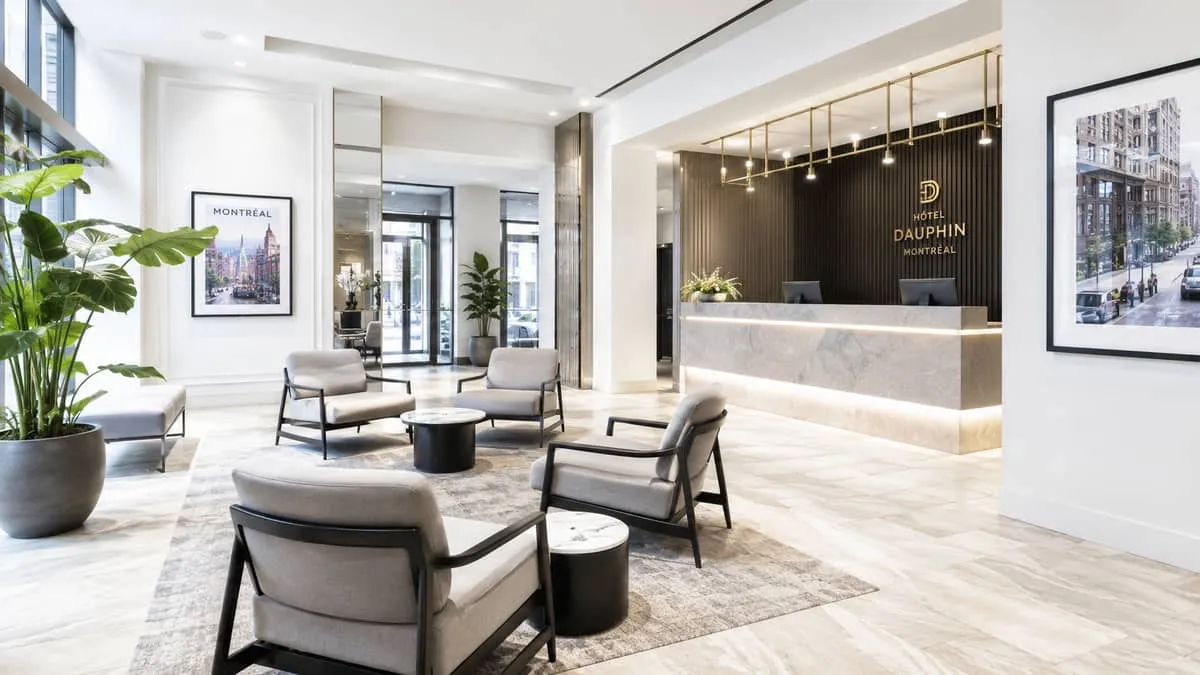
Leg and base finishes in high-contact reception zones need honest assessment. Polished chrome shows every scuff and smear and requires constant attention to look right. Brushed metals, matte powder-coated steel, and solid wood legs maintain their appearance through continuous use with minimal maintenance. That is a practical spec decision but it affects how the lobby reads during the period between deep cleans.
What European Standard Actually Means in Practice
When Montreal operators say their guests hold a European standard, they mean something specific. European hotel lobbies, particularly in France, tend to have a sense of material restraint that North American lobbies often lack. They are not minimalist in the sparse sense, but they are edited. Every piece justifies its presence. There is no furniture that is there because no one decided to remove it.
That editorial sensibility is what distinguishes a Montreal hotel lobby that works from one that looks like it was furnished by filling a budget rather than making choices. Le Mount Stephen, which occupies a landmark Sherbrooke Street mansion, demonstrates what happens when the furniture selection is genuinely considered in relation to the architecture. The W Montreal operates on a completely different design register but achieves the same result: a lobby where the furniture belongs to the room.
For operators sourcing contract furniture, this translates to a few concrete guidelines. Buy fewer pieces and buy better ones rather than filling every corner with mid-tier product. Choose a palette and stay inside it. Specify upholstery grades that will still look appropriate in three years rather than ones that look adequate at installation. Work with a supplier who can provide FR ratings and COM documentation, because Montreal's bilingual inspection requirements mean your paperwork needs to be in order.
Sourcing for Montreal: Supplier Criteria That Matter Here
Montreal's peak seasons are compressed and intense. Grand Prix weekend fills the city in June, Jazz Fest runs through July, and the fall conference season brings another occupancy surge before winter. A furniture supplier who cannot commit to reliable lead times is a liability in this context. A lobby renovation that misses its window by four weeks can cost a property its most profitable weeks of the year.
Contract-grade suppliers who work in the Montreal hospitality market need to be able to provide fabric samples and finish options with clear lead time commitments, FR certifications appropriate for Quebec's fire code requirements, COM (customer's own material) capability if your interior designer has specified a particular textile, and a track record in hospitality rather than residential or office furniture.
The distinction between residential and contract furniture is not academic in a Montreal hotel lobby. Residential furniture is not engineered for the traffic, the spill frequency, or the structural stress of continuous public use. It begins showing wear within a year in a busy lobby, which creates a cycle of replacement costs that contract-grade furniture largely eliminates. The upfront investment in properly specified contract furniture is the lower-cost option over a five-year horizon, which is a straightforward case to make to ownership groups weighing capital expenditure.
Montreal's hotel operators are competing in one of the most design-literate hospitality markets in Canada. The lobby furniture is not incidental to that competition. It is part of how a property positions itself in a city that notices the difference.
Every Montreal venue has its own volume, layout, and turnaround demands, and hotel lobby furniture pricing follows from those specifics. Request a quote and we will scope it to your project.