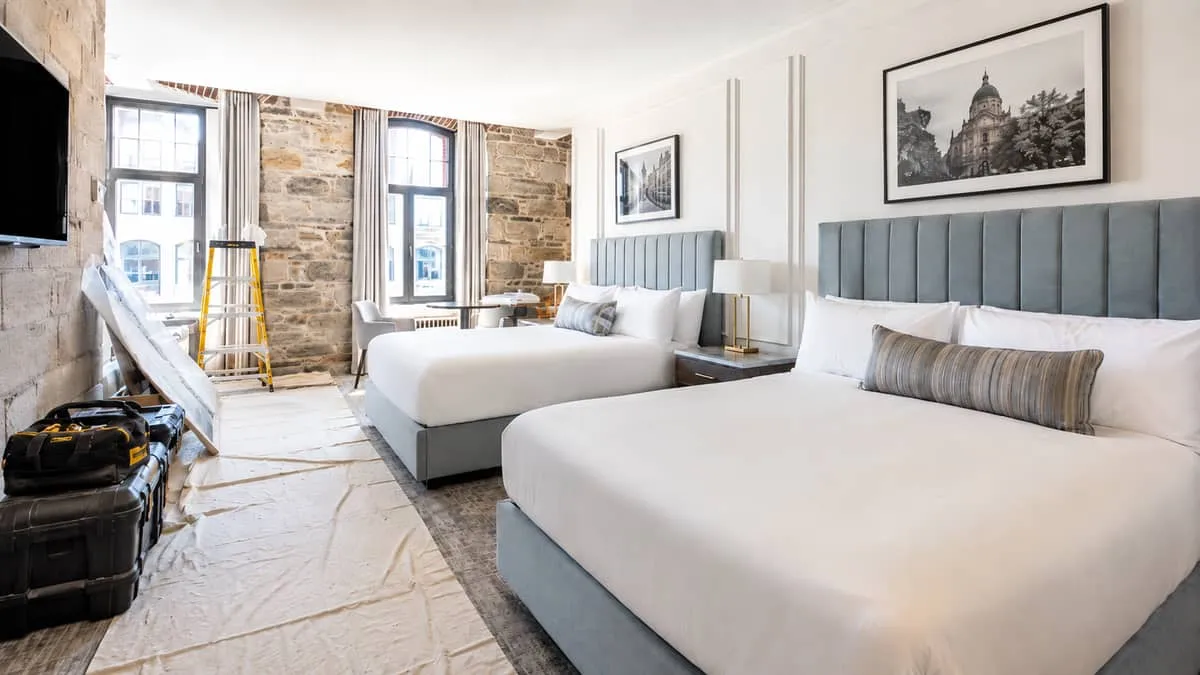
Montreal's hotel market does not forgive a bad renovation. Guests arriving for the Grand Prix or Jazz Festival have already scrolled through dozens of properties, and they booked yours specifically because of how it looks. If your Vieux-Montreal or Griffintown property is sitting on worn furniture from a decade-old refresh, you are losing bookings to the boutique competitor two streets over. Sourcing hotel renovation furniture in Montreal requires navigating a set of constraints that simply do not exist in other Canadian markets: heritage designation rules, cobblestone delivery logistics, a bilingual hospitality standard, and a revenue calendar shaped by peaks so dense that missing one by a few weeks costs real money.
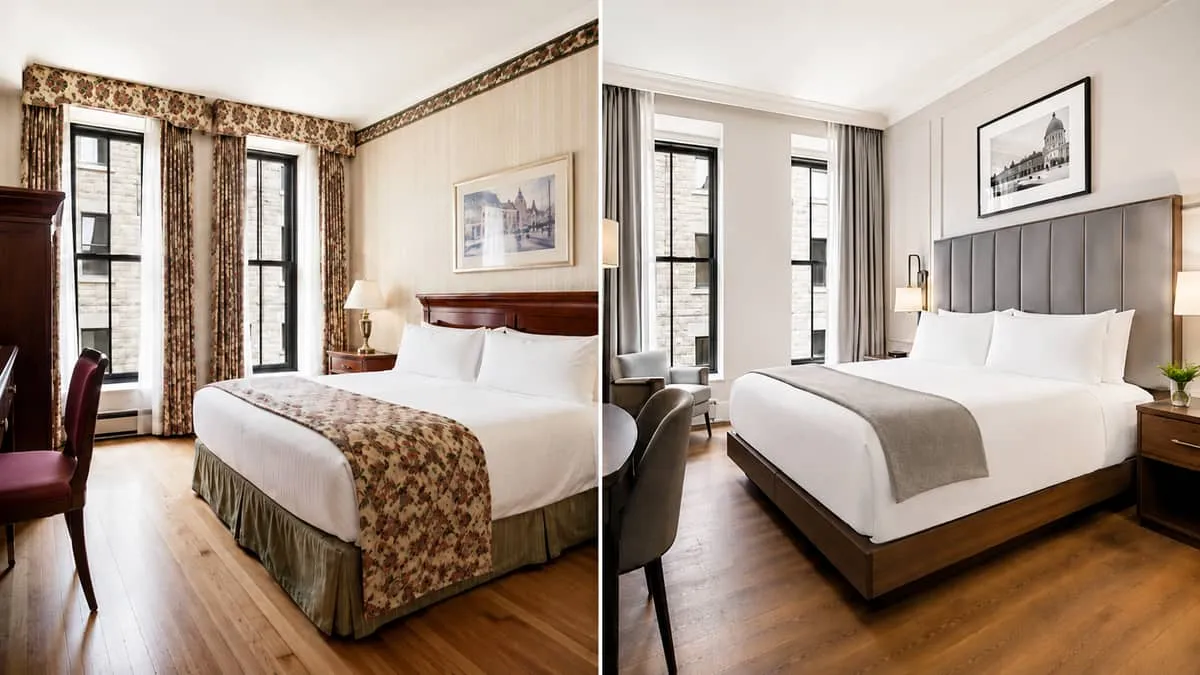
Renovating in Vieux-Montreal: Heritage Constraints Are Not Suggestions
Old Montreal contains some of the most photographed hotel interiors in Canada. Hotel Nelligan's exposed stone walls and Auberge du Vieux-Port's timber beams have set a design standard that guests consciously or unconsciously expect when they book in the neighbourhood. Renovation work in this district comes with constraints that owners in Griffintown or downtown do not face, and ignoring them is not an option.
Properties with heritage designation are subject to oversight from Heritage Montreal and the Ville de Montréal's cultural heritage division. Any modification to structural elements, exterior facades, original millwork, or masonry requires approval that can add months to a project timeline before a single piece of furniture ships. The practical implication for FF&E planning is that your furniture selections need to be finalized and approved long before demolition begins, because you will not have the flexibility to delay orders while permits sort themselves out.
The physical reality of Vieux-Montreal deliveries compounds this. Rue Saint-Paul, Rue de la Commune, and the cross-streets connecting them were not built for 53-foot transport trucks. Cobblestone lanes that look charming in marketing photos become a genuine logistical problem when you are coordinating a 40-room FF&E installation. Many buildings in the quarter have no service elevator, or service elevators sized for the early twentieth century rather than for king-sized platform beds and wrapped case goods. Some alley access points are legally restricted to delivery windows of a few hours on specific days of the week.
A furniture supplier who has not worked in this neighbourhood before will underestimate the receiving and installation timeline by a significant margin. When you are vetting FF&E partners for a Vieux-Montreal renovation, ask directly whether they have delivered into the quarter, what logistics solutions they used, and how they handle the difference between what the truck can carry and what the building can actually receive in a single window. Suppliers who cannot answer those questions precisely are telling you something important.
The Griffintown Renovation Calculus: New Construction, Rising Expectations
Where Vieux-Montreal renovation is about constraint management, Griffintown is about speed and competitive positioning. The neighbourhood has transformed faster than almost any comparable urban district in Canada over the past decade, and the boutique hotel development there reflects investors betting on continued growth from the tech and creative economy sectors anchored nearby. Properties opening or repositioning in Griffintown are competing directly for the same guests as Le Mount Stephen and the W Montreal, guests who travel frequently enough to notice immediately when a room's furniture does not match the promise of the lobby.
Griffintown properties have fewer heritage restrictions but face their own renovation pressure: in a neighbourhood where several boutique hotels are at various stages of development, the window for capturing the market's attention as the design-forward option is narrow. A renovation that comes in late, or that sources furniture at a quality tier below the competition, does not just miss the peak season. It sets a brand positioning problem that takes years to correct.
The FF&E implication is that Griffintown renovations need to lead with guest-visible quality. Contract-grade platform beds in solid wood or solid wood veneer construction with upholstered headboards, case goods in furniture-grade MDF or solid hardwood with durable laminate or painted finishes, and seating that can withstand commercial use without showing wear within two seasons. Cutting costs on guestroom furniture to fund lobby design is a common mistake in boutique development. Guests spend more time in their room than in the lobby, and they review accordingly.
Revenue Calendar Pressure: Building Your FF&E Timeline Around the Grand Prix and Jazz Festival
Montreal's hospitality revenue calendar creates a planning logic that differs from most Canadian markets. The Grand Prix in June and the Jazz Festival in late June through July represent demand peaks that hotels in many other cities simply do not have access to. Occupancy rates during these periods regularly reach levels that make the surrounding shoulder seasons feel almost irrelevant in terms of owner psychology, even when the math does not fully support that view.
The practical effect for renovation planning is that owners treat Grand Prix and Jazz Festival deadlines as hard stops. Missing June with a renovation that ran long is a compounding loss: you forgo the peak revenue, you take the reputational hit of rooms marked unavailable, and you push into a shoulder season where recovery is slower. Most Montreal hotel owners with any experience have had this conversation with their general contractor at least once.
Building your FF&E timeline backwards from June means working with hard numbers. Contract furniture from suppliers with established hospitality programs runs eight to fourteen weeks from confirmed order to delivery under normal production conditions. Add two to four weeks if you are specifying custom fabric, custom finish, or any upholstered headboard in COM (customer's own material). Add the receiving and installation window, which in a heritage building in Vieux-Montreal should be budgeted at thirty to fifty percent longer than a comparable suburban property because of the access constraints described above.
The resulting math: for rooms to be ready before Grand Prix weekend, FF&E selections need to be locked and orders placed no later than mid-January. Properties that try to compress this by starting the process in March typically end up with one of three outcomes: mismatched case goods because an item went on backorder, rooms that open partially incomplete, or a costly expedite charge to a supplier who can deliver faster only because they are pulling from overstock rather than spec. None of those outcomes serve the renovation's purpose.
If your project timeline is already compressed, the conversation to have with your FF&E supplier is not whether they can make the delivery date. It is what specific items are available from domestic warehouse stock, what the lead time difference is, and whether the in-stock options are comparable in quality to the specified items. A reputable hospitality supplier can often solve a timeline problem without compromising the room's design standard. That conversation needs to happen in the first planning meeting, not six weeks before delivery.
Phased Delivery in a Market Where Closure Is Expensive
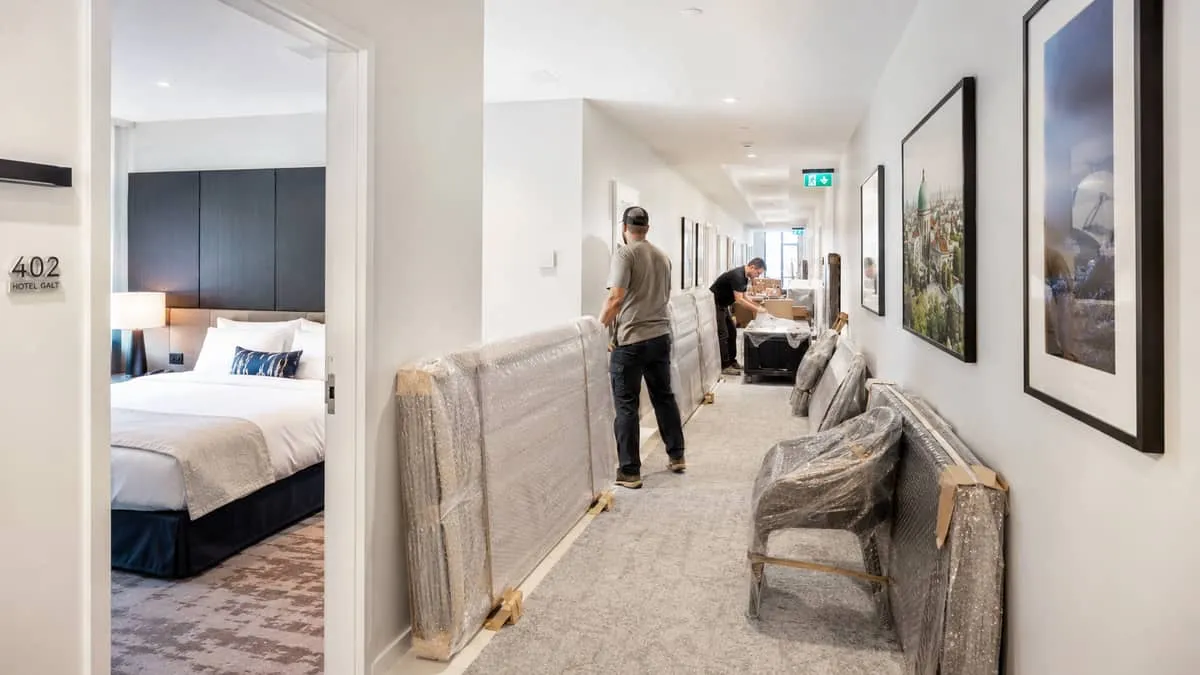
Very few Montreal properties can absorb a full closure during renovation. The revenue pressure is too constant, and the shoulder seasons between peak periods are not deep enough to absorb a multi-month shutdown without significant financial strain. Most owners structure renovations in phases: one floor or wing offline at a time, with FF&E installed and rooms returned to revenue before the next section closes.
Phased delivery places specific demands on your furniture supplier that not all suppliers can meet. They need warehouse capacity to hold your full order across multiple delivery windows, and they need the project management infrastructure to schedule partial releases without disrupting production on the backend. Before committing to a sourcing partner, ask explicitly: do you offer staged delivery programs, what are the storage fees if any, and what is the maximum duration you will hold inventory between phases?
The other critical requirement for phased renovations is specification consistency across phases. Ordering the same casegoods and soft goods in batches separated by several months introduces real risk: dye lots vary, fabrics get discontinued, finishes get updated on the supplier side without notice. Lock all specifications in writing before phase one ships and get a written commitment from your supplier on how they will handle any substitutions required on later phases. A single headboard fabric change across floors four and five creates a guest-facing inconsistency that shows up in reviews.
What Montreal's Design-Literate Guests Actually Notice
Montreal is arguably Canada's most design-literate hospitality market. The city's cultural economy, including Ubisoft, the film and TV production sector, the fashion industry, and the academic influence of McGill and Concordia, produces a concentration of guests who notice when a room's furniture is incoherent or cheap. The Plateau-Mont-Royal restaurant scene, Mile End's coffee shop and bistro culture, and Little Italy's dining corridor have established a baseline of design intentionality in Montreal's food and hospitality spaces that transfers directly to guest expectations in hotel rooms.
The specific failure mode to avoid is furniture that signals procurement rather than design. Neutral grey upholstery paired with blonde veneer case goods in a finish that has no textural reference to anything else in the room reads as generic to a Montreal guest in a way it might not in a less design-saturated market. Rooms in Vieux-Montreal's limestone buildings benefit from furniture in warmer tones, solid materials with visible grain, and upholstered elements in woven or textured fabrics rather than flat microfibre. Rooms in Griffintown's newer builds have more flexibility with contemporary silhouettes and cleaner finishes, but the quality tier expectation does not change.
Contract-grade furniture for Montreal's boutique market should meet specific construction standards independent of aesthetic choice. Solid wood or solid wood core drawer boxes with dovetail joinery, not stapled particleboard. Platform beds with centre support rails rated for commercial use weight loads. Upholstered headboards in fabric rated at minimum 30,000 double rub Wyzenbeek, and higher for properties targeting younger demographics who are harder on soft goods. Case goods with corner protection and edge banding that will survive the cleaning and turnover cycle over multiple years without delaminating.
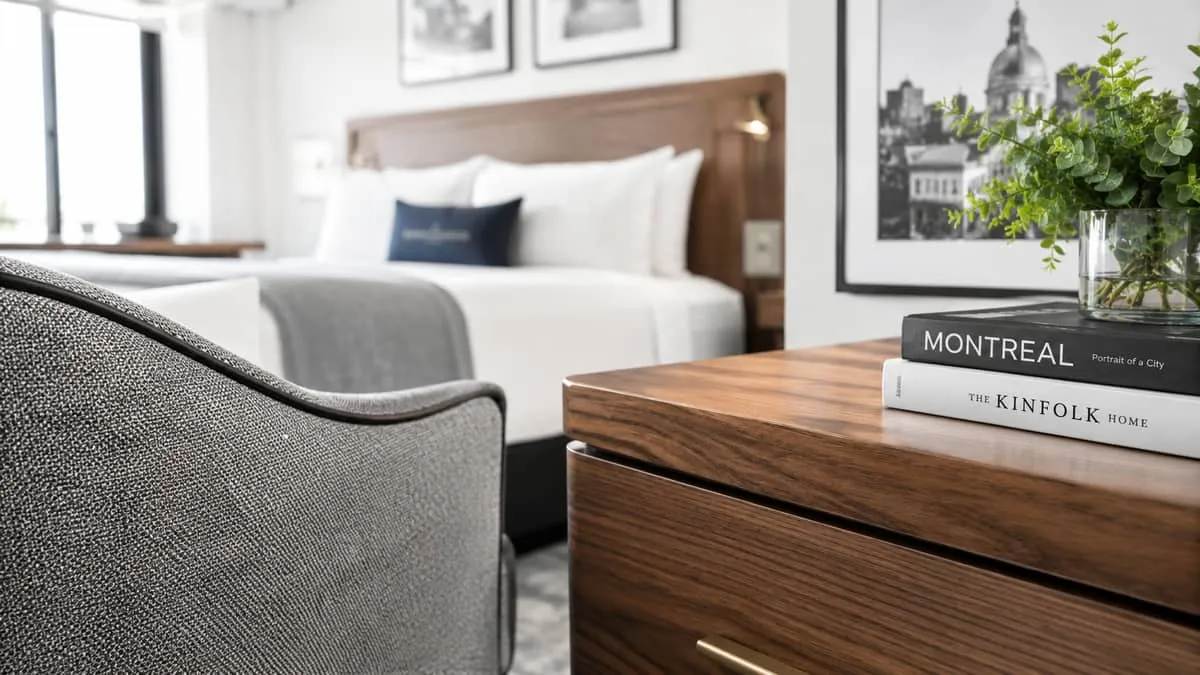
Operating Bilingually: Why French Language Standards Shape FF&E Decisions
Montreal is the only major North American hospitality market where French language law materially affects renovation procurement. The Office québécois de la langue française requirements mean that any documentation provided to guests in the room, any in-room technology interfaces, and any branded material associated with the property needs to meet French primary standards under Quebec's language legislation. For FF&E decisions, this has direct implications.
Branded properties renovating to flag standards may need brand approval for any in-room collateral or technology that comes packaged with furniture, because standard North American brand templates are often English-only and require Quebec-specific versions. Custom millwork that incorporates printed or engraved wayfinding also requires French primary text. Neither of these is a complicated problem to solve, but both need to be identified in the planning phase rather than discovered during installation.
The more subtle implication is that Montreal guests, including the substantial international traveller segment arriving for Grand Prix weekends and Jazz Festival from Europe, South America, and elsewhere, arrive with a cultural expectation that aligns more closely with European hospitality norms than with the North American standard. European guests booking Hotel Nelligan or a comparable Vieux-Montreal property are comparing it implicitly against properties they have stayed at in Paris or Lisbon. The furniture in your rooms is part of that comparison. Purchasing decisions that make sense from a cost-per-key perspective in a market with lower design expectations will underperform in Montreal specifically because of this reference frame.
Choosing an FF&E Supplier Who Understands This Market
The right furniture supplier for a Montreal hotel renovation is not necessarily the supplier with the lowest per-unit price or the fastest stated lead time. It is the supplier who has demonstrated capability with the specific combination of challenges this market presents: heritage building logistics, phased delivery programs, bilingual operational context, and product quality calibrated to a design-literate guest base.
Ask prospective suppliers for references from Quebec hospitality projects, not just Canadian projects generally. Ask how they have handled deliveries into Vieux-Montreal or other dense urban environments with freight access restrictions. Ask what their process is for holding inventory across phased renovations and what protections they offer if a specification item is discontinued between phases. Ask whether their team has experience with Quebec regulatory context, including the language requirements that affect branded and printed materials associated with FF&E.
A supplier who struggles to answer any of those questions directly is not the right partner for this project. A supplier who answers them with specific examples and clear processes is one worth building a relationship with, because Montreal hotel renovations do not get simpler as the market becomes more competitive.
Ready to get your FF&E sourcing sorted before your renovation timeline locks in? Contact our team to review your project scope and lead time requirements.
Tell us about your Montreal hotel renovation furniture needs and we will turn your quantities, finishes, and timeline into a firm quote. Request a quote whenever you are ready to compare.