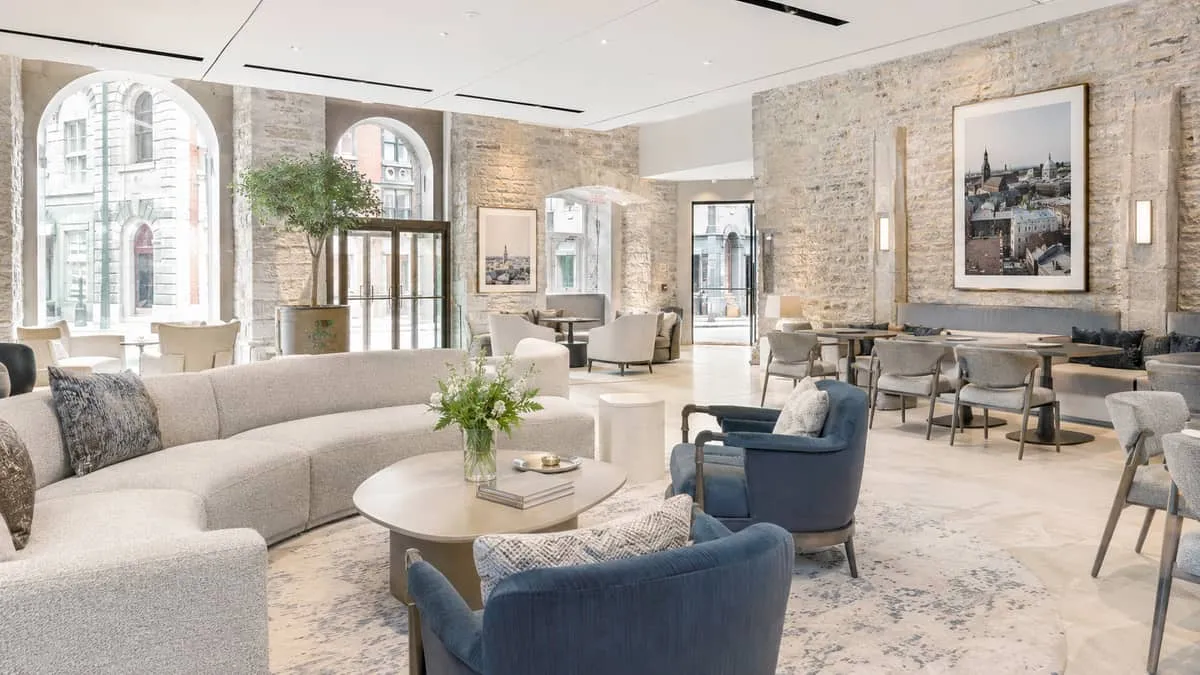
If you've walked through Hotel Nelligan in Old Montreal or pulled up a chair at a Mile End bistro, you've seen FF&E procurement done well. What you haven't seen is the six to twelve months of sourcing, specification, and logistics that made it happen. Montreal's hospitality market is Canada's most design-literate. Owners here have seen Paris, Barcelona, and Copenhagen. They have a point of view. Getting the furniture right isn't optional. Getting the process right is where projects succeed or fail, and the projects coming through Griffintown right now are putting that reality on full display.
Griffintown and the New Montreal Development Cycle
The volume of new hotel and residential hospitality development concentrated in Griffintown over the past five years is unlike anything else in Canadian real estate. Former industrial land between the Lachine Canal and downtown has produced boutique hotels, condo-adjacent hospitality amenity floors, co-living properties, and food and beverage concepts at a pace that has fundamentally changed how FF&E suppliers and procurement consultants think about the Montreal market.
A Griffintown boutique hotel opening today is not procuring furniture the way a property in Old Montreal did fifteen years ago. The client profile is different. The design references are different. The expectations around lead times, substitution tolerance, and custom finish options have shifted. Developers active in that corridor are often working on multiple assets simultaneously, which means procurement at scale, consolidated purchasing across projects, and a more sophisticated vendor relationship model than a one-off independent operator would typically run.
For a mid-scale boutique hotel in Griffintown or Saint-Henri, a realistic FF&E budget lands between $9,000 and $20,000 per key depending on brand positioning and design scope. Properties targeting the tech and corporate traveler segment that has grown with the AI and gaming sectors are spending at the higher end of that range to differentiate on room quality. The days when a mid-market Montreal hotel could get away with generic contract product are functionally over.
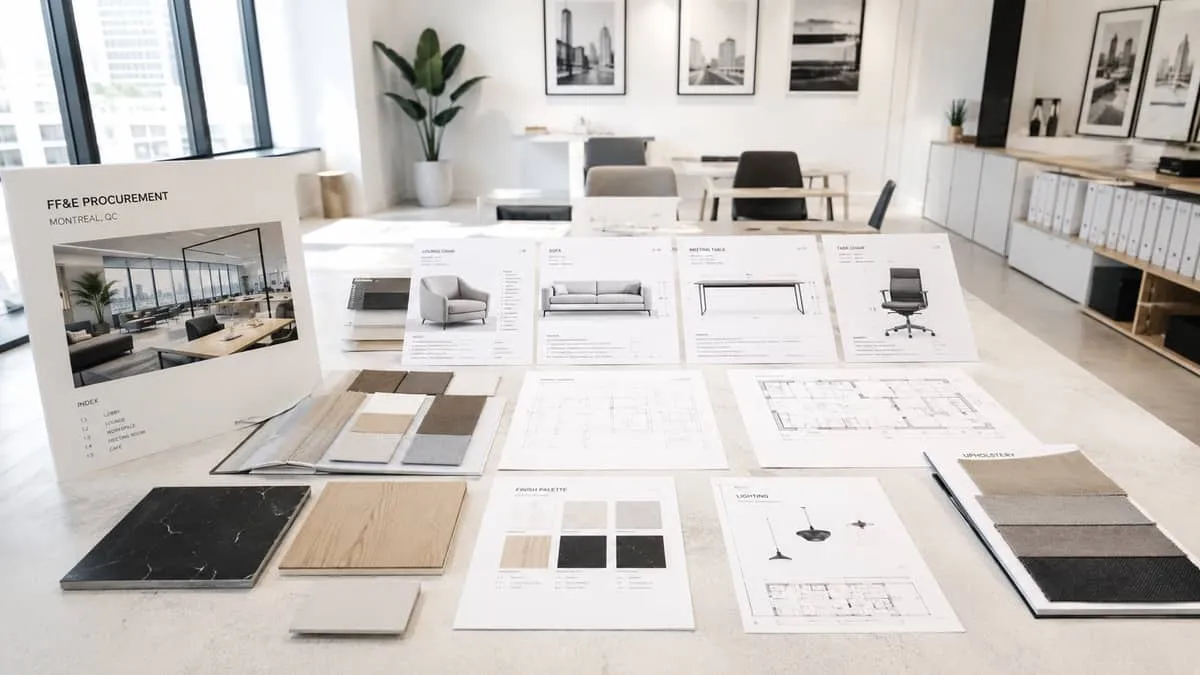
What Full FF&E Procurement Covers for a New Montreal Property
FF&E stands for furniture, fixtures, and equipment. In a hospitality context, that means every loose and semi-fixed item that furnishes a space: guestroom beds and casegoods, lobby seating, restaurant chairs and tables, bar stools, outdoor terrace furniture, lighting fixtures, artwork, and decorative accessories. If it appears on a design drawing with a furniture tag, it's probably FF&E.
What FF&E does not cover is OS&E, operating supplies and equipment. OS&E is everything the property needs to actually operate: linens, tableware, glassware, kitchen smallwares, cleaning supplies, and guest amenity products. The two categories are budgeted and procured separately. Confusing them is one of the most common errors new owners make when planning a project, and it creates budget problems late in the timeline when there's no room to absorb them.
For a new Montreal property, full FF&E procurement means managing the complete sequence from specification through installation sign-off. That includes receiving the designer's FF&E schedule, going to market for pricing across multiple contract furniture vendors, negotiating volume terms, issuing purchase orders, tracking production, coordinating cross-border freight where applicable, managing customs brokerage on American-sourced product, scheduling phased delivery to align with construction access, and overseeing installation. On a 120-key hotel, that is a full-time coordination role from schematic design through opening.
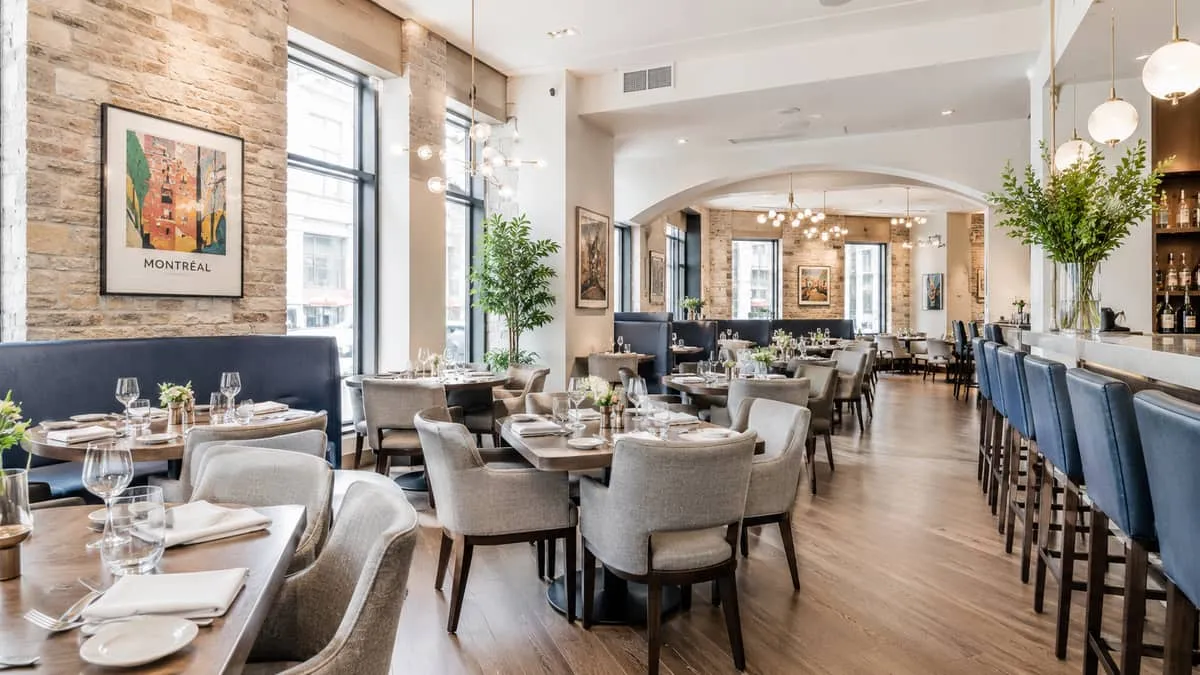
For food and beverage projects in Old Montreal or along the Notre-Dame Street corridor, the scope skews differently. A restaurant concept at Auberge du Vieux-Port's level is budgeting heavily for seating, outdoor terrace pieces, and custom or semi-custom millwork-adjacent fixtures that match the heritage stone context of the building. The terrasse culture in Montreal is not a seasonal afterthought. Operators treat the patio season from May through September as a primary revenue period, and the outdoor furniture program is specified to match the interior quality, not to be a cheaper version of it.
The Bilingual Procurement Reality
Montreal is a bilingual city in practice, not just in policy, and FF&E procurement reflects that. Supplier documentation, specification sheets, RFQ packages, purchase orders, and on-site installation coordination need to function in both French and English. That's not a bureaucratic nuance. It's a daily operational reality that affects how smoothly a project runs.
Some contract furniture manufacturers and their rep agencies cover Quebec from Toronto offices. Their teams may be English-primary, which means product documentation arrives in English and any technical clarification happens in English. That works for a developer comfortable operating in both languages. It creates friction on projects where the on-site contractor and trades are working in French, and where installation week communication needs to happen quickly and without interpretation delays.
Suppliers with genuine Quebec representation, meaning local reps who operate in French as a primary language, are meaningfully more useful on Montreal projects. The difference shows up during installation coordination, during deficiency resolution, and during any conversation where something has gone wrong and needs to be corrected fast. Knowing which suppliers have active Montreal representation versus which route their Quebec business through another province is something an experienced procurement consultant brings as baseline knowledge.
Specification documents on larger projects are increasingly being produced in both official languages, particularly on projects with government or institutional backing, or where the ownership group has French-language obligations. That adds scope to the designer's and consultant's workload, but it also reduces downstream confusion when the spec is being read by multiple parties across different language contexts.
How the Tech and AI Corporate Segment Is Changing FF&E Decisions
The growth of Montreal's AI and technology sector, anchored by institutions like Mila and companies that have built research and commercial operations around that ecosystem, has created a corporate travel segment that makes FF&E decisions differently than the traditional tourism and government markets that drove previous development cycles in the city.
Corporate guests from the tech sector traveling to Montreal for conferences, research partnerships, or extended project stays are not particularly price-sensitive on accommodation, but they are quality-sensitive in specific ways. They notice the desk and the chair because they are actually going to use them for several hours a day. They notice the bed because sleep quality affects their work. They are less focused on lobby grandeur and more focused on whether the room functions as a productive environment.
This has pushed a meaningful segment of the boutique hotel market toward workspace-forward guestroom FF&E. That means desks specified for actual use, not decorative desks that look good in a room rendering but provide inadequate surface area. It means task seating with genuine ergonomic function. It means reading light placement that accommodates both leisure and work use. The Ubisoft effect is real in Montreal: the gaming and tech sectors have raised the baseline expectation for what a good working environment looks like, and hotels serving that corporate clientele are specifying FF&E accordingly.
This is a different brief than a property primarily targeting Grand Prix weekend guests or Jazz Festival visitors, where the priority is atmosphere, social spaces, and design impact. Both profiles are active in Montreal simultaneously. The procurement implication is that a Griffintown boutique hotel serving a mixed leisure and corporate tech clientele needs a guestroom FF&E program that performs on both axes, which is a harder specification problem than optimizing for one segment alone.
The gaming and film production industries, Ubisoft and the production companies that have made Montreal a major film city, also generate extended-stay corporate demand that shapes FF&E selection. Long-stay guests notice furniture quality differently than short-stay guests. The wear pattern is different. The expectation of comfort is higher. Procurement for properties serving that segment needs to weight durability and daily comfort more heavily than visual impact in a styled photograph.
Working with Designers from Notre-Dame to Nelligan
Most Montreal hotel and restaurant owners work with a design firm before anyone talks to a furniture rep. That's the right sequence. The interior designer develops the concept, the space plan, and the furniture specifications before procurement begins. By the time sourcing starts, you should have a full FF&E schedule: a line-by-line document listing every item, the quantity, the finish, the fabric, and the budget target.
The designers active on Montreal hospitality projects bring a particular sensibility shaped by the city's European influences. The café culture of the Plateau, the heritage materiality of Old Montreal stone and brick, the industrial loft aesthetic that has defined Griffintown residential development, and the confident modernism of projects like Le Mount Stephen all represent distinct visual languages that procurement has to translate into specific, sourceable, contract-grade products.
Where projects run into trouble is when procurement starts too early, before the design is fully resolved, or too late, when the opening date is already set and lead times cannot be accommodated. The best Montreal projects coordinate design milestones and procurement timelines together from the start. That typically means bringing a procurement consultant into the conversation around schematic design, not at construction documents.
For restaurant projects in the Plateau or Mile End, the designer's vision carries significant brand weight. The independent restaurant culture in those neighborhoods is sophisticated. Operators who have studied what makes a room feel right at that level of the market are not interested in substitutions that compromise the concept. Procurement's job is to source that vision accurately and on budget, not to negotiate it away.
Scheduling Around Grand Prix, Jazz Festival, and the Construction Calendar
Lead times for standard contract furniture lines in Montreal follow the same general North American rhythm: sixteen to twenty-four weeks for upholstered seating, twelve to sixteen weeks for casegoods, and six to ten weeks for tables and occasional pieces. The complication is project scheduling against the Montreal event calendar and the city's construction window.
If your delivery targets fall anywhere near Grand Prix weekend in June or the Jazz Festival window that immediately follows, expect logistics disruptions in the Old Montreal and downtown core. Street closures, event infrastructure, and increased commercial traffic in those neighborhoods can delay delivery attempts by days. Experienced procurement coordinators build buffer into those windows as a matter of routine. First-time owners and developers who haven't lived through a Montreal project during festival season consistently underestimate this.
The winter construction reality matters too. Montreal's construction season has hard edges that most other Canadian cities don't face at the same intensity. Projects that miss a fall completion window often find themselves managing FF&E storage through the winter, paying warehousing costs and managing the risk of damage during multiple handling cycles. Procurement timelines that are realistic about Montreal's construction calendar prevent that outcome.
Freight and duties create their own scheduling considerations. Most Montreal hospitality projects source a significant portion of FF&E from American contract manufacturers. That means cross-border logistics, brokerage fees, and potential tariff exposure depending on product category and country of origin. A procurement consultant who prices these in from the start produces budgets that hold. One who adds them as line items late in the process produces surprises that the owner has to absorb.
Installation, Union Trades, and the Final Mile
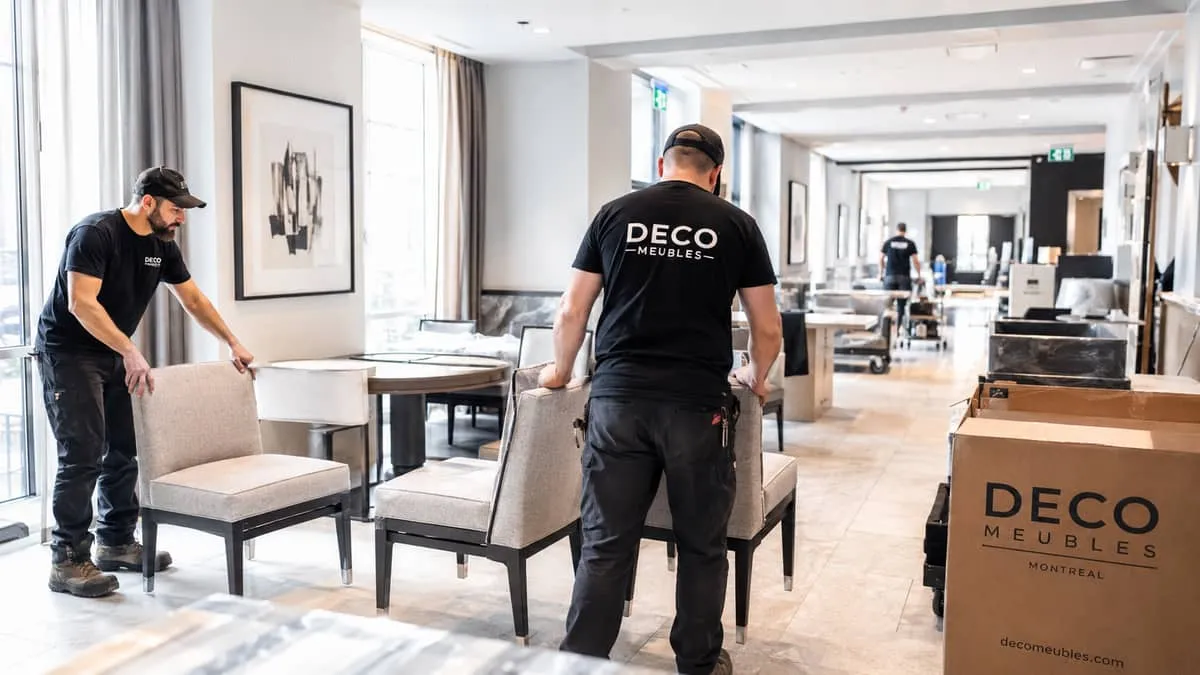
Installation coordination in Montreal means working within a union trades context for most commercial hotel projects. Knowing which pieces require union labor to position versus which your FF&E installation team can handle independently is a conversation that needs to happen between your general contractor and procurement team before trucks arrive at the dock. Getting this wrong means delays on opening day, which in Montreal's competitive hospitality market has real revenue consequences.
The final week before opening is where every gap in the procurement process becomes visible. Missing pieces that were not tracked carefully enough. Damage from freight that wasn't documented at delivery. Fabric that arrived in the wrong COM. Hardware that doesn't match the finish spec. A well-run procurement process has documented inspection protocols at the warehouse and again at delivery, so that deficiencies are identified and resolved before installation, not discovered after the room is made up and the photographer is booked.
For properties in Old Montreal with heritage building constraints, the installation logistics add another layer. Narrow corridors, freight elevator limitations in converted nineteenth-century structures, and building management coordination for access windows all affect how installation is scheduled. Hotels like Nelligan and Auberge du Vieux-Port operate within physical constraints that a new Griffintown build simply doesn't have. Procurement and installation planning needs to account for the building type, not just the furniture schedule.
Getting FF&E procurement right in Montreal comes down to timeline discipline, supplier relationships that include genuine Quebec representation, bilingual documentation that functions for every party in the project chain, and a procurement process that runs in sync with both your design schedule and the Montreal construction and events calendar. If you're planning a hotel or restaurant project in Montreal and want to understand how to structure your furniture sourcing from specification through installation, we can help you think through the process.
If you are sourcing FF&E for your Montreal property, the fastest way to real numbers is to tell us what you need. Request a quote with your quantities and timeline.