Montreal's event calendar is not like other Canadian cities. When the Formula 1 Canadian Grand Prix lands at Circuit Gilles Villeneuve every June, the corporate hospitality machine that runs alongside it is one of the most demanding in North America. When the Montreal Jazz Festival opens across the Quartier des Spectacles, it draws over two million attendees across eleven days, the largest outdoor jazz festival crowd on the planet. And when the Palais des Congres hosts a major international congress, it does so in both official languages, serving delegates from every continent in a facility that sits at the intersection of Old Montreal and downtown. These are not abstract market conditions for banquet event furniture buyers in this city. They are the specific pressures your furniture inventory has to survive, and thrive in, season after season.
Grand Prix Weekend: Furniture That Performs Under Corporate Hospitality Pressure
The Grand Prix is when Montreal's banquet furniture earns its keep. From the Wednesday before race day through to Sunday night, the city's hotel event rooms, private dining rooms, and rooftop terrasses operate at maximum commercial intensity. Sponsors, partners, and corporate clients host invitation-only dinners, pre-race breakfasts, and late-night receptions with guest lists that include executives who have seen event rooms in Singapore, Monaco, and Abu Dhabi. The standard of presentation matters.
The pattern that plays out across Le Mount Stephen, the W Montreal, and the event spaces tucked into Old Montreal's stone-walled heritage buildings is a rapid succession of format changes. A room that hosts a seated dinner for 120 on Thursday night needs to become a standing cocktail reception for 200 on Friday, then a boardroom-format sponsor briefing on Saturday morning. That is three complete turnovers in under 48 hours, often with the same furniture inventory.
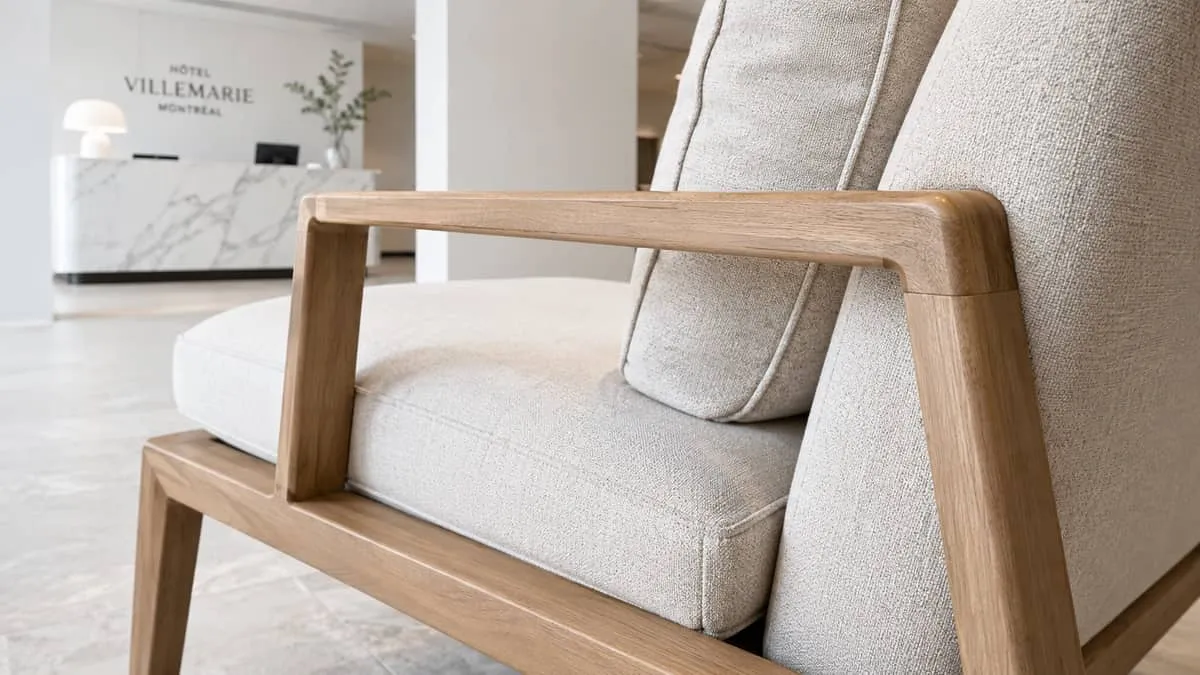
What makes that possible is a specific kind of procurement decision: stacking banquet chairs rated for 300 or more stack cycles, with a frame construction that does not show racking damage after the second year of heavy use. For Grand Prix-caliber events, resin Chiavari chairs in gold or silver finish are the dominant choice in Old Montreal venues because they match the aesthetic expectation of European-influenced corporate entertainment. Resin cleans faster than wood and does not splinter when dropped by a crew working under time pressure. Pair them with 60-inch rounds on locking-leg folding bases and you have a core format for any plated dinner format your Grand Prix clients will request.
For cocktail and standing reception formats, the high-top table is not optional. Venues that underinvest in cocktail furniture inventory discover it during Grand Prix week, when every corporate client wants a reception format and there are not enough high-tops to cover the floor properly. The standard spec is a 30-inch diameter top on a height-adjustable base, in a finish that does not require a tablecloth to look presentable.
Palais des Congres: Convention Scale in a Bilingual Context
The Palais des Congres de Montreal is one of Canada's premier convention facilities, and the furniture requirements it creates for satellite venues across the city are significant. When a major congress books the Palais, the overflow hospitality, associated dinners, and networking events land in hotels from the Vieux-Port waterfront to the Plateau. The medical, legal, and scientific conferences that cycle through the Palais year-round bring delegates who expect professional-grade event environments.
Convention configurations at this scale require a different calculation than Grand Prix hospitality. The emphasis shifts from aesthetic impression to operational efficiency and long-duration comfort. A conference dinner for 400 delegates is not a two-hour cocktail reception, it is a four-hour seated event where chair comfort becomes a measurable factor in attendee satisfaction. Padded banquet chairs with lumbar support and linked-row capability matter here. The linked-row feature is underappreciated until you manage a room where a section needs to convert from banquet seating to theater rows for an address, then flip back to dinner layout.
The bilingual dimension of Montreal's convention market also affects procurement in ways that are specific to this city. Palais des Congres events often serve mixed French and English audiences, and the professional environment expected at both language communities is the same. Your furniture supplier needs to be able to support you in both official languages, not as a courtesy but as a practical requirement for warranty claims, replacement orders, and logistics coordination. A supplier based in Ontario or the US who cannot provide bilingual documentation creates friction in your Quebec operations every time something needs resolving.
Rectangular 8-foot folding tables in commercial-grade laminate top construction are the workhorse for convention-adjacent events: buffet lines, registration tables, sponsor display formats, and breakout session configurations all use this format. Specify a minimum 1.25-inch top thickness and confirm the locking leg mechanism is rated for the cycle counts your venue will put on it. In a busy convention season, these tables will see more use than any other piece in your inventory.
The Montreal AI and Tech Conference Market
Montreal's position as a global artificial intelligence research hub creates a distinct conference market that most commercial furniture buyers in other Canadian cities do not encounter at the same scale. The ecosystem around Mila, the Quebec AI Institute, and the cluster of AI companies that have built operations in the city generates a consistent flow of technical conferences, research summits, investor events, and policy forums. This market behaves differently from traditional corporate event clients.
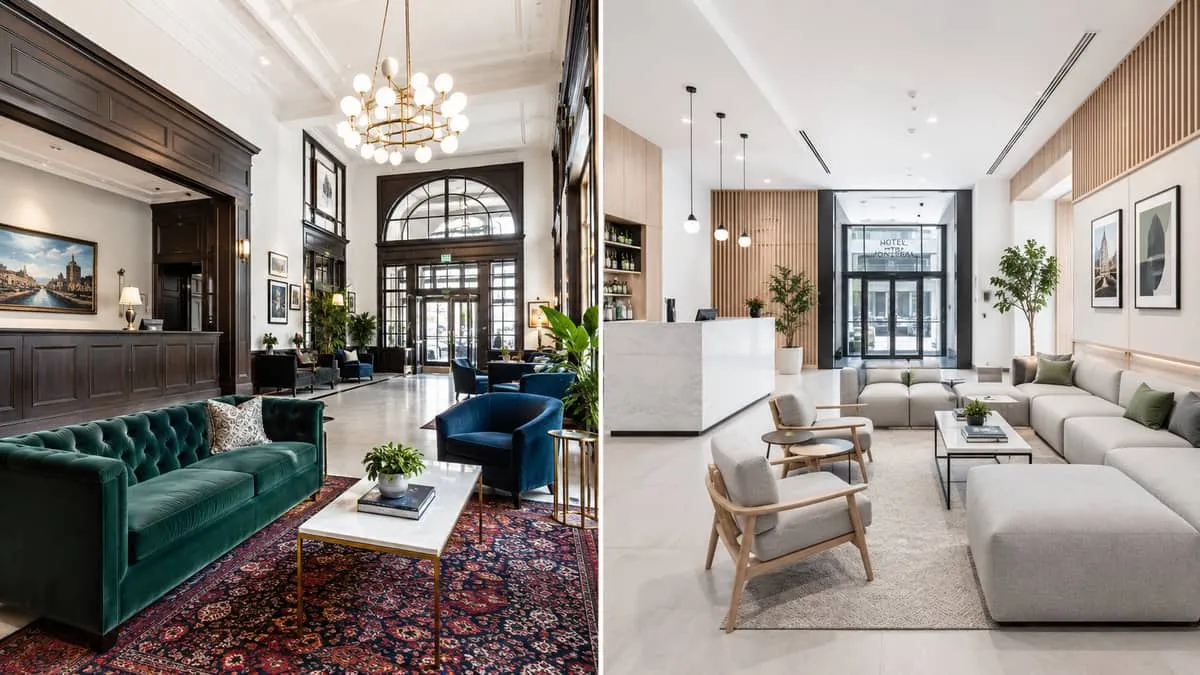
Tech conference events in Montreal tend to favor informal configurations over traditional banquet setups. Networking receptions with high-tops and lounge-style seating zones matter more than plated dinner formats. The preference runs toward environments that allow conversation and movement rather than rows of chairs facing a stage. Venues that serve this market successfully have invested in modular lounge furniture that can be deployed alongside standard banquet inventory, sectional sofas and club chairs in commercial-grade upholstery that hold up to heavy use, and occasional tables that work as both surface area and informal meeting points.
The Griffintown neighborhood, where a significant portion of Montreal's tech sector has settled into converted loft buildings and new boutique hotel development, is a natural geography for these events. The industrial-aesthetic venues in Griffintown expect furniture with a considered visual language, raw materials, metal frames, and fabric choices that read as intentional rather than default. This is not a market where standard beige upholstered banquet chairs read as appropriate without a strong design rationale.
For venues serving the tech and AI conference market, the investment in presentation is as important as the investment in durability. A startup's product launch dinner at a Griffintown event space, or an investor dinner adjacent to a Mila conference, is the kind of event where your furniture is in the background of every photo that ends up on company social channels.
Jazz Festival Season and the Summer Capacity Problem
The Montreal Jazz Festival concentrates event demand across a compressed summer window in a way that reveals inventory gaps venues did not know they had. Rooftop bars in Old Montreal, private event rooms at Hotel Nelligan and Auberge du Vieux-Port, and the private dining rooms of restaurants throughout the Quartier Latin see booking patterns during Jazz Fest that the rest of the year does not produce.
The specific pressure this creates is a simultaneous demand for outdoor-rated and indoor furniture at the same time. The terrasse culture that is central to Montreal hospitality means that patio furniture is not a secondary category during Jazz Fest, it is front-line revenue. Commercial-grade aluminum frames with UV-stable fabric on seat cushions are the minimum specification for outdoor banquet seating that will perform across a full Montreal summer. Rust resistance matters on frames, given the combination of rain, humidity, and repeated cleaning that summer event furniture endures.
The Old Montreal venue cluster, anchored by properties like Hotel Nelligan and Auberge du Vieux-Port with their courtyard and rooftop spaces, sets a visual tone that demands furniture investment. These are heritage stone buildings hosting clients who have specifically chosen this environment for its character. Furniture that feels out of place in a centuries-old vaulted room, or on a rooftop with a view of the St. Lawrence, is a detractor from the experience clients are paying for.
Jazz Fest also creates demand from venues outside the core. Restaurants along the Little Italy corridor on St-Laurent, the independent bistros of Plateau-Mont-Royal and Mile End, and the established event rooms of the Gay Village all participate in the extended festival season, running private events for groups that want the city's energy without competing for space at festival-adjacent venues. For these operators, the flexibility of stackable inventory that stores compactly between events is not a luxury, it is a practical necessity.
Storage, Changeover, and the Logistics That Determine Real Capacity
The furniture that moves fastest in a Montreal event venue earns its cost back through changeover speed, not through per-unit pricing. Chair dollies rated for 30 or more chairs per load cut your staff time between setups. Table carts with pneumatic wheels navigate the tight service corridors in Old Montreal's heritage buildings without gouging walls. If your storage room is not dimensioned around the actual stacked footprint of your furniture inventory, you will pay for that mismatch every event.
The calculation is straightforward: a room that takes three hours to flip costs more in labor and lost booking capacity over a year than the premium between a budget folding table and a properly specified commercial-grade one. In a market where Grand Prix week and Jazz Fest compress your peak revenue into narrow windows, changeover speed is revenue.
For venues working with older buildings in the Vieux-Port and Plateau neighborhoods, where service elevator capacity and storage room dimensions are constrained by century-old building layouts, this calculation is even more direct. Compact stacking dimensions, lighter aluminum frames over steel where weight matters, and furniture that does not require disassembly for storage all contribute to operational efficiency that shows up in your actual event capacity numbers.
Lead Times and Sourcing for the Quebec Market
Furniture procurement for Montreal venues requires accounting for logistics realities that buyers in Ontario or British Columbia do not face in the same way. Suppliers based outside Quebec need to manage bilingual documentation requirements for customs and freight. Import timelines from US suppliers can extend significantly when documentation is incomplete. Build in 12 to 14 weeks minimum for large orders from non-Quebec suppliers, and 8 weeks even for domestic suppliers during the spring rush when every venue in the country is restocking before summer season.
Working with a supplier who has established distribution relationships in Quebec is not a preference, it is a practical necessity if your target is to have inventory in place before Grand Prix weekend or the Jazz Festival opening. A missed delivery window during peak season in Montreal is not a minor inconvenience, it is revenue you cannot recover.
The total cost of ownership calculation that matters in Montreal is not unit price, it is cost per cycle across your expected event volume. A banquet chair at $45 that requires replacement after 200 cycles costs more over three years than a $90 chair rated for 3,000 cycles, in a city where peak season alone puts significant cycle counts on your core inventory. Get the specification right at purchase, and the furniture earns back the premium before the second Grand Prix weekend.
Every Montreal venue has its own volume, layout, and turnaround demands, and banquet and event furniture pricing follows from those specifics. Request a quote and we will scope it to your project.