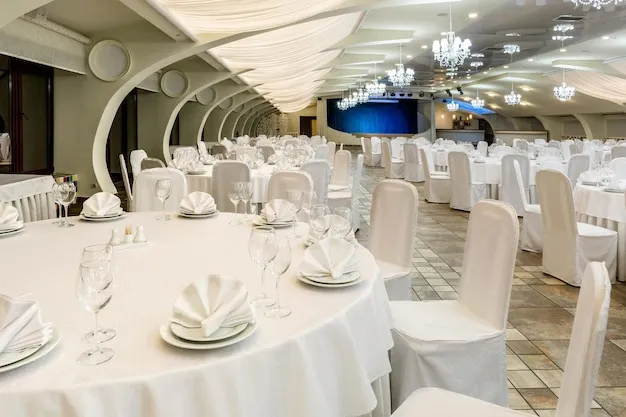
Build a banquet-furniture budget from the selected chairs, tables and handling equipment. The under-one-hundred to four-hundred-dollar chair span discussed here is an illustrative comparison, not a verified market-price series. Identify exact models, currency and delivered scope before comparing quotes.
Want a number for your specific project? Use our commercial furniture cost calculator with your own itemized quote inputs. The numerical bands below are illustrative assumptions, not current supplier prices; they have not been reconciled with lower ranges elsewhere on this site because model, currency and service scope are unspecified. If you do not yet have a guest count, use the banquet seating calculator for an initial scenario and then verify the actual room layout.
The main categories you're budgeting for
Banquet furniture is not a single product. Your budget breaks into a few distinct lines.
Banquet chairs are the highest volume item and the one that absorbs the most daily abuse. Stacking banquet chairs are the standard choice for ballrooms and event venues.
Banquet tables are commonly specified as 60-inch and 72-inch rounds plus 6-foot and 8-foot rectangles.
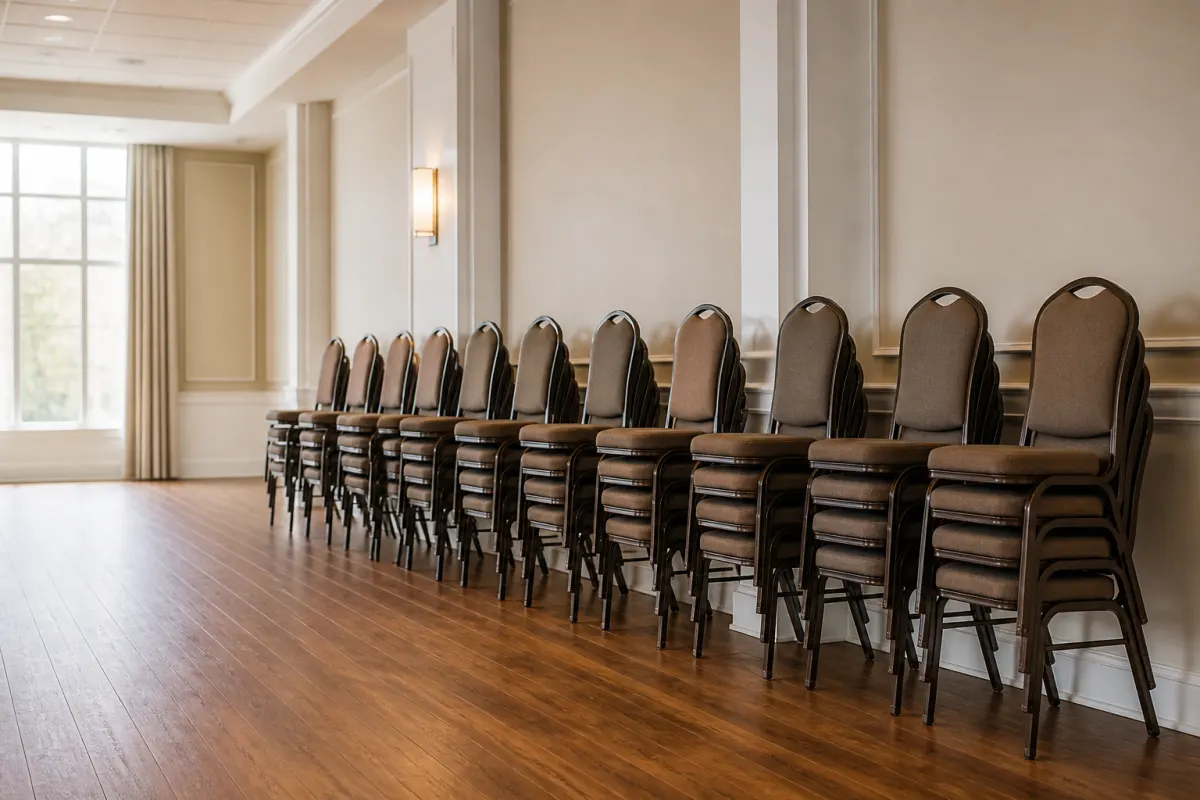
Transport and storage covers chair dollies, table carts, and chair caddies. These are not optional at volume. A venue moving 300 chairs per event without carts is paying for labor and breakage.
Budget chairs, tables and compatible carts/dollies together. The ten to fifteen-percent handling-equipment allowance is an illustrative input, not a verified share of every project; replace it with itemized cart quantities and delivered quotes.
What banquet chairs actually cost
Banquet chair pricing tracks closely with frame material and upholstery quality.
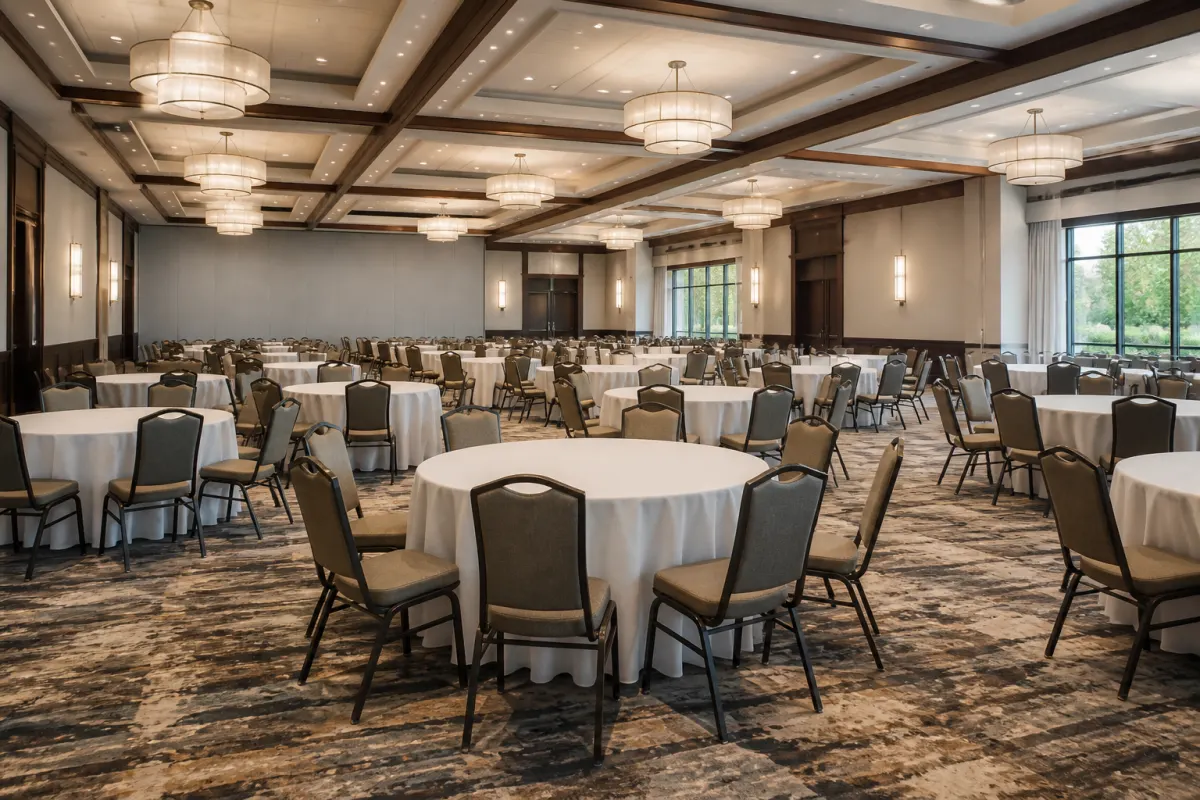
Steel-frame stacking banquet chairs use a chosen 95 to 175 dollar unit-price band here. Specify the exact frame, padded seat/back, upholstery, commercial-use documents and delivered scope before replacing that input with a quote.
Aluminum stacking chairs use a chosen 140 to 275 dollar budget band here. Confirm the exact unit weight, coating, exposure limits and delivered quote; aluminum alone does not establish a longer service life in a coastal or humid venue.
Chiavari chairs use chosen 95 to 190 dollar resin and 200 to 400 dollar wood/aluminum bands here. Select the actual model for its permitted transport and stacking conditions rather than treating material as proof of rental-fleet durability.
Compare the selected chairs' frame/joint, upholstery, ganging and stack documents alongside their itemized quotes. Thicker tube, a welded connection or a higher Wyzenbeek result does not by itself explain a quoted price difference or guarantee performance.
What drives the price difference
A sixty-dollar unit-price difference is an illustrative comparison input, not a verified quote for two equivalent models. Check the exact specification and delivered/service scope before assigning the difference to frame, upholstery or accessories.
Frame gauge and joinery. Request the selected model's tube dimensions, material, joints and actual load/handling tests. Tens of thousands of stack-and-sit cycles is a test-example scale, not a universal commercial rating. Neither origin nor welded/bolted labels establish a one-season failure forecast.
Upholstery rating. The 50,000 and 10,000 to 15,000 Wyzenbeek figures are test-result examples, not universal commercial/residential cutoffs or a forecast of months in service. Confirm textile category and method; ACT's abrasion guidance explains why test counts do not directly predict lifespan.
Foam density. The 35 to 40 ILD range is a chosen firmness example, not density. Ask for both density with its units and firmness under the stated test, plus relevant fatigue and cushion specifications. PFA's foam-performance guidance distinguishes those properties; neither value alone guarantees shape retention.
Stack height and ganging. Confirm each exact model's approved stack/cart and ganging configuration. Calculate storage and time the real setup routine before assigning a saving; those features do not automatically establish a higher manufacturing cost or lower labor bill.
Banquet table costs
Round banquet tables, 60-inch, use a chosen 350 to 900 dollar band here. Confirm the exact top, folding frame/base, edge, finish and delivered quote.
Rectangular banquet tables, 6-foot and 8-foot, use a chosen 300 to 800 dollar band here; quote the exact model and handling equipment.
Cocktail and highboy tables use a chosen 225 to 550 dollar band here; verify the selected top/base pairing and full order scope.
Table price is driven by top construction, edge detail, base stability, finish quality, and contract-grade durability. A stable base and a top that withstands repeated commercial use are worth the premium for a venue running hundreds of setups a year.
Buying in bulk: minimums and savings
Ask for quantity breaks for the exact banquet models and order scope. A larger order does not automatically reduce unit price; compare the delivered totals and any storage or spare-unit costs.
Minimum orders depend on the product and may be specified by carton or pallet. Confirm those requirements before approving the layout, and request a formal quote for the exact chair count, finishes, and delivery arrangements.
Request combined and separate delivered quotes for the same approved chairs, tables and carts. Consolidation may change freight or administration, but one purchase order does not guarantee better pricing or fewer shipments. Confirm the carrier, phases and included service before comparing totals.
Lead times and planning
Treat 10 to 14 weeks as a provisional custom-order schedule scenario. Confirm stock availability, approval milestones, production, shipping and receiving dates for the exact order.
A 14-week planning allowance is an example, not a sufficient lead time for every project. Work backward from the supplier's confirmed schedule and allow receiving, inspection and setup before the first event. Check maker-approved storage conditions and compatible carts for any furniture arriving early.
The bottom line
Budget chairs, tables and compatible handling equipment together. Compare exact frame, upholstery, cushion and warranty documents, then replace the illustrative prices and 14-week timing input with the supplier's itemized quote and dated schedule.
Submit a furniture request with the approved seat count, table mix, handling equipment and delivery requirements. Independent suppliers may provide itemized quotes and actual dates; neither the article's illustrative ranges nor submission of the request guarantees a price or availability.
Related reading: Commercial Seating Buyer's Guide · Ballroom Furniture Guide · How to Order Commercial Furniture in Bulk