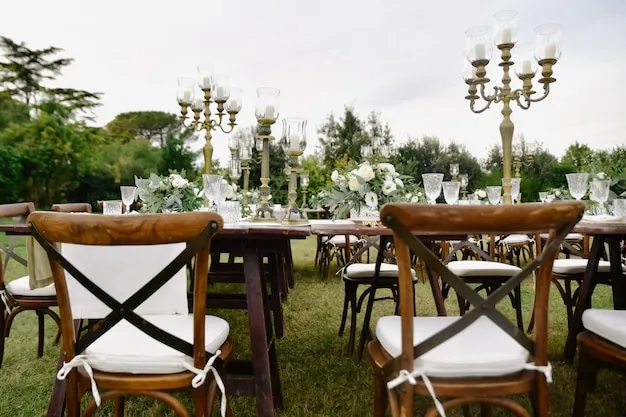
Event venue furniture lives a harder life than almost any other commercial seating. It gets stacked, rolled, hauled, reconfigured, and stored, sometimes several times a week, across events that demand wildly different looks. A wedding on Saturday becomes a corporate conference on Monday. The furniture has to flex, survive the abuse, and still photograph well. Here is how to build a venue furniture package that earns its keep.
Start with how the space will actually be used
Before you spec a single chair, map your event types. A ballroom that hosts weddings, galas, and conferences has different needs than a corporate meeting venue or an outdoor event lawn. List your formats, your typical guest counts, and how often the room turns over. Everything downstream, from chair choice to storage planning, follows from this.
The defining requirement for event space seating is reconfigurability. Unlike a restaurant where the layout is fixed, a venue rearranges constantly, so furniture has to move fast, stack tight, and set up cleanly.
The core categories of a venue package
Most venue furniture packages are built from a handful of workhorse categories:
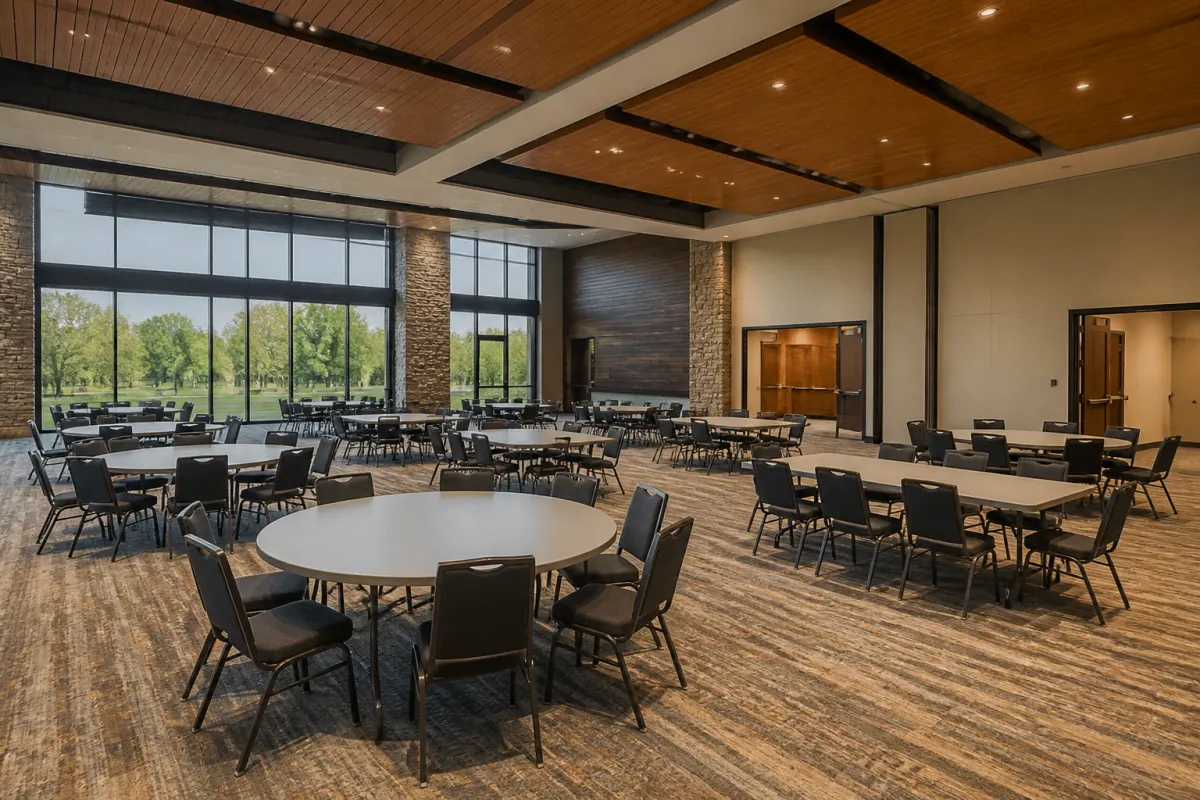
- Stacking chairs are the backbone of event seating. They set up and break down quickly, stack high for storage, and come in finishes from banquet-formal to ceremony-elegant. Look for chairs that stack 10 or more high on a dolly.
- Folding and flip-top tables give you fast reconfiguration. Round tables for banquets, rectangular for conferences and buffets, and cocktail and highboy tables for receptions.
- Lounge furniture creates conversation zones and premium areas. Modular sofas and ottomans that break apart and recombine are worth the premium for flexibility.
- Bars and back-of-house carts handle service. Portable bars and rolling carts move with the event.
- Storage equipment is the category buyers forget. Chair and table dollies, carts, and racks are not optional in a venue; they protect your investment and your staff's backs.
Sizing and capacity planning
Plan furniture around realistic capacity, not the absolute maximum the room can hold:
- Banquet rounds: a 60 inch round seats 8 comfortably, 10 tight. A 72 inch round seats 10-12.
- Conference seating: allow 18-24 inches per person at rectangular tables.
- Theater style: stacking chairs in rows let you maximize headcount for presentations and ceremonies.
- Cocktail flow: highboy and bistro tables at 42 inch height keep standing receptions moving.
Buy chair and table counts that cover your largest common event plus a buffer for breakage and overlap, not just your average night.
Materials and durability for heavy rotation
Event furniture takes constant handling, so construction matters even more than in fixed seating.
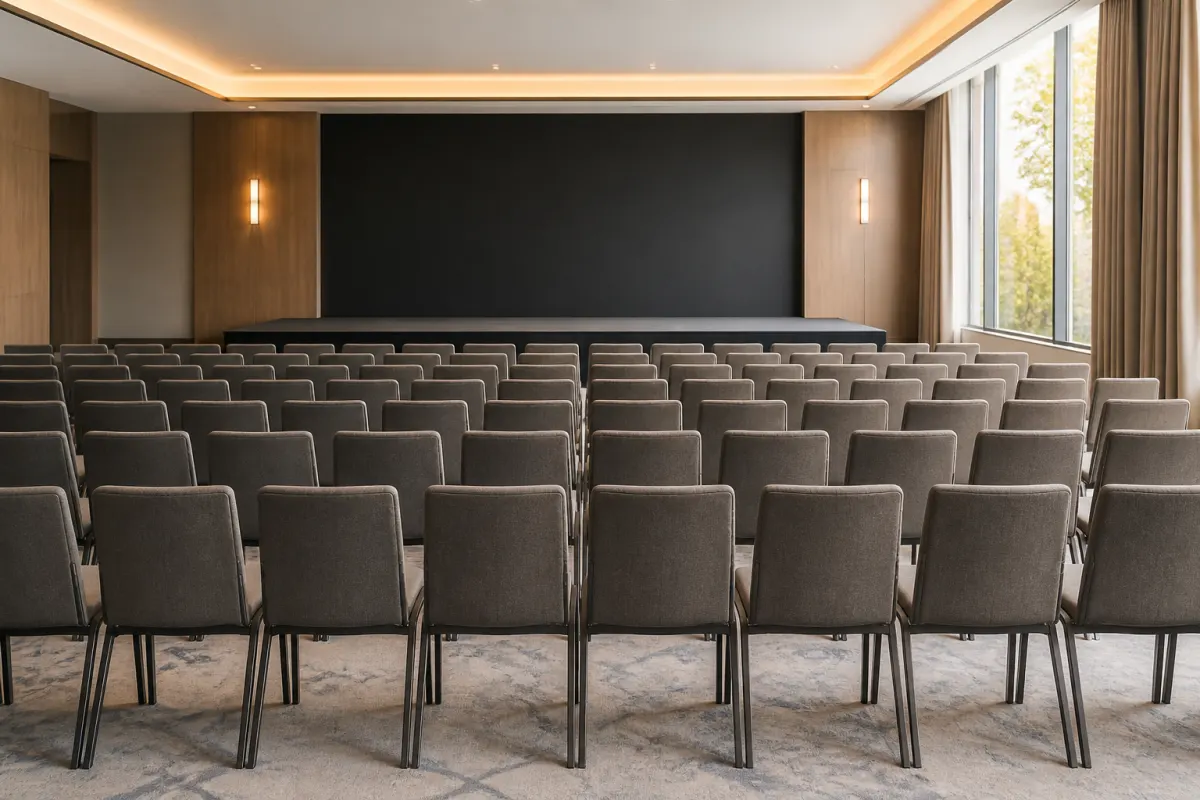
- Frames: welded steel or aluminum stacking chairs hold up to repeated stacking and transport. Aluminum is lighter for staff who move furniture all day; steel is heavier and very durable.
- Finishes: powder-coated frames resist the scuffs and chips that come with constant stacking and storage.
- Upholstered seats: specify commercial vinyl or performance fabric rated to a minimum of 50,000 Wyzenbeek double rubs. Padded seats add comfort for long ceremonies and dinners.
- Tabletops: sealed, wipe-clean surfaces survive spills; flip-top mechanisms should be rated for heavy commercial cycling.
- Outdoor pieces: if you host on a patio or lawn, those items need weather-rated frames and UV-resistant materials. Indoor and outdoor furniture are not interchangeable.
Ask for stacking ratings, frame material, and Wyzenbeek numbers on a venue quote. Furniture that fails under constant handling becomes a recurring replacement cost.
What drives the cost of a venue package
Event venue furniture cost is driven by volume, material, and configurability:
- Quantity. Venues buy in large counts, which lowers per-unit cost but raises the total. A single coordinated order keeps finishes consistent across the room.
- Material grade. Aluminum and premium upholstery cost more than basic steel folding chairs but last longer under rotation.
- Flexibility features. Modular lounge systems, flip-top tables, and high stack ratings carry a premium that pays back in faster turnovers.
- Storage equipment. Dollies and racks add upfront cost but extend furniture life and cut labor on every event.
When comparing packages, factor in total cost of ownership. Cheap furniture that dents, fades, or fails under heavy rotation gets replaced far sooner.
Ordering a venue package
Buying a full package is different from buying a few pieces. Bring your event formats, capacity targets, and storage constraints to your supplier and let them help you balance the package. Order in a single coordinated run so finishes match across hundreds of pieces, and fold the standard 10-14 week factory-direct lead time into your opening or renovation schedule. Plan storage and dollies into the same order, not as an afterthought.
The bottom line
Spec event space seating around reconfigurability, durability under heavy handling, and storage from day one. Buy commercial-grade frames and upholstery, plan capacity for your largest common event, and order the package as one coordinated run for consistent finishes.
Outfitting a new venue or refreshing an existing one? Request a quote with your event formats and capacity targets, and we will help you build a venue furniture package that holds up to constant rotation. Browse the Commercial Furniture Depot catalog to start.
Our take
The guide is right to build the whole package around reconfigurability and to fold storage and dollies in from day one. The metric it stops short of naming is the one a venue actually lives on: reset time. A room that becomes a wedding on Saturday and a conference on Monday is only as profitable as the labor it takes to flip it, and two chairs with identical stack ratings on paper can flip a room at very different speeds once you count how they load onto a dolly, how the tables fold, and how many trips the change takes. So before committing a package, time it. Have the supplier's samples flipped through one real configuration change by the number of staff you would actually assign, and judge the furniture on the clock, not on the spec sheet. A slightly pricier chair that shaves minutes off every turnover pays that difference back across a full event calendar in labor you stop spending on every single changeover.
The bottom line: Select a venue package on reset time, not just stack ratings. Two chairs with the same stack number can flip a room at very different speeds, so time a real configuration change with the staff you would assign and let turnover labor drive the choice.