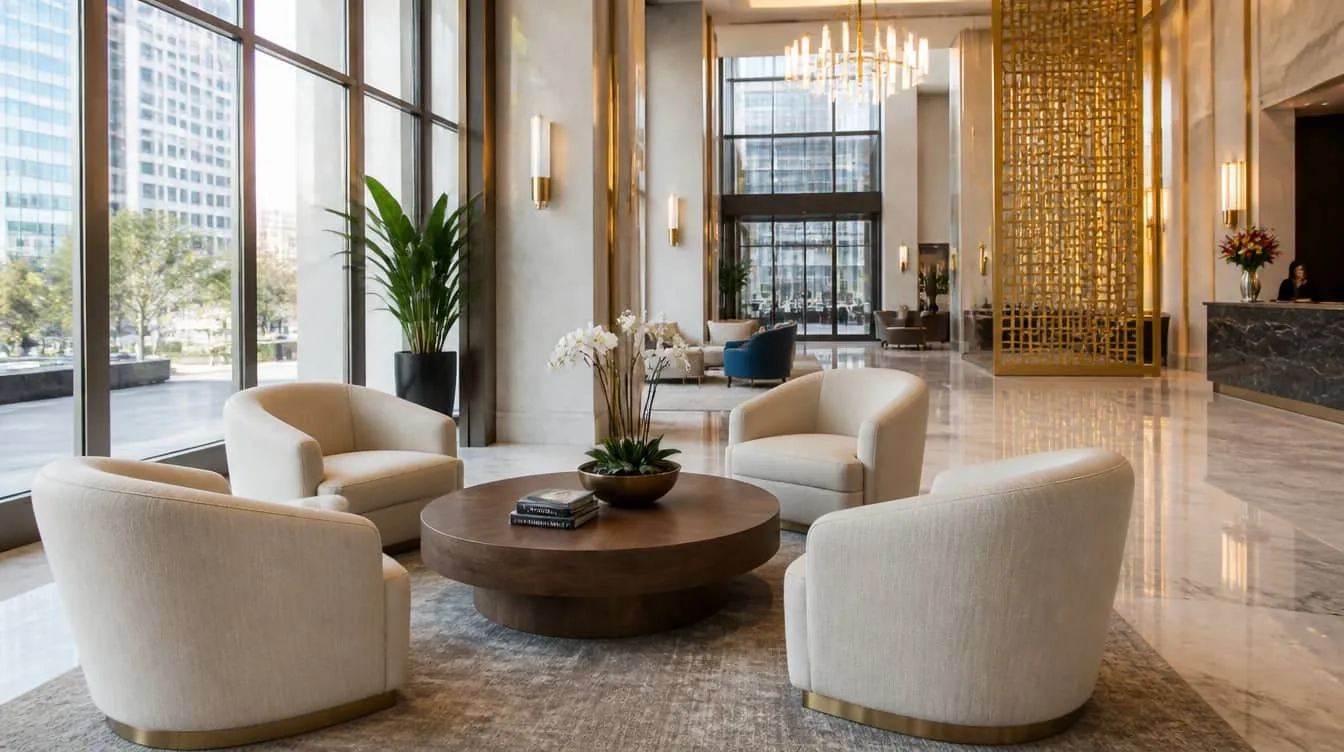
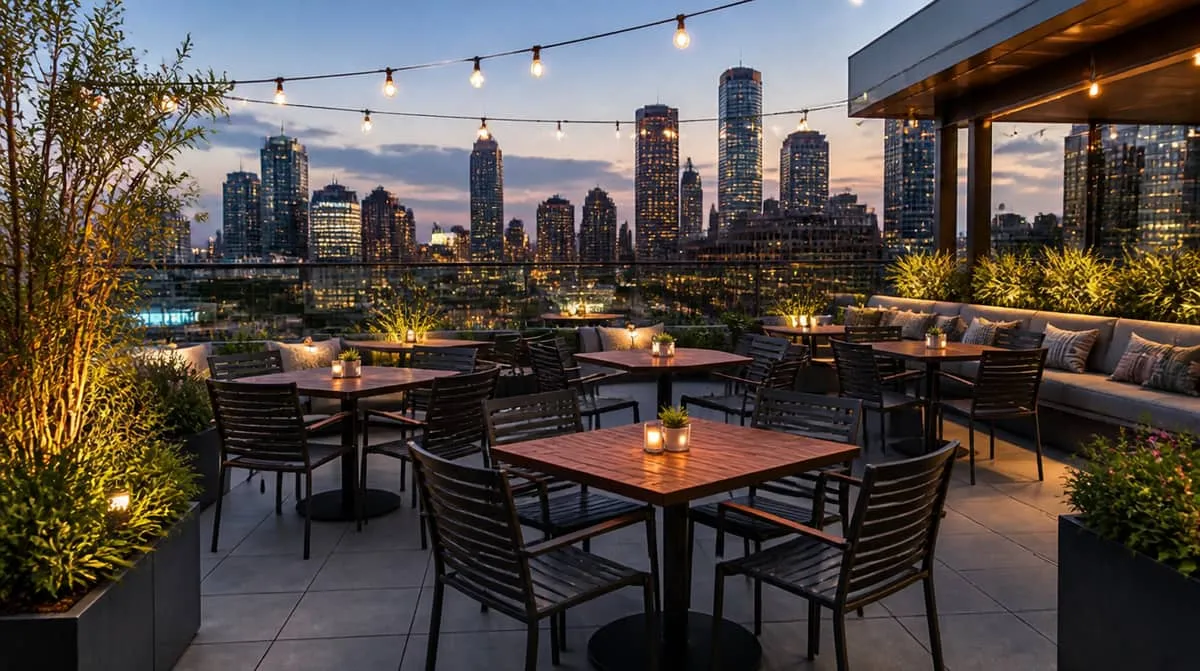
Outdoor dining in Houston gets complicated by the climate in ways that operators from other markets don't fully anticipate. The summer heat and humidity genuinely limit outdoor covers for stretches of June through September, but the shoulder seasons, October through May, are legitimately good for outdoor dining in Houston. Spring and fall evenings on a well-managed patio are some of the best dining experiences the city offers, and restaurants that have invested in quality outdoor environments capture a meaningful share of covers during those months. The mistake is either writing off outdoor dining entirely because of summer, or trying to run outdoor covers year-round without acknowledging that the summer months require a different strategy.
What this means for commercial patio furniture procurement is that you're buying product that will sit through Houston summers even when it's not being heavily used. That matters because the combination of UV exposure and high humidity is more punishing on outdoor furniture than either factor alone. Materials that might hold up reasonably well in a drier climate, or in a climate where summers are hot but not humid, will fail faster in Houston's coastal conditions. Getting the material specification right upfront saves the cost of replacing failed furniture within three to four years.
Material Selection for the Gulf Coast Climate
Aluminum is the dominant frame material for commercial patio furniture in Houston's restaurant market, and for good reasons. It doesn't rust, which is the primary concern in a coastal humidity environment. A quality powder-coated aluminum frame with a properly applied finish will hold its appearance through years of Houston weather without the rust bleeding and surface degradation that steel frames develop. The powder coat itself matters; commercial-grade electrostatic powder coating is significantly more durable than consumer-grade liquid finishes, and it's worth confirming that specification with your supplier before you order.
Wrought iron and steel frames have their aesthetic advocates, particularly for more formal patio programs at steakhouses or upscale restaurants in the Galleria and River Oaks neighborhoods where the traditional Texas dining aesthetic has an established guest base. If you commit to steel or iron frames for aesthetic reasons, the maintenance commitment is real: annual inspection for rust, touch-up coating, and the expectation that you're on a seven to ten year replacement cycle rather than fifteen-plus. For most Houston restaurant operators, aluminum gives you comparable aesthetics with significantly less maintenance.
Seat surface materials for Houston patio seating need to handle both moisture and UV. Sling seating, where a woven or solid mesh material is stretched over the frame, is comfortable, allows air circulation in heat, and dries quickly after rain. Commercial-grade sling materials in PVC-coated polyester or acrylic weave hold their color and structural integrity through years of UV exposure in a way that lower-grade materials do not. Rope weave seating has become popular in contemporary restaurant design and works well in Houston's climate when commercial-grade materials are specified; the aesthetic is appropriate for the farm-to-table and casual contemporary restaurant formats that have grown significantly in Montrose and the Heights.
Teak deserves specific mention for Houston's higher-end patio programs. Properly finished and maintained teak holds up extremely well in humid coastal climates because the wood's natural oil content resists moisture absorption and the associated swelling and cracking. The upfront cost is higher than aluminum, but teak furniture at upscale restaurants near Hermann Park or in the River Oaks dining corridor communicates a quality level that matches those environments. The maintenance requirement is real, annual oiling or sealing depending on the finish treatment, but it's manageable for properties with a facilities team.
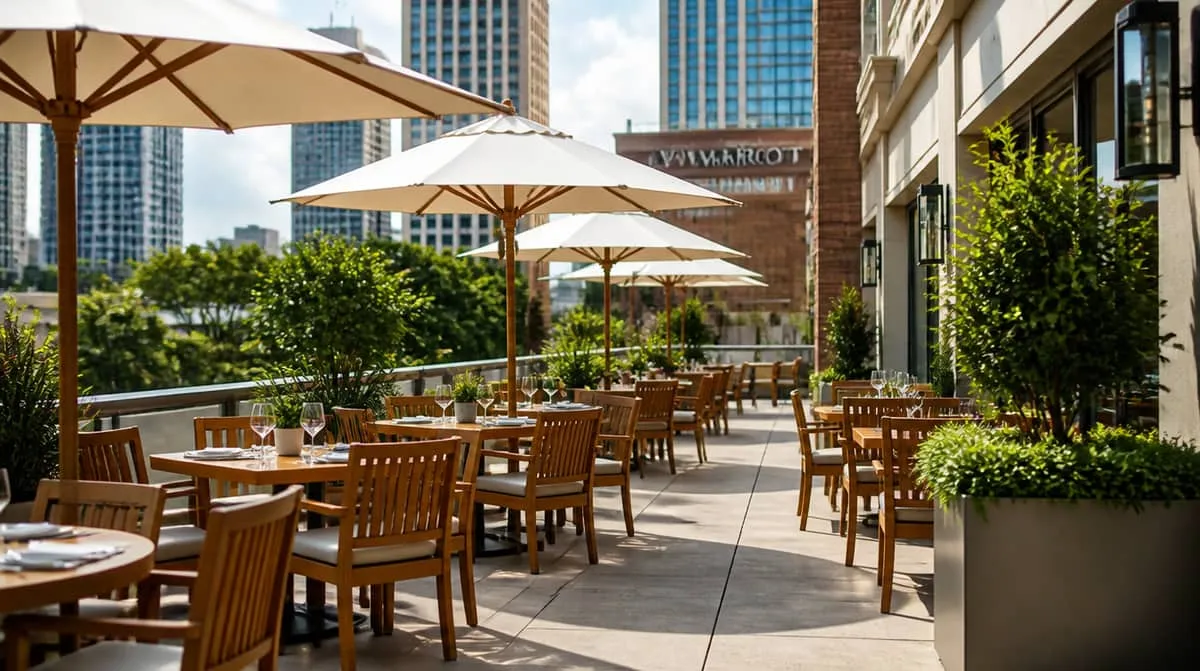
Table Specs and Layout for Houston Outdoor Spaces
Commercial patio tables need to resist leveling problems that outdoor surfaces create. Even well-maintained concrete patios have slight irregularities, and table bases with leveling glides that can be adjusted independently on each leg are worth the small cost premium because they eliminate the shimming and wobbling that drive guests and staff equally crazy. Tables that wobble consistently are a guest satisfaction problem that adds up across thousands of covers.
Table top material for outdoor use in Houston should be either cast aluminum, solid teak, or commercial-grade high-pressure compact laminate, depending on the aesthetic direction of the property. Tempered glass tops look clean and contemporary but require constant cleaning in Houston's humidity, where condensation and pollen accumulate quickly, and they're vulnerable to damage in the severe weather events that come through periodically. Laminate tops designed for outdoor use can look quite good in contemporary restaurant designs and are easy to clean and maintain. Cast aluminum tops are the most durable option but carry a higher unit cost.
Umbrella selection for Houston patio programs is a practical decision that significantly affects how much of the shoulder season your outdoor space is actually usable. Commercial-grade umbrellas with aluminum poles, properly rated bases, and commercial outdoor canopy fabric in a solution-dyed acrylic will hold up to Houston's weather far better than residential umbrellas. The base weight and anchoring system is critical in Houston, where wind gusts during storm events can topple inadequately weighted umbrellas and create genuine safety issues. Minimum 50-pound bases for standard commercial cantilever umbrellas, and engineering review for any permanent post-mount installation in a space with significant wind exposure.
Storage and Seasonal Management
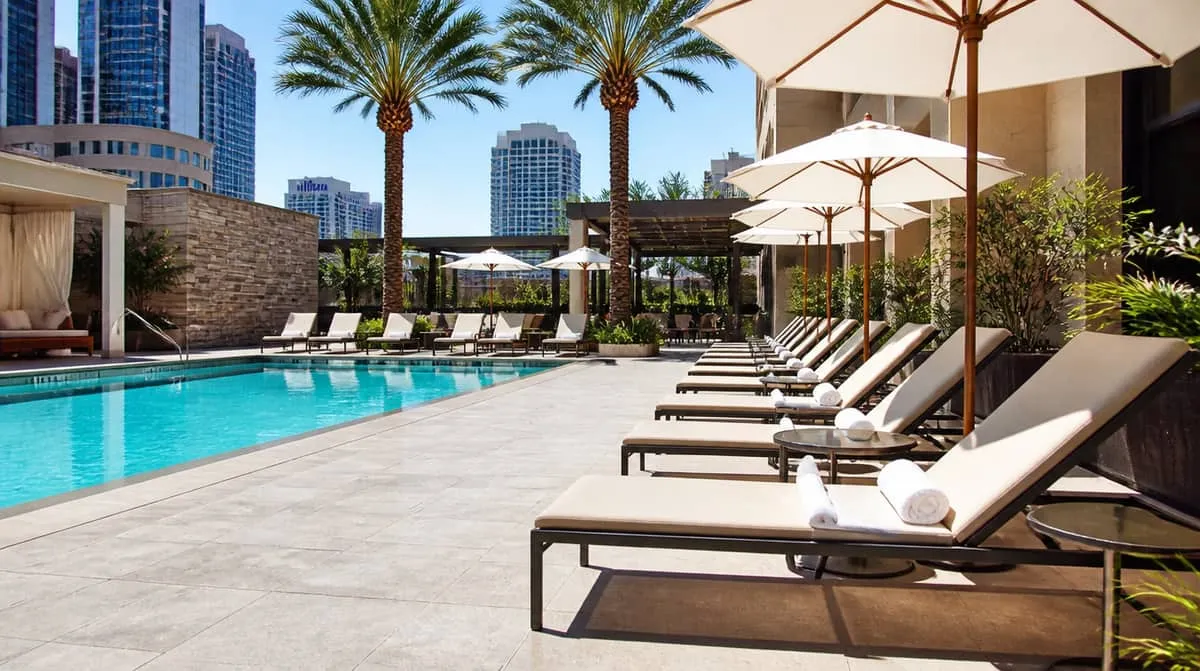
Houston restaurants that run patio programs through summer at reduced capacity, or close the patio entirely during peak heat, need a furniture storage solution that doesn't require moving everything to a remote warehouse. Stackable seating and nest-able tables reduce the storage footprint significantly. If your back-of-house space is limited, which it is at most Houston restaurant footprints, discussing storage dimensions with your supplier before you order is worth the conversation.
Tell us about your Houston commercial patio furniture needs and we will turn your quantities, finishes, and timeline into a firm quote. Request a quote whenever you are ready to compare.