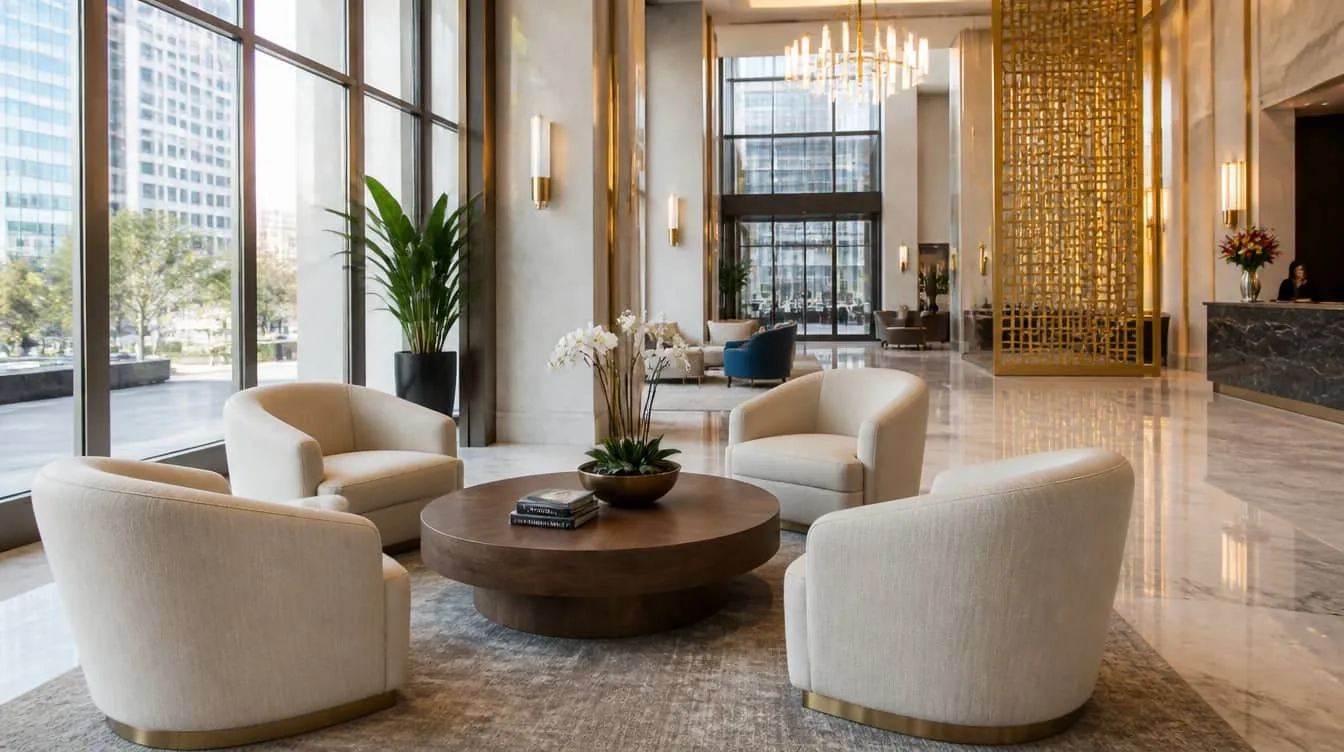
Houston operates on a scale that catches people off guard. It's the fourth-largest city in the country, and its hotel market reflects that size in ways that aren't always obvious from the outside. The Medical Center alone generates more room nights than entire mid-sized cities, with families of patients, visiting physicians, and healthcare conference attendees filling hotels along the South Main corridor year-round. The Galleria corridor hosts every major corporate travel brand, drawing executives on oil and gas business from companies headquartered both locally and internationally. George R. Brown Convention Center pulls in large-format conventions that book out the Marriott Marquis and surrounding properties for weeks at a time. If you're sourcing hotel furniture for a Houston property, you're buying for a market with multiple demand streams and no single guest profile, which means your furniture decisions have to work across a broader range of use cases than almost any other city in Texas.
Understanding Houston's Hotel Demand Segments
The energy industry shapes Houston's hotel market in ways that go beyond name recognition. Corporate travel programs tied to oil and gas companies tend to be generous with per diem, which means mid-scale properties along the Energy Corridor on the west side of the city see guests with higher expectations than the rate tier might suggest. These guests travel frequently, they notice worn furniture, and they develop opinions about specific properties fast. A guestroom that looks dated, with soft seating that's lost its shape or a desk chair that doesn't adjust properly, can knock a property off a preferred vendor list in ways that take years to recover from.
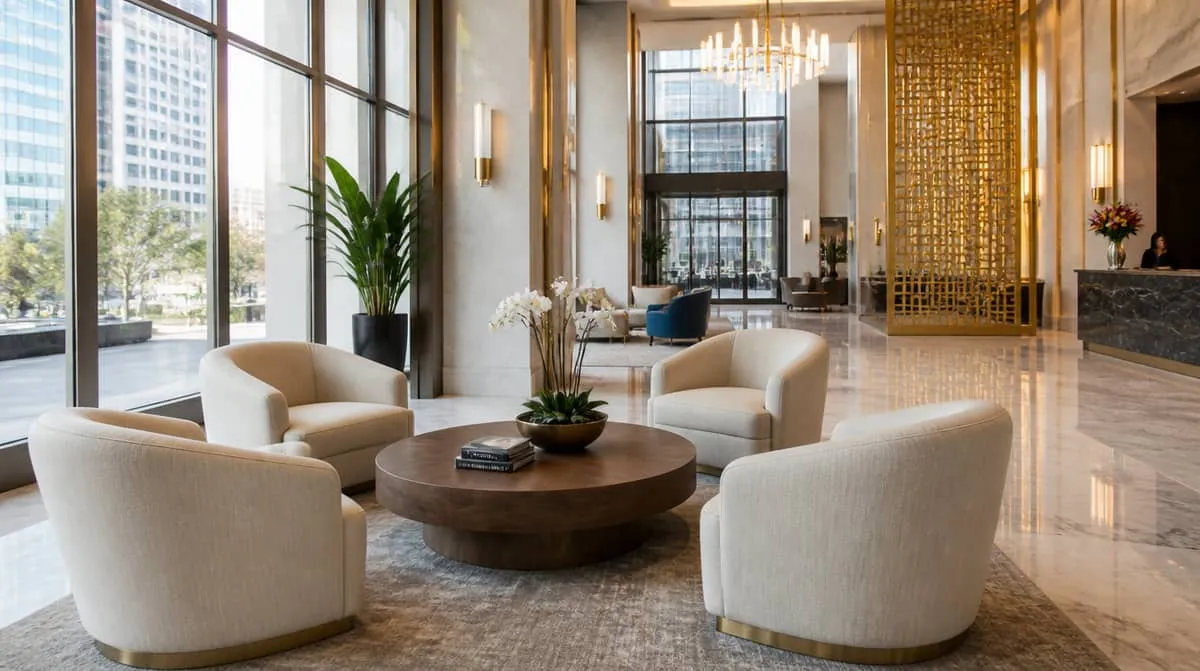
The Medical Center segment has different requirements. Stays tend to be longer, sometimes weeks rather than nights, and the emotional weight guests carry is significant. Rooms that feel genuinely comfortable, with quality bedding, properly scaled seating, and adequate storage, make a real difference in the experience of someone who is spending weeks away from home managing a family health crisis. Furniture that communicates quality and care, rather than just adequate function, is part of what separates properties that earn loyalty in this segment from those that don't.
Downtown Houston, particularly the properties closest to George R. Brown, runs convention business on a schedule that demands furniture built for hard use. Public spaces, pre-function areas, and meeting rooms in convention-adjacent hotels take an enormous amount of wear during peak convention weeks, and the furniture needs to hold up to that volume without looking beaten down between events.
Selecting Hotel Furniture for Houston's Climate and Design Context
Houston's climate is a furniture specification factor that gets underestimated. The humidity is real and persistent, and properties that have significant indoor-outdoor flow, whether through pool-adjacent lobbies, covered terraces, or ground-floor restaurant spaces, need to think carefully about how moisture migration affects their interior furniture. Solid wood case goods in high-humidity environments need appropriate finishing and proper HVAC management to stay stable. Upholstered pieces in humid climates benefit from performance fabrics that don't absorb moisture or support mildew growth. These aren't catastrophic concerns with the right product selection, but they're worth discussing with your supplier before you finalize a spec.
Houston's design market doesn't track a single aesthetic the way some cities do. There's a significant presence of traditional luxury spec in the Galleria corridor and in River Oaks-adjacent boutique properties, with dark wood case goods, rich upholstery, and a formal reference point that appeals to the older executive travel demographic. There's also a growing contemporary market in Midtown and EaDo, where newer hotels are leaning into cleaner lines, mixed materials, and a design language that references the city's global character rather than its Texas heritage. Both approaches are commercially valid, and your supplier should be able to source across that range without defaulting to a single catalog direction.
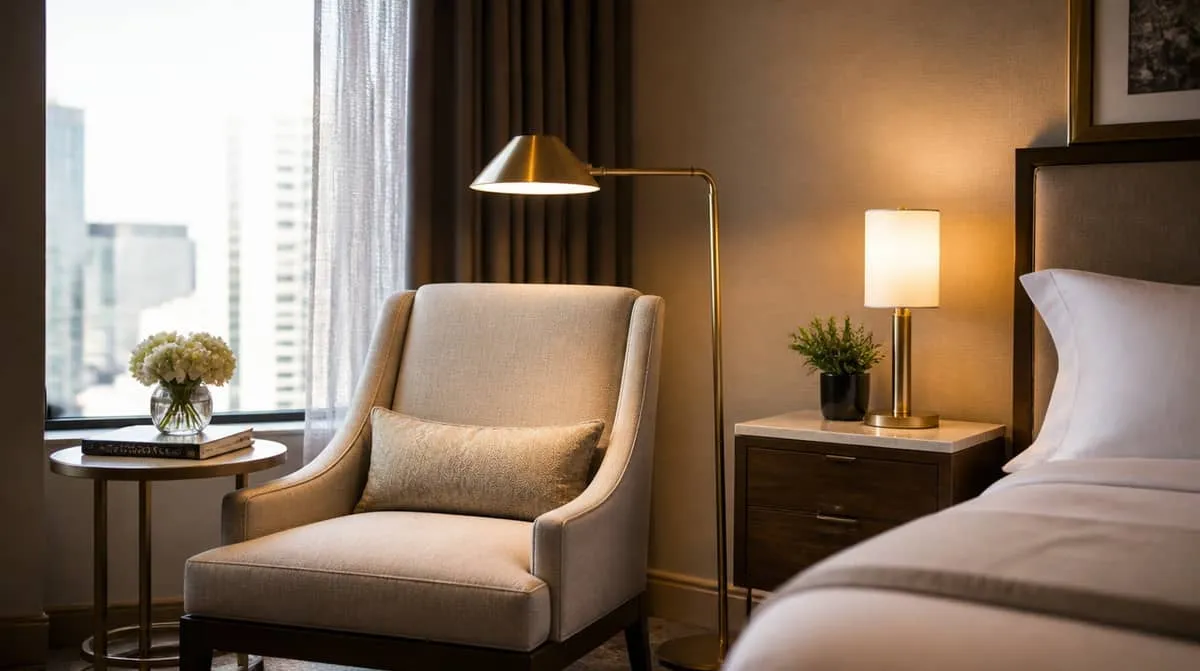
Casegoods for guestrooms are where hotels spend the most money per room, and they're where the quality signal is clearest to guests. Drawer hardware that wobbles, drawer boxes that bind, or laminate surfaces that show edge chipping within a year of opening communicate a quality level that's hard to recover from. Contract-grade case goods use dovetail or dowel joinery, solid edge banding, and commercial-grade laminate that holds up through years of daily use and repeated housekeeping cleaning routines. The upfront cost difference between contract grade and retail crossover products is real, but the replacement cost and guest satisfaction impact of choosing wrong makes the contract spec the better financial decision over any reasonable ownership horizon.
Procurement, Lead Times, and Opening Timelines
Houston's construction and renovation market is active enough that lead times from commercial furniture suppliers are a genuine planning concern. Properties opening near the Texas Medical Center or in one of the mixed-use developments coming up in Midtown need to plan furniture procurement 16 to 20 weeks ahead of their opening date to avoid the risk of delays pushing back their first day. This is especially true for custom upholstery programs and case goods with specific finish or hardware selections, where a late order revision can add weeks to the timeline.
Working with a commercial furniture supplier who has experience in the Houston hospitality market is useful partly because they understand the local contractor ecosystem, partly because they can give you honest lead time guidance based on current factory conditions, and partly because they know how to coordinate delivery with the realities of Houston's traffic and job site access patterns. Large-format furniture deliveries to properties inside the Loop require coordination that an inexperienced supplier may not anticipate.
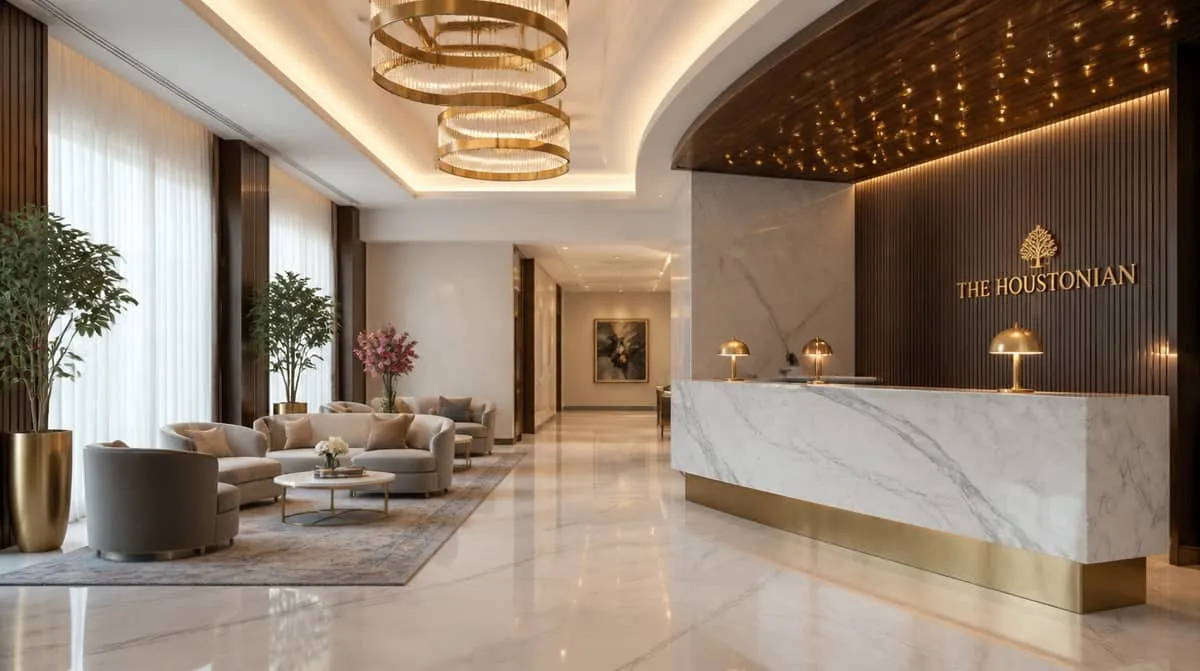
For properties doing phased renovations, which is common in Houston's older hotel stock along the Galleria corridor and around Greenway Plaza, a supplier who can hold inventory and deliver in phases without disrupting the rooms you're still selling is worth a premium. The ability to coordinate a rolling renovation across a 300-room property while maintaining occupancy is a logistics capability, not just a sales relationship, and it's something you should ask about directly before committing to a supplier.
If you are sourcing hotel furniture for your Houston property, the fastest way to real numbers is to tell us what you need. Request a quote with your quantities and timeline.