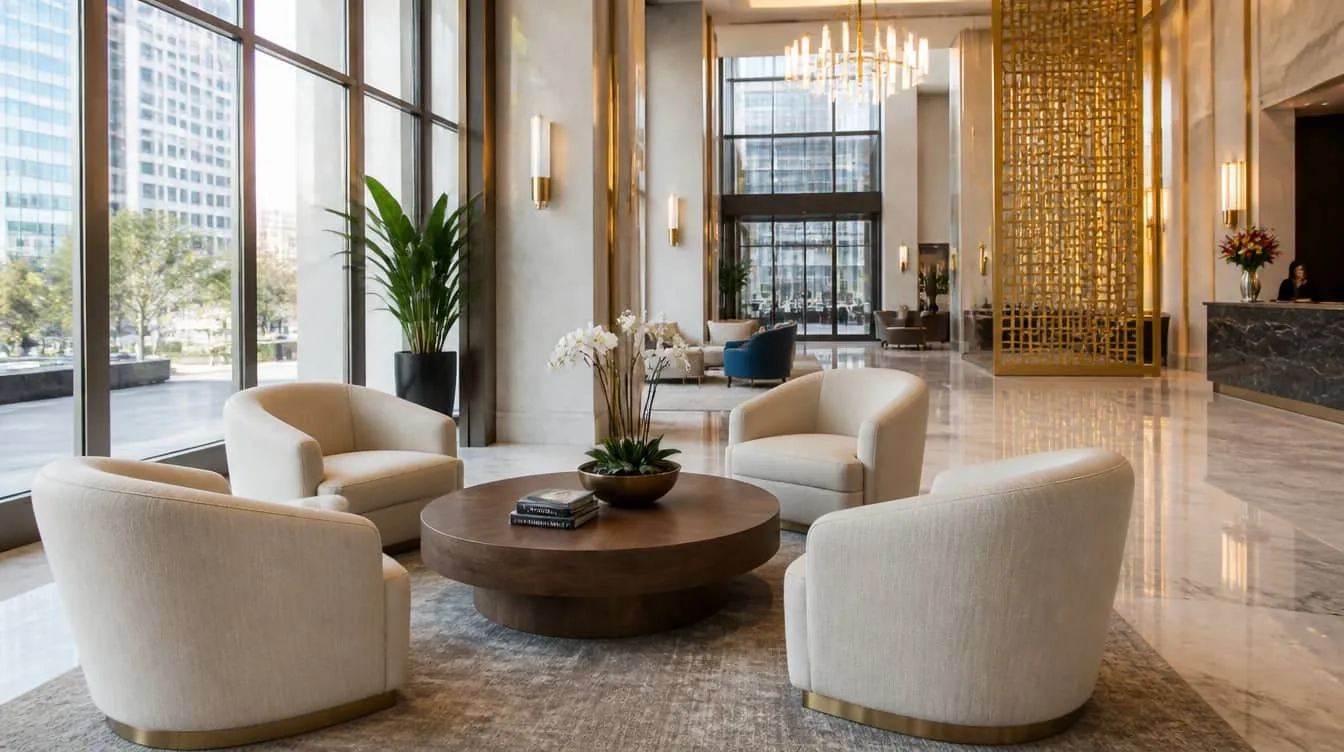
The lobby is where a Houston hotel makes its first and most lasting impression, and the guest population walking through that lobby can be remarkably varied within a single property. A full-service hotel in the Galleria corridor might see a Permian Basin oil executive checking in at the same time as a medical conference attendee, a family visiting a patient at the Texas Medical Center, and a group of conventioneers arriving for a George R. Brown event. The lobby furniture program needs to serve all of these guests without feeling like it was designed for none of them, and that's a harder design and procurement challenge than it looks.
Houston's lobby design market has moved away from the traditional formal hotel lobby, heavy case goods, dark wood, and overstuffed seating arranged in static configurations, toward something more flexible and contemporary. This shift reflects both a national trend in hospitality design and something specific to Houston: the city's international character, its design-forward commercial real estate culture, and its younger professional demographic in neighborhoods like Midtown and EaDo all push toward lobby environments that feel animated and current rather than formal and static. Properties that have renovated with this shift in mind are performing better with the demographics that drive Houston's growth segments.
Seating Configuration and Traffic Flow
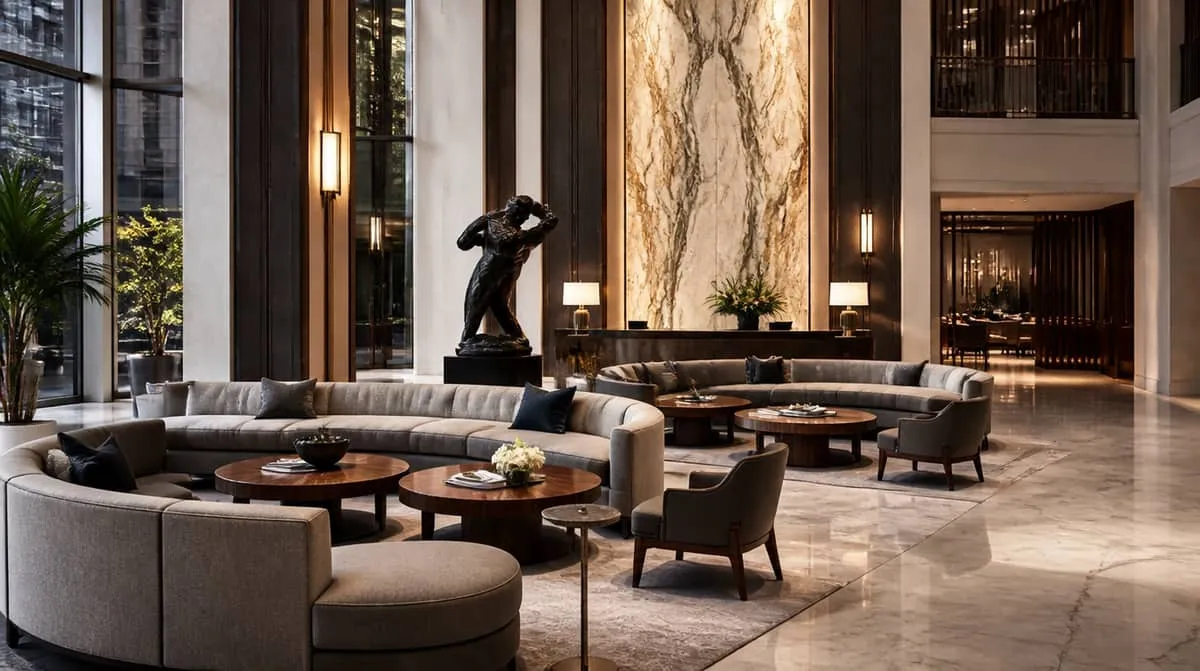
Lobby seating in a Houston hotel needs to account for how the lobby actually functions across a full day, not just how it looks in a design rendering. Morning peak hours mean people with laptops, coffee, and rolling luggage passing through or settling in for a few minutes before departure. Afternoon and evening hours bring different groups, including families meeting up, bar-adjacent guests spilling into lobby seating, and business travelers looking for a quiet spot for a phone call. A lobby seating program that works across all of these use cases needs flexibility built in, with a mix of seating heights, table configurations, and spatial arrangements that allow the space to absorb different group sizes and use patterns.
Lounge seating in the 16-to-18-inch seat height range works for the relaxed gathering context but is less practical for laptop work. Lobby chairs in the 18-to-20-inch range are more functional for working guests and easier to get in and out of for guests with mobility considerations. A mix of both, plus a counter-height bar or communal table option if the program and square footage support it, gives your lobby the range it needs. For Houston properties targeting oil and gas corporate travel, where guests often have extended layover-style dwell time in the lobby before and after meetings, the working-friendly seating proportion should be higher than it would be in a leisure-heavy property.
All lobby seating takes more abuse than the specification sheet suggests. Lobby chairs and sofas get sat on constantly, by guests in wet clothing from Houston rain, by people sitting on the arm rather than the seat, by guests with luggage who lean and push against the furniture in ways that put stress on joints and frames. High-density commercial foam, commercial-grade fabric rated for 50,000 or more double-rub cycles, and frame construction with properly reinforced joints are the baseline for lobby seating that will hold its appearance and function through years of this use pattern.
Tables, Case Goods, and Hard Surface Elements
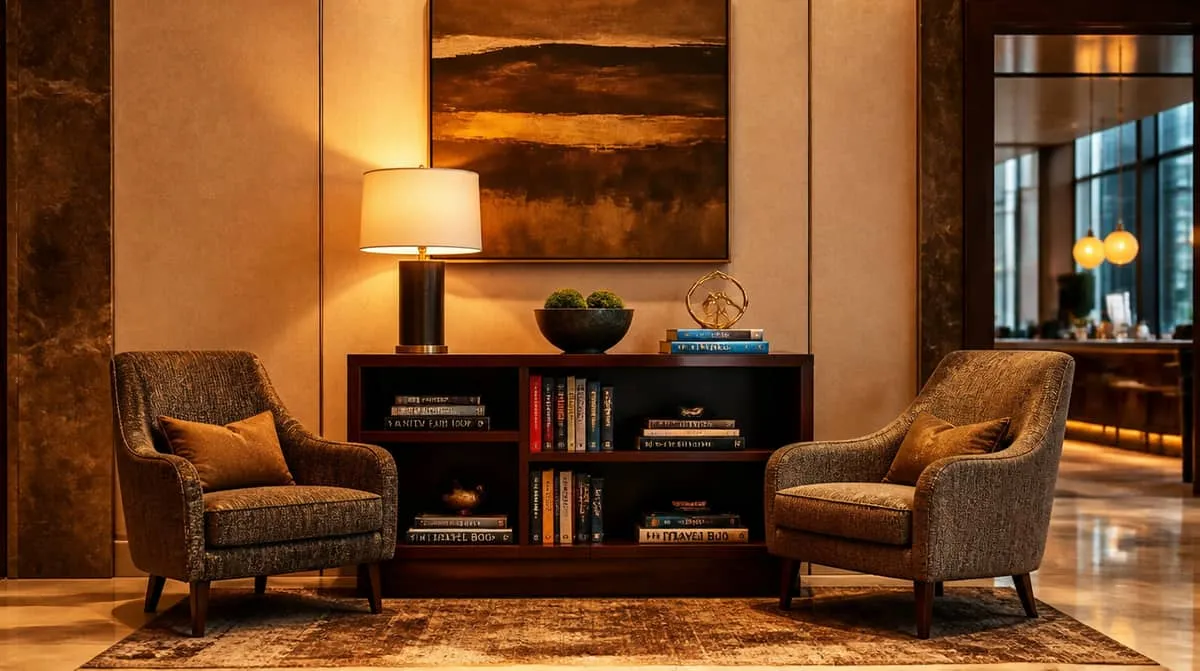
Lobby tables need to be considered as a system with the seating, not as separate purchases. A cocktail table at the wrong height relative to a lounge chair creates a functional problem that guests notice immediately, and a table with a base configuration that makes it easy to knock over in a busy lobby creates a safety and nuisance issue that adds up over time. Commercial lobby tables with appropriately weighted bases, leveling capability for the slight irregularities in lobby floor surfaces, and surface materials that clean up quickly are the practical standard.
Accent case goods and decorative furniture in Houston hotel lobbies increasingly serve a dual function as design objects and operational furniture. A well-chosen console table in the lobby does what it needs to do functionally while also contributing to the design character of the space. For Houston properties that are working with a Texas vernacular or industrial aesthetic, case goods with appropriate material references, raw metal, reclaimed wood, woven leather, fit into this context authentically. For properties positioned in the international luxury market, pieces that reference a more global contemporary design vocabulary are appropriate.
Lobby flooring in Houston hotels is often a mix of hard surface and area rugs, and the furniture program needs to be specified with the floor surface transition in mind. Furniture legs on hard surface floors need glides that don't scratch the surface and don't squeak when moved. Furniture on area rugs needs to be stable on the slight surface irregularity the rug creates. These are small details that become noticeable problems if they're not addressed in the specification.
Durability Standards and Renovation Planning
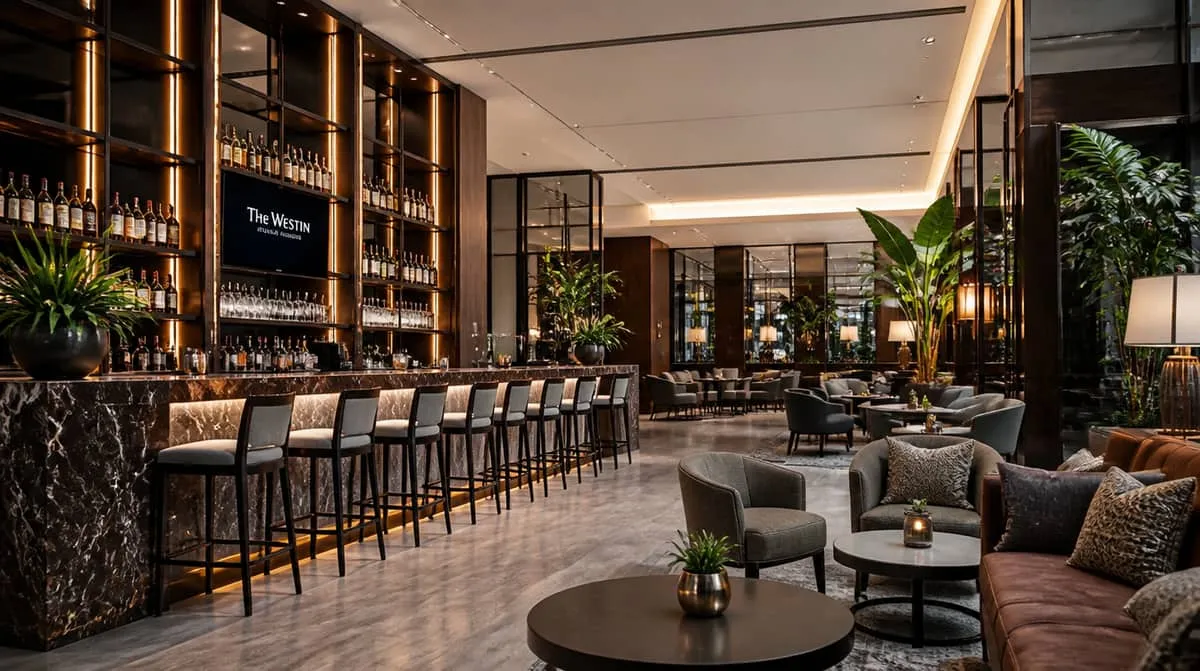
Houston hotel lobbies see enough traffic that the furniture program needs to be evaluated on a regular cycle. Properties that are honest about their renovation budget and set aside adequate reserves for lobby furniture refresh every eight to ten years maintain their competitive positioning in a market where guests have many options. The worst outcome is a lobby that looked sharp when the hotel opened but has been allowed to look tired for years, because that communicates a lack of investment that savvy Houston travelers notice and respond to with their booking behavior.
Tell us about your Houston hotel lobby furniture needs and we will turn your quantities, finishes, and timeline into a firm quote. Request a quote whenever you are ready to compare.