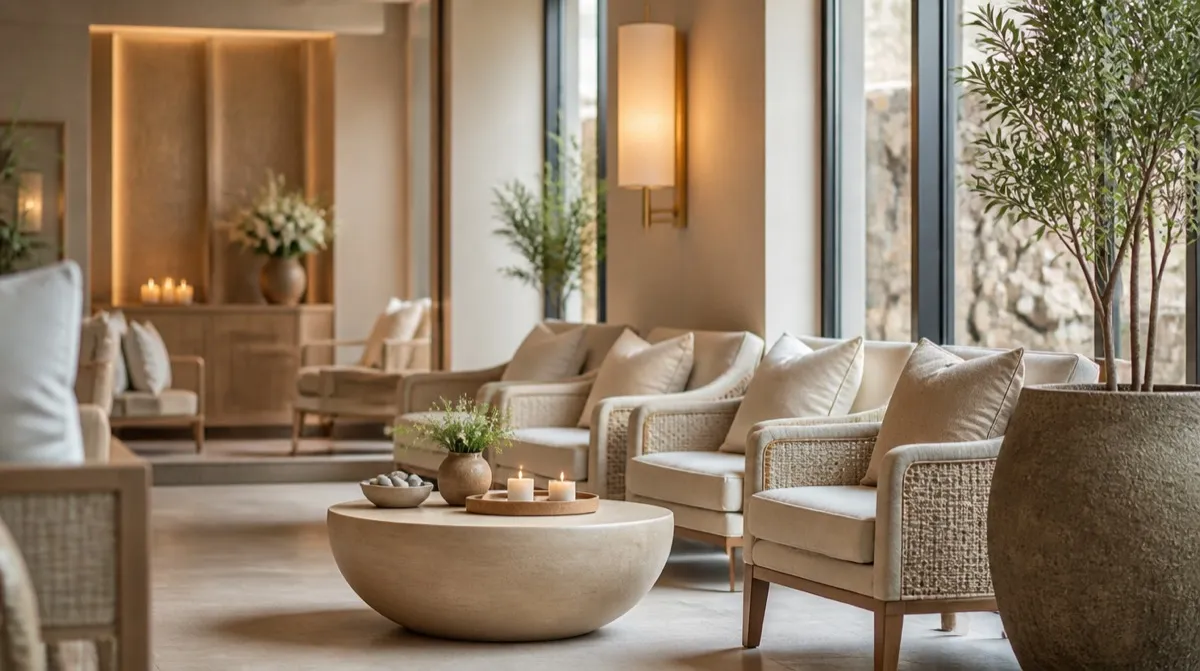
Spa furniture has to do two jobs at once. It has to sell serenity, because the whole business model depends on a guest feeling calm and cared for the moment they sit down. And it has to survive a punishing daily reality of water, oils, lotions, hair color, wax, and cleaning chemicals that would ruin most attractive furniture in a season. That tension between a soft, restful look and a genuinely durable spec is what makes buying spa and salon furniture harder than it appears. This guide covers how to choose reception, treatment, and waiting-area pieces that stay beautiful and hold up under real commercial use.
Spa and salon furniture works in specialized zones
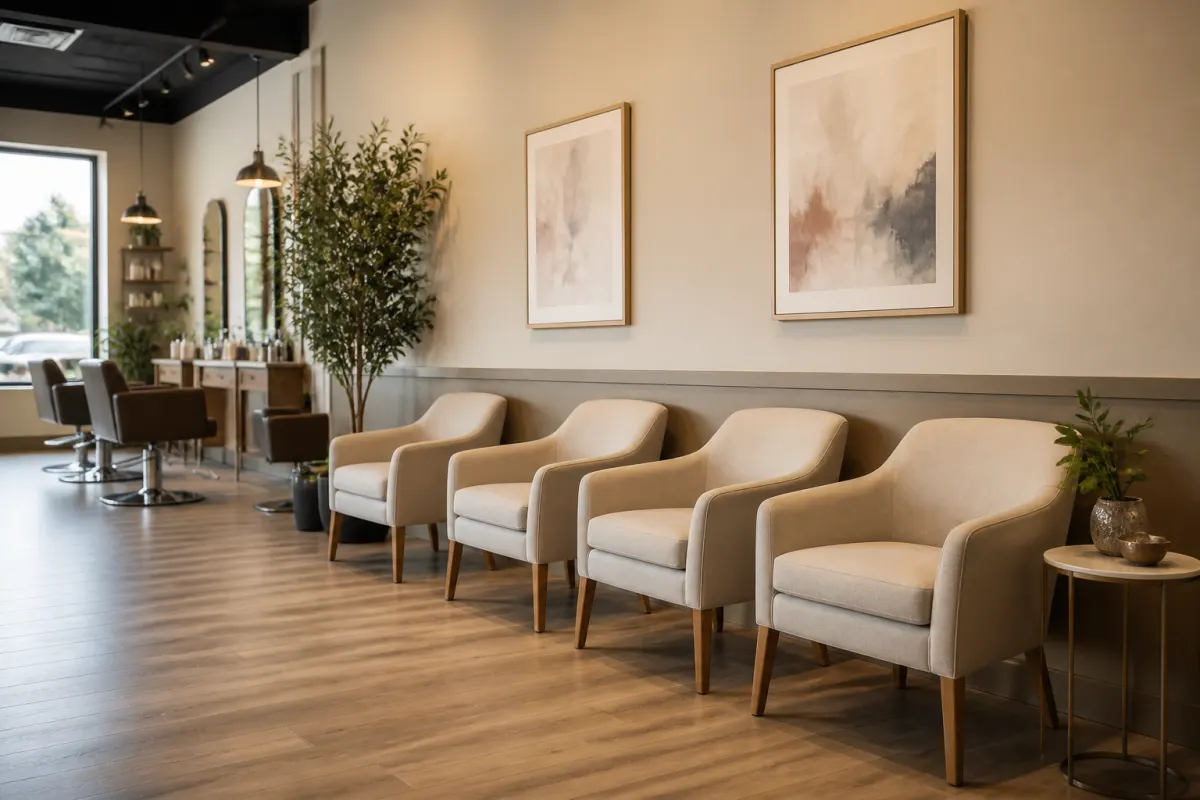
A spa or salon is not one room, so spec it as a set of distinct zones, each with its own demands. Reception and retail set the first impression and need refined desks and a few accent chairs. The waiting or relaxation lounge is where guests dwell before and between services, so comfort and cleanable upholstery both peak there. Treatment and service areas need purpose-built stations, but they also need durable stools and side seating that stand up to constant chemical exposure. Map how a guest moves from arrival to service to checkout, and the furniture mix follows naturally from that flow rather than from a catalog page.
Waiting and relaxation lounge seating
Test lounge comfort with the intended users and review the selected frame and cushion construction for commercial use. The 35–40 ILD range is a chosen firmness example, not foam density and not a promise that cushions will retain their shape. PFA's foam-performance guidance separates density, firmness and other performance properties. The $300 to $900 chair and $800 to $2,500 sofa bands here are illustrative budget inputs, not verified supplier prices or evidence of service life; replace them with quotes for the selected models.
Upholstery is the make-or-break spec
Specify upholstery against the oils, lotions, hair products, moisture and cleaning products the room actually uses. The 50,000 and 10,000 to 15,000 Wyzenbeek figures are test-result examples, not universal commercial and residential cutoffs or predicted lifespans. ACT's abrasion guidance warns against converting rub counts into service life. Obtain the textile or coated-fabric maker's chemical compatibility, stain-removal and cleaning instructions; neither vinyl nor a performance label guarantees resistance to wax, dye or bleach. Confirm suitability before choosing a softer solution-dyed textile for the lounge. Our commercial upholstery fabric guide walks through rub counts and fiber choices in more depth.
Reception, retail, and surfaces
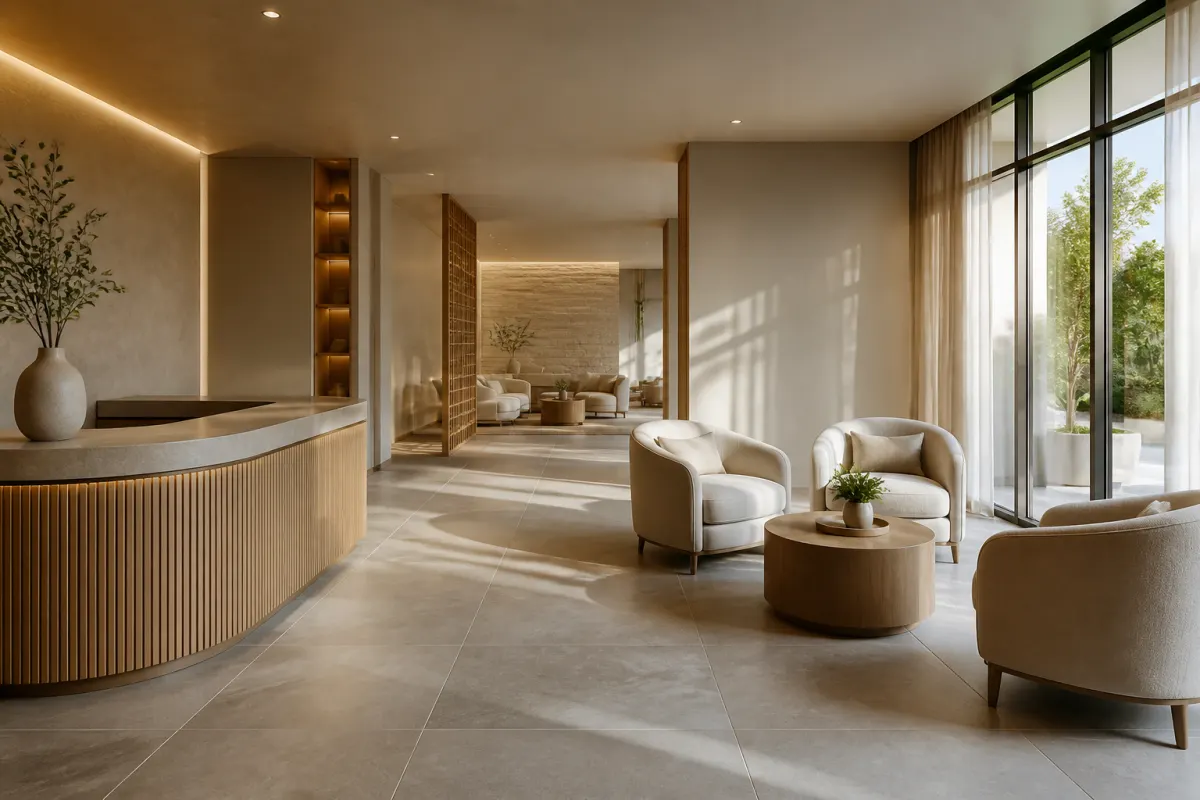
Reception furniture carries the design weight of the room, and it takes constant contact from bags, product testers, and cleaning crews. Desks and retail display surfaces should use commercial-grade materials such as high-pressure laminate, sealed stone, or solid wood with a durable catalyzed finish that resists rings, spills, and product residue. Metal bases should be welded and powder-coated. Skip residential furniture with delicate veneers and glued joinery here, because it will not survive daily wipe-downs with the cleaners a spa actually uses. A few well-chosen armchairs at reception can soften the space without sacrificing durability.
Budgeting, volume, and lead times
Price each treatment, waiting and retail zone from its actual furniture list. The 14 to 26 percent freight/installation allowance and 10 to 14 week custom window are illustrative inputs; replace them with itemized supplier costs and dates. Use those inputs in the furniture cost calculator. Browse lounge-chair concepts and sofa concepts for the style brief, then submit a furniture request with the zone plan, care requirements and delivery scope. Independent suppliers can confirm which actual models fit those requirements.