
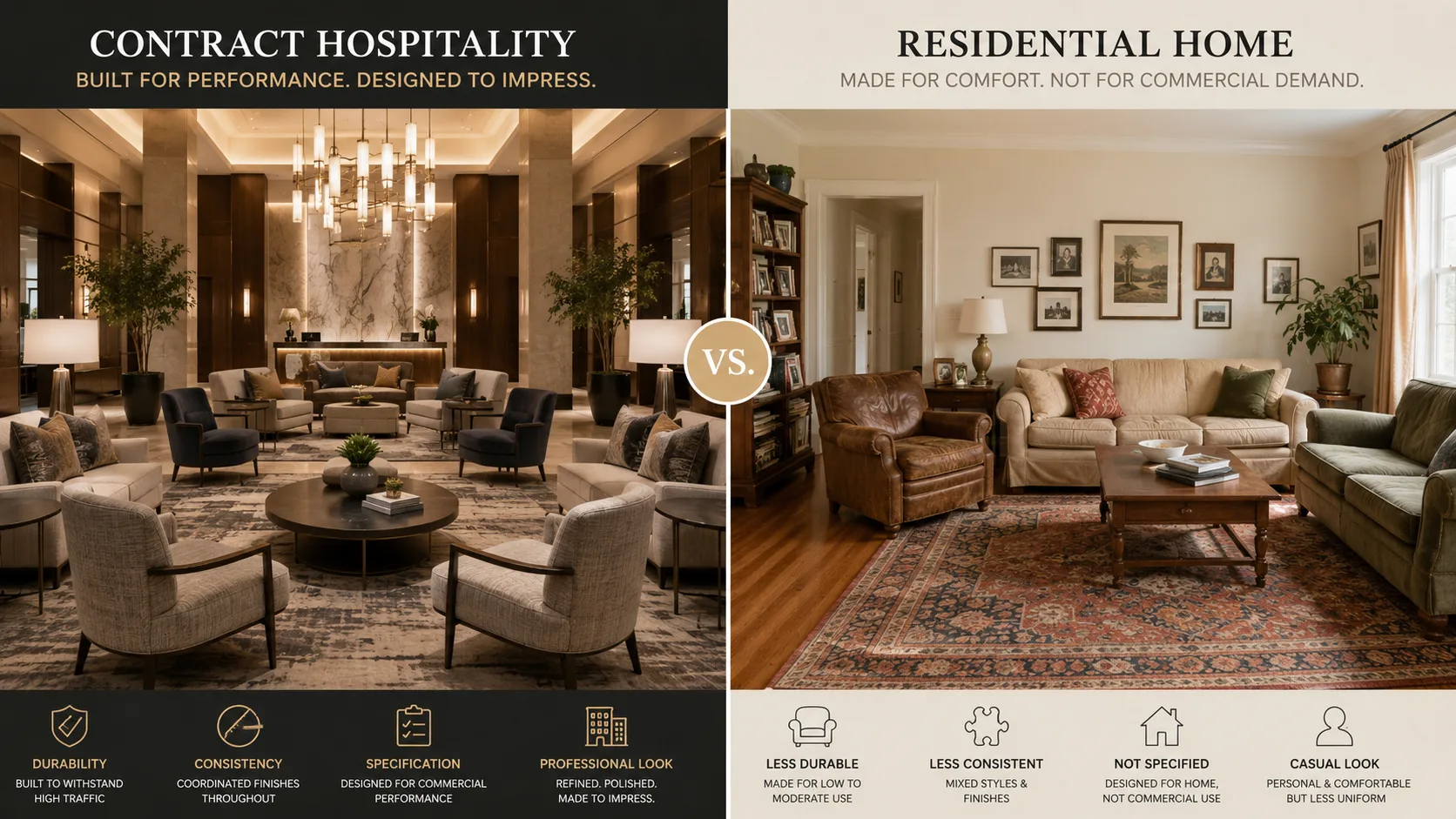
Contract furniture is furniture intended for commercial or institutional settings such as hotels, restaurants, offices, schools and public spaces. It is commonly selected through a specification and quote process because the buyer needs a consistent package, documented performance and support for repeated use.
The word “contract” is a category description. It does not, on its own, identify a test result, certify every product or establish compliance with every requirement for a building.
What a buyer needs to verify
The useful distinction between two similar-looking pieces is in their documented use, construction and support. A commercial project should record:
- The exact manufacturer, model and configuration being supplied.
- Dimensions relevant to fit, including seat or arm height when needed.
- Intended environment and any use limits.
- Applicable test evidence for the model.
- Finish, fabric and cleaning instructions.
- Warranty coverage for the planned commercial use.
- Available replacement components and the ordering process.
A photograph cannot answer those questions. Request the documents for the proposed configuration, especially when upholstery, dimensions or other details are customized.
What BIFMA evidence does and does not say
BIFMA develops furniture standards covering different product types. Its BIFMA Compliant program is a verification program and product registry. Testing takes place in an appropriately accredited in-house or third-party laboratory.
Look for the exact product and applicable standard. For a product outside the registry, ask for its test report or conformance documentation. A manufacturer's participation does not establish that every item it sells is listed.
Different BIFMA standards address different types of furniture and performance. Ask what the evidence covers instead of accepting “BIFMA certified” as a complete specification. A mechanical test claim should not be read as an all-purpose statement about flammability, emissions, accessibility or suitability for your room.
Read fabric results in context
Record the upholstery name, test method and result, then check its intended application and approved cleaning method. Foam density, cushion firmness, seam construction and replaceability answer additional questions.
An abrasion score is not a conversion into years of service. ACT's abrasion guidance explains that higher results above its high-traffic guideline do not demonstrate longer life. Cleaning, maintenance and the actual application also affect how the textile performs.
For a practical comparison, use the fabric durability checker alongside the maker's specification. Keep the approved textile sample and cleaning instructions with the purchase record.
Check the warranty before comparing the total
A warranty should identify the covered use and the separate terms for frames, mechanisms, upholstery and other components. Read exclusions, maintenance obligations, claim requirements and the responsibility for freight or labor.
Do not assume that every residential warranty excludes every commercial use, or that every product marketed as contract furniture has the same commercial protection. Read the document supplied for that model and use.
Ask about replacement glides, hardware, upholstery components and matching reorders. A long warranty period does not guarantee that all wear parts are covered or that the same finish will remain available.
Match the purchase to the room's actual demands
Write down how the furniture will be used before deciding what evidence matters most.
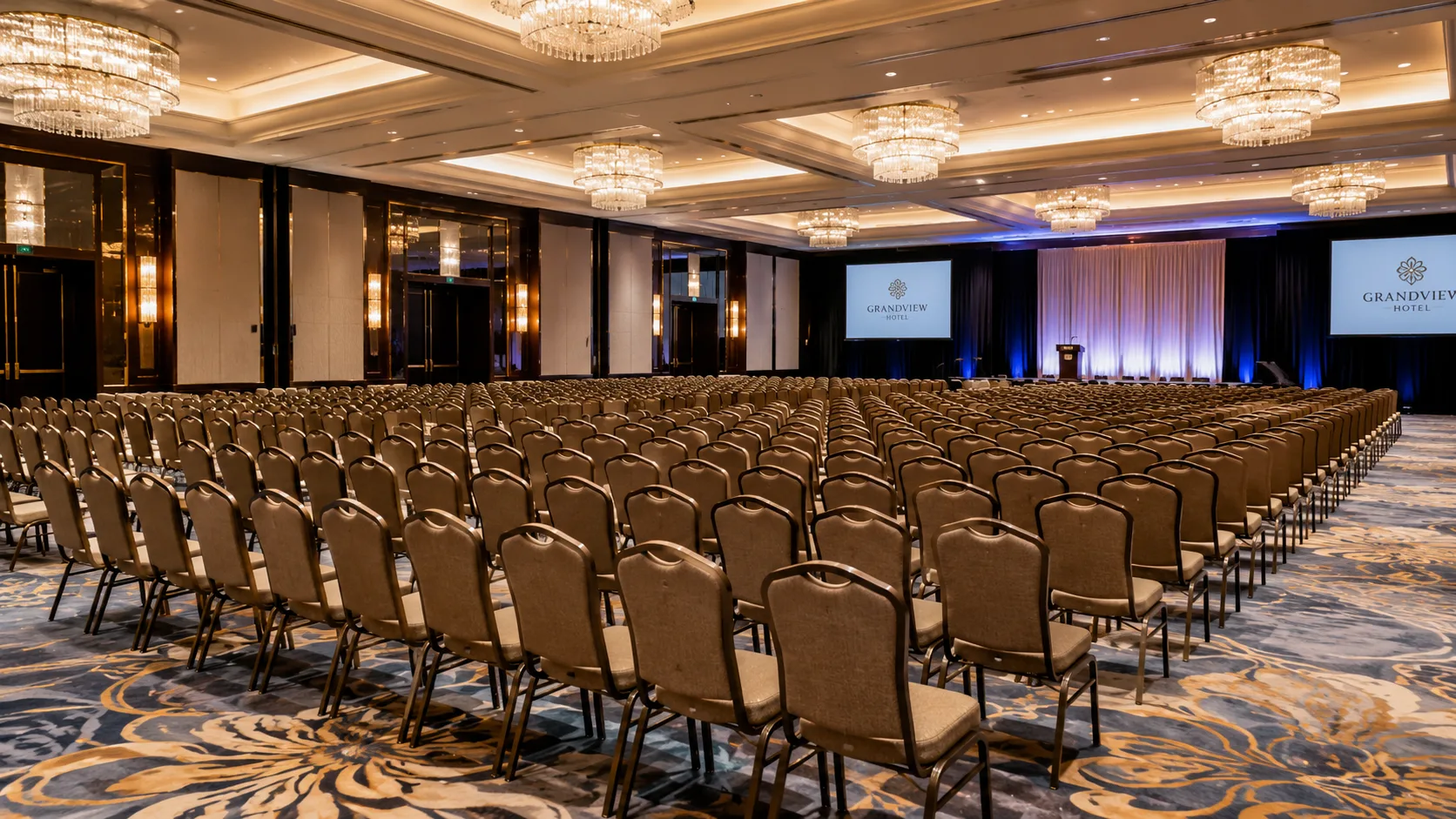
For banquet chairs, stacking, carts and repeated resets are part of the specification. A restaurant needs table/chair fit and a cleaning method suited to service. An office needs the relevant work positions and adjustment range. Outdoor furniture requires exposure and storage information as well as the indoor-style fit questions.
Public-space requirements depend on the project and location. Have the responsible designer or authority identify the applicable fire, accessibility and circulation requirements. Keep that list separate from a supplier's general commercial-use statement.
Useful starting points are the banquet chair buying guide, restaurant FF&E checklist and contract outdoor furniture guide.
Choose a supplier by the scope it can document
Manufacturers, dealers and procurement providers can offer different combinations of products and services. Compare what each proposal actually includes: specification support, samples, order coordination, freight, receiving and installation.
Buying directly does not automatically establish the lowest completed project cost. A single furniture price may exclude services another proposal includes. Likewise, using several suppliers can work when someone owns the shared schedule and handoffs.
For a consistent comparison, issue the same item list and ask suppliers to identify exceptions. The manufacturer, supplier and dealer guide explains those roles.
Use this approval checklist before ordering
Give each item a reference number and keep the decision traceable:
- Model: the quote, sample and supporting documents describe the same item.
- Fit: labeled dimensions have been checked against the room and adjacent furniture.
- Materials: finish and fabric selections are approved; permitted substitutions are written down.
- Use: the intended environment and relevant performance documents are confirmed.
- Care and support: cleaning instructions, warranty and replacement-parts process are available.
- Delivery: address, access, unloading/placement scope and receiving contact are agreed.
- Timing: approval, production, shipment and ready-for-use dates are distinguished.
Custom work should retain the approved drawings and material records. Discuss custom fabrics, finishes and dimensions against the specific product rather than assuming a standard test or warranty automatically transfers to every modification.
Turn the specification into a complete order
Attach the approved item schedule to the purchase order. Keep quantities, model references, finishes, delivery scope and the approval record together. Confirm which approvals or payments start the production clock and whether the quoted lead time includes transit.
Our lead-time planning guide helps work backward from the date the room must be usable. The FF&E procurement guide covers the wider sequence through receiving and installation.
Browse commercial furniture categories or request a quote with the item schedule, delivery details and required dates. The documented specification is what makes the resulting proposals comparable.
Comparing contract and retail alternatives
Compare the exact products rather than assigning a lifespan or construction method to an entire sales category. Put intended use, test evidence, warranty coverage, cleaning instructions and replacement support side by side. If a document does not address your proposed use, ask the manufacturer before treating it as suitable.
A useful cost comparison includes the purchase price, delivery and setup, expected maintenance, replaceable wear parts and the disruption of future replacement. Use your own operating assumptions and label them as estimates. A more expensive piece does not automatically last longer, and a lower price does not by itself establish poor quality.
Retain the approved model specifications, material samples, test documents and warranty with the purchase record. When reordering, confirm that the current model and finish still match; do not assume a familiar product name guarantees unchanged construction or availability.
Keep the evidence with the schedule
Use the FF&E schedule builder to record the room, item description, quantity and selected specifications. Keep the model's test documents, care instructions and warranty alongside the downloaded schedule. The schedule organizes an order; it does not certify a product.