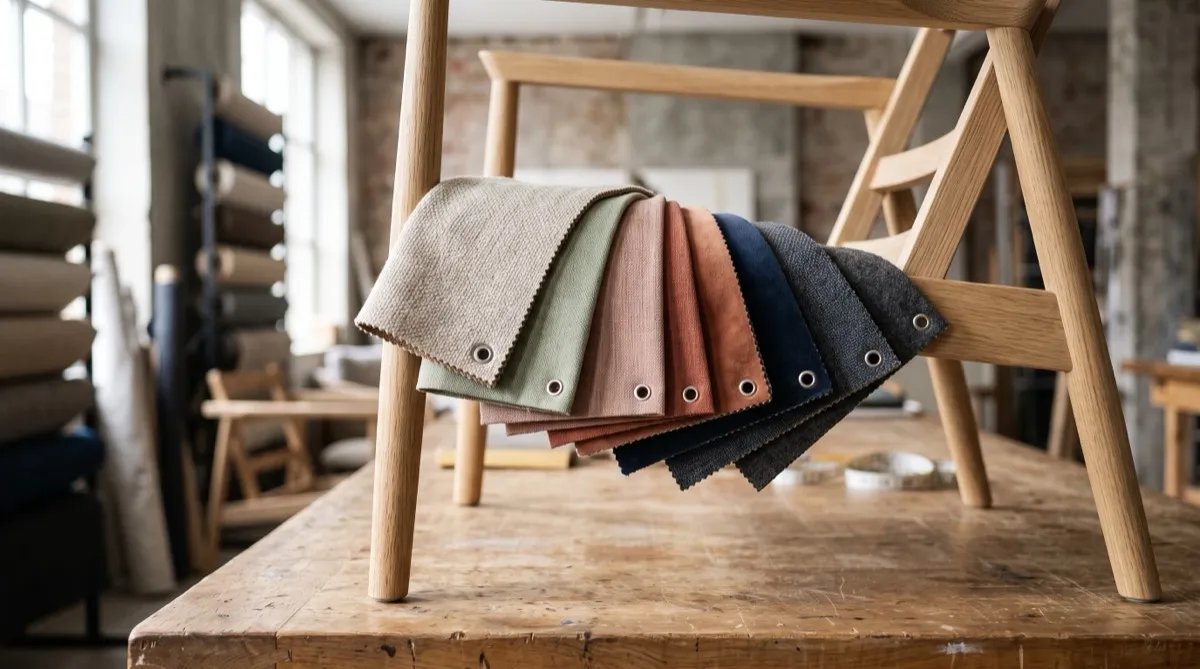
Frame and upholstery condition need separate inspection. Neither a commercial label nor an abrasion number establishes a 15-year frame life or an 18-month upholstery failure date.
Inspect the cover, cushion, seams, frame, and care history separately when an upholstered piece deteriorates. These checks help identify which specification or maintenance step needs attention; this article supplies no field data ranking failure points or predicting appearance in years one and three.
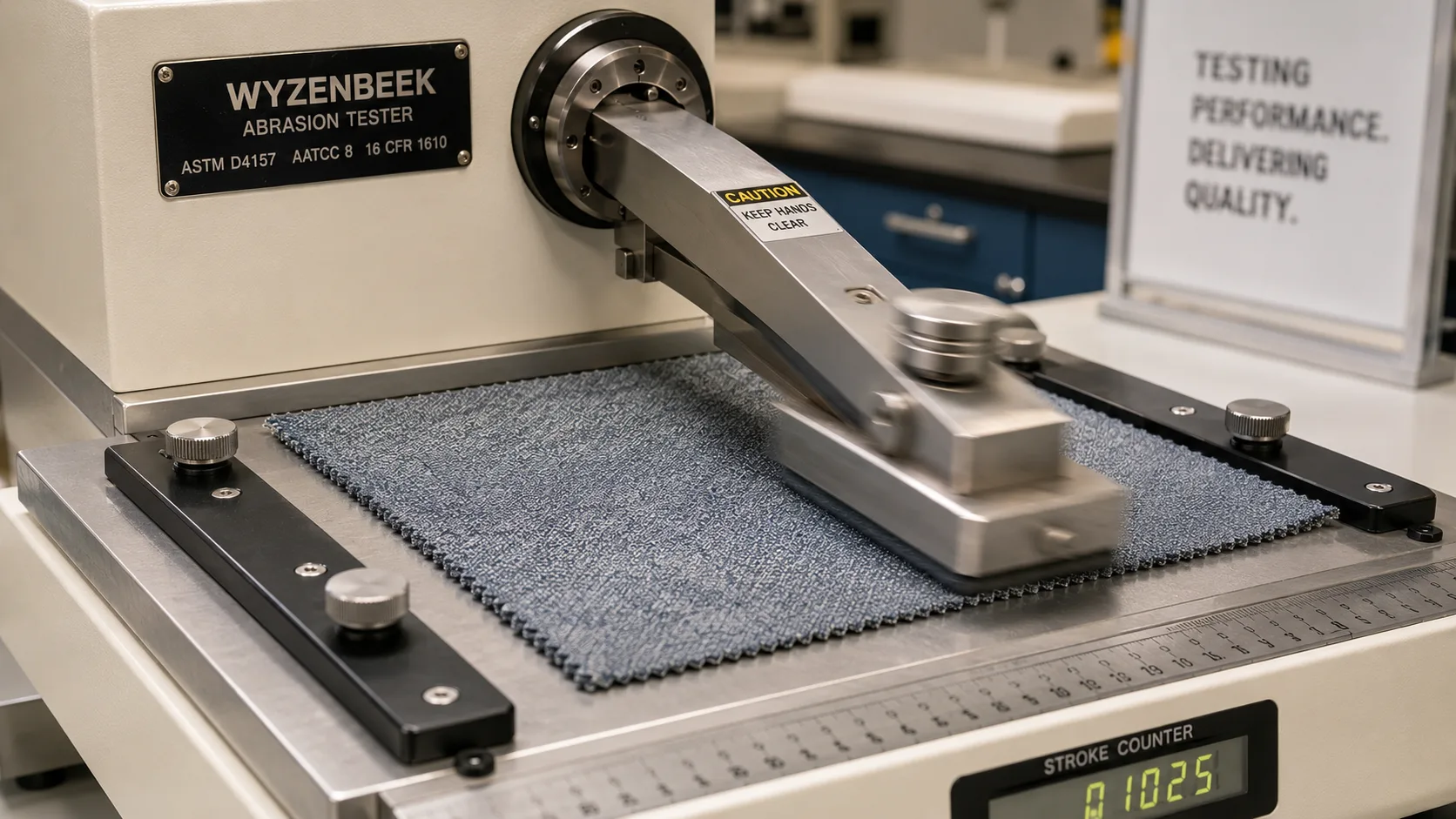
The Wyzenbeek test: what it is and why you need to know it
Wyzenbeek is one test of flat abrasion resistance used for upholstery; it is not a complete measure of furniture durability. A machine rubs the fabric back and forth until it shows visible wear. The number of rubs it survives is the rating.
A 10,000 to 15,000 double-rub band can be an illustrative swatch-comparison input, not a verified residential market range or proof that a fabric is adequate for home use. Compare the actual textile type, test method, application, and care evidence.
The ACT voluntary abrasion guidelines distinguish fabric types and applications. High-traffic woven or knit fabrics use 30,000 Wyzenbeek double rubs; high-traffic coated fabrics use 50,000. A project can set a higher criterion, including 100,000, but that is not a universal healthcare requirement or a service-life forecast. Keep the test method, textile type, and cleaning requirements together when comparing candidates.
Ask the supplier for the exact textile's abrasion test report, method, result, and intended application. If the record is missing, leave the rating unverified; a representative's immediate recall is not a test document.
Fabric types by environment
Different environments need different fabric specs. Here's how to match them.
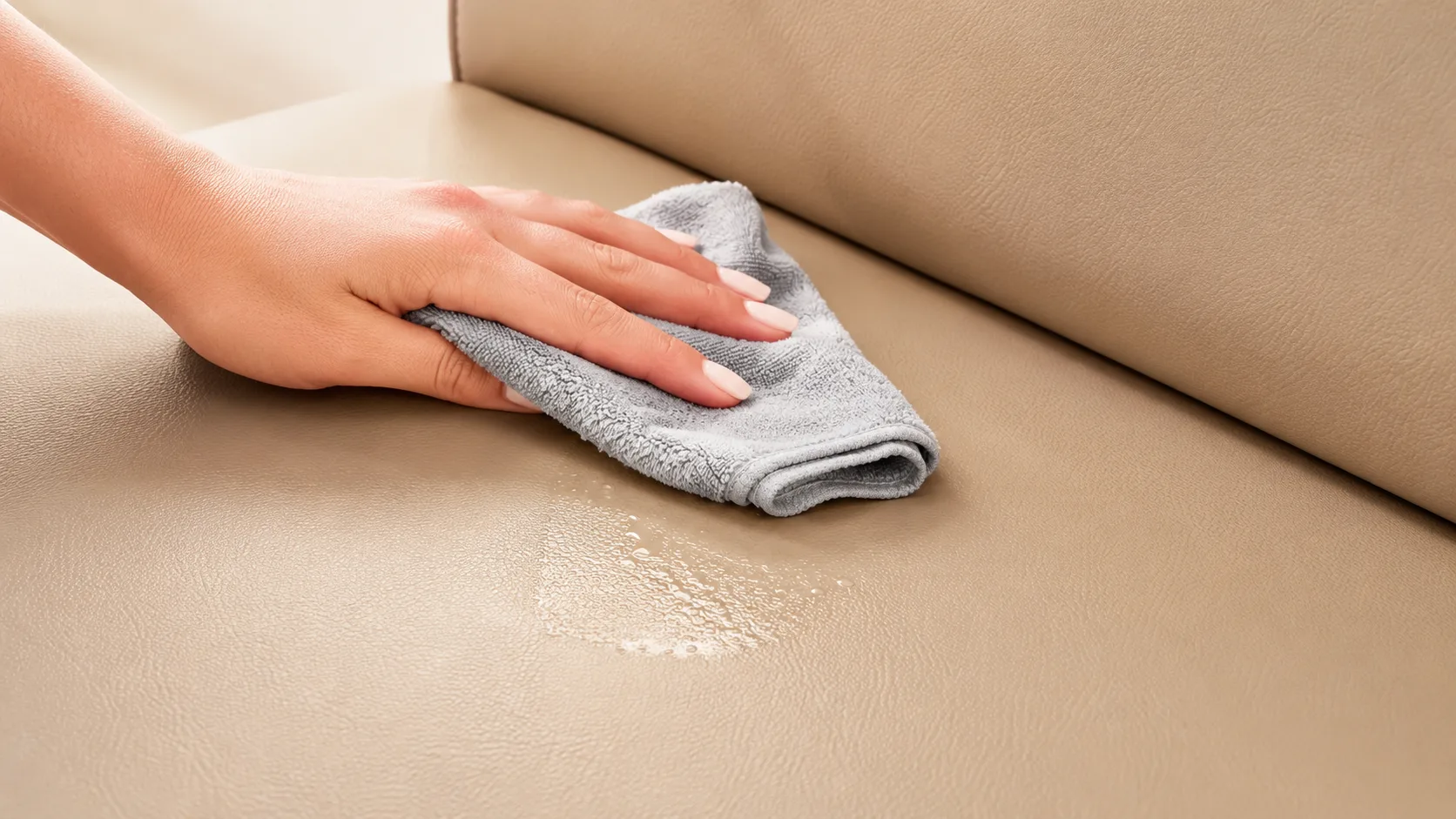
Polyurethane-coated upholstery is one coated-fabric option for food-service seating; PVC vinyl is a different material. Compare the exact product's spill, hydrolysis, abrasion, and cleaning documentation. Do not apply bleach solely because a swatch is called vinyl or PU: obtain the approved cleaning agents, concentration, and rinse instructions for the selected cover and furniture assembly.
Crypton fabric: identify the exact collection and construction, then review its stain, moisture, and approved-care documents. Evaluate Revolution separately using its own product records. Neither brand name establishes a built-in moisture barrier, cleaner compatibility, or suitability for every hotel, booth, or lounge assembly.
Sunbrella: confirm the exact collection, fiber composition, intended indoor or outdoor use, exposure-test evidence, and approved care. Sunbrella and other proposed textiles must be evaluated for the actual setting; a brand name is not a mandatory outdoor standard or a universal fade, UV, or mold guarantee.
Treated full-grain leather: compare the exact finish, cleaning restrictions, repair options, and intended use with the venue's spills and maintenance resources. Do not accept or exclude it solely because the setting is upscale, high-volume, or late-night.
What to avoid
Cotton and linen blends: obtain the exact blend, finish, test and care evidence before considering it for food service or other public use. Fiber names alone do not establish quick failure, stain behavior, or incompatibility with every commercial cleaner.
A fabric without evidence for the intended application needs further review. A laboratory Wyzenbeek result is not a calendar of in-service failure, and no 12- to 18-month failure date follows from a residential label.
Untreated or light-colored fabric: test an exact sample against the appearance and approved-care requirements of the spill-prone zone. A light color does not by itself establish faster wear, and no single brand is required by this guide.
Specifying fabric when you order
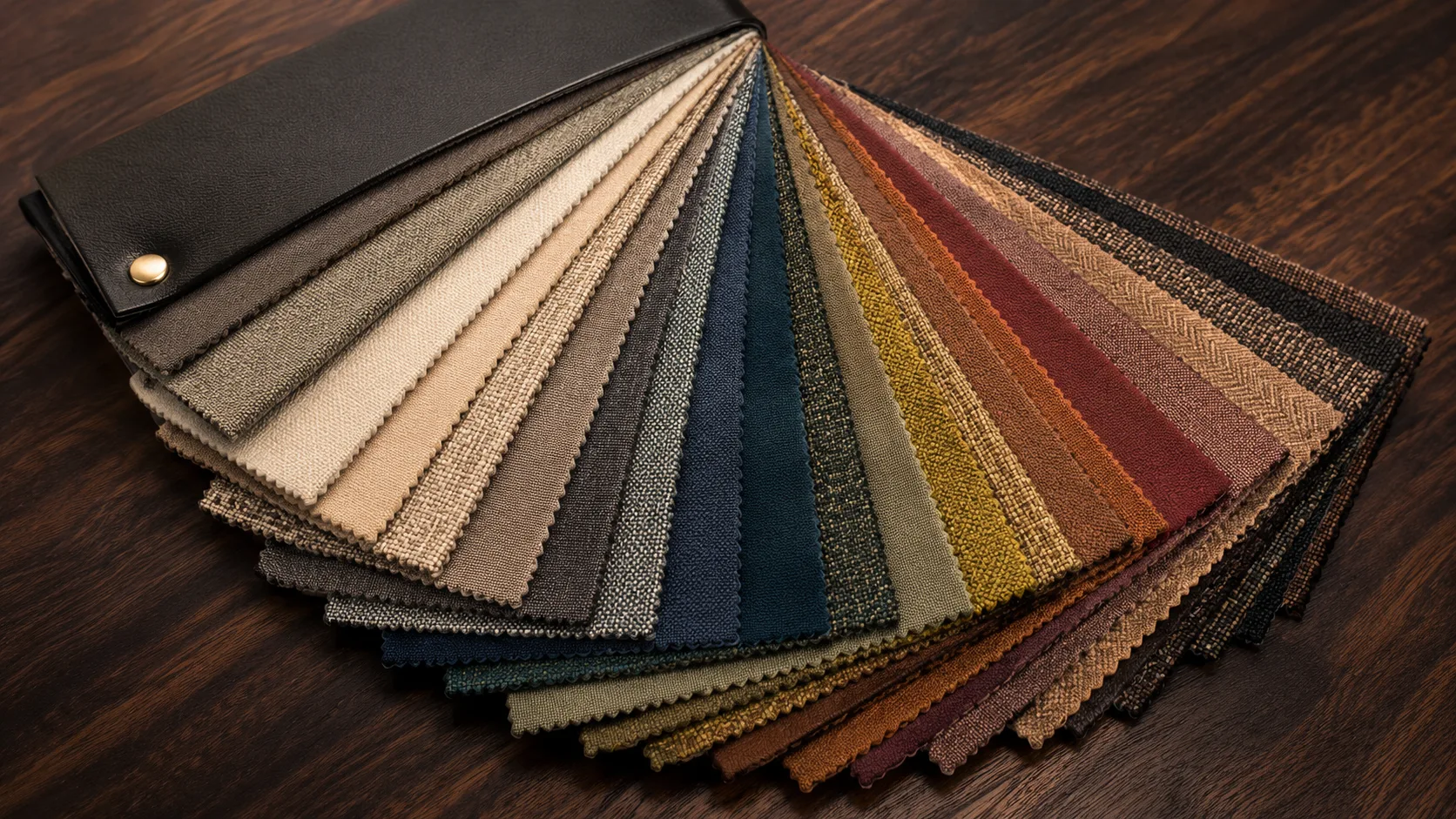
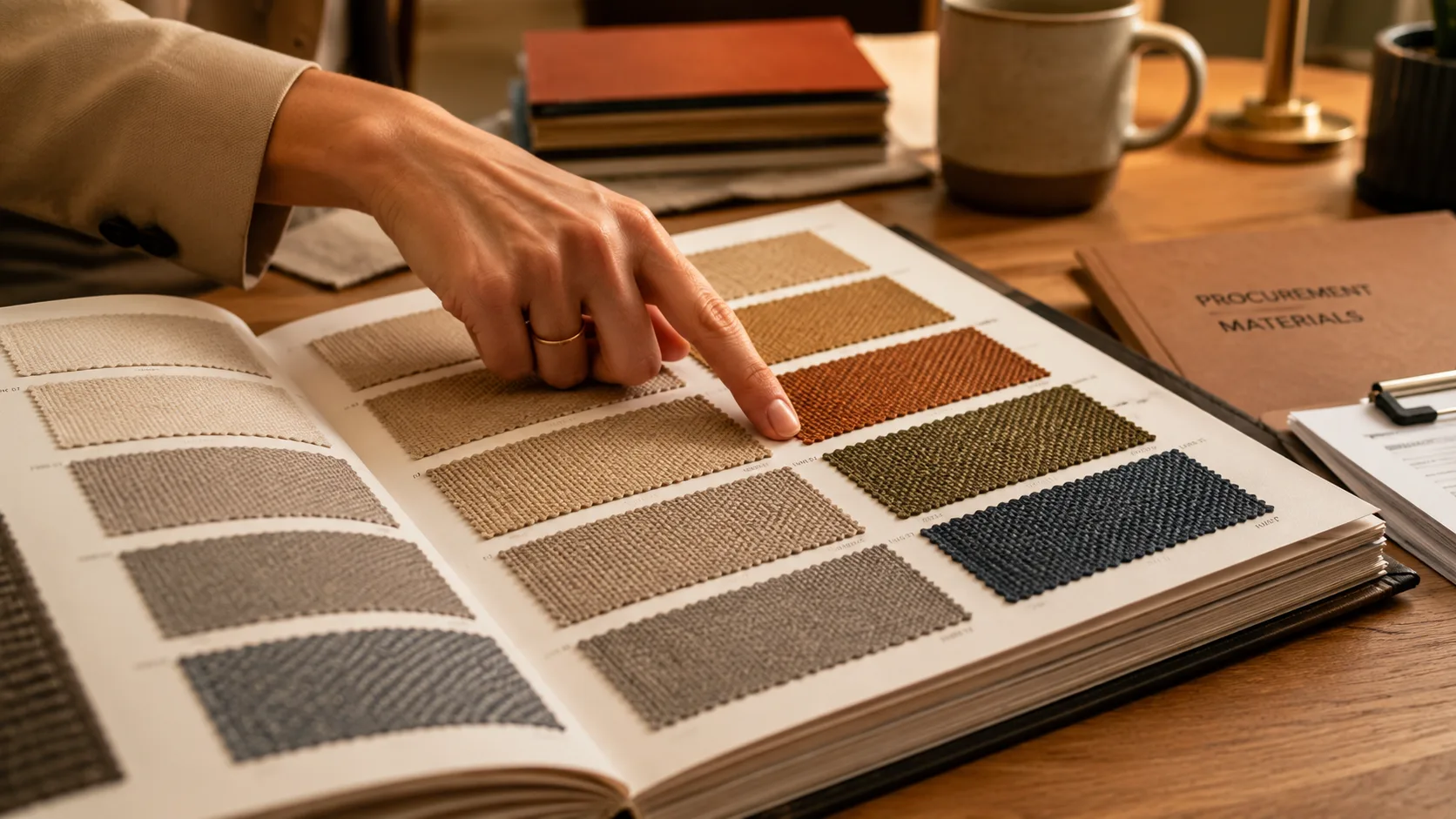
When you order upholstered commercial furniture, you'll choose from the supplier's fabric library or supply your own material. Supplying your own material is called COM: customer's own material.
Supplier fabric can simplify coordination if the maker approves it for the exact furniture assembly. Ask for the textile test and care documents, assembly approval, and physical sample availability; a fabric-library listing alone does not establish those facts.
COM means customer's own material: ask whether the selected upholsterer accepts it and obtain written suitability, yardage, receipt and production-release requirements. It does not guarantee full control over the assembly or any fabric's approval. A two- to four-week COM allowance is an illustrative schedule input, not an assured extension; use the actual agreed milestones.
Colors on screen are not reliable for matching. Always request physical samples before committing to quantity on any upholstered order.
The construction underneath
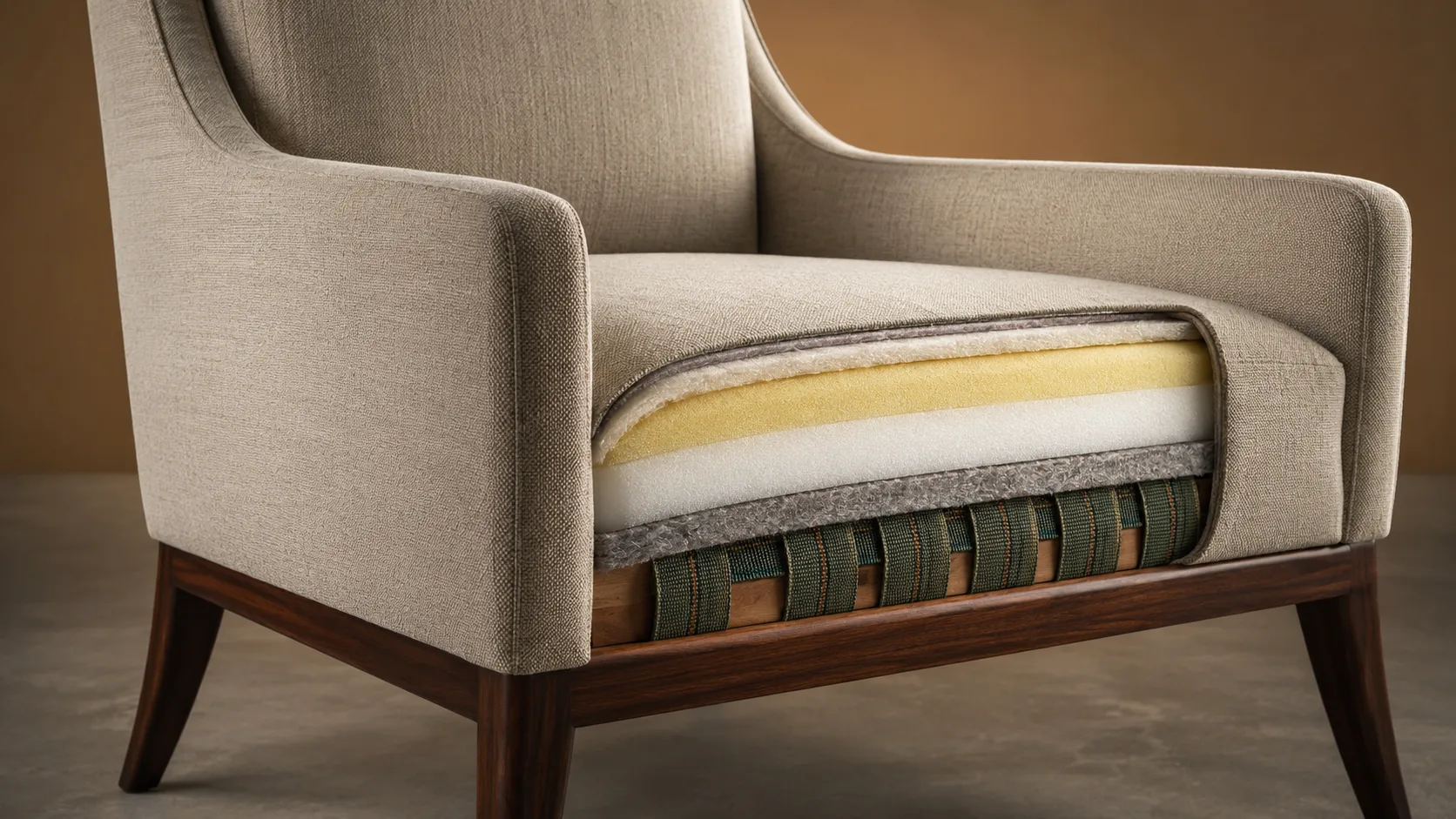
Fabric is the visible layer. What's underneath matters too.
Record foam density and firmness separately. The Polyurethane Foam Association explains that density is mass per volume while IFD describes firmness. A proposed 35 to 40 ILD range and a 15 to 25 range describe different firmness assumptions; neither identifies a commercial or consumer density or proves when a cushion will flatten. Ask for density units, test method, cushion thickness, support, and fatigue results for the selected assembly.
If a moisture barrier is proposed between the cover and foam, obtain its exact liquid-resistance, seam and assembly documentation and approved care. Review the complete sample with the facility; a barrier label does not establish that liquids never reach foam or provide odor or bacteria control.
The bottom line
Compare the textile's test report and approved care with the proposed seat construction. Record abrasion method and result, foam density and firmness, and any moisture barrier before signing an upholstery order. These describe different properties; they do not promise that a chair will look unchanged in year five.
Related reading: Commercial Seating Guide · Restaurant Lounge Seating · How Long Does Commercial Furniture Last
Our take
Abrasion describes the fabric surface, so inspect the seams and edges as separate parts of the assembled seat. Ask which seam, thread, and edge construction the maker uses at seat-front edges and booth corners, how those details are tested, and which cleaning method is approved. Compare a sample at those high-contact points with the same attention given to the flat swatch. A high double-rub number alone does not establish the seam performance or a replacement date.
The bottom line: Compare the exact textile's applicable abrasion method, approved care and assembly details with the intended use. Record foam density separately from ILD firmness, and verify any barrier and seams; no single count or layer establishes the chair's life or hygiene performance.