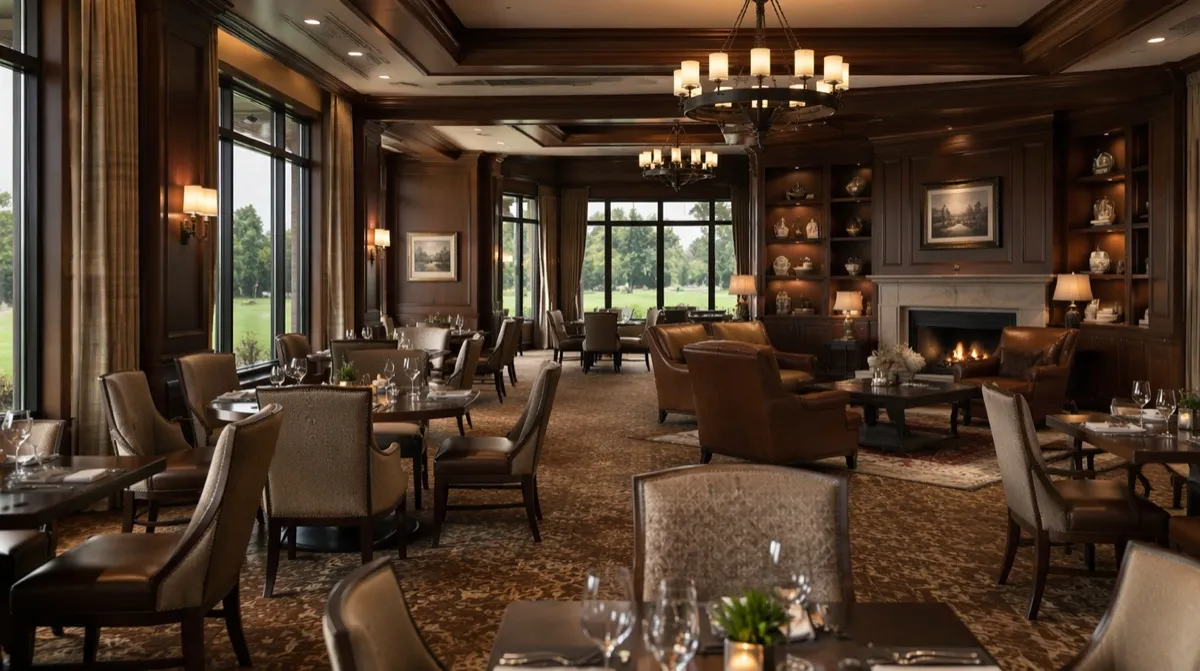
Country club furniture is one of the broadest specification challenges in commercial furnishing. A single property might include a formal dining room, a casual grill, a member lounge, a banquet ballroom, a pro shop, an outdoor patio, and a pool deck. Each space carries its own aesthetic expectation and its own durability demand, and members judge all of them against a high standard because they are paying for it.
Getting country club furniture right means matching contract-grade durability to the specific look each space needs, indoors and out. Here is how procurement committees and club managers should think it through.
Why country clubs span so many furniture types
Most hospitality venues have one identity. A country club has several under one roof, which is what makes it distinct.
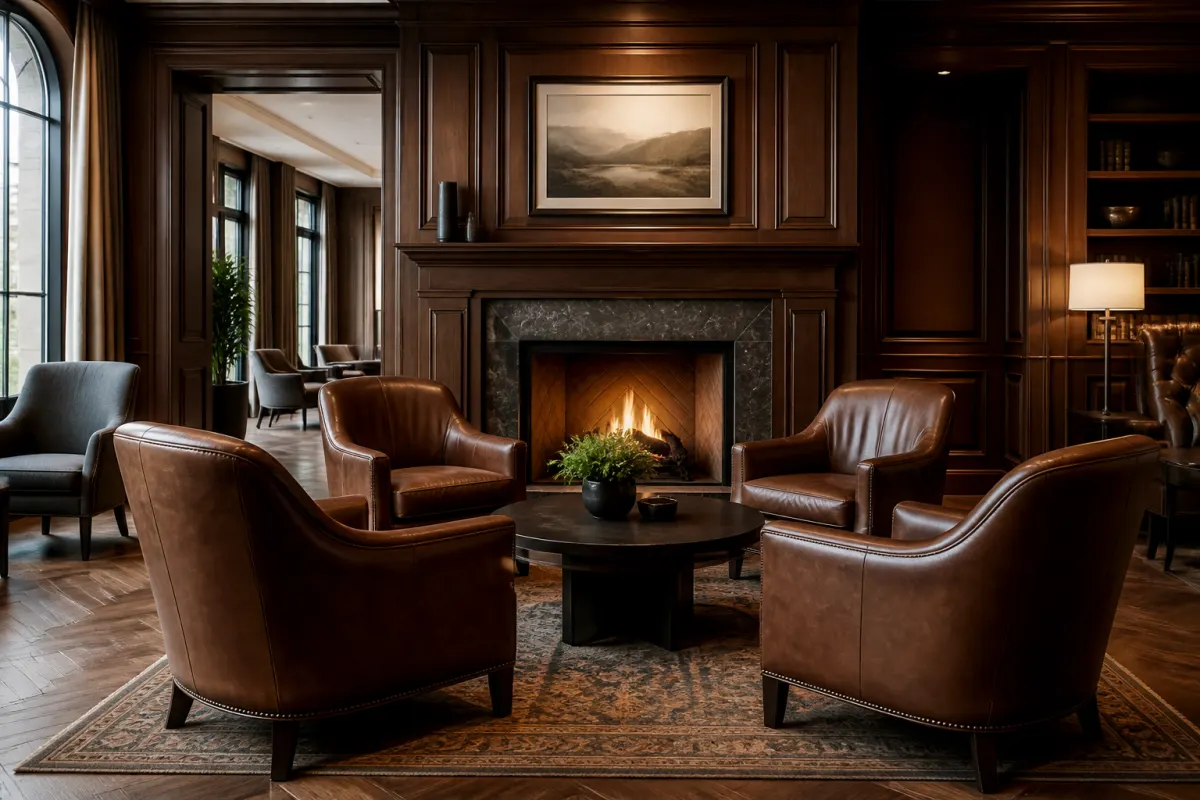
The formal dining room needs refined, upscale seating that reflects the club's image. The grill or casual dining space needs comfortable, more relaxed furniture that still holds up to daily service. The ballroom needs stackable banquet seating and folding tables that convert the room between weddings, member events, and meetings. The lounge and card rooms need inviting club chairs and sofas. And the outdoor spaces, patios, terraces, and pool decks, need furniture engineered for weather.
The mistake clubs make is treating this as one order with one spec. It is really several distinct specifications that happen to share a supplier and a budget cycle. Treating each space on its own terms is what keeps the whole property looking coordinated and lasting.
Indoor dining and lounge specs
Indoor country club seating needs documented construction and upholstery suited to each room. Specify foam density and firmness separately for the seat construction and intended use. Review the textile’s material, abrasion method and result, cleaning instructions, and appearance retention together. ACT’s abrasion guidance distinguishes fabric constructions and warns that test counts do not predict service life. A universal 50,000-rub threshold or a residential label alone does not establish whether a fabric fits the club’s use.
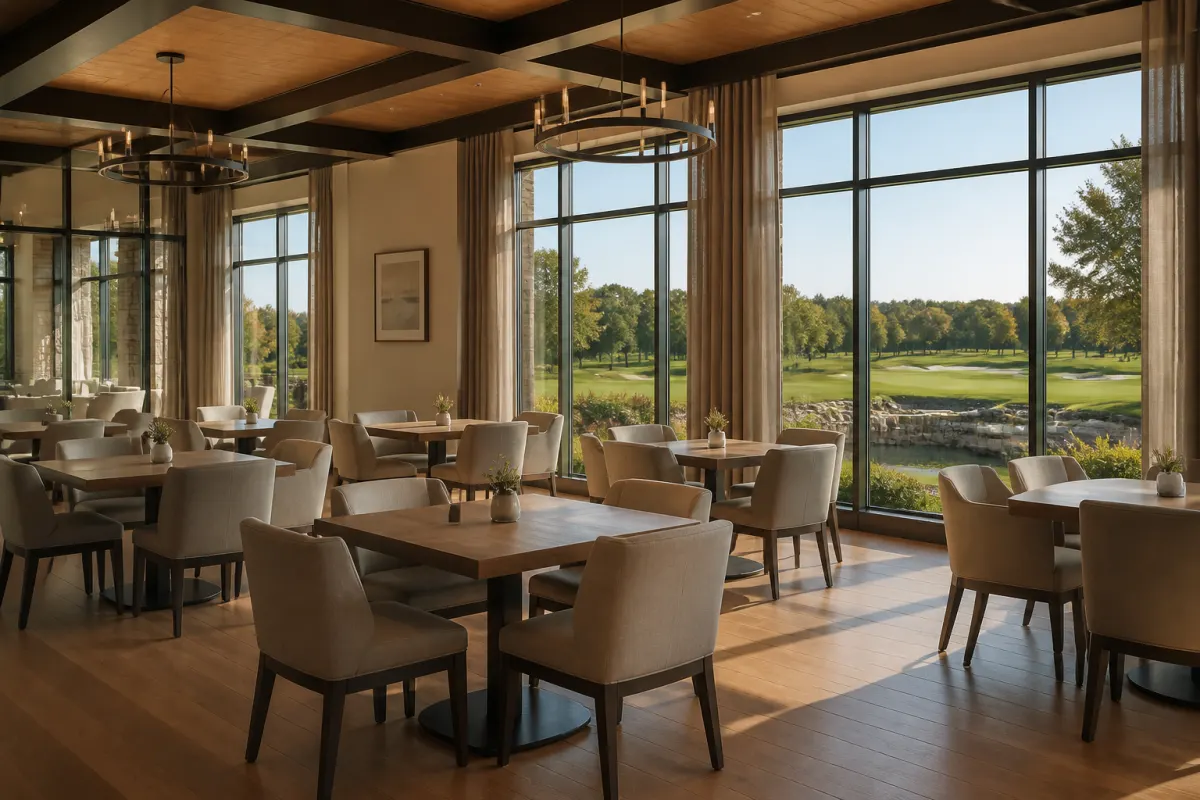
Because the dining and lounge furniture is on display to members constantly, finish consistency and upholstery quality matter more here than in a back-of-house or budget setting. Many clubs use customer's own material so upholstery coordinates with an interior designer's scheme, and a 10-14 week COM-production window is an illustrative scheduling assumption. Confirm fabric receipt, approval, production, freight, and installation dates for the actual order.
The dollar ranges in this guide are illustrative unit-budget inputs, not current supplier prices. Confirm currency, configuration, quantity, and delivery scope in a quote. For one lounge scenario, test $300-900 per chair, $800-2500 per sofa, and $110-320 per grill-room barstool. Browse contract-grade options in our lounge chairs, sofas, and barstools categories to see the range.
Banquet and event space furniture
The ballroom and event spaces are where clubs earn non-dues revenue from weddings and functions, so this furniture has to be both flexible and presentable. It gets set up, torn down, and stored constantly, which demands purpose-built event furniture rather than repurposed dining pieces.
Specify stackable banquet chairs and folding or nesting tables that store compactly and convert the room quickly. Using the same illustrative budget scope, test $45-90 for steel stacking chairs, $70-130 for aluminum, $40-80 for resin Chiavari, and $90-180 for wood or aluminum Chiavari. Example table allowances are $60-130 for a 60-inch round and $50-120 for a 6-to-8-foot rectangle. Check the event brief, samples, handling, and storage before choosing a chair style; a formal event does not require one universal chair type.
A country club ballroom needs matching event furniture and a practical storage plan. See our banquet chairs category for the options.
Outdoor and pool deck furniture
Outdoor country club furniture is a genuinely different specification, because weather, not just use, is the enemy. Patios, terraces, and pool decks need materials engineered for UV exposure, moisture, and temperature swings.
Compare outdoor-rated powder-coated aluminum, polymer, woven systems, or other documented options against the site’s sun, moisture, salt, and pool exposure. Check the selected coating, hardware, cushion drainage, textile cleaning instructions, and commercial-use warranty. A material label alone does not establish corrosion, UV, or chlorine resistance.
Do not carry indoor furniture outside and expect it to survive. Confirm the intended environment and care requirements for each model. Indoor-use furniture may be unsuitable outdoors, and no generic material choice guarantees appearance retention for a fixed number of seasons.
Budgeting and buying across the whole club
The cost calculator’s optional 14-26% freight-and-install allowance is a model assumption. Obtain destination- and access-specific pricing before approving the budget. Model the full multi-space spend with our furniture cost calculator before the committee signs off.
Plan lead times around your busiest season. Confirm actual stock and use a 10-14 week custom-production window only as an initial planning scenario. Build the spring reopening schedule from written approval, production, transit, and installation milestones. When you are ready, request a quote with your space-by-space list, unit counts, and target dates, and we will help you spec each area correctly and price the whole project.