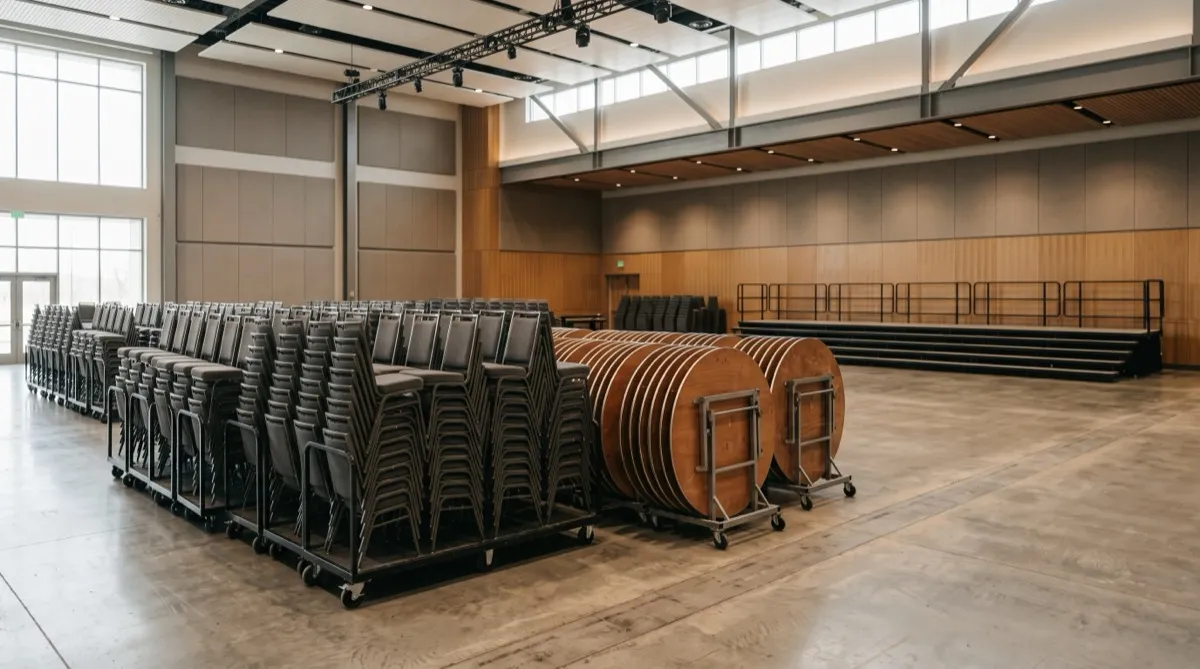
Opening or re-equipping a banquet hall starts with the events you plan to host and the furniture each layout requires. This banquet hall equipment list covers front-of-house chairs, tables, barstools, and the carts and storage that keep them moving. It provides quantity examples to check against your guest capacity and an item schedule to use when requesting current pricing.
The goal is to walk into a supplier conversation with a tested layout, a count by item, and the delivery details needed for a quote. Kitchen equipment, refrigeration, catering serviceware, audiovisual systems, lighting, and specialist staging need their own scope and supplier checks; a furniture checklist does not cover the entire venue opening.
The core equipment list
Check these basic furniture categories against the events your hall will host:
- Banquet chairs (stacking, steel or aluminum frame)
- Round or rectangular banquet tables
- Cocktail and highboy tables for receptions
- Barstools if the hall has a bar or lounge area
- Chair and table dollies or carts
- Storage racks or a dedicated equipment room
Specialty seating like resin or wood Chiavari chairs belongs on this list too if the booking plan calls for it. Compare that fleet with steel or aluminum stacking chairs against setup frequency, storage space, and the finishes clients request. A second chair style needs its own storage and handling allowance.
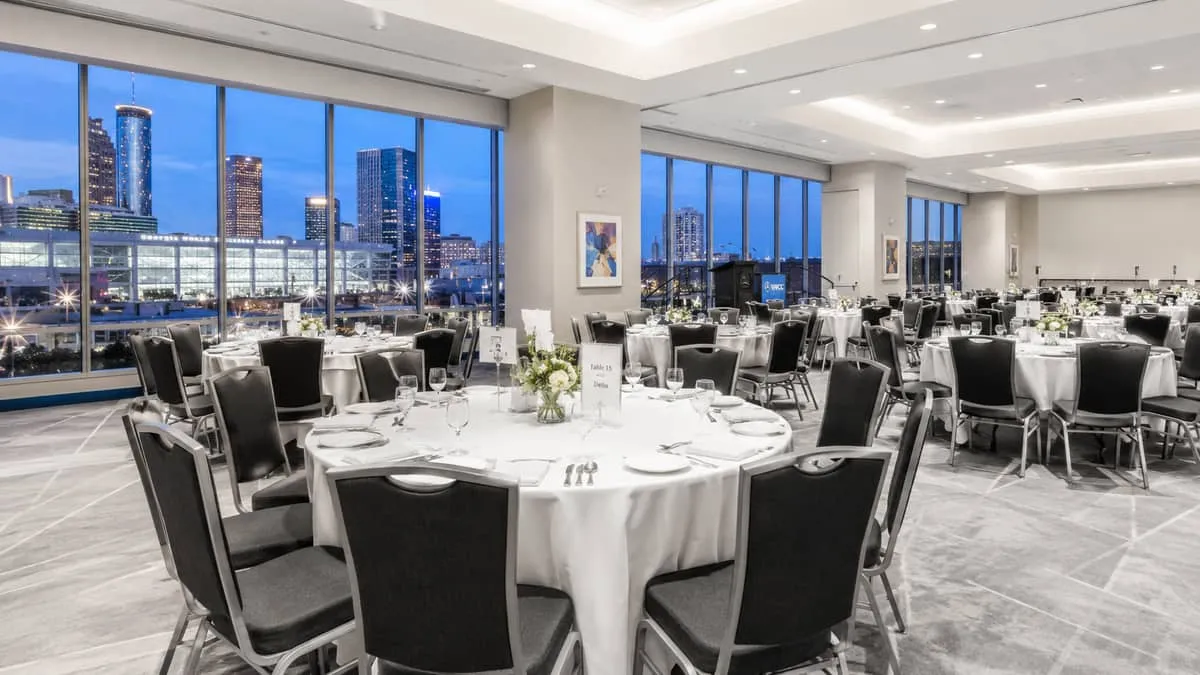
Quantities by guest capacity
Calculate guest seats first, then choose a separate spare allowance. The examples below use eight guests per dining table and a 10% chair reserve; they are inventory examples, not occupancy approvals.
| Guest capacity | Banquet chairs | Round or rectangular tables | Cocktail/highboy tables | Barstools |
|---|---|---|---|---|
| 100 | 110 | 13 dining tables | By reception layout | By bar layout |
| 250 | 275 | 32 dining tables | By reception layout | By bar layout |
| 500 | 550 | 63 dining tables | By reception layout | By bar layout |
| 1,000 | 1,100 | 125 dining tables | By reception layout | By bar layout |
Table count is guest count divided by eight, rounded up. Confirm the actual table and chair fit, then add non-dining tables separately.
Count furniture that must be available at the same time. If two rooms operate concurrently, schedule both layouts before deducting shared inventory. If a ceremony changes into a meal in the same room, reuse may be possible, but only after the setup team confirms the reset window. Do not count the same chair as available in two active layouts.
For an existing hall, record usable stock separately from items awaiting repair and from the spare reserve. The purchase quantity is the confirmed requirement less usable stock, with each replacement or reserve line explained. Use the banquet chair dimensions guide to prepare fit checks and the banquet tables guide to compare the table shapes needed by each layout.
Build the budget from the item schedule
Multiply the confirmed quantity of each item by its quoted unit cost. Add carts, storage equipment, freight, assembly and any installation service as separate lines. Mark unknown costs as unresolved rather than treating them as free. The FF&E schedule builder provides an editable item list and spreadsheet download; the furniture cost calculator provides a starting planning range.
Carts, dollies, and storage
This is the part of the equipment list that gets skipped and then regretted. Chairs and tables that stack well are only useful if staff can actually move them efficiently and store them without damage. Plan for:
- Chair carts compatible with the chosen model and the manufacturer’s rated stack and load limits.
- Table dollies sized to your table style (rounds need a different cart than rectangular folding tables).
- A dedicated storage footprint based on the actual loaded cart width, depth, and height, with space to pull carts out and reach equipment behind them. Confirm the manufacturer's approved stack height rather than assigning one from frame material alone.
- Wall or corner racks for folding tables, kept off the floor to protect table edges and hardware.
A hall running frequent back-to-back events should treat carts as non-negotiable line items, not an afterthought added after the chair order ships.
Decide whether carts will hold the entire stored inventory or circulate through several trips during a reset. Those are different purchasing plans. Ask for the cart's compatible chair or table models, loaded dimensions, rated capacity, and handling instructions, then check a loaded sample through the narrowest door and tightest turn on the intended route.
What to check before ordering
Before placing a bulk order against this list, verify a few things on every category:
- Stackability and frame gauge. Confirm welded joints, a stated weight rating, and how high the chair or table stacks safely.
- Fabric rating. For upholstered chairs and barstools, request the abrasion test method and result, cleaning instructions, and any restrictions on cleaning products. Check a sample against the venue's actual cleaning routine.
- Glides and floor protection. Confirm replaceable glides on chairs and tables to protect finished floors and reduce noise during setup and teardown.
- Sample first. Order one chair, one table style, and one barstool before committing to a full order, especially on a first-time build-out.
- Warranty terms. Ask what is covered on frames versus upholstery and foam.
Freight and lead times
Bulk furniture orders for a new or renovated hall ship LTL or full truckload depending on total volume, and freight cost depends on your delivery zip code, whether the site has a loading dock, and whether the address qualifies as limited-access. Have those delivery details ready before you request pricing. Obtain current availability and the approval, production and transit schedule for each quoted line before committing to an opening date.
Getting a quote
Once you have counts by category, prepare one item schedule for the furniture package. Include the model or required dimensions, quantity, finish or fabric code, compatible carts, delivery zip code, receiving constraints, and target date. Request a quote and ask for product pricing, freight, assembly or installation scope, and availability to be itemized. Keep any line without a confirmed supplier or cost marked as unresolved.
Browse banquet chairs, tables, and barstools to compare options while you finalize counts; confirm the selected finish and availability in the quote.
Opening a venue: buy against tested layouts
Build a seated-banquet layout and a reception layout before buying the opening package. The banquet seating planner helps compare furniture arrangements; the venue's approved occupancy and required routes still need to be checked separately. Count registration, buffet and staff tables in addition to guest dining tables.
Split the purchase into opening essentials, flexible pieces used across event types, and optional upgrades justified by bookings. Record which layouts each piece supports. A second premium chair style is a separate inventory decision; do not assume it replaces the standard fleet at every event.
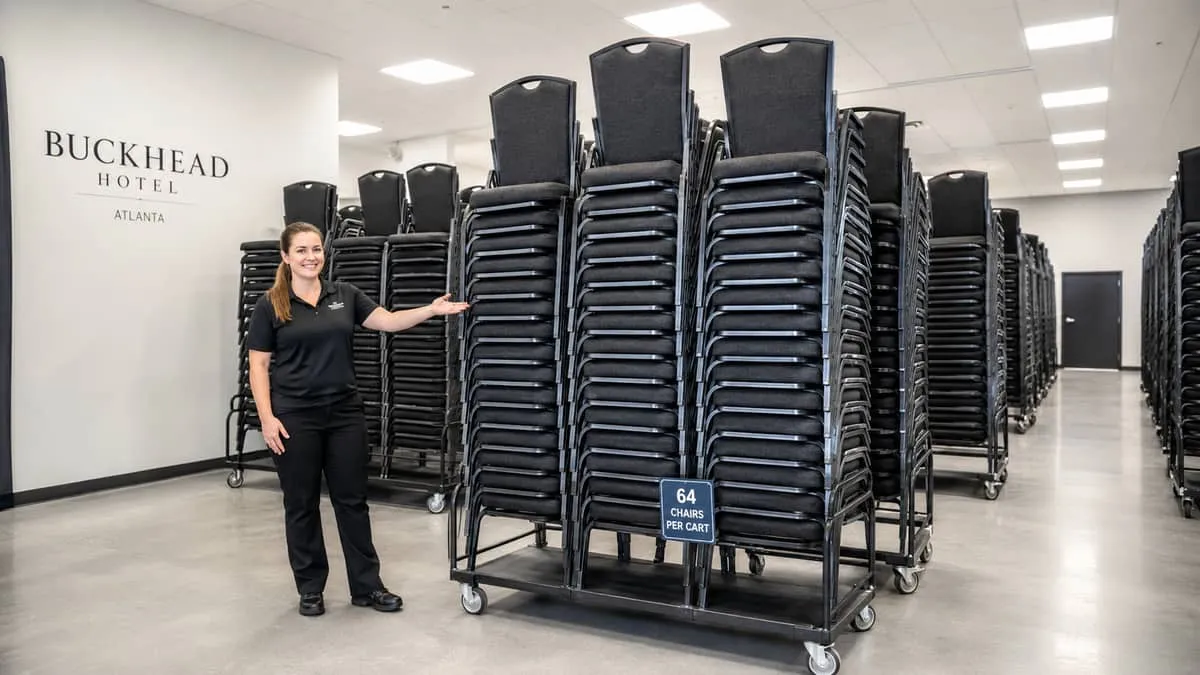
Test a representative room reset with a sample chair, table and intended carts. Measure the cart route through doors and lifts, identify a staging position and time the moves with the setup team. Use the manufacturer's stacking limit and cart compatibility, not a generic chairs-per-cart ratio.
Include stage or riser needs, covers, replacement glides and storage positions in the procurement plan. Verify which supplier provides each item. Keep finish and fabric codes for reorders, compare samples under event lighting, and schedule receiving around confirmed bookings.
For receptions, estimate the dance floor separately; for outdoor events, test a tent area allowance with the rental supplier.