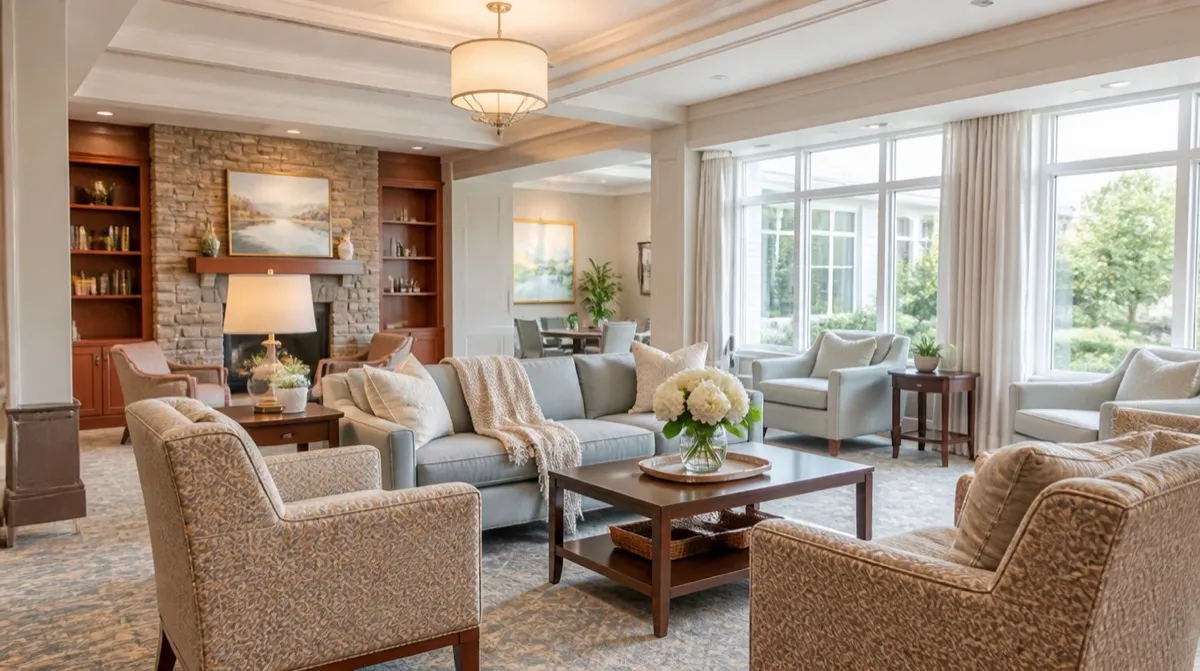
Build the senior-living furniture brief with the facility's qualified care and infection-control teams: transfer tasks, individual fit, cleaning, room use and appearance. These requirements need exact model and care evidence; the category does not establish one commercial durability standard or that other hospitality settings never face the same needs.
Whether you are furnishing independent living apartments, assisted living common areas, memory care units, or skilled nursing rooms, the specification decisions you make affect resident safety, staff workload, and how long the furniture lasts. Here is what procurement and operations teams need to know when buying senior living furniture.
Why senior living furniture is a distinct category
Include resident fit and support, the facility's cleaning process, intended activities and appearance in the brief. The care team should identify actual transfer and infection-control requirements; those needs cannot be inferred solely from a senior-living or commercial label.
A dining chair in a senior community is not just a place to sit. It is something a resident grips to stand up, leans on for balance, and uses dozens of times a day. A lounge chair in a common area may be occupied by someone who needs help getting in and out. The furniture becomes part of daily mobility, which means design details that seem cosmetic in a hotel become safety features here.
Have the community identify the cleaning agents, frequency, and infection-control process for each zone. Obtain the furniture maker's compatible material and assembly instructions; neither a senior-living label nor a generic cleaner description establishes that a surface tolerates the actual process.
Durability and cleanability standards to specify
Ask for the selected frame's structural test documentation and the cushion's density, firmness, and fatigue data. The proposed 35-40 ILD band is a firmness assumption, not a density or longevity rating, as the Polyurethane Foam Association explains. For abrasion, use the ACT textile-specific guidelines: high-traffic woven or knit fabrics and coated fabrics have different criteria, and none establishes a replacement date for a senior-living dining room.
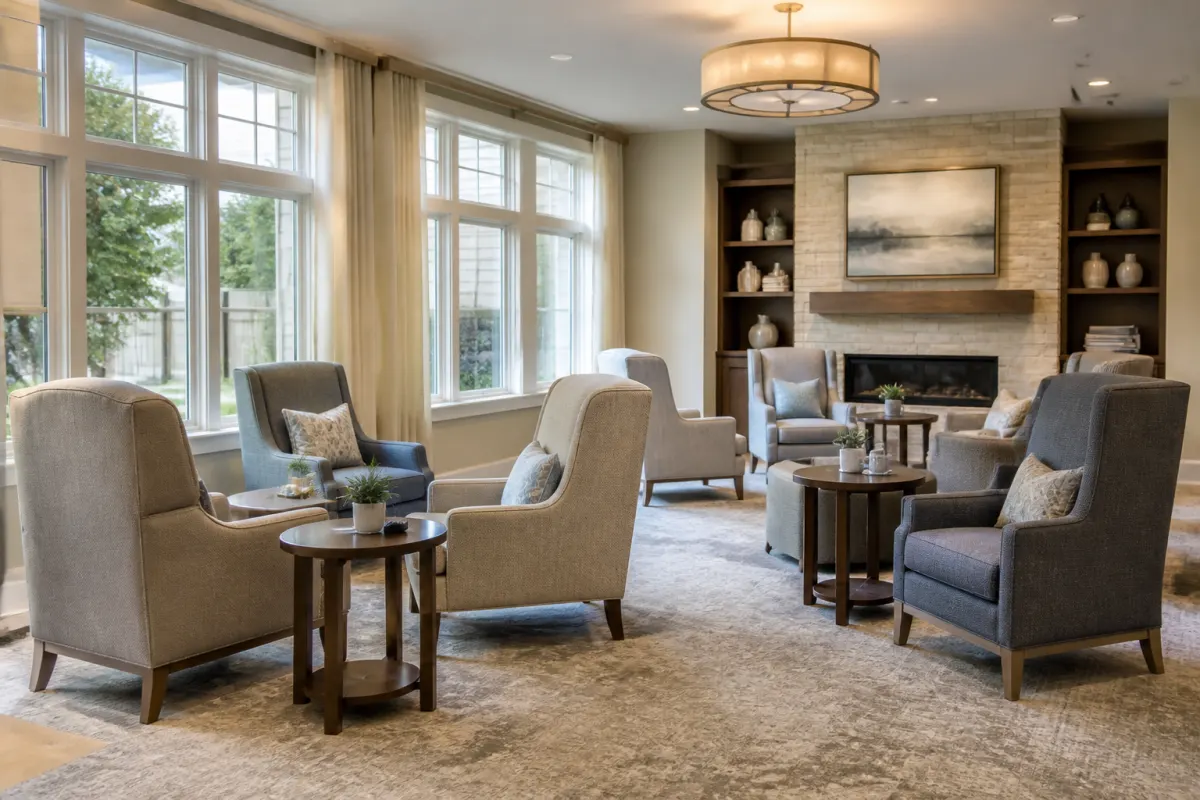
Define cleanability from the facility's actual process; a standard commercial-fabric label is not proof of approval. Have the community's infection-control and care teams approve the surface and cleaning process. An antimicrobial treatment or coated-fabric label does not establish compatibility with bleach or the facility's disinfectants. The CDC environmental-surface guidance directs healthcare facilities to use appropriate EPA-registered disinfectants according to their instructions; obtain the furniture maker's material-specific care instructions as well. Ask the supplier specifically whether the material tolerates the disinfectants your community actually uses, and request the exact agent, concentration, contact time and method approved for the complete assembly. Compare seam access, any moisture barrier, and removable-cushion procedures with housekeeping on a sample. Those features need actual care and service evidence before assigning labor savings or added life.
Safety and mobility design details
The features that make furniture safe for older residents are specific and worth naming in your spec.
Have the facility's qualified care team define residents' transfer and support needs. An 18 to 20 inch seat-height band is only an illustrative comparison for that review, not a transfer prescription. Test the selected seat, arms, cushion compression, table relationship, and foot support with the appropriate users and staff; higher, firmer, or grippable features are not universally suitable.
Ask for the exact model's stability, intended-use load, and restrictions, then have the care team evaluate the proposed transfer use. For memory-care zones, obtain facility requirements for hardware, removable parts, edges, and patterns; do not treat a wide base, rounded edge, or calming appearance as a safety approval or a universal baseline.
Comfort and a residential look
The design goal in senior living is a home, not an institution. Residents live here full time, and families judge a community heavily on how warm and residential it feels during a tour.
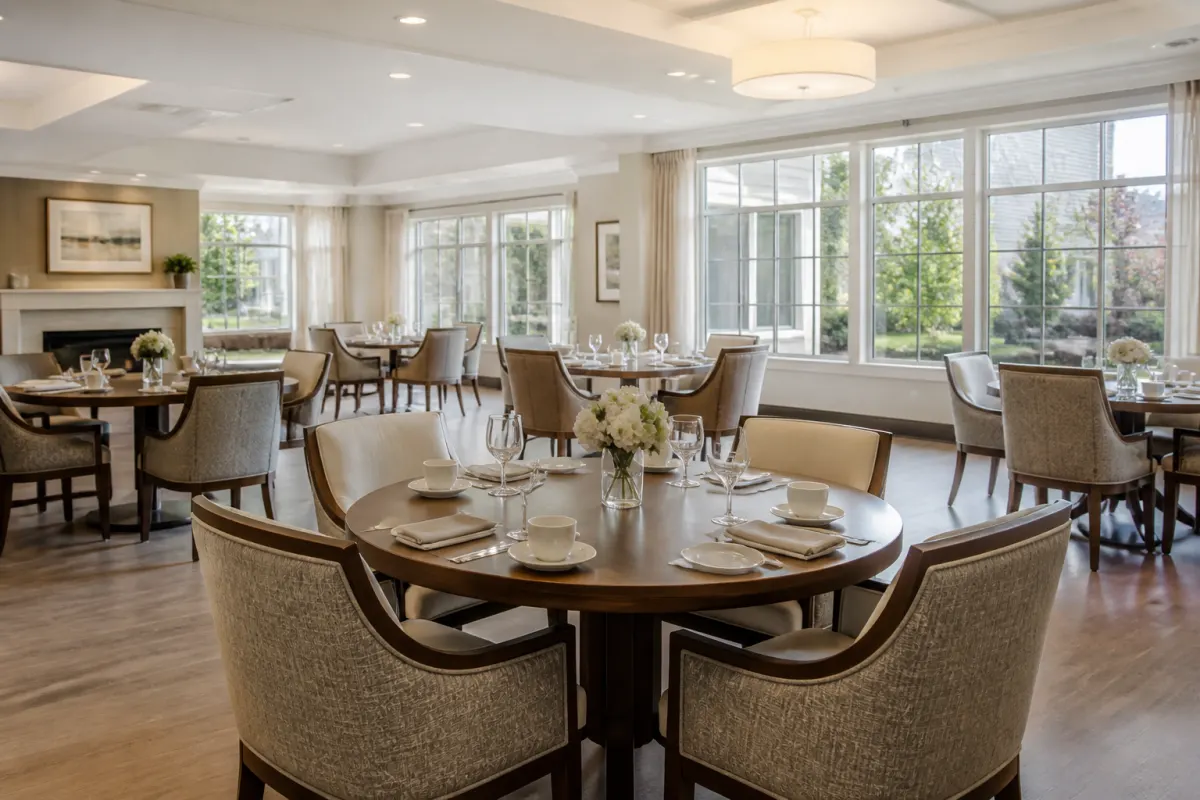
That means specifying furniture that reads as residential while performing as commercial: wood-tone finishes, softer color palettes, upholstery patterns that look like something from a home rather than a waiting room. The good news is that contract manufacturers now build senior living lines that hide their commercial construction behind a residential appearance. Compare the proposed residential appearance with documented care, structural tests, parts, and warranty for the actual assembly; a homelike style does not establish a ten-year service life.
Balance comfort with the mobility requirements above. A chair can look inviting and still have the arm support and seat height a resident needs. The best senior living furniture does both at once.
Budgeting a senior living furnishing project
For an illustrative pre-quote budget, this article uses $300-900 per lounge chair and $800-2500 per sofa, plus a 14-26% freight-and-installation allowance. These are planning inputs, not verified current prices or a measured logistics average. Occupied-building access, phasing, unloading, and installation scope need separate quote lines. You can model those assumptions with our furniture cost calculator before replacing them with the actual proposal.
Plan lead times early. Stocked items ship fast, but a 10-14 week custom upholstery and finish duration is an illustrative initial schedule; obtain approval, production, and delivery dates for the selected products. For a full community opening or renovation, work backward from your target date and build in float.
Request a quote with unit counts, resident-use requirements, upholstery and cleaning criteria, and the delivery timeline. Ask responding suppliers for the proposed models' dimension, load, test, care, and receiving documents, then have the facility review the fit and use requirements. Browse furniture concepts in lounge chairs and armchairs for design discussion rather than assumed senior-living suitability.