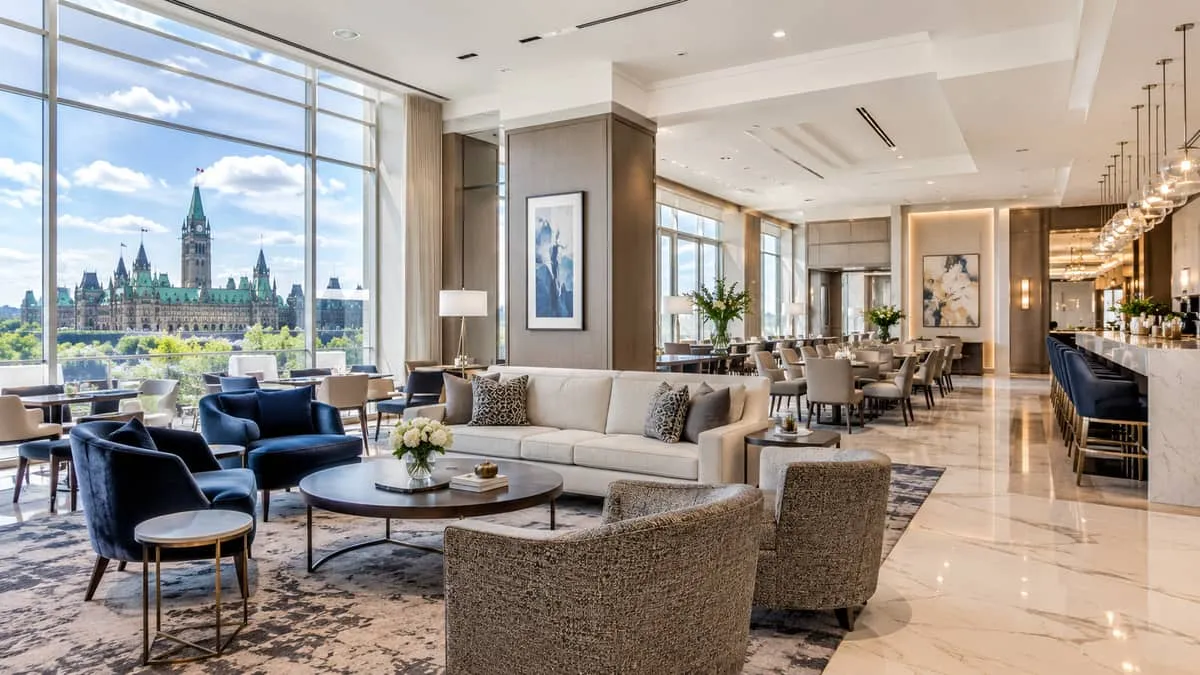
Ottawa's development pipeline is active in ways that most Canadian cities outside Toronto cannot match right now. LeBreton Flats is finally moving from decades of NCC planning exercises into ground-level construction, and the Zibi project straddling the Ottawa and Gatineau shores of the Ottawa River is delivering mixed-use density that both cities have needed for years. Meanwhile, the Shaw Centre continues to generate consistent convention demand that feeds a hotel market concentrated along Rideau Street and into Centretown, with the Fairmont Chateau Laurier setting the benchmark for what a full-service property in this market looks like.
For hospitality operators entering this pipeline, whether opening a 180-key business hotel near the convention complex or a 60-seat independent in Hintonburg, FF&E procurement is one of the largest controllable cost categories in the project. Getting it right requires understanding not just furniture specifications, but the specific rhythms, relationships, and regulatory considerations that shape procurement in a bilingual federal capital.
What FF&E Covers in an Ottawa Hospitality Project
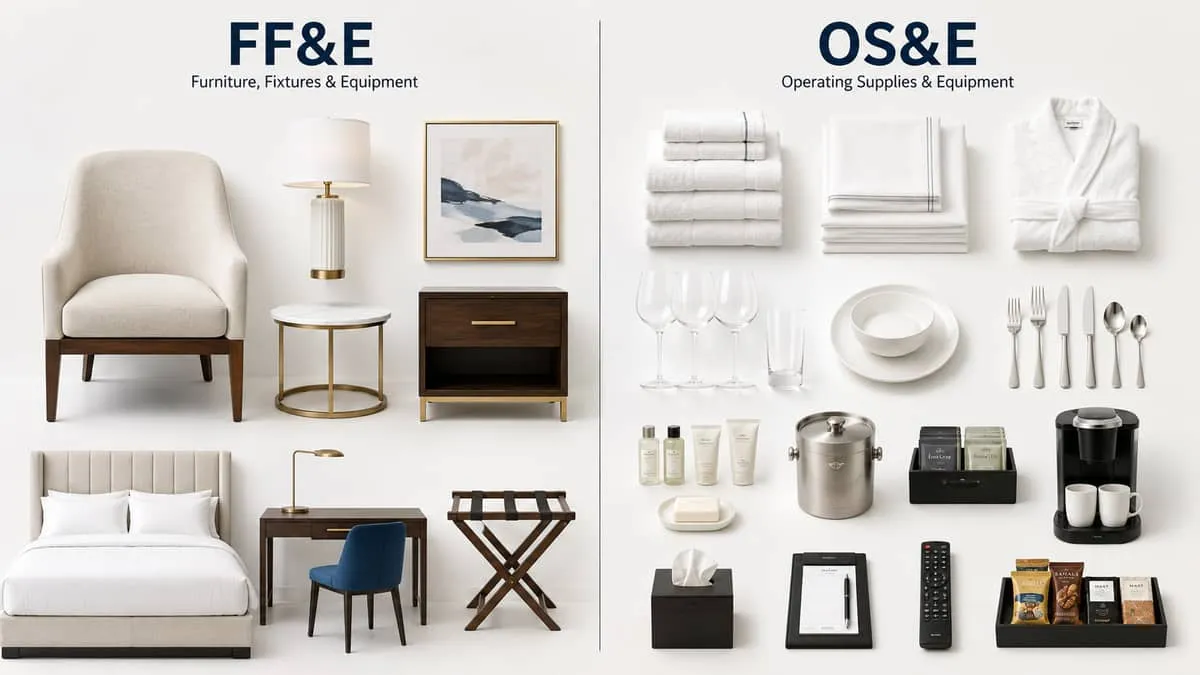
FF&E stands for furniture, fixtures, and equipment. For a new hotel entering the Ottawa market, that scope includes every guest room bed frame, headboard, desk, task chair, lounge seating, case goods, artwork, mirrors, and all decorative lighting. For a restaurant opening in the ByWard Market or along Bank Street in the Glebe, it covers booth seating, dining chairs, bar stools, host stand, server stations, and any feature lighting that is part of the interior design rather than the base building.
What FF&E does not cover is OS&E: operating supplies and equipment. OS&E is the linen program, glassware, kitchen smallwares, uniforms, and guest amenity items. Both budgets are planned in parallel during a hospitality project, but they are managed separately and procured through different channels. Owners who treat OS&E as an afterthought to FF&E regularly hit budget surprises in the final two months before opening.
For properties targeting the government and association conference market that anchors Ottawa's hotel occupancy, the FF&E specification also needs to account for accessibility compliance at a level that leisure-driven markets sometimes underweight. Federal departments, national associations, and diplomatic delegations booking Shaw Centre-adjacent hotels will have accessibility requirements embedded in their RFP language. Your FF&E selection needs to satisfy those requirements before the first group contract is signed.
How Convention and Government Business Shapes Spec Decisions
Ottawa's hotel market is not leisure-driven. The Fairmont Chateau Laurier serves diplomatic functions and parliamentary delegations. The Shaw Centre cluster fills rooms for national association conferences, federal training events, and lobbying-season meetings that run from September through June. The Hotel Arts Helix brings a design-forward product to a market that has historically skewed functional over aesthetic.
That demand profile has direct implications for FF&E specification. Guest rooms in properties targeting the government and association segment need to function as working environments, not just sleeping rooms. That means desks with adequate surface area and ergonomic task seating that can support a full working day, not a decorative chair that happens to sit near a desk. It means lighting that supports document review, not just ambient mood. It means surfaces and upholstery specified at a durability grade that holds up to 250 or more room nights per year from guests who are working, not vacationing.
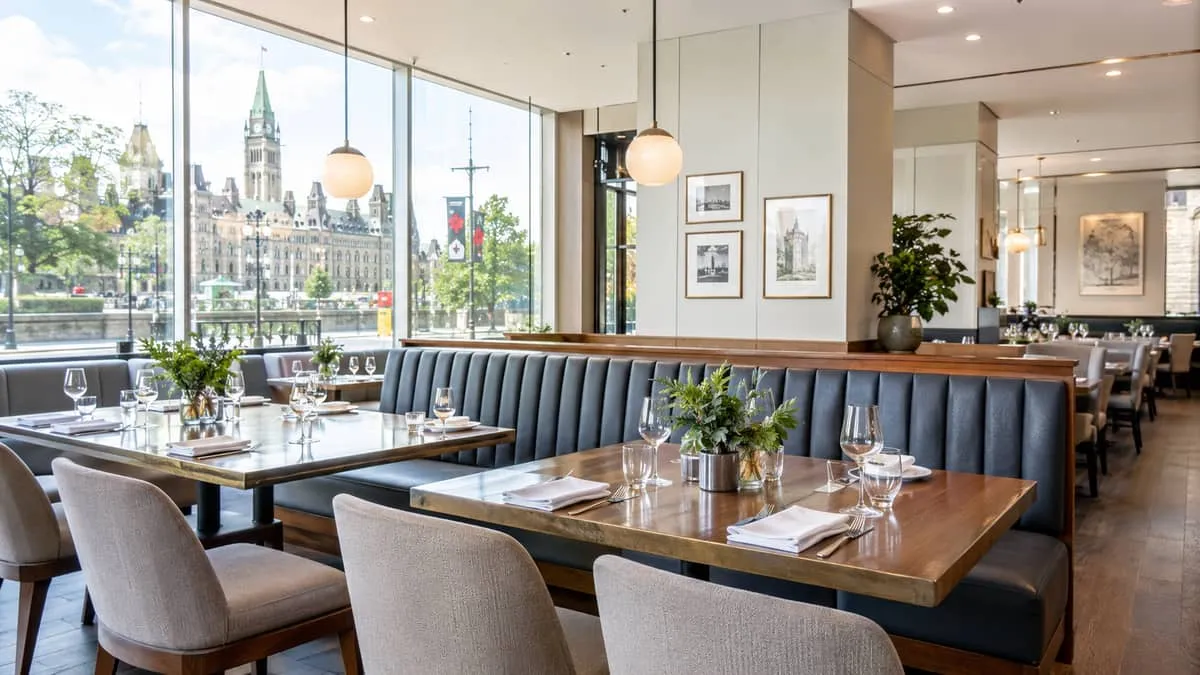
In restaurant contexts, the Sparks Street corporate lunch crowd and the association-dinner circuit place different demands on a room than a leisure tourist destination would. Seating needs to support extended business meals without pressure or fatigue. Tables need surfaces that handle frequent turnover, wipe-down cleaning between covers, and the weight of a laptop open beside a plate. These are contract-grade requirements, and they rule out the residential-adjacent furniture that occasionally shows up in smaller restaurant projects because the initial price point is attractive.
For new properties coming online in the LeBreton Flats development, the likely tenant and guest mix will be multi-layered: federal government workers in the residential units, conference delegates and diplomatic visitors in hotels, and a neighbourhood dining and retail environment that serves both. FF&E decisions for each venue type need to account for that mix rather than defaulting to a generic specification.
Bilingual Procurement in a Federal Capital
Ottawa is an officially bilingual city where the federal government presence means that bilingual product documentation, signage, and supplier communication is not optional for certain project types. Properties that will host federal tenants, embassy functions, or national association events will encounter bilingual requirements in contract language, in signage specifications, and occasionally in product documentation.
From a procurement standpoint, this creates a practical consideration when selecting suppliers. A supplier whose product catalog, care and maintenance documentation, warranty terms, and technical specifications are available only in English creates downstream friction for properties that need French-language materials for regulatory compliance, staff training, or guest-facing communications. For the Zibi development specifically, given its explicit positioning as a cross-river community serving both Ottawa and Gatineau, bilingual supplier capability is a genuine evaluation criterion rather than a formality.
This does not mean limiting sourcing to Quebec-based suppliers. It means asking the question explicitly during the RFQ process: can you provide product documentation, care instructions, and warranty terms in both official languages? Contract furniture suppliers with established hospitality programs in the Ottawa and National Capital Region market will generally have this covered. Suppliers newer to the market may not, which creates a project management task you will need to handle internally.
The bilingual consideration extends to the installation and service relationship as well. An Ottawa property that needs warranty service, replacement parts, or field visits from a supplier's service team should confirm that French-language service capability is available, particularly for properties in Gatineau or those serving predominantly French-speaking diplomatic and government clients.
Procurement Timelines for Ottawa's Development Pipeline
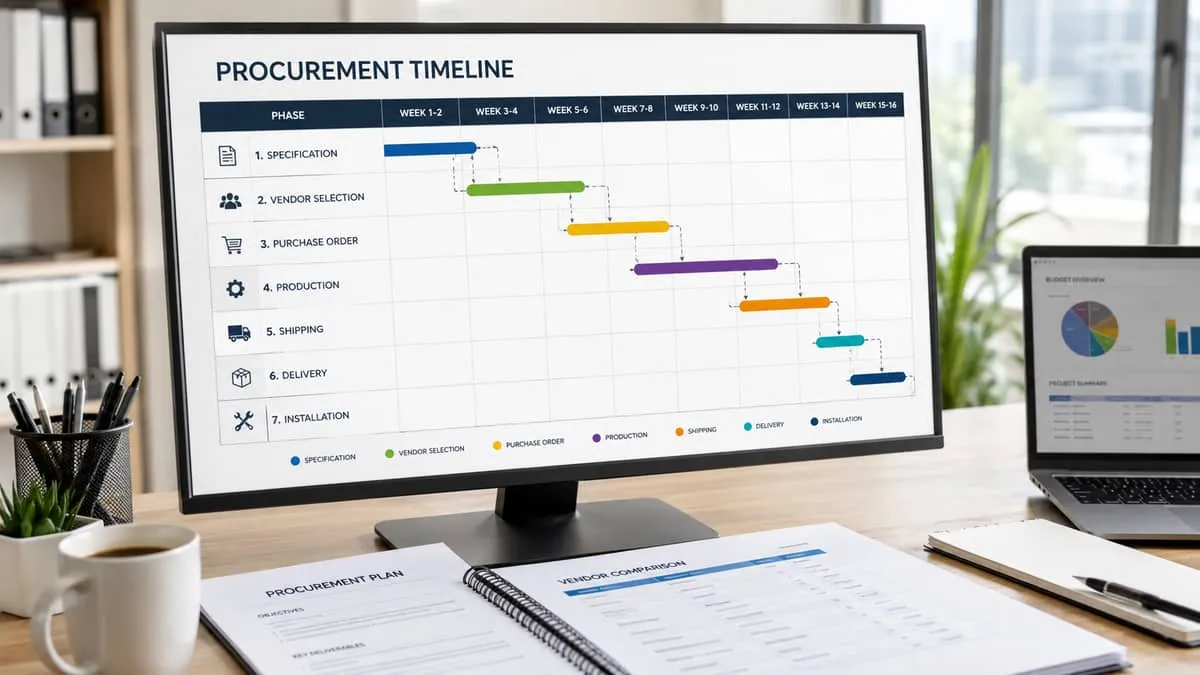
The compressed renovation windows that shape FF&E procurement in Ottawa are well known to anyone who has managed a hospitality project here. The conventional wisdom is that renovations happen in July and August, in the gap between the spring parliamentary sitting and the fall conference season that begins in September. That eight-to-ten-week window is when contractors, installers, and procurement teams all compete for the same calendar.
For new construction projects in the LeBreton Flats or Zibi developments, the timeline pressure is different but equally real. New hotel openings tied to development completion dates have hard deadlines that cannot be moved, and FF&E is always on the critical path in the final push to opening. A realistic procurement timeline for a full hotel opening, from specification sign-off through furniture installation complete, runs 22 to 30 weeks. Custom upholstery programs, proprietary case goods finishes, and overseas manufacturing add time. Customs clearance for US or overseas shipments adds variability.
The practical implication is that procurement conversations need to begin during schematic design, not after construction documents are issued. For a property targeting a fall opening to capture the Shaw Centre conference season, specification work needs to be well advanced by the preceding January. For a spring opening, the fall before is the correct starting point for supplier engagement.
Ottawa projects also face a staging and warehousing consideration that smaller markets sometimes handle more loosely. Construction sites in the Centretown core, the ByWard Market neighbourhood, or the LeBreton Flats area do not have the land area for large furniture deliveries to stage on-site. A third-party staging warehouse where furniture is received, inspected, and held for phased delivery to the building is standard practice for any project of meaningful scale. Factor the cost and lead time for that warehousing arrangement into your procurement plan from the beginning.
What a Full FF&E Scope Looks Like for a New Ottawa Property
For operators going through this process for the first time, a complete FF&E scope for a new Ottawa hotel or restaurant involves more categories than the initial planning usually anticipates.
For a hotel guest room, the full scope includes the bed platform or frame, headboard, mattress and box spring (sometimes managed under OS&E but often included in FF&E for tracking purposes), nightstands, dresser or wardrobe unit, desk, desk chair, lounge chair and ottoman if the room type supports it, luggage bench, full-length mirror, all decorative lighting fixtures, artwork and framed pieces, window treatments, and any custom millwork elements that are not base building. A mid-range property at a $12,000 to $16,000 per-key FF&E budget is a reasonable planning number for Ottawa's current market, with full-service and design-forward properties running higher.
For public spaces, the scope includes lobby seating groups, front desk millwork and related fixtures, any bar or lounge furniture, meeting room tables and chairs, and any outdoor furniture for terraces or patios. Ottawa's patio season runs genuinely from May through September, with the ByWard Market terraces and Rideau Canal-adjacent venues hosting meaningful outdoor covers. Outdoor furniture specified for Ottawa winters needs to be designed for off-season storage or be genuinely weather-resistant enough to stay out year-round in a cold continental climate. That is not the same specification as outdoor furniture for a Vancouver or Toronto property.
For restaurant openings in Hintonburg, the Glebe, or the ByWard Market, a per-seat budget of $450 to $950 for seating alone is a realistic planning range for mid-range to upscale independent concepts. That range covers commercial-grade chair and booth frames with contract upholstery, but not custom millwork banquettes, which are typically scoped separately in the construction budget.

Supplier Relationships and the Ottawa Market
Ottawa is not a city where hospitality operators can walk into a showroom and immediately access contract pricing and lead time commitments without an established relationship. The suppliers who serve the National Capital Region's hotel and restaurant market, including the properties along Rideau Street, the Centretown corridor, and the development zones that are now generating new inventory, work primarily through designers and procurement consultants who have ongoing account relationships.
For a first-time operator opening a restaurant in the ByWard Market or a boutique hotel in a converted building near Sparks Street, the fastest path to reliable supplier access is through a designer or procurement consultant with active accounts in the Ottawa market. Confirm before engaging that their supplier relationships are with contract-grade vendors rather than residential trade sources. A designer who primarily works on residential interiors may have access to attractive product, but the commercial durability grades, lead time reliability, and warranty terms will be different from what an Ottawa hotel or restaurant needs.
For developers working on the LeBreton Flats and Zibi pipeline, the scale of those projects means direct supplier relationships are worth building during the design development phase, before procurement documents are issued. Suppliers with national accounts and Ottawa-market familiarity can provide value engineering input during specification that reduces cost without compromising the durability grades the market requires.
The National Capital Commission's role as a landowner and regulatory body in properties adjacent to NCC lands also means that some FF&E specifications for public-facing spaces may need to pass design review. Confirm the NCC review scope for any project on or adjacent to NCC-controlled land before finalizing specifications that affect the exterior or publicly visible interior spaces.
Getting the Process Right Before You Start Sourcing
The hospitality operators who move through Ottawa FF&E procurement without major budget or schedule surprises share a few consistent practices. They treat procurement as a project management exercise with defined milestones and assigned accountability, not a shopping process. They start supplier conversations earlier than feels necessary, typically during schematic design. They build contingency into both budget (15 percent is the standard starting point) and schedule (four to six weeks of buffer before the hard opening date). And they confirm bilingual documentation requirements with their supplier list before purchase orders are issued, not after.
The federal government delegation arriving for a Shaw Centre conference, the diplomatic function at a Chateau Laurier-adjacent property, and the association board dinner at a Glebe restaurant all experience the physical environment of Ottawa's hospitality spaces directly. The FF&E decisions made during procurement are what those guests sit on, sleep in, and eat at. Getting the specification right for Ottawa's specific demand profile is worth the planning effort.
If you are sourcing FF&E for your Ottawa property, the fastest way to real numbers is to tell us what you need. Request a quote with your quantities and timeline.