
Ottawa hospitality operators work in a market shaped by forces that do not exist anywhere else in Canada. Government ministers, foreign diplomats, national association executives, and federal procurement officers are sitting in your dining rooms and sleeping in your guestrooms. Your clients are not just evaluating the meal or the room rate. They are forming an institutional impression of your property that gets relayed back into organizations with long memories and recurring budgets. The furniture in a Rideau Street hotel or a Sparks Street restaurant is part of that impression, and it either holds up or it does not.
Sourcing from a credible commercial furniture supplier Ottawa operators can rely on is not a premium option for high-end properties. It is the minimum threshold for any hospitality business that wants to survive in a market where the public sector and association conference trade sets the quality expectation for everyone.
The Ottawa Purchasing Mindset Is Different From Every Other Canadian Market
Ottawa operators think about supplier relationships differently than their counterparts in Calgary or Vancouver, and there is a structural reason for that. A significant portion of the Ottawa market depends on clients whose own organizations operate under formal procurement and compliance frameworks. Federal departments, Crown corporations, national associations, and diplomatic missions all have procurement cultures built around documentation, accountability, and defensible supplier selection.
That culture bleeds into private hospitality purchasing decisions in a way that is unique to the capital. When a hotel near the Shaw Centre is pitching corporate room blocks to a federal department or a national industry association, the property's own operational standards get scrutinized alongside the room rate. Documented supplier quality, certifiable product standards, and a track record with comparable properties carry weight that would mean almost nothing in a purely leisure market.
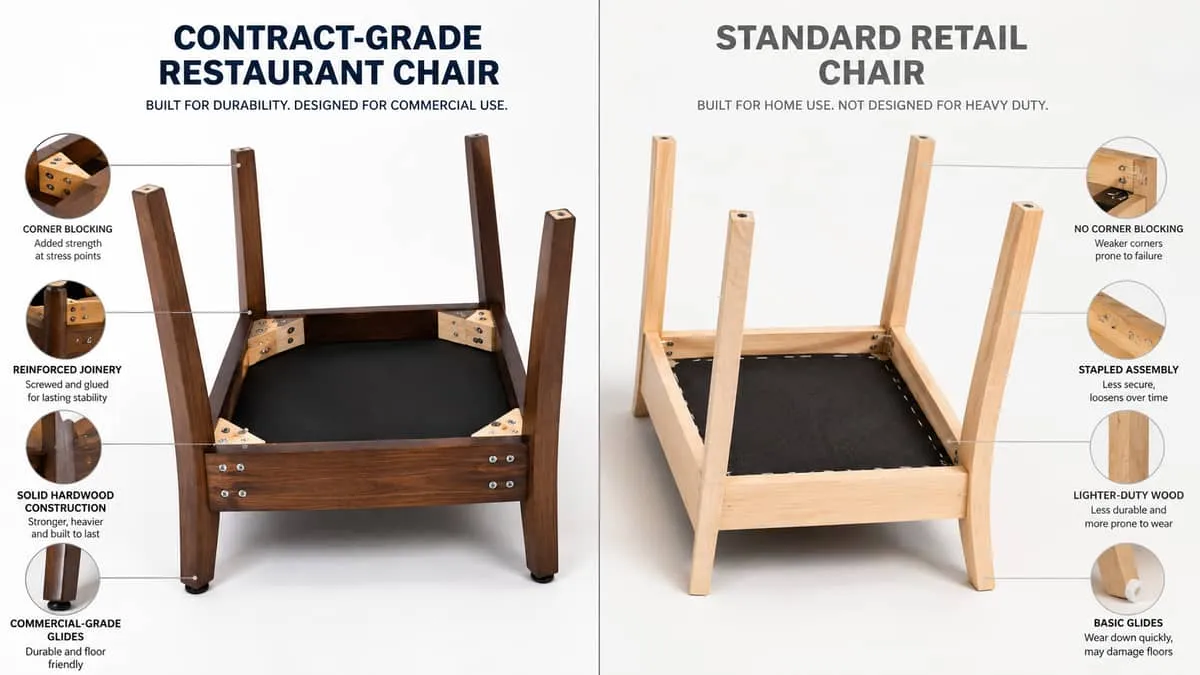
A commercial furniture supplier Ottawa hoteliers use for a major refresh should be able to provide more than a catalogue and a price sheet. They should be able to document the construction standards for each product line, provide references from comparable hospitality projects, confirm compliance with Ontario commercial fire code requirements, and ideally carry some form of certifiable quality documentation. BIFMA certification for seating products is the most common benchmark. It is not bureaucratic box-ticking in Ottawa. It is the kind of credential your own clients may ask you to demonstrate when they are deciding where to book their annual conference.
This is the question operators in purely private markets rarely need to ask their furniture supplier: can you help us demonstrate the quality of our interiors to an institutional client? In Ottawa, that question has real commercial value.
Federal Procurement Culture and What It Means for Private Hospitality Buyers
Ottawa's federal government presence does not just influence who books your rooms. It shapes how local operators think about vendor selection across every category, including furniture. Procurement officers at government-adjacent organizations understand supplier vetting. When those same people move into association or private sector roles, they bring that framework with them.
For hospitality operators, this creates a practical expectation worth understanding. Clients with government backgrounds will notice, even subconsciously, when a property's interiors show signs of corners being cut. Worn upholstery at the Fairmont Chateau Laurier reads as an institutional failure in a way it might not at a resort property in Whistler. The standard at the Chateau Laurier is not relevant to every Ottawa operator, but the underlying expectation it creates in the market is.
National Capital Commission properties, federal buildings along Wellington Street, and the diplomatic corridor along Sussex Drive all operate under procurement standards that emphasize longevity and professional presentation. Hotels and restaurants that serve those communities inherit a portion of that expectation. Sourcing decisions that look like short-term cost savings can undermine a property's positioning with the clients who generate the most consistent revenue.
There is also a bilingual dimension worth noting. Ottawa is officially bilingual in a way that affects commercial relationships at every level. A commercial furniture supplier Ottawa properties use for large contracts should be capable of producing documentation, specification sheets, and correspondence in both official languages. It is not a universal requirement for every purchase, but for properties with federal or association clients it is a reasonable thing to verify upfront.
Convention Scale Purchasing at Shaw Centre and What It Requires
The Shaw Centre on Colonel By Drive is one of the largest convention facilities in Canada outside Toronto, and the hotel cluster around it along Rideau Street and into the ByWard Market corridor operates at a scale that changes the furniture sourcing equation significantly. A convention hotel running large banquet configurations may need hundreds of matching chairs deployed across multiple function rooms, then reset into different configurations the same day.

That kind of operational demand has specific furniture requirements that smaller or less experienced suppliers cannot reliably meet. Stacking capacity matters enormously when 300 chairs need to move from a plenary hall to storage between morning and afternoon sessions. Frames need to be light enough for fast handling but rigid enough that they do not flex and creak under load. Upholstery needs to resist the kind of surface transfer that happens when the same chair covers hundreds of different bodies across a multi-day event.
The purchasing questions for a property serving the Shaw Centre conference market include details that a boutique hotel in the Glebe will never need to ask. How many units can be produced to identical spec across a single production run? What is the tolerance on frame dimensions for units produced six months apart if you need to expand the order later? Can the supplier match finish and fabric exactly if replacements are needed two years into a contract?
Lead times are the other convention-scale variable. Contract furniture is typically custom or semi-custom, with production windows of 10 to 16 weeks for upholstered pieces. A convention hotel that is planning a pre-season refresh before a major conference cycle cannot afford a supplier who overpromises on timelines. Ask for a written production schedule with milestones, not just a delivery date.
The ByWard Market and Seasonal Patio Durability
The ByWard Market restaurant district is one of the highest-traffic dining environments in Canada from May through September. Terraces fill with government workers, tourists visiting the National Gallery and Parliament Hill, and the weekend crowd that treats the Market as the city's primary outdoor dining destination. The patio season in Ottawa is genuine and valuable, but it is also compressed. You have roughly five months to generate revenue from outdoor seating before the cold continental winter forces everything inside.
That compression means patio furniture in the ByWard Market works harder per season than outdoor seating in milder Canadian cities. It gets used constantly from opening through the last warm evenings in October, stored through a serious winter, and brought back out in May. The cycle repeats for years. Product that is not built to that standard shows wear by the second or third season.
For Ottawa patio sourcing, the relevant specifications are about finish durability as much as structural strength. Powder-coated aluminum frames resist the freeze-thaw cycling that causes painted finishes to crack and rust. Synthetic weave or solution-dyed acrylic fabrics handle UV exposure and repeated cleaning without fading or deteriorating. Stacking or folding capacity matters for a Market restaurant that needs to clear a terrace quickly when summer storms roll in from the Ottawa Valley.
The Rideau Canal corridor adds another dimension. Restaurants and hospitality properties adjacent to the Canal or Dows Lake operate in a high-visibility setting where the National Capital Commission has design expectations for commercial properties. Outdoor furniture that reads as cheap or generic in a Rideau Canal patio context undermines the property's standing with both the NCC and with guests who chose that location for its setting.
Evaluating a Supplier for an Ottawa Property
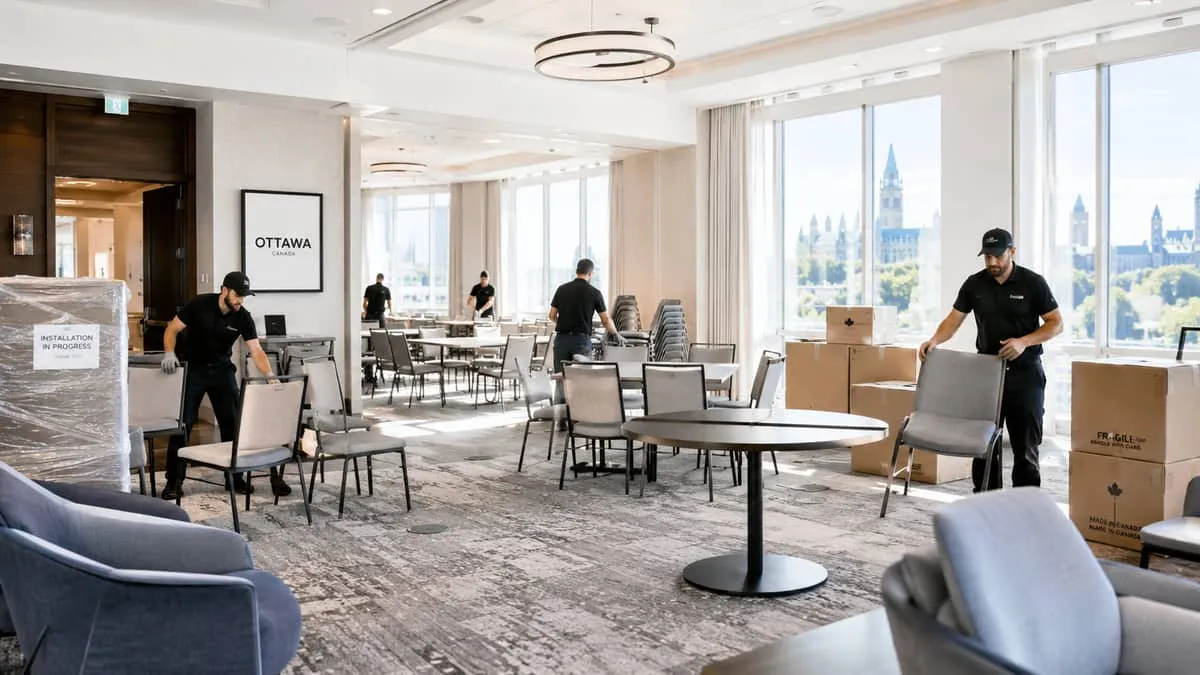
Not every company that markets commercial furniture has the operational depth to support a serious hospitality project in this market. When assessing a commercial furniture supplier Ottawa operators are considering, there are specific questions worth asking that go beyond the standard reference check.
Ask whether they have completed projects with Ottawa hospitality properties and what those projects involved. A supplier with a track record in the capital understands local delivery logistics, the complexity of getting large orders into downtown properties with loading constraints, and the quality expectations of this specific market.
Ask about quality control documentation at delivery. Large furniture orders arriving with finish defects, mismatched fabric lots, or dimensional inconsistencies are a genuine problem, and it is a problem that falls on your property once the truck leaves. A credible supplier has a written inspection protocol and a documented replacement process, not just a verbal assurance.
Ask what their process is for matching product years after initial delivery. Properties that want to expand a successful furniture program, or replace damaged units without creating a visible mismatch, need a supplier who maintains specifications and can reproduce them reliably.
For Ottawa specifically, ask whether they can provide product documentation suitable for inclusion in a supplier qualification file. This may not matter for a small independent restaurant in the Hintonburg neighbourhood, but for a hotel or conference property with institutional clients it is a practical consideration.
Centretown, Glebe, and the Independent Restaurant Market
Not every Ottawa hospitality operator is serving conference groups and government delegations. The Glebe, Hintonburg, Westboro, and the residential dining corridors of Centretown have a strong independent restaurant culture that operates on different economics than the convention and hotel market.
For independent operators, the commercial versus retail furniture question comes down to replacement cost over time. A Glebe restaurant that equips a 60-cover dining room with retail furniture will typically see meaningful deterioration within two to three years under commercial traffic. The lower upfront cost becomes a recurring capital expense as seating gets replaced, and the operational disruption of mid-cycle furniture changes adds to that cost. Contract-grade product purchased through a credible commercial supplier costs more upfront, but it is engineered to last seven to ten years under proper maintenance, which changes the economics significantly over the life of a restaurant lease.
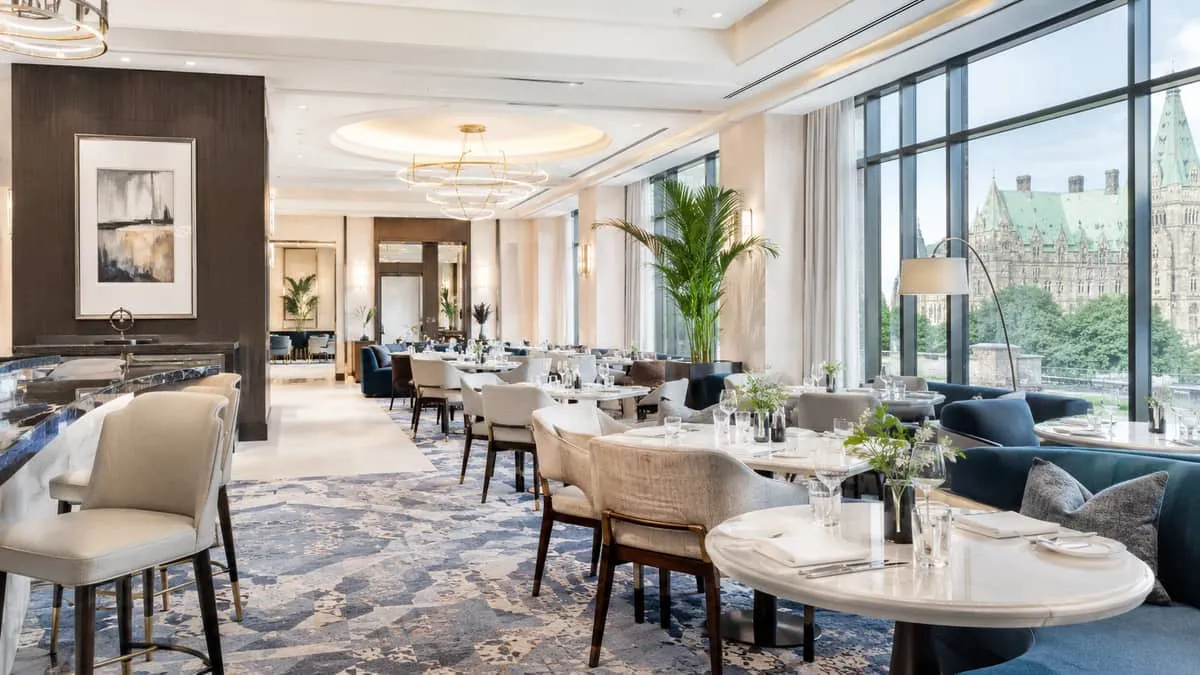
The ordering process for a smaller independent project is simpler than a convention hotel program, but the evaluation criteria are the same. Get a detailed quote that includes per-unit pricing, freight, and lead time in writing. Confirm warranty terms before production begins. Verify that the fabric and finish specifications are documented so that future replacements can match the original order.
For Ottawa's growing LeBreton Flats development and the emerging hospitality scene in that corridor, operators are making furniture decisions that will set the interior standard for properties that did not exist five years ago. The suppliers they choose now will define how those spaces hold up as the neighbourhood develops and the client base matures.
When you are ready to evaluate options, start with your project scope, your timeline, and a realistic budget range. The right commercial furniture supplier will ask the right questions back, and in Ottawa's market, those questions will cover more ground than they would almost anywhere else in Canada.
If you are sourcing commercial furniture for your Ottawa property, the fastest way to real numbers is to tell us what you need. Request a quote with your quantities and timeline.