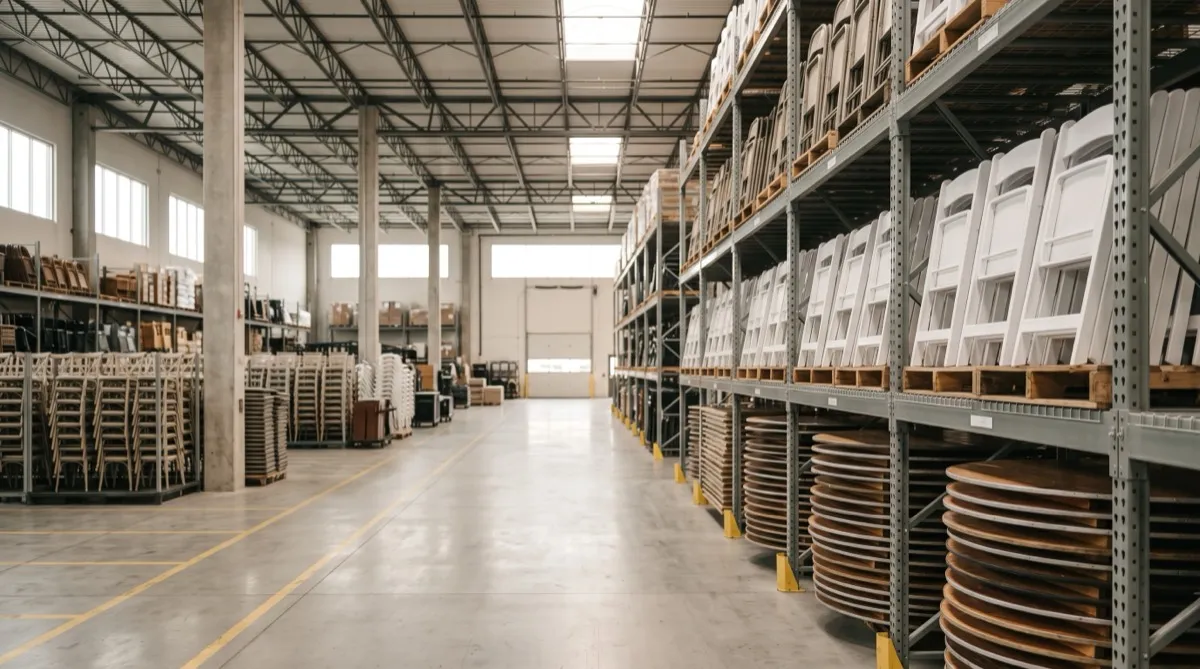
A hotel or banquet hall buys a chair once and uses it for years in one building. A rental company buys the same chair and puts it through a truck, a loading dock, a setup crew, an event, a teardown, and a return trip, then repeats that cycle again the following weekend. If you run an event rental company, the question is never just "what does this chair cost." It is "what does this chair cost per turn, over however many turns it survives before it needs to be repaired or retired."
That distinction changes almost everything about how you should buy event rental inventory.
Why rental math is different from venue math
A hotel ballroom might run 150 to 250 events a year on the same chair inventory. A working rental company can push individual pieces through 100 to 300 turns a year, and each turn includes loading, transport, setup, teardown, and reloading, all of which stress a chair or table far more than sitting in one room getting used and stacked. Rental inventory also gets handled by different crews on different trucks, which means less consistent care than a single in-house banquet staff provides.
The result: the cheapest chair per unit is almost never the cheapest chair per turn. A steel-frame stacking banquet chair priced at the low end of the $45 to $90 range might save you real money upfront on a 200-chair order, but if it needs re-welding or glide replacement after 150 turns while a heavier-gauge unit at the top of that range lasts 400 turns, the "cheaper" chair costs more over its working life. Rental buying should be evaluated on cost per turn, not cost per unit, and durability per turn is the spec that actually drives your margin.
Durability per turn: what to spec for
For rental inventory, prioritize the specs that hold up under repeated transport and handling, not just repeated seating.
Frame gauge and welds. Heavier-gauge steel and fully welded joints (not bolted-only) resist the loosening that comes from being loaded onto dollies and trucks weekly. Ask your supplier for the gauge spec, not just "commercial grade."
Stacking bumpers and glides. These are the first parts to wear on rental inventory because every truck load and every stack cycle grinds them. Confirm they are replaceable rather than fused to the frame.
Weight rating. Rental chairs and stools see a wider range of guests and less predictable use than a single venue's regulars. Buy to the higher end of commercial weight ratings.
Fabric double-rub count. For upholstered banquet chairs, resin Chiavari cushions, or barstool seats, aim for the higher end of commercial Wyzenbeek ratings (50,000-plus) since rental fabric gets cleaned and re-cleaned between clients far more often than fabric in a single dining room.
Repairability matters more than it does for a single venue
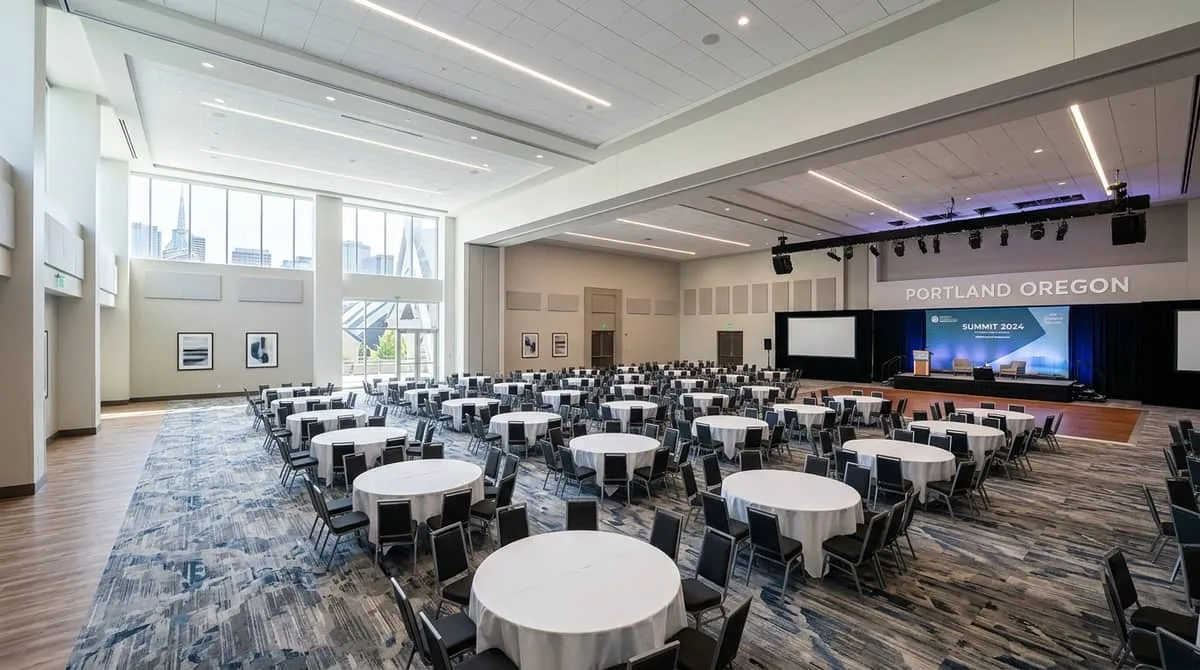
A hotel that owns 150 chairs can afford to retire a handful early. A rental company running 500 units across a busy season cannot afford to pull inventory out of rotation for good every time a glide cracks or a bolt backs out, especially during peak wedding and gala months. Before you commit to a supplier for wholesale event furniture, ask specifically about parts availability: can you order replacement glides, bumpers, and seat pads separately, and how fast do they ship. A chair line with available replacement parts effectively extends your fleet life every season, while a line with no parts program means every damaged unit is a full write-off.
This is also where finish and color choices matter operationally, not just aesthetically. Stock finishes are easier to match later when you need to add units to an existing fleet or replace damaged ones without a mismatched batch showing up in photos.
Rough ROI per item: a way to think about it
You do not need a complex model to make this decision well, just a consistent one. For any item you are considering for your fleet, estimate three numbers: the per-unit landed cost at your order volume, a conservative estimate of turns before major repair or retirement, and your typical rental rate per unit per event. Divide cost by expected turns to get cost per turn, then compare that to your rental revenue per turn. A chair that costs $70 and lasts 300 turns costs about 23 cents per turn in hard furniture cost. A chair that costs $50 but only lasts 120 turns costs about 42 cents per turn, nearly double, even though it looked cheaper on the invoice.
Run that math across your catalog (banquet chairs, barstools, Chiavari chairs, folding tables) and buy toward the items with the best cost-per-turn number, not the lowest sticker price. The furniture cost calculator is a fast way to model landed cost per unit at different volumes before you build out this comparison.
Freight, lead time, and volume basics still apply
Rental companies buy the same way any bulk buyer does. Orders ship LTL or full truckload depending on size, and cost depends on your delivery zip, whether you have a loading dock, and whether the address needs liftgate service, so have those delivery details ready when you request pricing. Lead times run 2 to 6 weeks for in-stock lines and 8 to 14 weeks for custom fabrics or finishes, which matters if you are building out fleet ahead of wedding or gala season. Volume discounts typically start at 50 units and step up again at 100, 250, and 500, commonly 5% to 15% off list depending on quantity and finish, so building your order around round numbers at those thresholds can meaningfully change your per-unit cost.
Getting a sample before you commit to a fleet order
Before committing to 200 or 500 units for a growing rental fleet, order a sample of the exact frame, fabric, and finish you are considering. Run it through a few real events and see how it holds up to your actual crews and trucks, not just a showroom look. It is a small upfront cost against a fleet-sized commitment.
Request a fleet quote
If you are building or refreshing rental inventory, request a quote with the item, quantity, finish, delivery zip, and timeline, and our team will price it against your target order volume. Use the furniture cost calculator first to model different quantities and finishes before you lock in numbers.