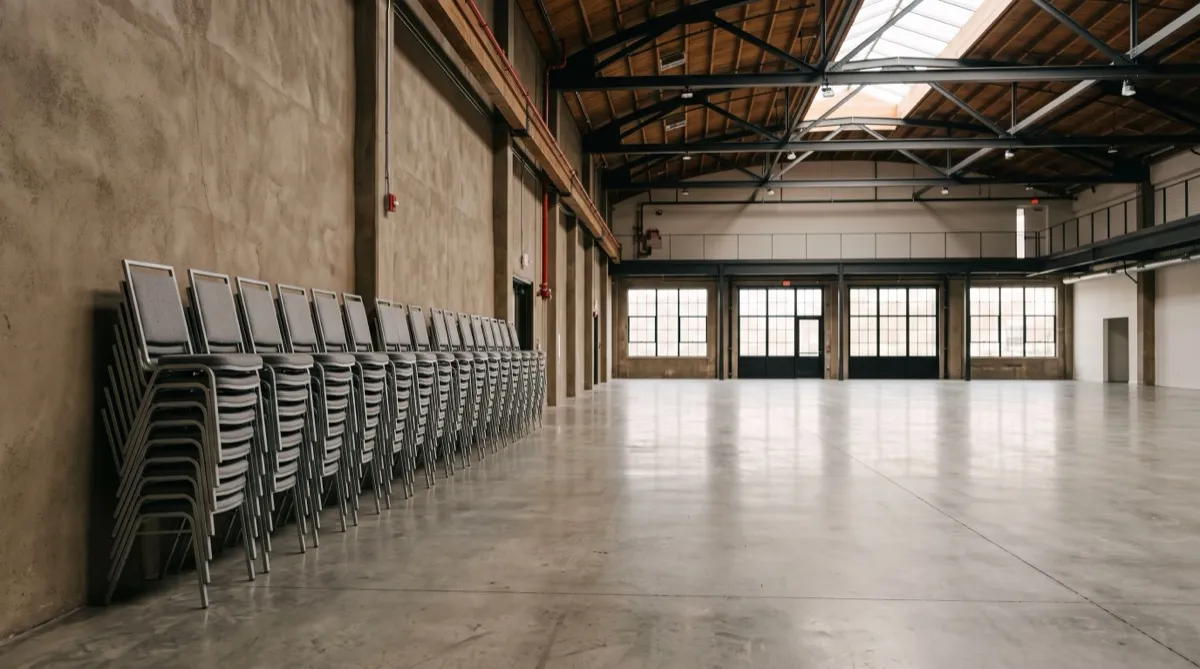
Furniture is one of the first real decisions anyone learning how to start an event venue has to make, and one of the easiest to get wrong. New operators either overbuy before they have a booking calendar, or underbuy and scramble every time a client asks for a layout the current inventory cannot support. The fix is not guessing a number and ordering it. It is buying in phases that match how your bookings actually grow, with furniture flexible enough to cover weddings, corporate meetings, and galas out of the same inventory.
Here is a workable path from opening day to a full-capacity room.
Start with your maximum layout, not your first event
Before ordering anything, figure out the largest configuration your space needs to support, even if you will not book that size right away. A 300-guest ballroom laid out for a seated banquet needs a very different chair and table count than the same room set theater-style for a conference. Measure your room for both, and use the larger number as your ceiling. You do not need to buy to that ceiling on day one, but you need to know it before you plan phased purchasing, so early orders scale into it cleanly instead of becoming mismatched leftovers.
Phase 1: core inventory to open the doors
Most new venues open with enough furniture for their expected average event, not their maximum one. A reasonable starting point for a venue targeting 100 to 150 guest events:
| Item | Quantity | Estimated cost range | |---|---|---| | Steel-frame stacking banquet chairs | 150 | $6,750 to $13,500 | | Round 60" tables (seats 8 each) | 19 | $1,140 to $2,470 | | Cocktail/highboy tables | 8 | $560 to $1,200 | | Commercial barstools (for bar area) | 10 | $1,100 to $3,200 |
That phase covers a standard banquet layout with a small standing bar and cocktail area, which is the most common first-event format for new venues. Steel-frame stacking chairs are the right starting point because they hold up under frequent restacking between bookings while staying at the lower end of per-unit cost.
Phase 2: flexible inventory for mixed event types
Once you have a few months of bookings behind you, the second phase is about range, not just headcount. Venues that only host banquets can stay lean. Venues that also want corporate meetings, ceremonies, and cocktail-style events need furniture that reconfigures.
- Add 50 to 100 additional stacking chairs so you can run a banquet and a smaller meeting room simultaneously without borrowing from one setup to cover the other.
- Add rectangular 6-8 ft tables for classroom or boardroom-style corporate layouts, since round tables do not work for that format.
- Consider resin Chiavari chairs if you plan to book weddings and want a step up in look without the cost of wood Chiavari.
| Item | Quantity | Estimated cost range | |---|---|---| | Additional stacking chairs | 75 | $3,375 to $6,750 | | Rectangular 6-8 ft tables | 15 | $750 to $1,800 | | Resin Chiavari chairs (for weddings) | 100 | $4,000 to $8,000 |
This is also the phase to build a floor plan library, meaning a set of pre-drawn layouts (banquet, theater, classroom, ceremony) your sales team can hand a client on day one instead of redrawing the room for every inquiry.
Phase 3: scaling to full capacity
By the time a venue is booking near its ceiling capacity regularly, it is worth ordering the remaining chairs and tables to hit that maximum layout number, plus a buffer of 5 to 10% to cover damage, storage rotation, and back-to-back events where cleaning turnaround is tight. This is also when it makes sense to add a small stock of commercial barstools and cocktail tables beyond the original bar setup, since a venue at full capacity typically runs multiple beverage stations.
Freight, lead time, and budget planning
Bulk furniture orders for a new venue typically ship LTL freight, with cost depending on your delivery zip code and whether your loading area has a dock or needs a liftgate truck. Have those delivery details ready when you request pricing, since they change freight cost more than almost anything else in the order. Lead times run 2 to 6 weeks for in-stock chairs and tables, and 8 to 14 weeks for custom fabrics or finishes, so time your phase 2 and phase 3 orders around your actual booking calendar rather than ordering everything reactively. Volume discounts typically kick in at 50, 100, 250, and 500 units, commonly 5% to 15% off list, so combining phases into fewer, larger orders can lower your per-unit cost even if you are staggering delivery.
What to check before you order
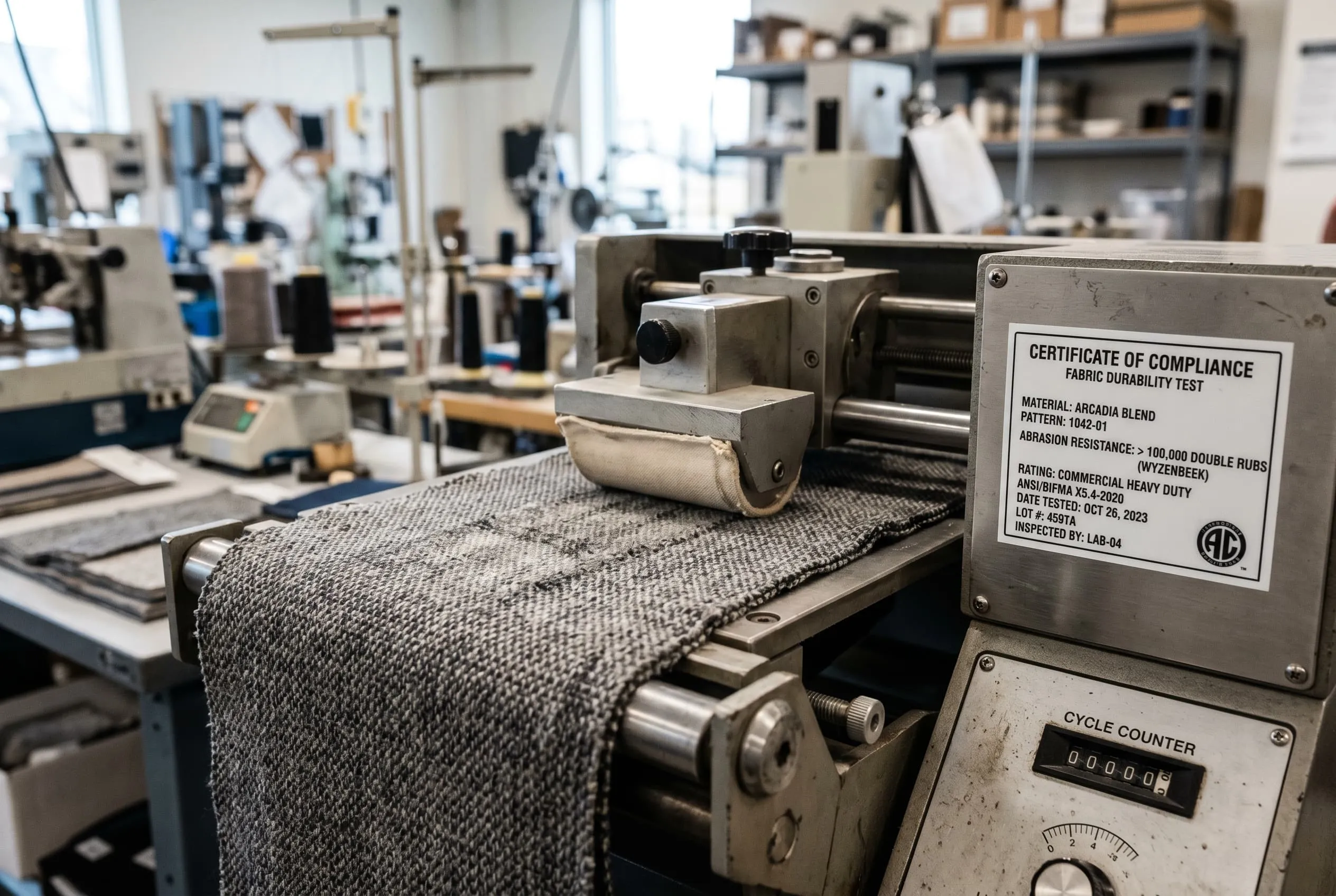
Before placing any order, confirm stackability and a matching cart for chairs, frame gauge and weld quality on steel pieces, weight ratings, and fabric double-rub count for any upholstered seating. Ask for a sample chair or table before committing to a full order, and confirm floor protection glides are included, since hard floors and frequent restacking wear glides out fastest.
Getting an accurate budget before you buy
Because the right furniture mix depends on your room size, event mix, and phase, run your numbers through the furniture cost calculator before committing to a purchase order. When you are ready to move, request a quote with your item list, quantities per phase, finish preferences, delivery zip code, and opening timeline, and a rep can help you sequence the order so phase 1 arrives in time for your first booked event.