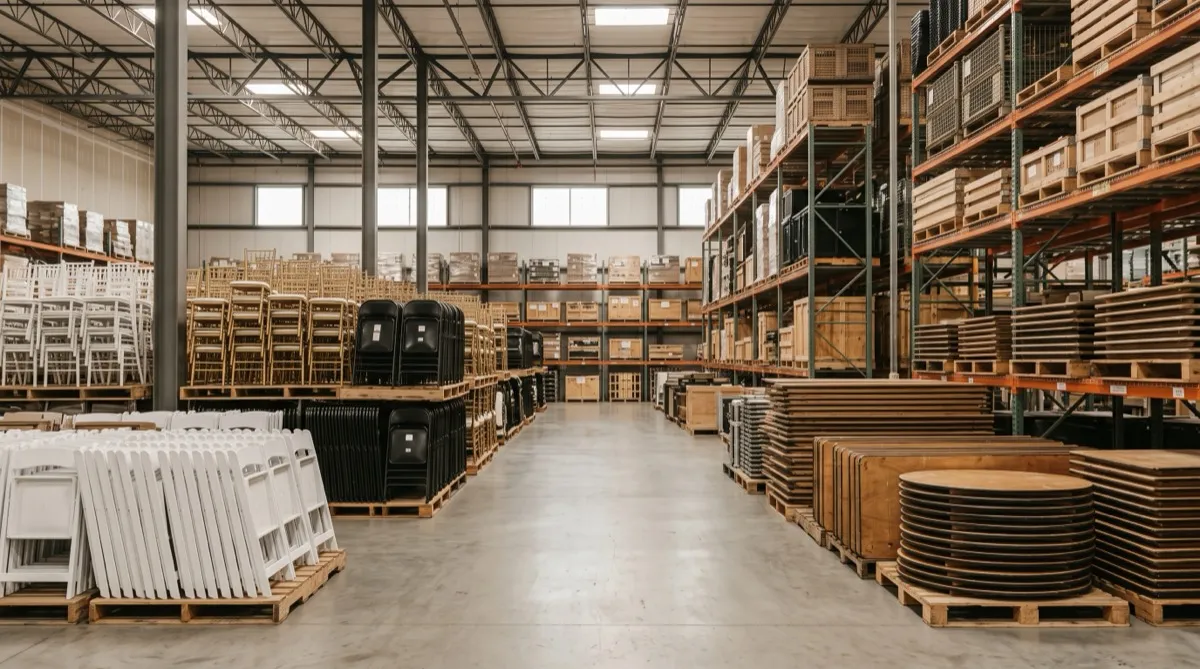
Most new party rental operators make the same mistake in year one: they buy a little of everything instead of enough of a few things. A rental business does not make money from variety. It makes money from utilization, meaning the same 100 chairs and 20 tables going out the door on Friday, coming back Monday, and going out again the next weekend. Before you spend a dollar on inventory, you need a starting lineup, a realistic budget, and a plan for where all of it lives between events.
Here is what that lineup actually looks like when you buy direct from a commercial furniture supplier instead of piecing it together from retail sources.
What to buy first
New operators tend to overbuild specialty inventory (specific colors, specific styles) before they have the core categories covered. Build the core first.
Chairs. Steel-frame stacking banquet chairs are the backbone of most rental fleets because they cover corporate events, weddings, and community functions with one style. Resin or wood Chiavari chairs come next once you have repeat wedding and upscale event clients asking for them.
Tables. Round 60 inch tables for seated dinners, rectangular 6 to 8 ft tables for buffets and registration, and a smaller run of cocktail or highboy tables for standing receptions.
Barstools. Lower priority for a first buy unless your local market leans heavily toward cocktail-style corporate events or bar activations. Add these once demand is proven.
Do not chase every finish and color from the start. A rental fleet in black or a neutral wood tone books more consistently than a fleet split across five colors, because planners mix and match your inventory with linens and decor they are already sourcing elsewhere.
Starter inventory and budget
Here is a realistic starting order for a new operator targeting local weddings, corporate events, and community functions, using published commercial pricing:
| Item | Starter quantity | Per-unit range | Estimated cost | |---|---|---|---| | Steel-frame stacking banquet chairs | 150 | $45 to $90 | $6,750 to $13,500 | | Resin Chiavari chairs | 50 | $40 to $80 | $2,000 to $4,000 | | Round 60" tables | 20 | $60 to $130 | $1,200 to $2,600 | | Rectangular 6-8 ft tables | 15 | $50 to $120 | $750 to $1,800 | | Cocktail/highboy tables | 10 | $70 to $150 | $700 to $1,500 | | Total starter fleet | 245 pieces | | $11,400 to $23,400 |
That range covers a fleet large enough to book a 150-guest wedding and a smaller corporate event in the same weekend without overlap. It does not include linens, delivery vehicle costs, or storage, which we cover below. Once you know your local rental rates and target booking volume, run your own numbers through the furniture cost calculator to see how quickly a starter fleet pays for itself.
Per-item ROI, roughly
Rental furniture pays for itself faster than almost any other category of commercial furniture because it is not a one-time purchase, it is a revenue-generating asset that gets reused dozens of times a year. A steel banquet chair bought at $60 that rents for $2 to $4 per event pays for itself in 15 to 30 bookings, and a well-maintained commercial chair can handle several hundred setup and teardown cycles over its life. Tables follow a similar pattern with slightly higher per-event rental rates relative to their purchase cost. This is exactly why buying contract-grade, not retail, matters for a rental fleet: a retail folding table that fails after 40 uses never gets you to breakeven, while a commercial-grade table built for repeated setup keeps earning for years.
Storage and trailer planning
Inventory only earns money when it can be moved and stored efficiently, so plan storage before you place your order, not after.
Storage footprint. Chairs that stack cleanly in a tight column take up far less warehouse or storage-unit space than ones that lean or wobble when stacked. Confirm stack height and stability before ordering, and budget shelving or dolly storage so chairs are not stacked directly on a concrete floor, which speeds up frame corrosion and glide wear.
Carts and dollies. Matching chair carts protect frames during loading and reduce staff injury risk during fast turnovers. Factor cart cost into your first order rather than treating it as an afterthought.
Trailer or truck capacity. Know how many chairs and tables your delivery vehicle holds before you overbuy inventory you cannot move in one trip. Many new operators start with enclosed trailer capacity for 100 to 150 chairs and a dozen tables, then scale the fleet as booking volume justifies a second trip or a larger vehicle.
Freight and lead times on your first order
A first-time bulk furniture order ships LTL or full truckload depending on volume, and freight cost depends on your delivery zip code, whether the delivery address has a loading dock, and whether liftgate service is needed for a non-dock location. Have those delivery details ready when you request pricing. In-stock chairs and tables typically ship in 2 to 6 weeks, while custom colors or fabrics run 8 to 14 weeks, so plan your launch date around lead time, not the other way around.
What to check before you place your first order
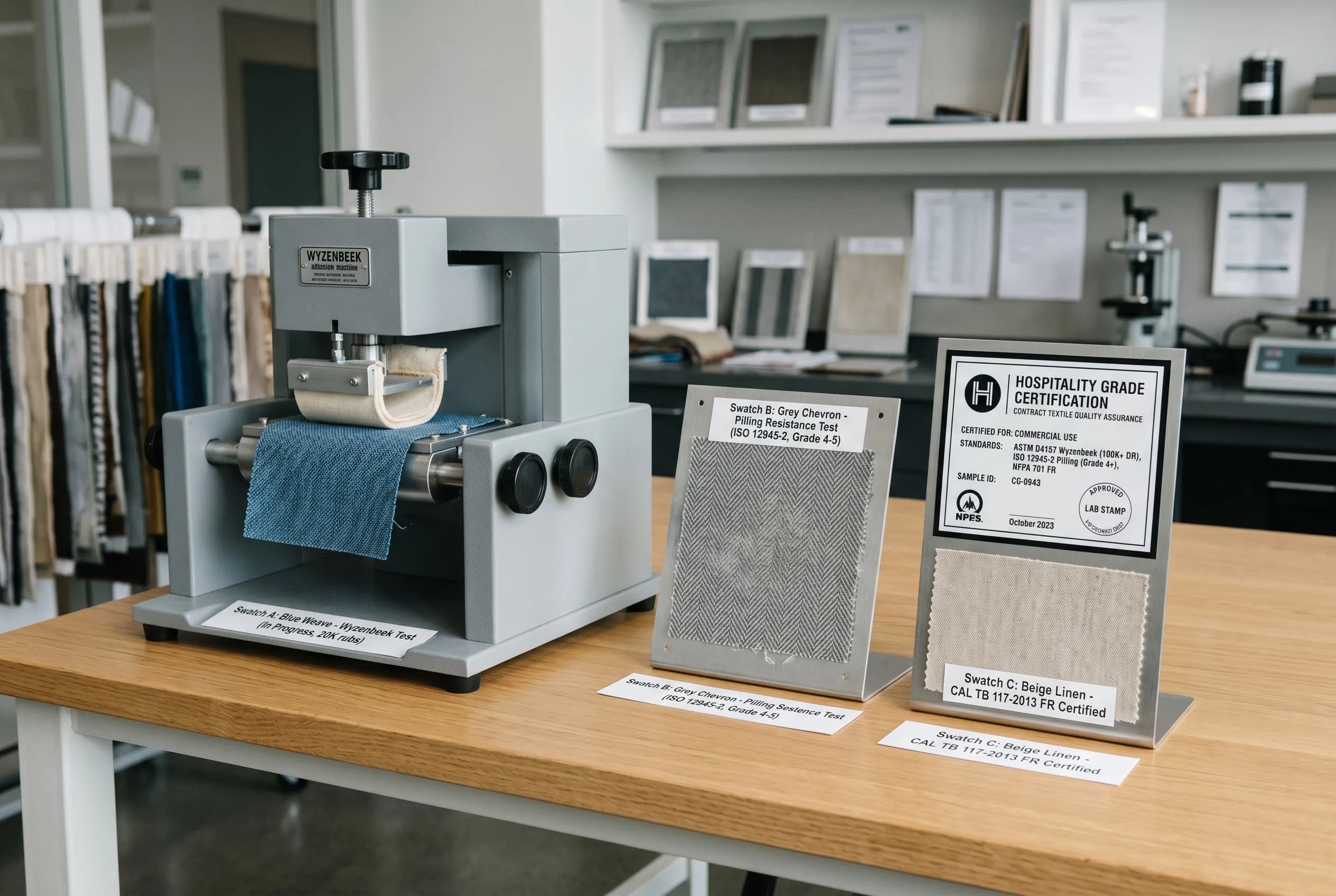
Before committing to a starter fleet, confirm frame gauge and weld quality on chairs, a stated weight rating, stacking height and stability, fabric double-rub count on any upholstered pieces, warranty terms, and whether floor protection glides are included. Ask for a sample chair or table before ordering at volume. A single unit in hand tells you more about how it will hold up after 50 rental cycles than any spec sheet.
Get a starter fleet quote
The fastest way to price out a real starter fleet is to request a quote with your target item mix, quantities, finish preference, delivery zip code, and launch timeline. Our team can help you sequence the order (chairs and tables first, barstools and specialty pieces later) so your capital goes toward the inventory that books the most often. Browse stacking banquet chairs, tables, and barstools to see current commercial options while you plan your first buy.