If a boutique project has no applicable brand furniture package, its responsible team must define the specification. A Marriott or Hilton brand requirement, where applicable, should be obtained for the actual property rather than assumed from the name. Nine versus ninety rooms is an illustrative quantity comparison; confirm the real room mix and approval process.
That freedom is the whole point of a boutique property, and it is also where the furniture budget goes wrong. This guide covers what actually changes when there is no brand book, how to split the package between custom and catalog, how to get a distinctive look that still survives commercial duty, and what the budget and timeline really look like.
No brand book means somebody has to write the spec
An applicable brand standard may specify materials, tests, mounting and approved products. Obtain the current requirements for the actual property and identify who approves deviations; this guide does not establish that every brand book contains the same durability or warranty requirements.
Write the property's actual FF&E specification with the designer or responsible project team, then ask suppliers to assess available models and custom capability. The FF&E procurement resources help prepare that brief and a supplier request; CFD does not provide an end-to-end purchasing or design contract.
What does not work is skipping the specification and furnishing the property piece by piece from whatever looks right. Without a spec there is no volume pricing, no finish consistency between rooms, and no document to check deliveries against.
Smaller runs change the economics
The second structural difference is quantity. A flagged limited-service hotel might order 120 identical guest room sets. A boutique property ordering for 25 rooms needs fewer repeated pieces, often with a broader mix of finishes. That affects sourcing in three ways.
The item schedule matters. Separate repeated room items from one-off accent pieces, and confirm minimum quantities and finish availability for each. The bulk ordering guide explains how to prepare that specification and compare complete quotes.
Custom minimums bite. Factories quote custom work against minimum runs. A custom casegood that is economical across 200 rooms can be painful across 20, which is exactly why the custom versus catalog split below matters so much for boutique projects.
Attrition stock is harder to rebuy. With small runs of distinctive pieces, ordering spare fabric and a few extra units of the high-wear items at the outset is cheap insurance. Matching a discontinued finish three years later is not.
Custom versus catalog: where each belongs
The instinct on a design-led project is that everything should be custom. The budget rarely agrees, and it does not need to. The workable split looks like this:
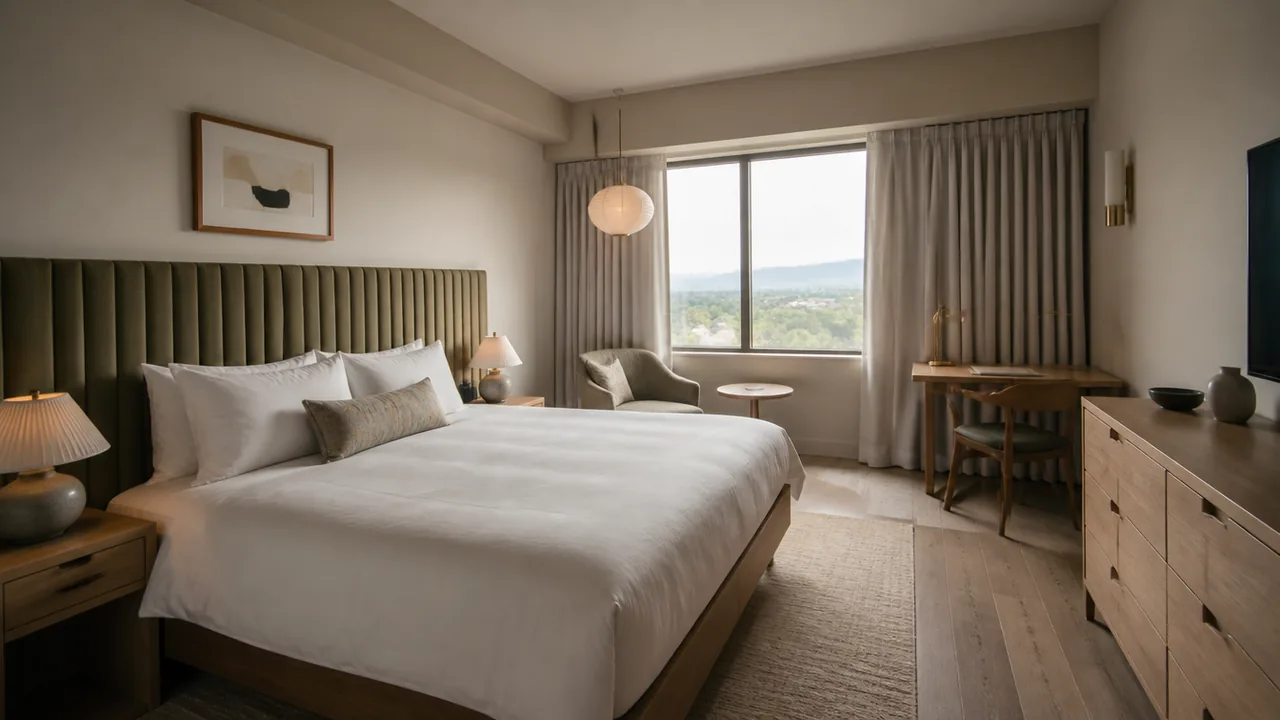
Verified supplier lines can carry repeated items. Ask for the actual frame tests, commercial-use warranty, finish/fabric options, parts availability and dated delivery plan. A catalog appearance or CFD concept image does not establish any of those facts, and later matching remains a supplier question.
Custom is reserved for the pieces that define the property. The lobby centrepiece, a signature headboard wall, the restaurant banquettes, the front desk. These are the pieces guests photograph and remember, and they justify custom minimums and custom lead times because there are few of them and they do the brand's work.
Review vintage and residential candidates individually. A styling role does not establish safety or permitted commercial use. Obtain any available structural, upholstery, fire-performance and care documents and have the project team verify applicable requirements before placing a working seat, bed or table; missing documentation is a concrete approval gap.
Durability without the corporate look
Choose the design alongside the actual model's relevant structural, upholstery/fire-performance and cleaning documents. A BIFMA reference must identify the specific standard, tested model and conditions. Have the project reviewer confirm whether that standard is specified for this actual item; the reference alone does not establish one common requirement for every hotel furniture category. The commercial-grade guide covers related model-document questions.
The practical method: let the designer choose the silhouette, then hold the line on what is underneath it. Specify the tested frame, the contract-rated fabric in the designer's colour, the sealed finish in the designer's tone. Guests experience the design; the property experiences the duty cycle.
Compare actual fabric abrasion methods/results and cleaning instructions rather than assigning a year-two outcome to a contract label. Review the desired hand and colour alongside the intended contact and cleaner exposure. If the selected fabric lacks the necessary documents, resolve that gap or choose a documented alternative before approval.
Review the actual warranty by component, covered use, exclusions, remedies and labor/transport responsibility. The five to twelve-year band is an illustrative comparison range, not a verified term for every commercial product. A one-year cushion warranty does not make the entire chair a one-year chair or establish its lifespan. Keep warranty terms separate from performance tests and observed service history.
Guest rooms versus public spaces: where the money should go
Boutique budgets are finite, and the split between guest rooms and public spaces deserves an actual decision rather than a default.
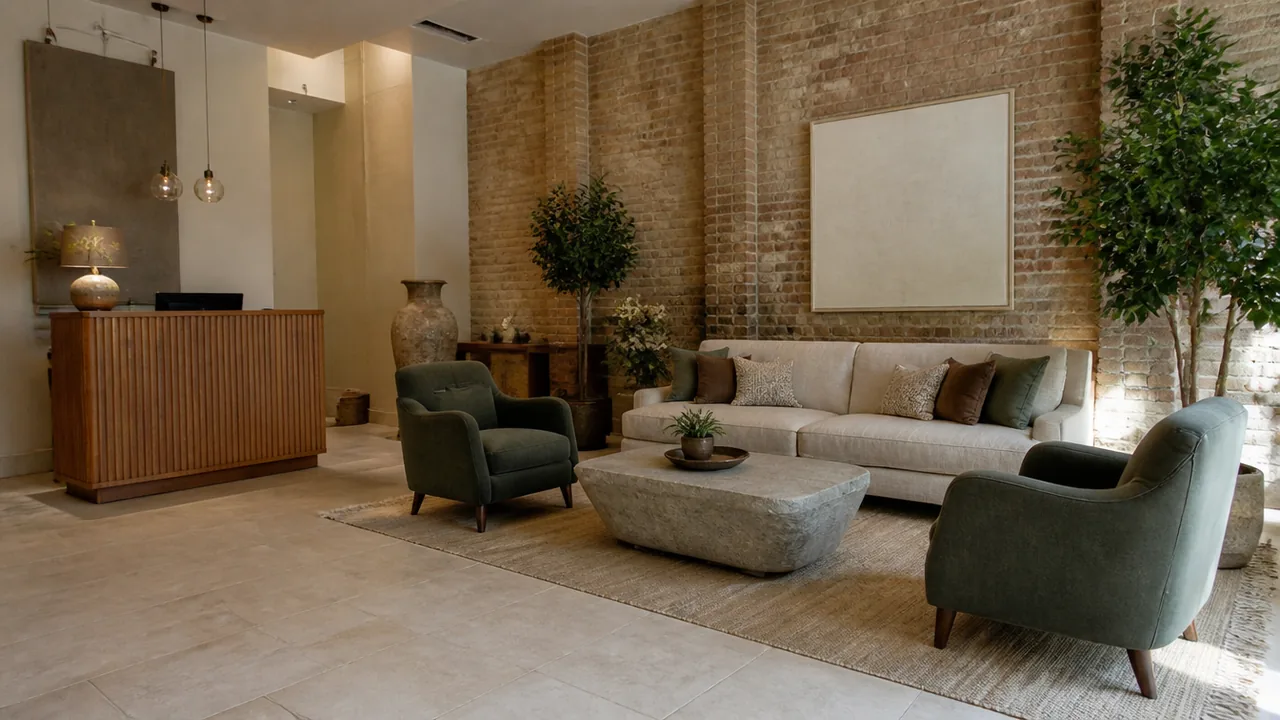
Public spaces earn the showpieces. The lobby, bar, and restaurant are where the property's identity is built, where guests linger, photograph, and decide how they feel about the place. They are also the hardest duty in the building: constant traffic, food and drink, daily cleaning. This is where custom money and the highest-grade upholstery belong.
Guest rooms need a deliberate use specification. Review beds, drawers, work surfaces and seating against the actual guest and housekeeping routine. A room-versus-lobby label or mid-grade contract label alone does not establish gentler use or longer life. Compare approved samples and actual performance documents before assigning budget priorities.
A useful sanity check: walk the guest journey from the front door to the pillow and rank the touchpoints. Budget in that order. Most boutique properties that feel special on a modest budget got there by concentrating spend on the first three touchpoints and the bed, and by keeping everything else consistent rather than remarkable.
Budget and lead-time realities
A boutique package prices the same way any commercial furniture package does, in parts: unit pricing at your real quantities, freight quoted by pallet space and distance as its own line, and installation priced against the actual site. Insist on seeing those lines separately; a blended number is impossible to compare against a competing quote.
The one to three-week stock and eight to sixteen-week made-to-order windows are provisional planning examples. Confirm actual stock, approvals, production and delivery for every signature and repeated item. Work backward from opening with those commitments and receiving/install time. The lead times guide explains planning questions rather than an actual supplier schedule.
Ask when the supplier can return an itemized quote once the room counts, specification, delivery address and target date are complete. One to two business days is a provisional response-time assumption, not a confirmed service commitment. Record the quote's validity and any information still needed.
Pricing a boutique package
Prepare the room-by-room specification, quantities, finish direction, delivery phases and target dates. Share those through the contact page for relevant independent suppliers to review. The supplier handles model confirmation, quote, freight, availability and purchase terms directly; CFD does not guarantee the specification's performance.