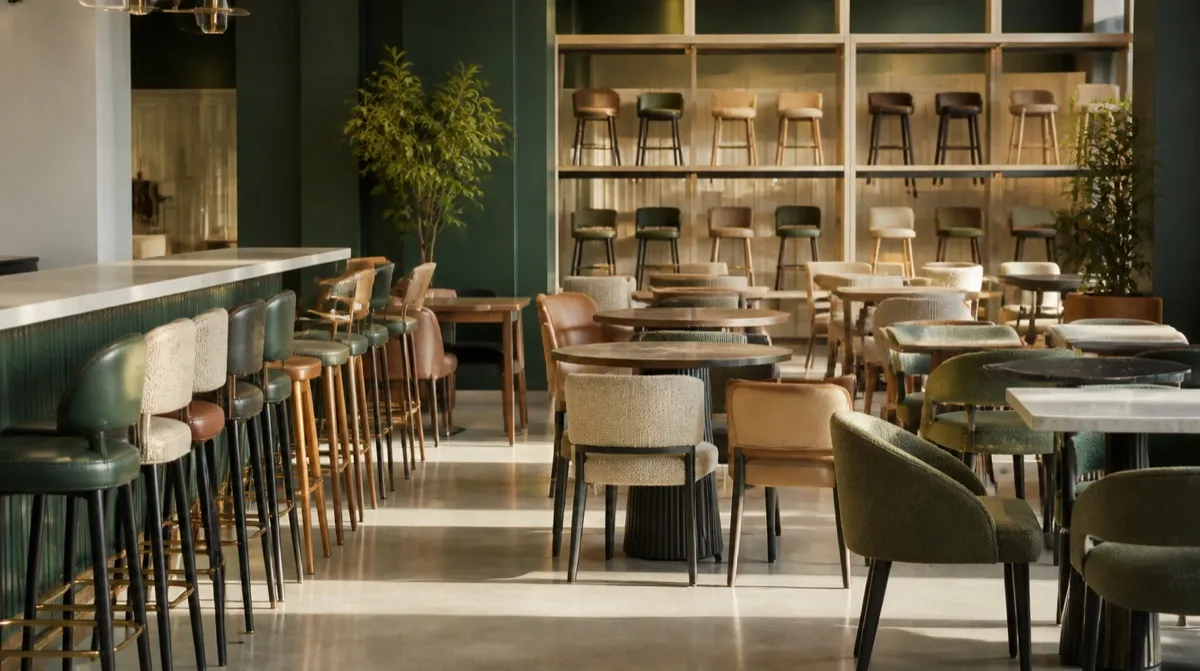
Most operators start the furniture search by looking for chairs. The better starting point is finding the right store, because the supplier you buy from shapes everything that follows: what grade of product you can access, how a full package comes together, what happens when a shipment arrives damaged, and whether you can reorder a matching chair two years from now. A bar and restaurant furniture store is not a retail counter. It is a sourcing relationship that either protects your opening budget or quietly drains it. This guide covers how to evaluate a store, how to plan a complete bar and restaurant package instead of buying piece by piece, and where the common buying traps sit.
What a bar and restaurant furniture store actually sells
A furniture store built for hospitality is selling three things beyond the products themselves. The first is grade. A commercial supplier stocks contract-grade seating, tables, and barstools built to survive daily service, not residential lookalikes that photograph well and fail in a season. The second is breadth, so you can outfit a dining room, a bar, a lounge zone, and a patio from one source and keep the look consistent. The third is support: freight coordination, damage claims, replacement parts, and reorder access when you expand or refresh. A store that only offers product with no support is really just a warehouse with a website, and you carry all the risk.
Before you compare prices, confirm the store operates in the commercial lane. Ask what the frames are made of, what the fabric abrasion ratings are, and whether the pieces carry a commercial warranty. If those answers are vague, the store is selling retail furniture with a commercial markup.
Vet the store before you vet the chairs
Price is the easiest thing to compare and the least important. Use these checks before a single product goes in the cart.
- Grade and warranty. Commercial seating should carry a real commercial warranty, and the store should state it plainly rather than burying it. Retail furniture returned to a busy bar fails inside a year.
- Product depth. Can the store supply barstools, dining chairs, booths, tables, table bases, and outdoor pieces? A single-source order keeps finishes and heights consistent and simplifies freight.
- Lead times in writing. Stocked items should ship in days. Custom upholstery and finishes typically run 8 to 14 weeks. A store that will not commit to a timeline cannot help you hit an opening date.
- Damage and claims process. Freight damage on commercial furniture is normal. What matters is how the store handles it. Ask who files the claim and how fast a replacement ships.
- Reorder access. If a chair discontinues the month after you buy, you cannot match a broken one later. Ask how long the line stays available.
A store that answers all five clearly is worth more than one that simply undercuts on price, because a cheap chair that fails at month nine costs more than a correctly spec'd one that lasts a decade.
Plan the full package, not a pile of chairs
Buying furniture one category at a time is how mismatched dining rooms happen. Plan the package as a whole so heights, finishes, and durability all line up. A complete bar and restaurant order usually breaks into five zones.
| Zone | Core pieces | Spec priority | |------|-------------|---------------| | Dining room | Dining chairs, tables, table bases, booths | Seat comfort, footprint, turnover speed | | Bar | Barstools, high-top tables, cast or steel bases | Height match to bar top, spill resistance | | Lounge | Lounge chairs, sofas, low tables, ottomans | Fabric abrasion rating, cleanability | | Patio | Outdoor chairs, tables, umbrellas or shade | UV and rust resistance, stackability | | Service and back | Waiting-area seating, host stand | Durability, easy cleaning |
Working zone by zone makes the quote easier to read and keeps the store from missing a category. It also lets you sequence spending: the dining room and bar drive revenue first, so they lead the order, while a patio or lounge refresh can follow if the budget is tight.
Match heights before anything else. A standard bar top at roughly 42 inches needs a 28 to 30 inch seat. A 36 inch counter needs a 24 to 26 inch seat. Order the wrong height and the barstools are unusable regardless of how good they are. Our barstool height guide walks through the math, and the restaurant chair selection guide covers the dining-room side.
Barstools and bar seating
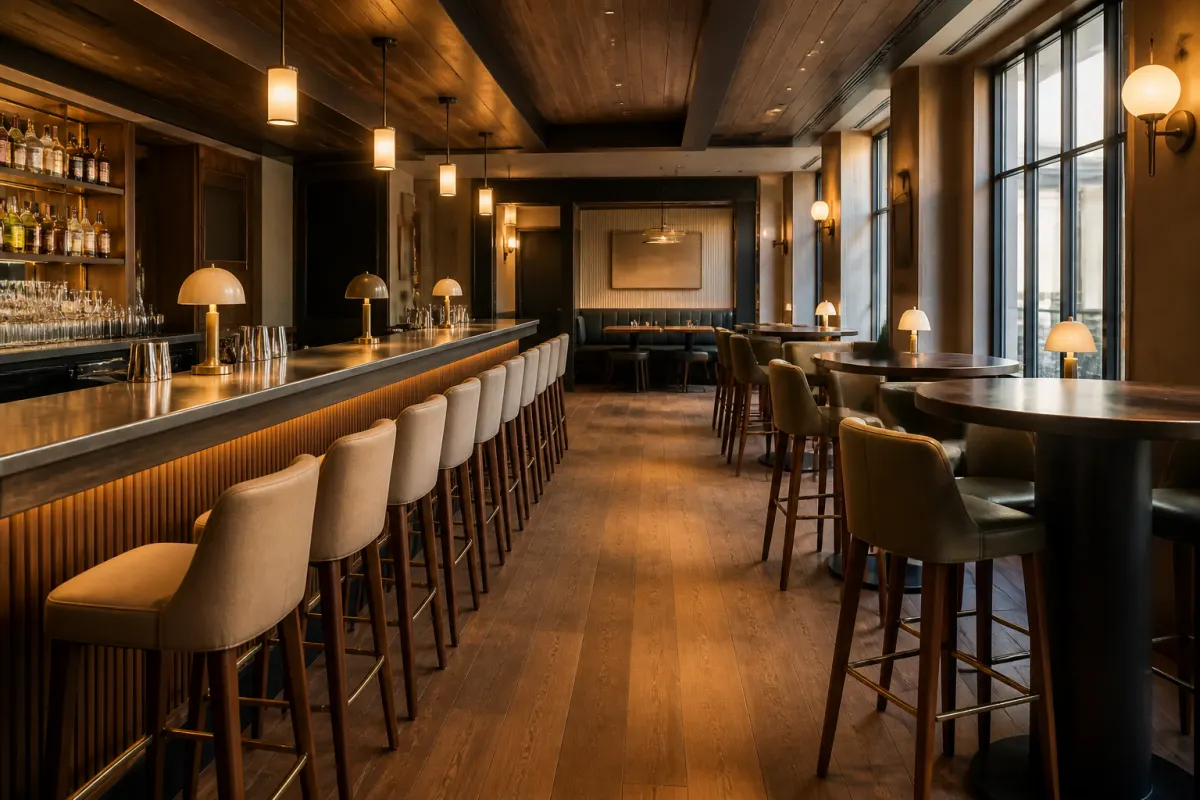
The bar is where the gap between commercial and retail grade shows fastest, because barstools take standing weight, footrest leverage, and constant spills. Spec a heavy-gauge steel frame with welded joints, never cam-lock or bolted connections that loosen under commercial cycles. The footrest should be welded separately and reinforced, since footrests fail first on cheap stools. Seats should be vinyl or a wipe-clean commercial fabric. Browse the range on the barstools category and read the commercial barstool buying guide before you commit to a height and base.
Dining chairs, tables, and booths
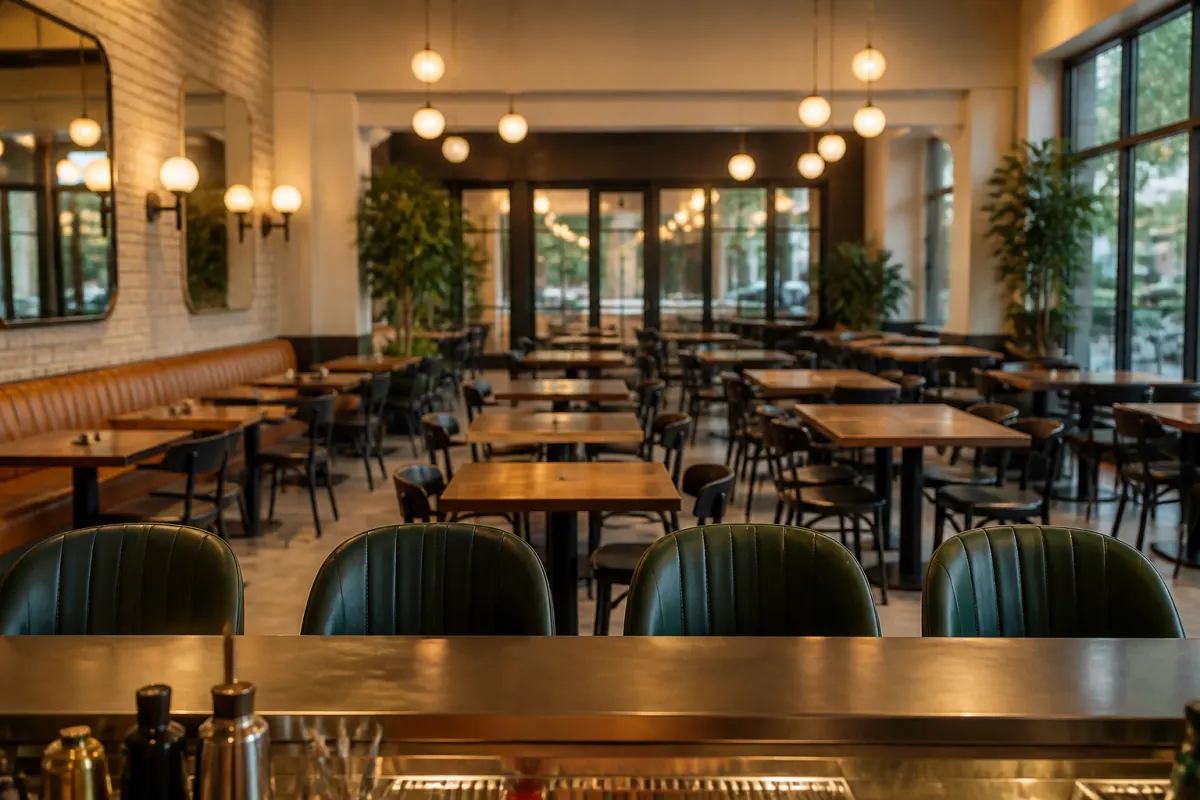
The dining room is the largest line item, so grade and footprint matter most. Metal and wood dining chairs both work at commercial grade if the joinery is right: welded steel or properly doweled and glued hardwood, not stapled frames. Tables come down to top and base. Commercial tops resist heat, moisture, and cleaning chemicals, and heavy cast or steel bases keep tables stable when guests lean. Booths deliver the highest seats-per-square-foot of any dining configuration, which is why high-volume concepts lean on them. Compare options across the dining chairs, tables, and booth units categories, and see the booth buying guide for banquette layouts.
Match furniture to the concept and the traffic
The right furniture depends on what kind of room you run. A fast-casual concept turning tables every 45 minutes needs durable, easy-to-clean seating and a layout that moves guests through. A full-service dining room holding guests for two hours needs comfort that supports a longer sit. A cocktail bar leans on barstools and high-tops. Spec to the actual service pattern rather than to a photo you liked, because comfort and durability requirements shift with turnover. Model your seat counts against your floor plan with the restaurant seating capacity calculator, then pressure-test the revenue math with the revenue per seat calculator so the package pays for itself.
Budget, freight, and lead times
Build the budget from three numbers, not one. Furniture cost is the base. Freight and installation typically add roughly 14 to 26 percent on top, and that is real money on a full-room order, so get it quoted rather than assumed. Lead time is the third: stocked barstools, dining chairs, and tables ship fast, while custom upholstery and finishes carry an 8 to 14 week window that has to fit your opening calendar. Order the long-lead items first. As a rough planning anchor, commercial dining chairs and barstools commonly land in typical ranges rather than at retail clearance prices, and volume breaks step down at 50, 100, and 250 or more units. Model the whole project with the furniture cost calculator, then request a quote with your zone-by-zone counts and a store can confirm pricing, freight, and lead time against your open date.
Common mistakes when choosing a store
Three traps catch operators repeatedly. The first is buying on price alone and discovering the furniture is residential grade that fails under service. The second is ordering category by category from different sources, which produces mismatched heights and finishes and multiplies freight. The third is skipping the lead-time conversation and then scrambling when custom pieces miss the opening. Each one is avoidable with the vetting checklist above. A store that passes those checks earns the whole package, and a single-source relationship pays off again at your first reorder or your second location.