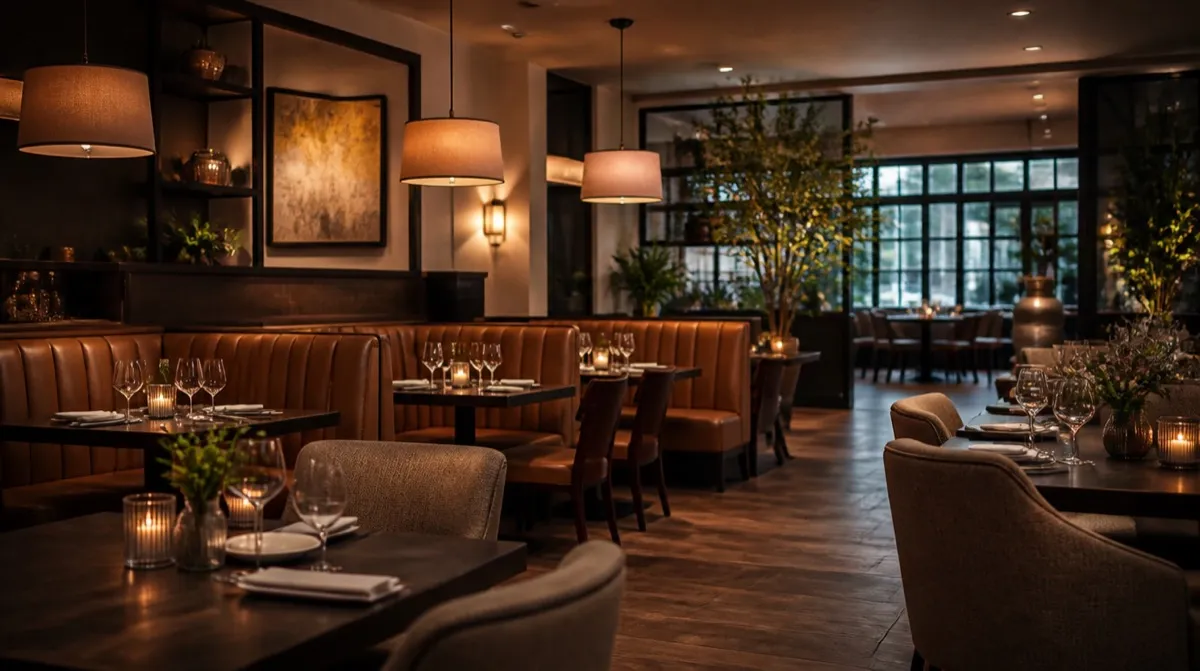
Build a restaurant furniture budget from the approved seat mix and quoted configurations. The ranges below are illustrative inputs, not verified current supplier prices. Their dollar notation has no confirmed currency or included freight, tax, assembly, or installation scope. Replace them with dated, itemized quotes for the exact products and delivery requirements.
Think in cost per seat
Use the floor plan's usable seats, tables, booth lengths, and stools to build the item schedule. One table per three to four covers is a comparison scenario, not a procurement ratio; party mix, table sizes, occupied clearances, and approved layout determine actual quantities. Calculate per-seat cost from the completed item budget if it helps compare layouts.
Chairs
For an illustrative budget, test 70 to 220 dollars per restaurant side or dining chair as chosen inputs. No evidence establishes where a wood, metal, wipe-clean, or upholstered configuration falls within that range. Compare actual joints, intended use, tests, loads, care, and warranty. A 50,000-Wyzenbeek scenario is not a universal survival threshold; ACT's abrasion guidance explains that high test results alone do not predict service life. Browse illustrative side-chair concepts for design direction, then obtain product-specific documentation and quotes.
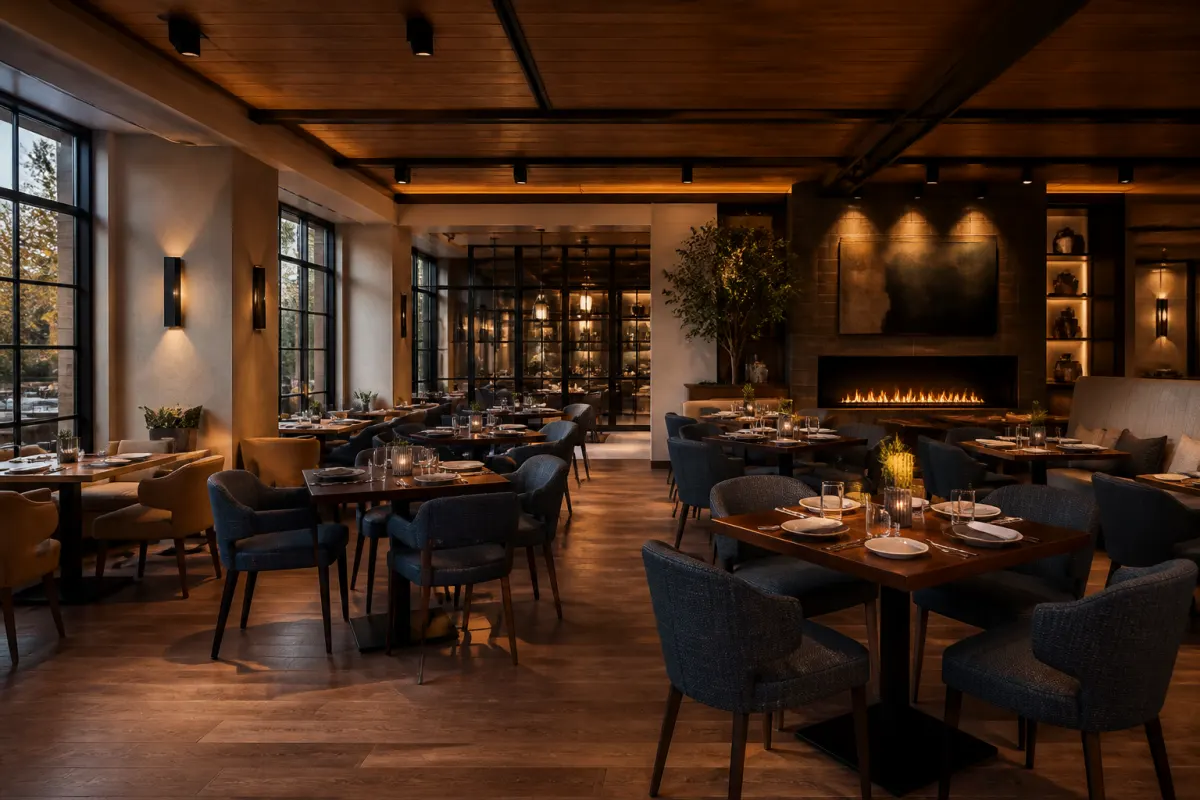
Booths and banquettes
For a booth-budget scenario, test 160 to 380 dollars per linear foot and confirm how the supplier measures and prices each configuration. Review the actual booth, table, and route dimensions before comparing its seating footprint with freestanding chairs. A perimeter of booths and a center of movable tables can be tested against the restaurant's party mix and service pattern.
Barstools and tables
For illustrative budgets, test 110 to 320 dollars per stool and 120 to 400 dollars for a complete table top/base. These are chosen inputs, not a claim that one material or table type has a fixed market price. Compare the exact finish, footrest, joints, care instructions, and top/base approval in supplier quotes.

Quality tiers and durability
Compare construction, intended commercial use, tests, repairability, and warranty for the exact products. A lower initial price or a retail label does not establish a one-year failure date, and a commercial label does not guarantee many years. Model alternative repair and replacement scenarios using the operation's own records.
Budgeting the full room
Build the budget from the approved item schedule, and test a selected 14-to-26-percent freight/installation allowance before replacing it with quoted line items. Use the commercial furniture cost calculator for scenarios, then request a quote for relevant independent suppliers to review exact configurations, delivery requirements, currency, price, and purchase terms.