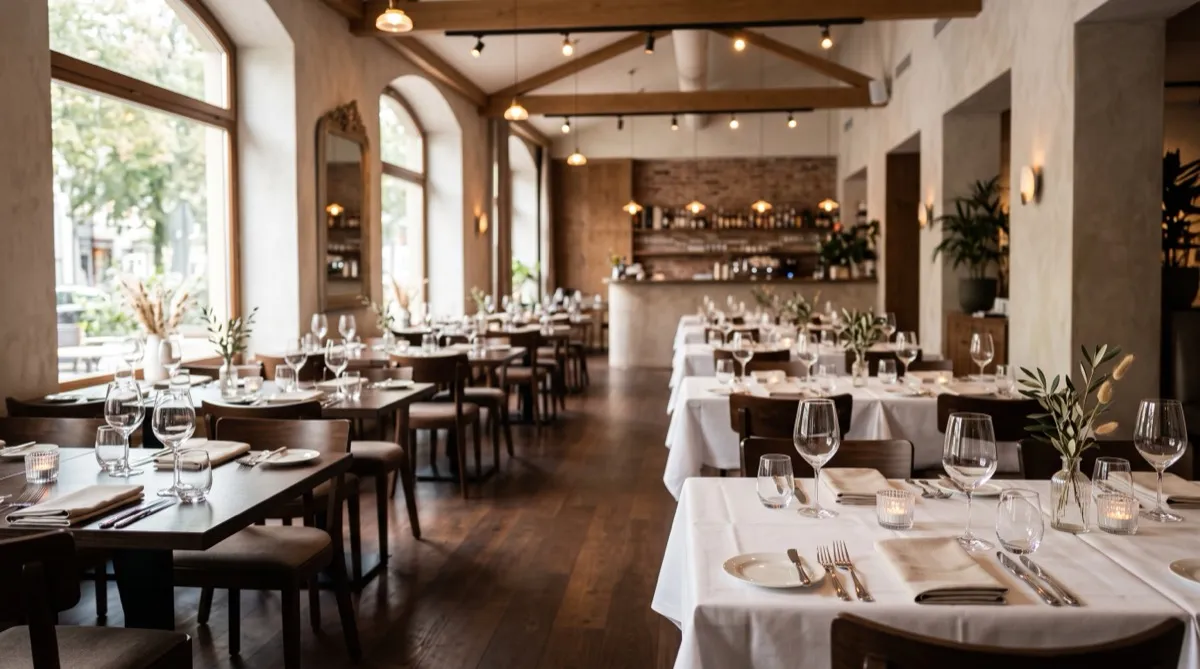
Opening a restaurant is one of the most expensive things you can do, and furniture, which should be one of the easier decisions, ends up being one of the most confusing.
How many chairs do you need? What's a realistic budget? Where do you actually order from? And how far in advance do you need to start?
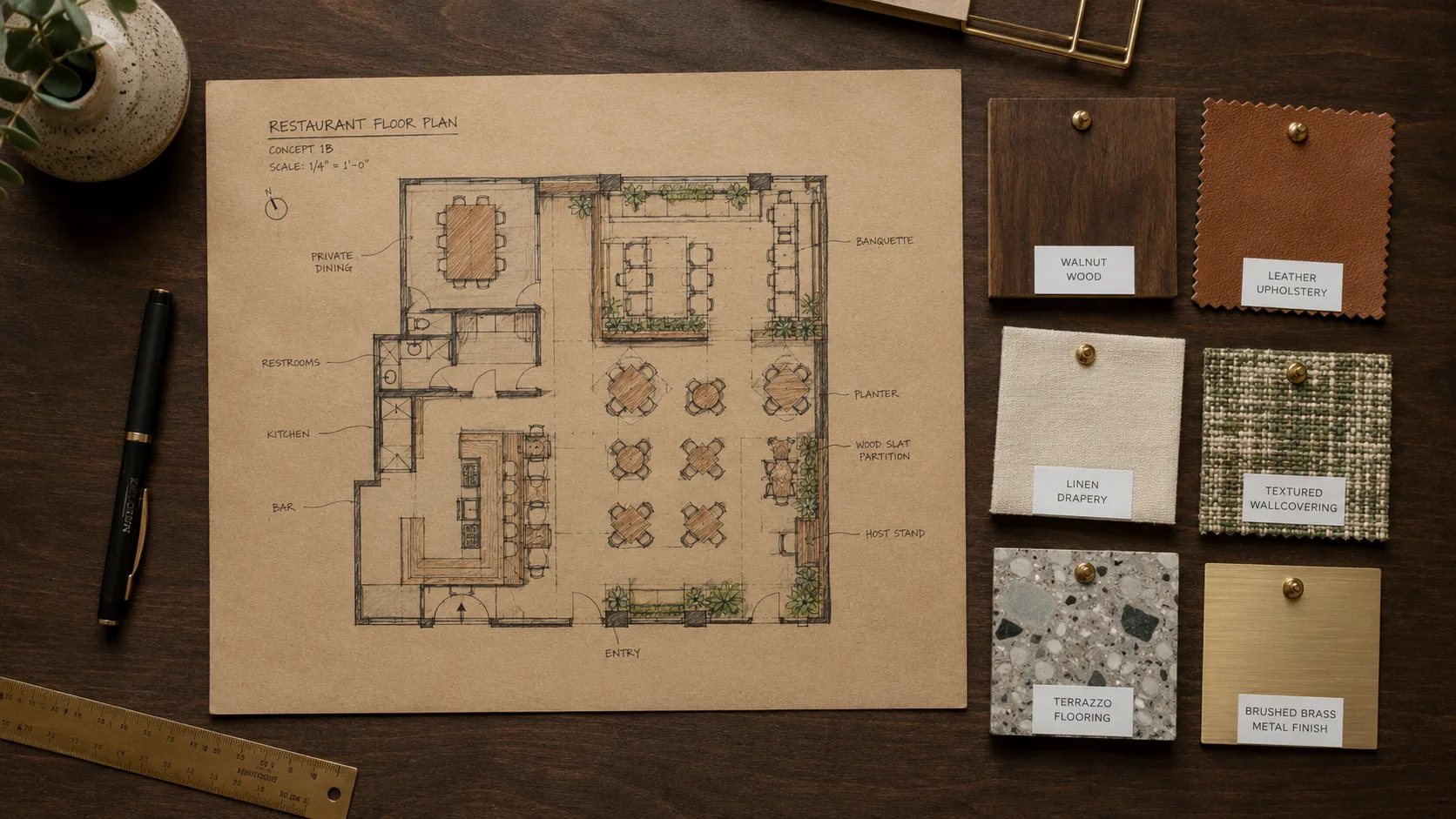
Here's the full picture so you don't have to figure it out the hard way.
Step one: lock your floor plan before you count a single chair
Before you order anything, you need your dining room layout finalized.
Take your dining room square footage and divide by 15 to 20 square feet per guest. That's the standard restaurant planning ratio. A 1,000 square foot dining room comfortably seats 50 to 65 guests depending on table configuration and flow.
Once you know your seat count, add 10 to 15 percent overage. Chairs break, chairs get damaged, chairs go missing in a move. You need spares. Opening with 60 seats? Order 68 to 70 chairs. Same math applies to barstools if you have bar seating.
This step sounds obvious but it's where most operators get tripped up. They order based on a floor plan that changes during buildout and end up short, or they order before the layout is locked and then realize the furniture doesn't work with the final table configuration.
What pieces a restaurant actually needs
Most restaurants need four categories of furniture:
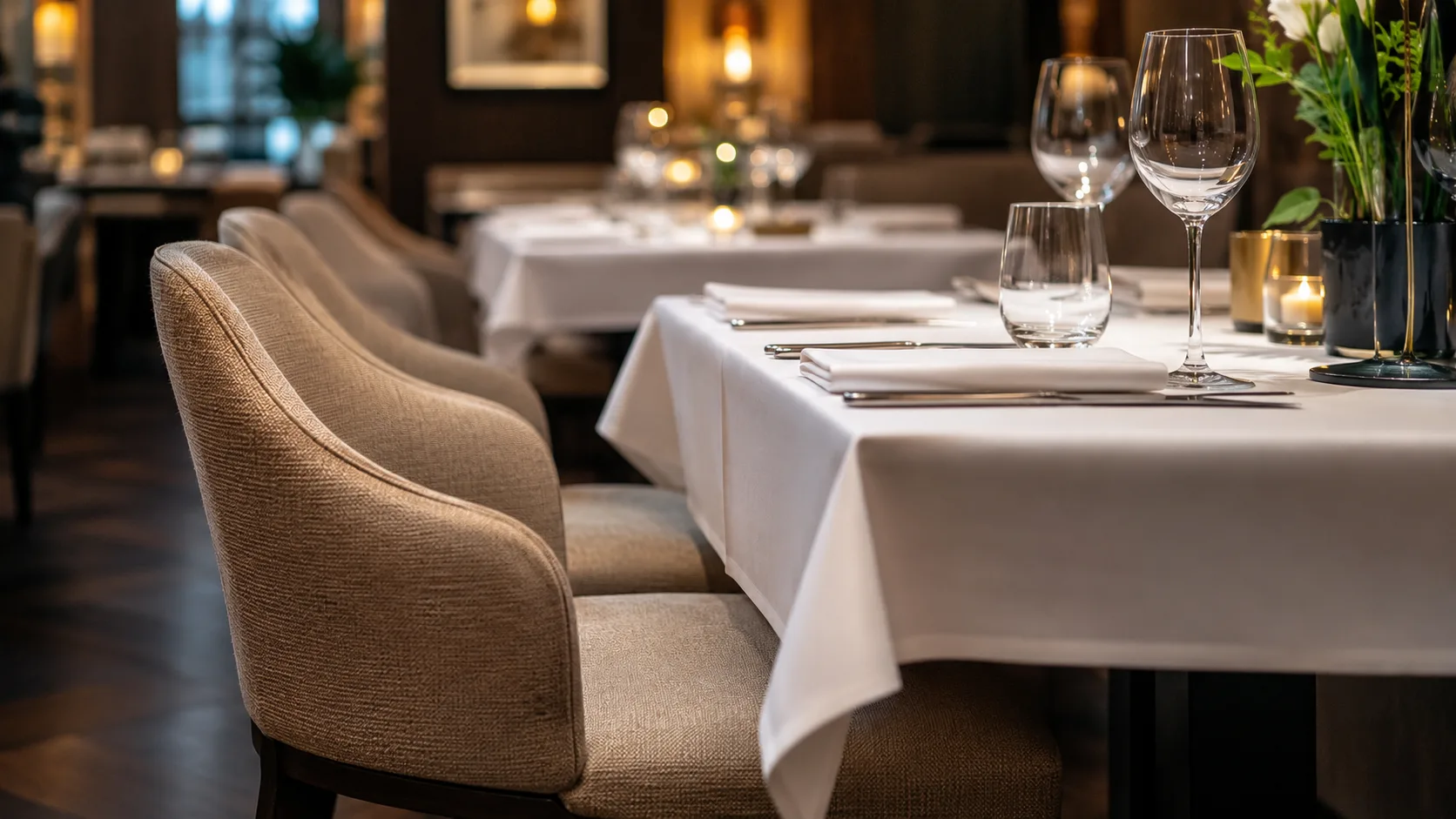
Dining chairs are your main seating. These take the most abuse of anything in the room and should be your highest priority for quality. A dining chair in a busy restaurant gets sat on by 30 to 50 different people a day. Contract-grade construction is not optional here.
Barstools come into play if you have a bar or high-top counter. Height matters more than most people realize. Standard bar height is 28 to 30 inches for the seat; counter height is 24 to 26 inches. Measure your bar top before you order.
Tables are typically sold as bases and tops separately. This gives you flexibility on size, shape, and finish to match your space. A four-top that can split into two two-tops is worth considering for flexibility.
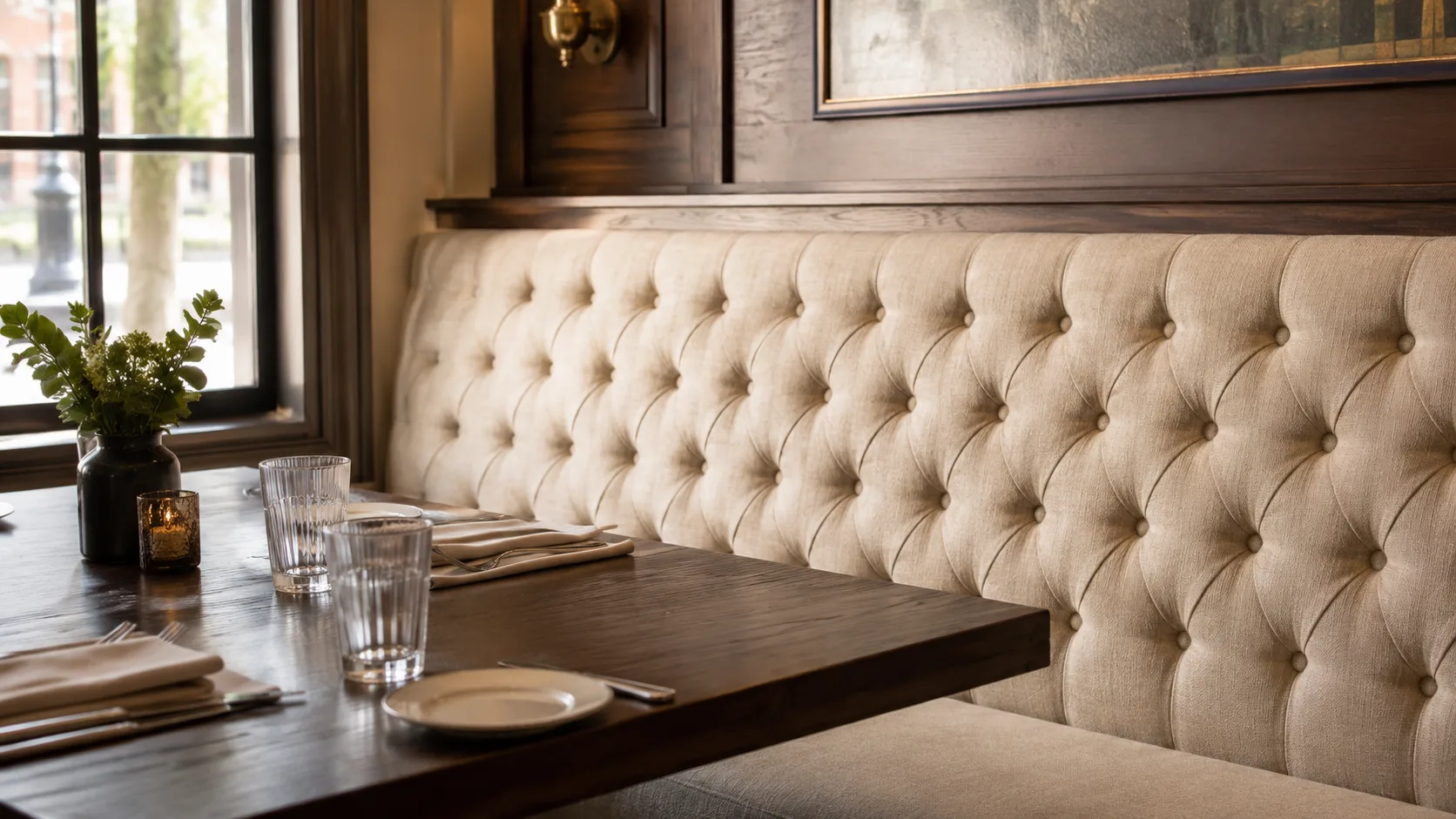
Lounge or waiting area seating is lower volume use than your dining chairs, but it's the first thing guests see when they walk in.
Budget: what to actually expect
Here's a realistic range for commercial-grade restaurant furniture in North America.
- Dining chairs: $150 to $450 per chair depending on material and upholstery
- Barstools: $200 to $550 per stool
- Table bases: $100 to $250 each; table tops: $150 to $400 each
- Lounge seating: $500 to $1,500 per piece
For a 60-seat restaurant with a small bar and a waiting area, budget $25,000 to $55,000 for furniture depending on your spec level. That sounds like a lot until you compare it to what you're spending on kitchen equipment, POS systems, or your buildout.
The math also looks different when you factor in lifespan. A commercial chair at $200 that lasts seven years costs less per year than a $70 retail chair you replace every 18 months. Over a five-year period, the retail chair costs more, plus the labor and downtime of replacing it mid-service.
Timeline: when to place your order
This is where most restaurant operators get into serious trouble.
Commercial furniture is made to order. Lead times run 6 to 12 weeks from order confirmation to production complete. Add two weeks for freight and receiving. If you want furniture in your restaurant on opening day, count back 14 weeks from that date. That's when you need to place your order.
Most restaurant buildouts run behind schedule. If your contractor is running two weeks behind, your opening date slips, which means your furniture might sit in a warehouse for a few weeks. That's fine. What's not fine is ordering late and scrambling to furnish a space the week before opening.
Order early. You can always store furniture. You cannot open without it.
The bottom line
Furnishing a restaurant isn't complicated once you understand how the process works. Lock your layout, count your seats with overage built in, get your spec together, and order at least 14 weeks before you need the furniture on the floor. Every step after that gets easier.
Related reading: How to Spec Restaurant Furniture · Commercial Furniture Lead Times · Commercial Barstool Buying Guide
Keep a specification that supports the next order
Record each furniture model, dimensions, finish, upholstery, quantity, and location in one schedule. For a restaurant group, use that schedule to identify compatible spare furniture and match later orders rather than allowing each location's specification to drift.
After the room has operated, review where furniture moves, which finishes show contact wear, and whether the installed counter and stool heights work together. Update the specification before ordering for an extension or another location.