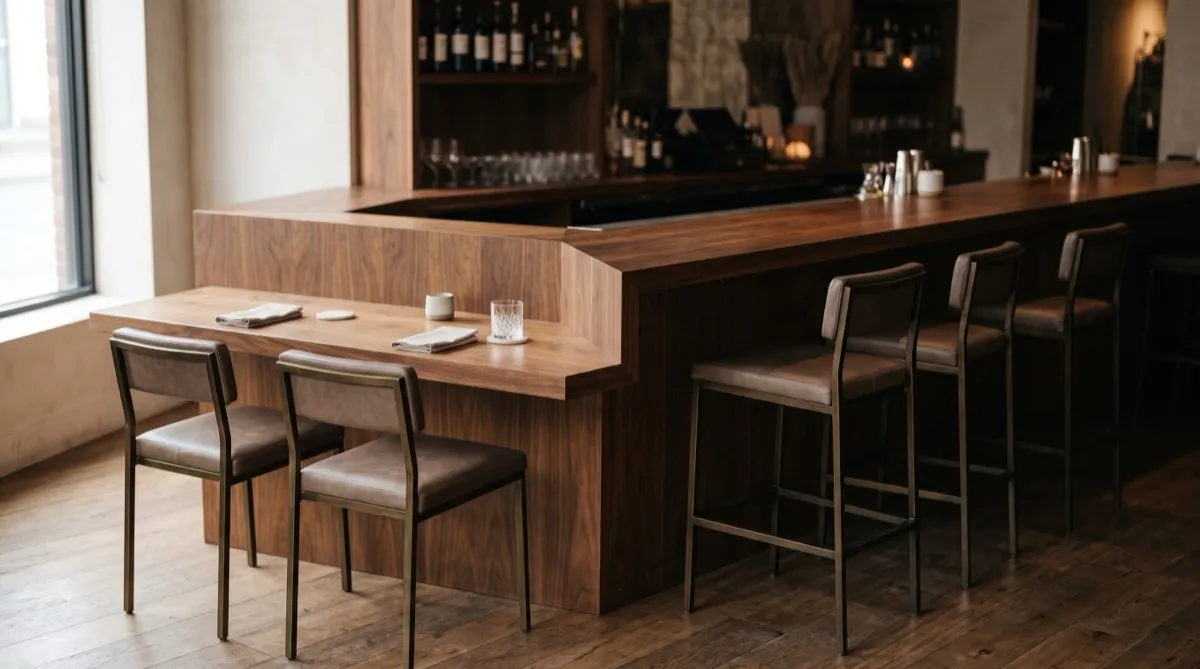
Wrong barstool height is one of the most common and most fixable mistakes in bar and restaurant design.
Get it wrong and your guests are either perched too high or can barely reach the bar surface. And unlike upholstery you can reupholster or finishes you can refinish, you can't adjust a barstool's seat height after you've ordered. You replace the stools.
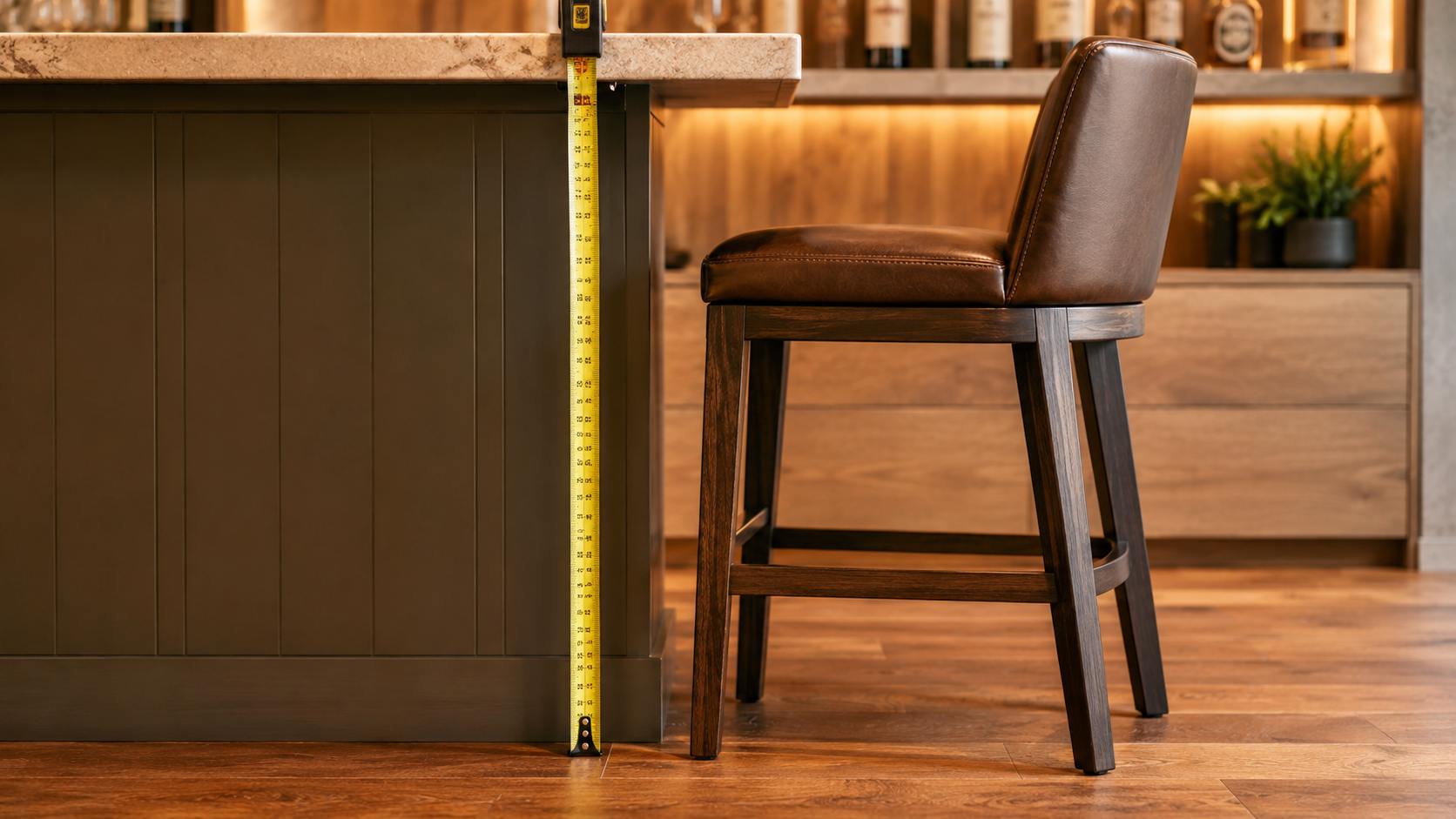
Here's the formula to get it right before you order.
The one formula you need
Seat height should be 10 to 12 inches below bar top height.
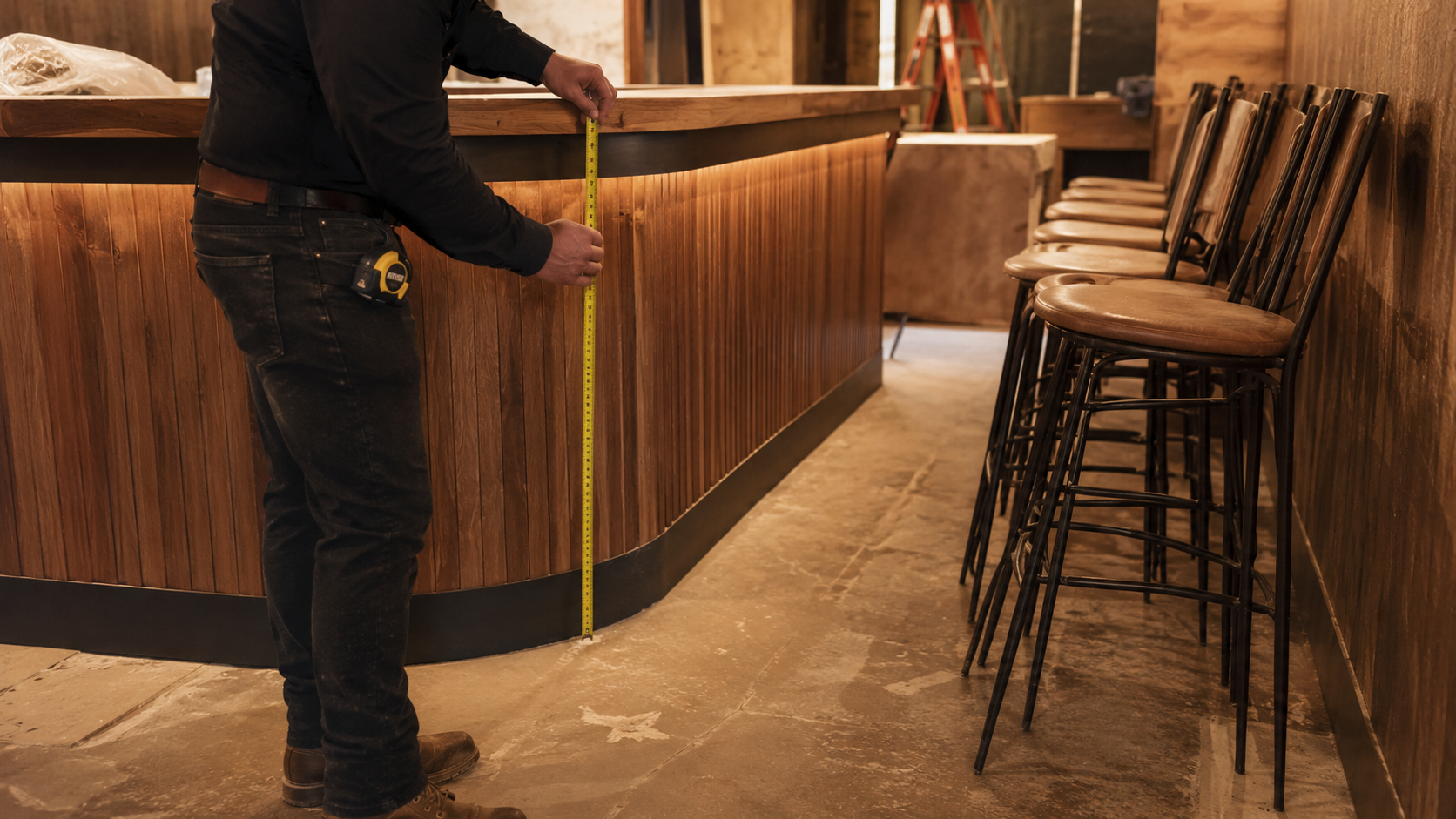
Measure your bar top from the floor to the top surface. Subtract 10 to 12 inches. That's the seat height you order.
A 42-inch bar top needs a 30 to 32-inch seat height. This is standard bar height and what the majority of commercial barstools are designed for.
A 36-inch counter needs a 24 to 26-inch seat height. This is counter height, common in café counters and kitchen bar situations.
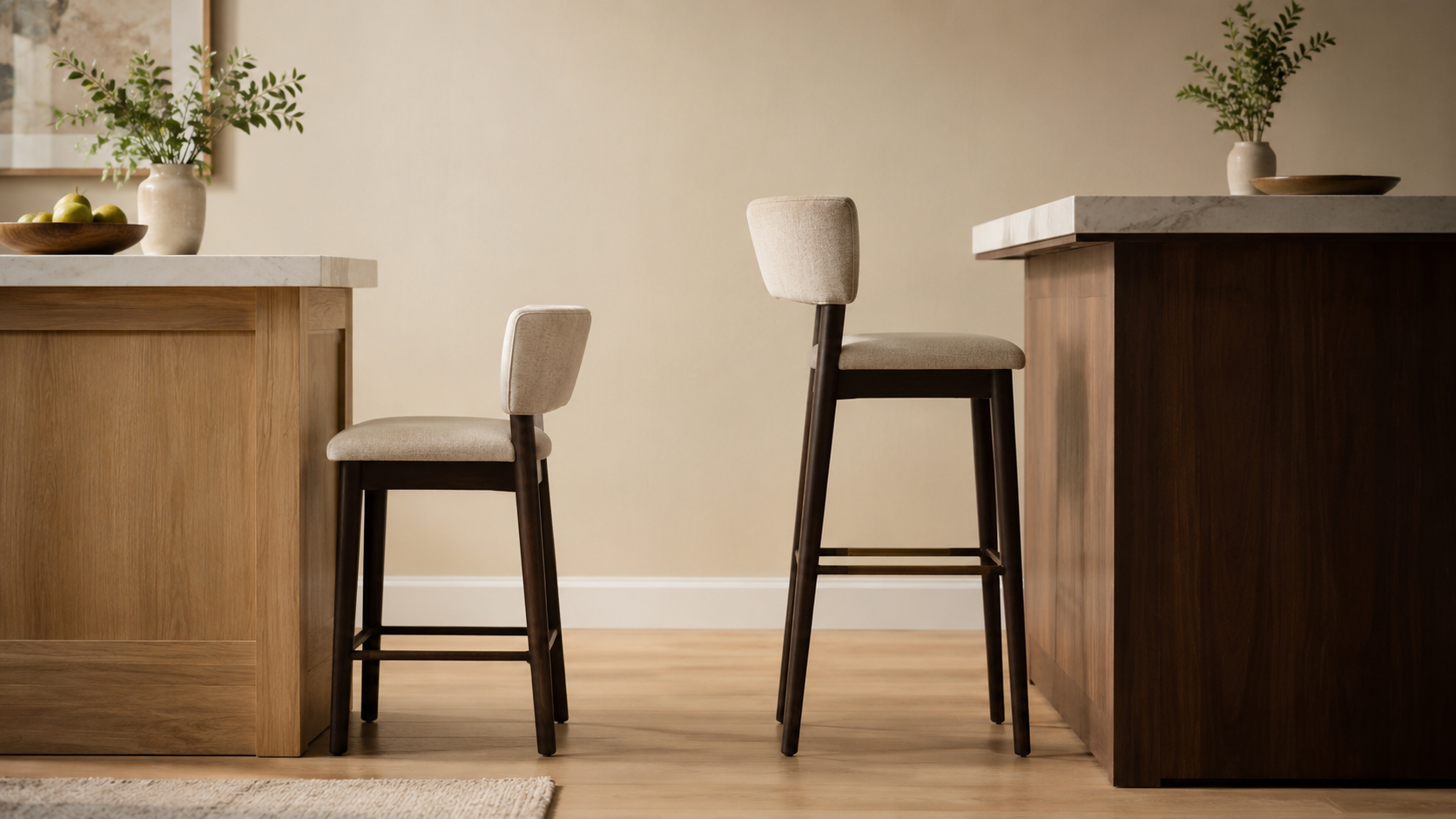
A custom bar top at 44 or 46 inches needs extra tall stools at 32 to 34-inch seat height. Custom bar millwork at non-standard heights is where most buyers get caught because they're assuming standard dimensions.
Measure before you order. Do not assume.
The three commercial height categories
Counter height: seat at 24 to 26 inches. Used at kitchen counters, café counters, and lower bar tops. Less common in restaurant bars, more common in quick service and coffee environments.
Bar height: seat at 28 to 30 inches. Standard for a 40 to 42-inch bar top. The most common commercial barstool height and what most commercial suppliers stock as their standard offering. If your bar top is in this range, finding the right stool is straightforward.
Extra tall: seat at 30 to 34 inches. For elevated or custom bar tops above 42 inches. Less common in standard product lines, but available through custom orders. If you're building custom millwork at a non-standard height, confirm your barstool options before you set the bar top height in your build.
When you order barstools you specify seat height, not overall height. Overall height varies depending on the back design and silhouette. The number that matters for function is seat height.
Back vs backless: the tradeoffs
Backless barstools tuck completely under the bar when not in use. This saves floor space, makes the bar area feel more open, and works better in standing room environments where stools get moved frequently. The trade-off is comfort for longer sits. A backless stool is fine for a quick drink or a meal eaten in 30 minutes. For guests sitting through multiple drinks over two hours, a back provides meaningful comfort support.
Backed barstools are more comfortable for longer dwell times. They can't tuck fully under the bar, which means they're visible on the floor when unoccupied and take up more footprint. For a bar where guests come in specifically to sit at the bar for a meal or a cocktail hour, backed stools are usually the right call.
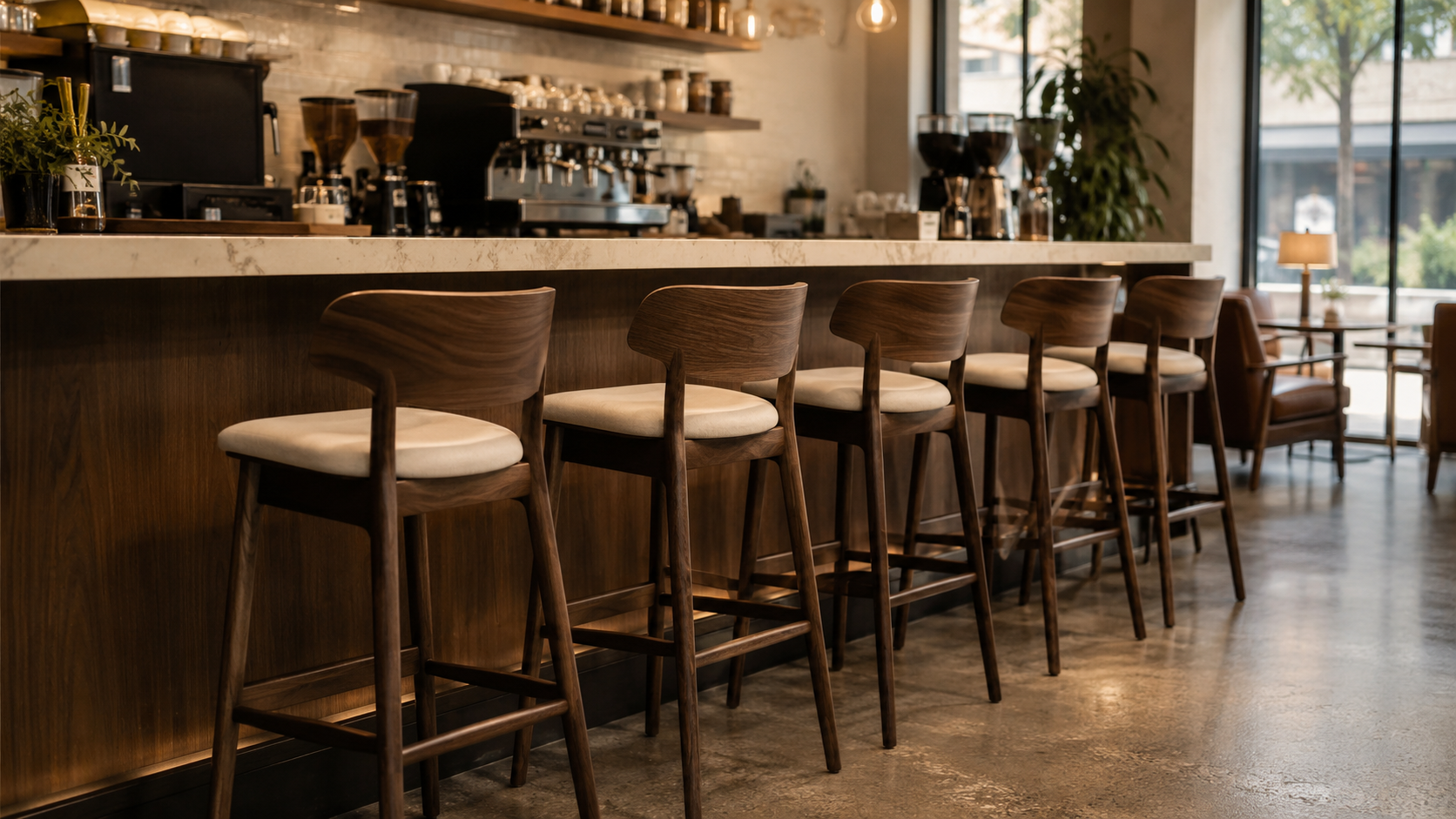
Backless: high-turnover bars, standing room environments, smaller footprints.
Backed: full-service bar seating, longer dwell times, table service at the bar.
Getting the proportions right
One thing beyond seat height that affects comfort: the relationship between the seat and the bar top, and the space between them.
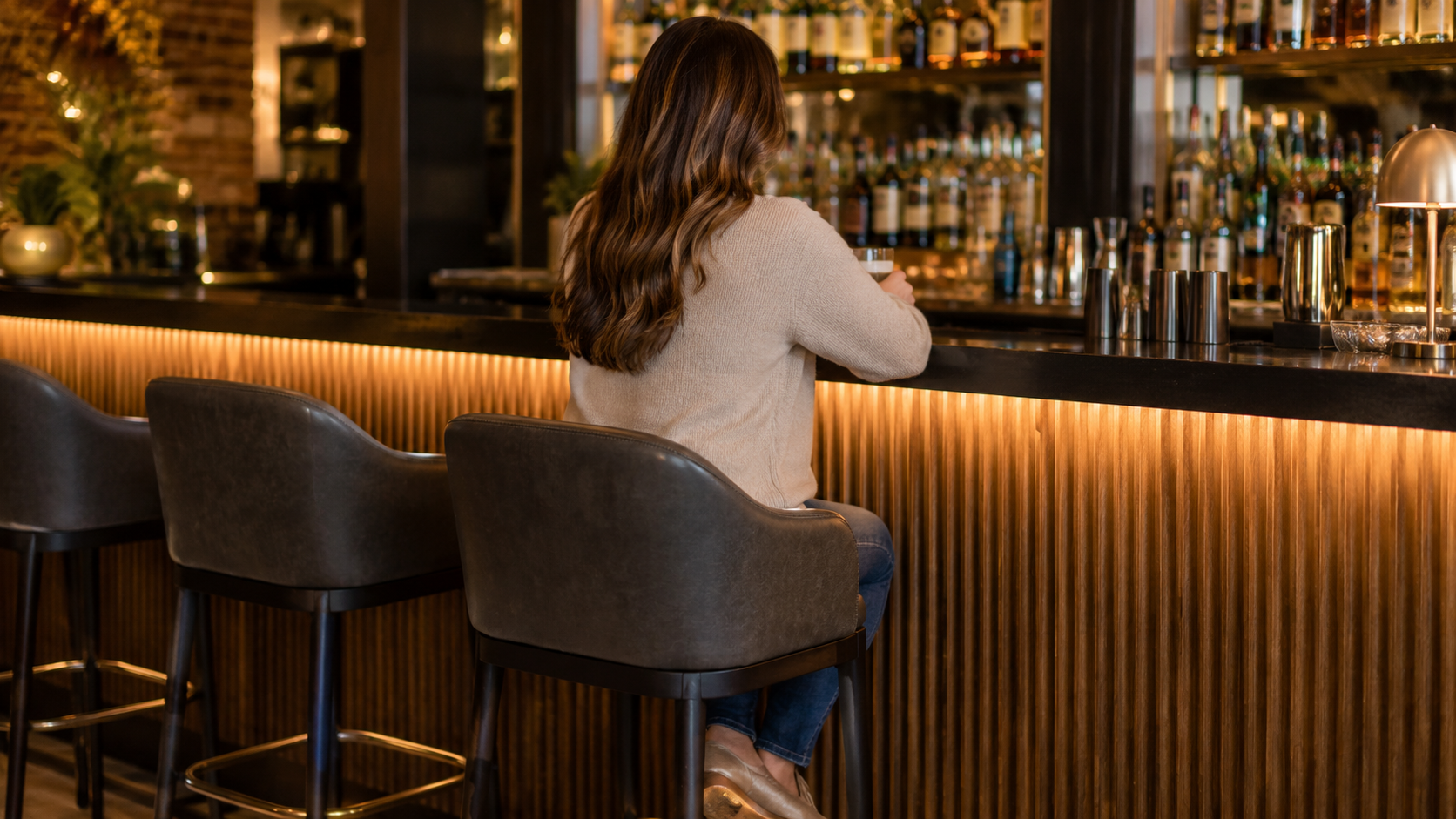
Standard guidance is 10 to 12 inches between bar top and seat top. Go below 10 inches and guests feel cramped with their arms on the bar. Go above 12 inches and the bar feels too high to comfortably reach.
Footrests matter too. A barstool without a footrest puts all the pressure on the back of the thighs for a seated guest. A footrest ring at the right height removes that pressure and significantly improves comfort for longer sits. On most commercial barstools at bar height, footrests are standard. Confirm this before you order for any application where guests will sit for more than 20 minutes.
Custom heights and ordering
If your bar top is at a non-standard height, which is common with custom millwork, custom seat heights are available. Bring the measurement and a supplier can confirm what's possible in the style you want.
Custom finishes and upholstery are also available on barstools, covering specific frame colors, vinyl or fabric seat options, and custom dimensions. Custom orders ship direct from the factory, so plan 10 to 14 weeks for those. Standard spec items may be available from local stock on a faster timeline.
When you contact a supplier, have these details ready: bar top height (measured), quantity needed, preferred frame finish, seat type (vinyl or fabric), and your delivery date.
The bottom line
One measurement determines everything: your bar top height. Subtract 10 to 12 inches and that's your seat height. Get that number from a tape measure, not a guess, before you contact any supplier. Everything else in the selection process (style, finish, back or backless) is secondary to getting the height right.
Related reading: Commercial Barstool Buying Guide · How to Furnish a Bar or Nightclub · Bar Furniture Guide
Our take
The ten-to-twelve-inch formula is the right rule and the guide is correct that the mistake is expensive because seat height cannot be changed after ordering. The measurement caveat it does not add is that the formula assumes a flat reference floor, and real bars are not always flat. A service bar often sits over a floor that slopes for drainage, sits on a raised platform, or crosses a threshold transition, so the height from finished floor to bar top can vary along a single run even when the bar top itself is dead level. Measuring at the actual stool positions, rather than at one point, catches that. Where a run genuinely steps or slopes, the fix is either leveling the reference or accepting that different sections need different seat heights, which is far cheaper to discover with a tape measure than after fifty stools arrive.
The bottom line: Measure your bar top and subtract ten to twelve inches for seat height before ordering. Measure at the actual stool positions, not one spot, since sloped, stepped, or platform floors can change the effective height along a single bar run.