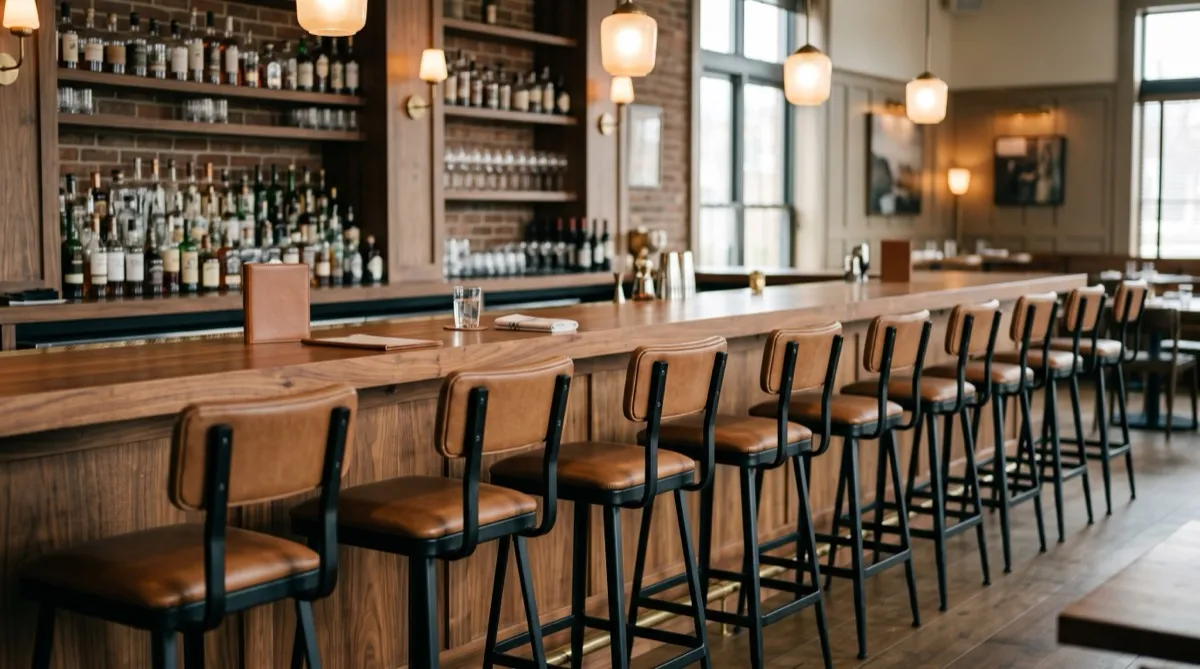
For a restaurant or bar stool order, start with the actual use, fit, maintenance records and approved model documents. This guide provides no industry replacement-frequency study or evidence assigning all replacements to buying the wrong product.
Check height, frame/footrest performance, upholstery and supply terms for the exact model. The 18-month and five to seven-year figures are hypothetical comparison periods, not documented predictions of replacement or trouble-free service.
Height: the most common and most expensive mistake
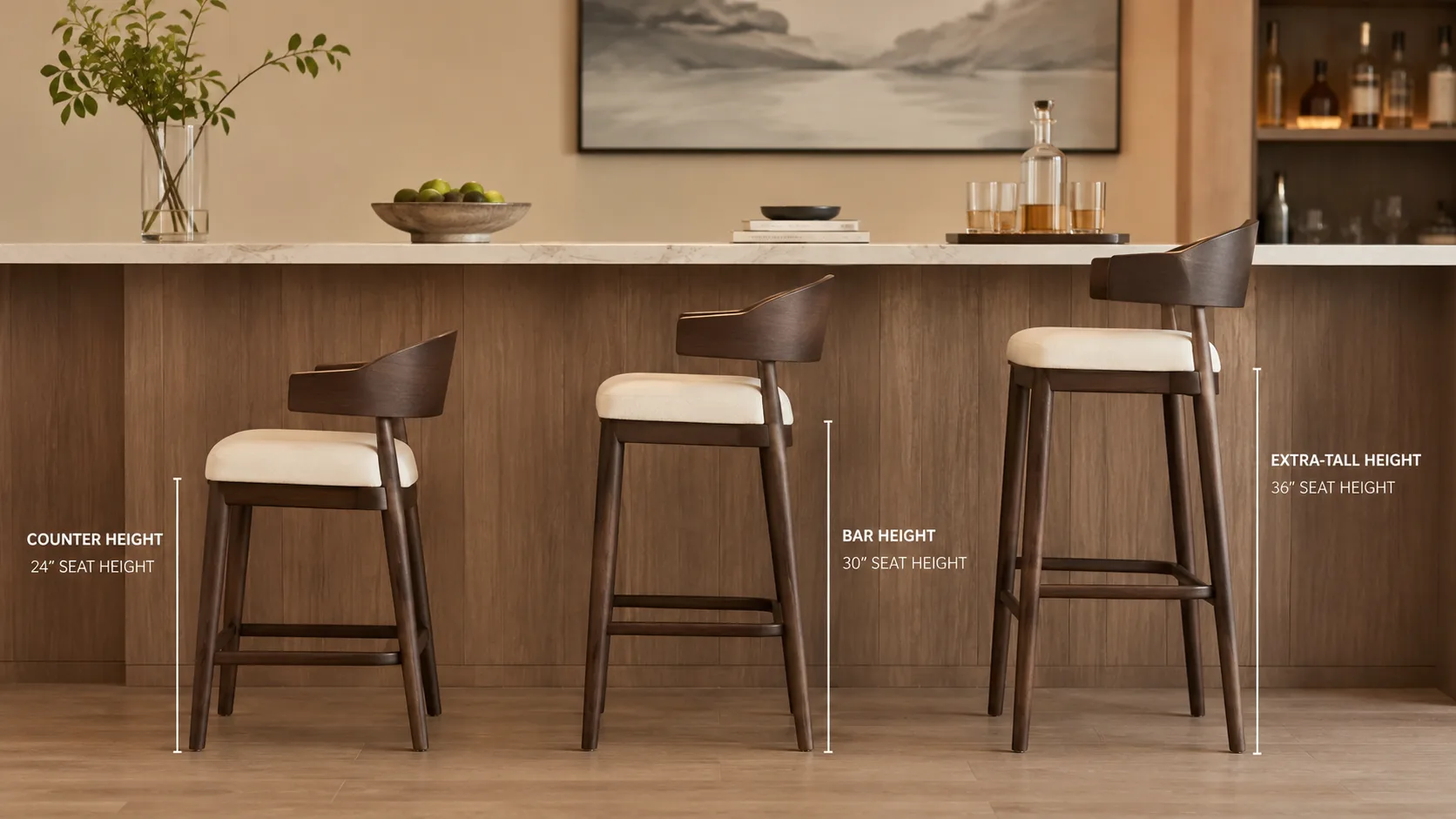
There are three barstool heights and most people get confused between them.
Counter height seats sit at 24 to 26 inches. Used at kitchen counters and lower cafe bar tops.
Bar height seats sit at 28 to 30 inches. Standard commercial bar top height is 42 inches, which makes this your most common restaurant and bar stool.
Extra tall seats sit at 30 to 32 inches, for higher custom bar tops.
Separate top-to-seat height from the usable underside gap. A 42-inch top with a 30-inch seat has a 12-inch top-to-seat difference; the gap below is smaller if a thick top or apron projects down. Treat the 10 to 12-inch comfort range as a starting assumption and test the actual pairing. A 28 to 30-inch seat range does not produce the same gap at every position.
Measure your bar top before you order. This sounds obvious and people still get it wrong because they're working off a blueprint that ends up being slightly different from the finished counter.
Frame material
Compare the proposed hardwood, metal and other frame assemblies by their exact use, test, care and warranty documents rather than treating two material categories as universal approval.
Metal is one frame option to compare using the actual model's joint tests, coating/care limits and commercial-use warranty. Powder-coated steel or aluminum alone does not establish that joints never loosen or that cleaning products cannot damage the finish. No site sales data establishes a most-popular CFD option.
Solid hardwood can provide the desired wood appearance. Compare the exact assembly's weight, finish/cleaner limits, load documents and itemized quote; hardwood does not universally mean heavier or more expensive than every metal alternative.
Assess any MDF, particleboard, hardwood or metal candidate using the complete model's permitted commercial use, moisture/care limits, joint and load documents. No evidence here establishes that almost every retail stool uses one material or that every such frame necessarily fails. Resolve missing documents before approval.
Seat: back or backless, upholstered or hard
Backless barstools may suit a counter that needs a compact stored envelope. Check whether the actual frame and footrest tuck under the finished overhang, and test comfort for the intended sitting duration; the style alone does not establish fit or easier cleaning.
Backed barstools offer a back-support configuration to test with the actual users, seat/footrest and meal duration. A back alone does not establish that every such model is more comfortable for an hour-long sit.
Upholstered seats need care and test documentation for the intended exposure. The 50,000 Wyzenbeek figure is an example abrasion result, not a universal minimum or a guarantee that other fabric wears within six months. ACT's abrasion guidance explains why counts do not directly predict lifespan.
Hard seats need their own approved food/drink, cleaner and exposure limits. Compare actual care labor and comfort with upholstered candidates; wood or molded labels do not by themselves establish lower maintenance, outdoor suitability or less comfort.
Minimums and how ordering works
Confirm minimum quantities for each selected model and configuration. Twenty units is a provisional planning example, not a rule that applies to every supplier or production run.
Confirm the selected model's manufacturing origin and actual stock location. Treat 10 to 14 weeks as a provisional custom-order scenario; obtain dated stock, approval, production and delivery commitments rather than assuming origin or local availability.
Describe any custom finish, upholstery or dimension in the furniture brief. Independent suppliers must confirm whether they can make or source it, the actual minimums, model testing, quote and dates; CFD does not manufacture custom stools.
For a quote, provide the actual top and underside height, tested seat count, any owned spare units, finish/material and delivery requirements. Ask the supplier for its response date and quote validity; 24 to 48 hours is an illustrative assumption, not a confirmed universal turnaround.
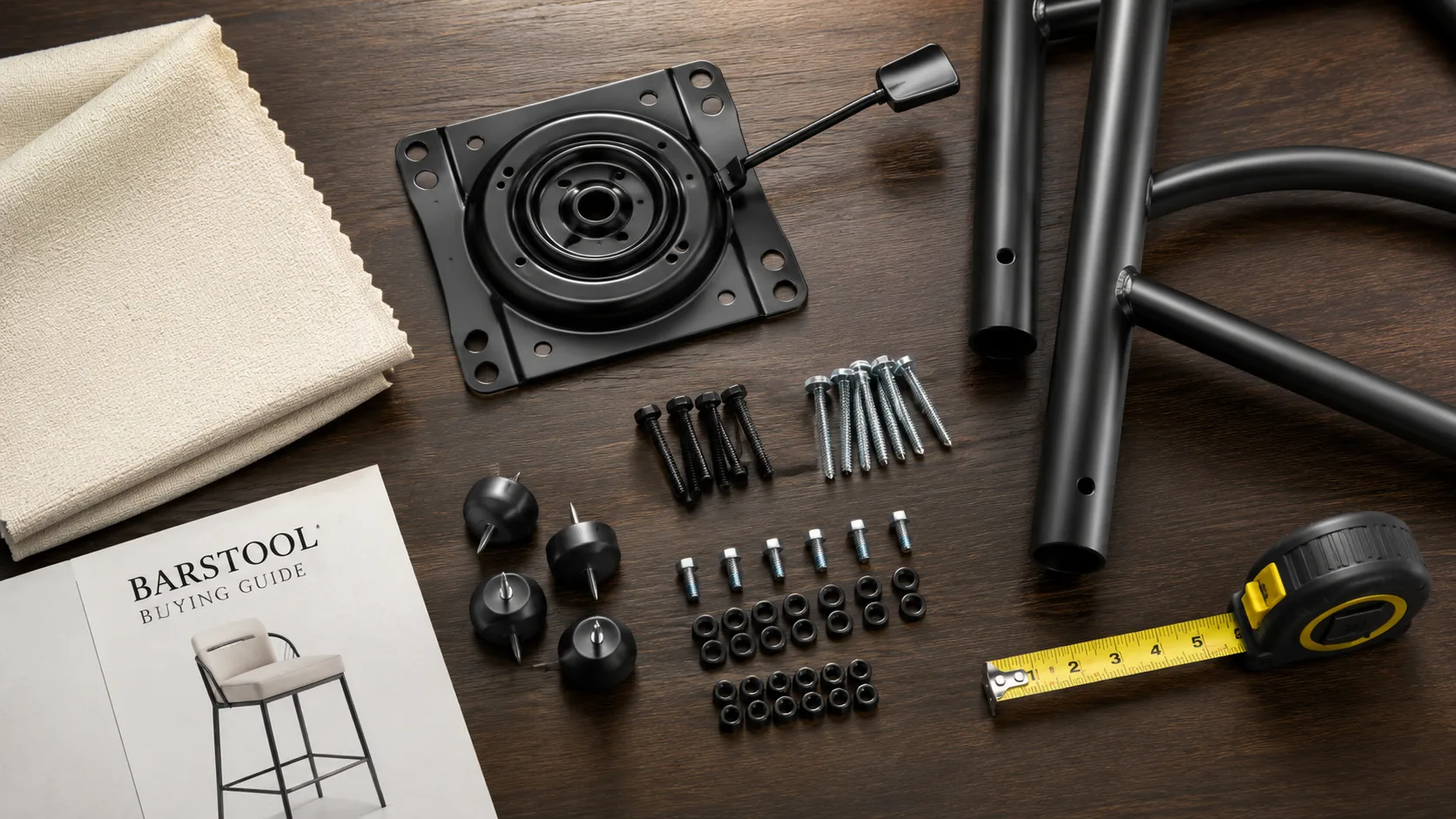
The bottom line
Check actual top/underside and seat heights, documented frame/footrest performance, upholstery care and the supplier's dated delivery plan. These are useful purchasing checks, but no evidence here establishes that they account for 90 percent of failures. Record the approved model, sample and operating limits.
Related reading: How to Choose the Right Barstool Height · Commercial Upholstery Fabric Guide · How to Furnish a Bar or Nightclub
Include service parts in a volume quote
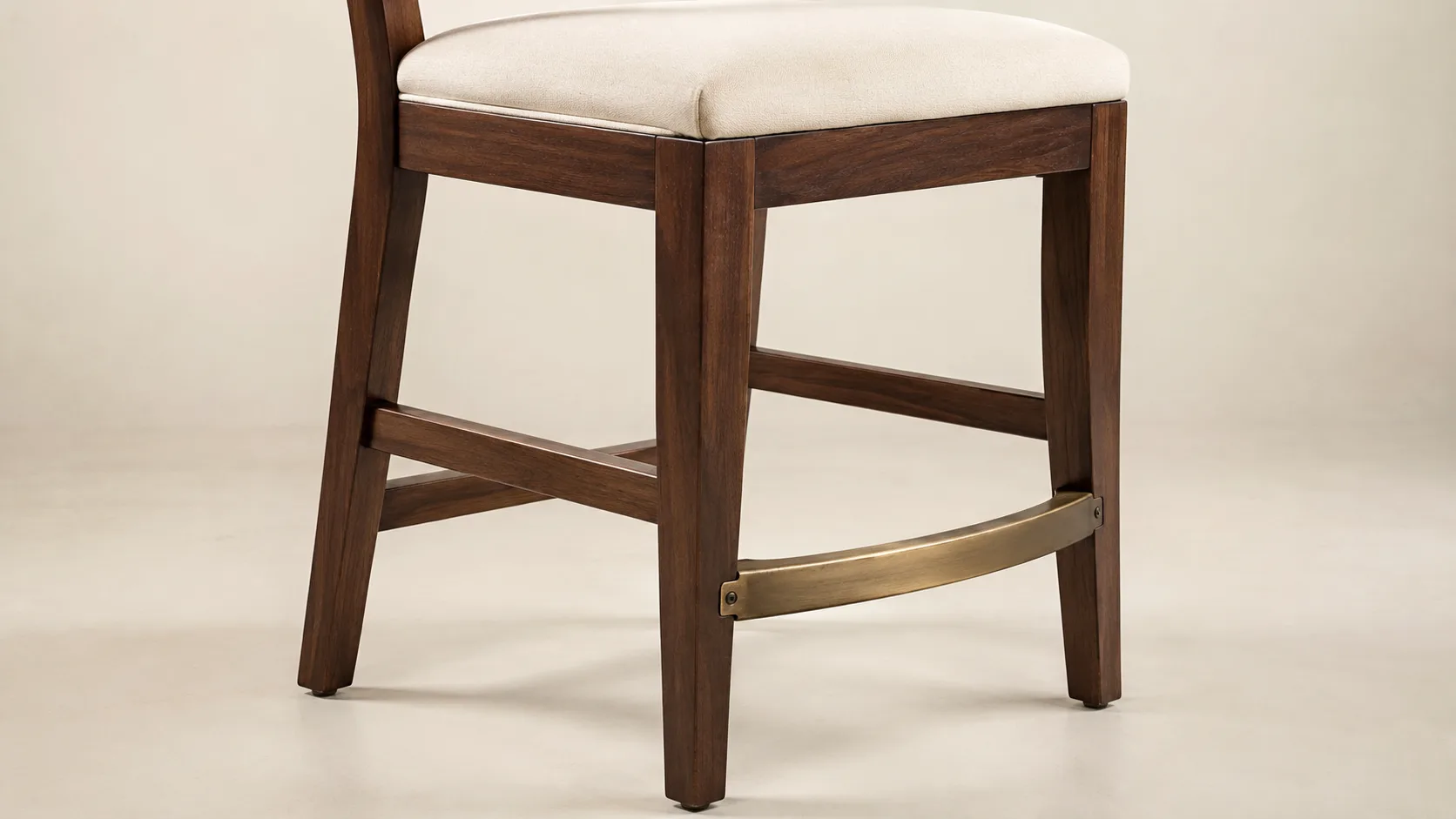
Inspect the footrest connection on the sample and ask whether the footrest, glides, seat, and swivel mechanism can be replaced separately. Request model-specific information rather than treating a frame capacity as a rating for the swivel.
For multiple locations, record the exact seat height and approved finish at each counter. Confirm delivery, assembly, and spare-part arrangements alongside unit pricing so the first order and later replacements use the same specification.