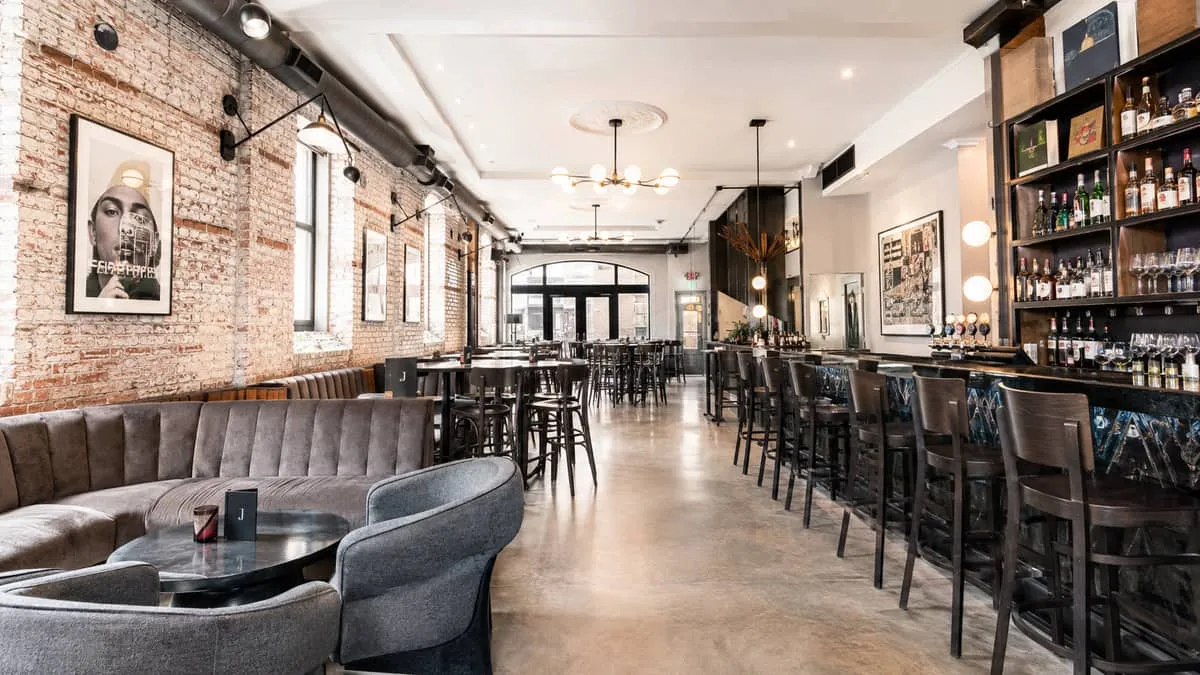
Montreal's bar scene is not like other Canadian cities. The last call is later. The terrasses are more serious. The design expectations run higher. And when Grand Prix weekend and the Jazz Festival land back-to-back in June, downtown hotel bars are running three-deep until 3am, Crescent Street is at absolute capacity, and operators who underspecified their furniture are already watching chairs wobble and upholstery split at the seams. This is a market where hospitality is treated as a genuine cultural institution, and the furniture that supports it has to be sourced accordingly.
Choosing bar lounge furniture Montreal venues can genuinely depend on means understanding what this city actually asks of a chair, a stool, or a banquette. The answer is: a lot.
The Terrasse Question Is Central, Not Supplementary
In most Canadian cities, patio season is a nice bonus. In Montreal, the terrasse is a core revenue driver and a deeply embedded part of the city's social fabric. A Plateau-Mont-Royal restaurant running a full terrasse from late May through early September is not offering an outdoor option; it is operating a second room that is often more profitable than the interior during peak months.
What that means for furniture specification is significant. Plateau terrasses are dense. Tables are close together. Guests linger. A weekend in July at a well-run terrasse on avenue du Mont-Royal or rue Saint-Denis means seats that are occupied for two, three, sometimes four hours at a stretch, with turnover running late into the evening. Furniture needs to hold up under that combination of continuous use, humidity, UV exposure, and the specific stress of urban sidewalk placement where guests are often pressing chairs back against planter edges or iron railings.
The right outdoor specification for a Montreal terrasse starts with fully welded aluminum frames. Powder-coated finishes resist the salt and particulate matter that city air carries. Seating surfaces need to be commercial sling fabric or high-density woven resin that drains properly after rain and dries without mildew. Stacking capability is essential; Montreal winters make year-round outdoor storage impractical, and furniture that cannot be compactly stored indoors eats floor space for six months. This is a different specification from your interior program, and the two should never be sourced interchangeably.
One detail operators often overlook: weight. Lightweight stacking chairs on a Plateau terrasse in a strong summer storm become projectiles. Commercial-grade outdoor seating needs enough mass, or a stacking rack with a securing strap system, to stay put when the weather turns.
Crescent Street and the Grand Prix Corridor
The Crescent Street and downtown bar strip around rue de la Montagne and boulevard de Maisonneuve operates in a different gear than the neighborhood bar scene. These venues are built for volume and spectacle. During Grand Prix weekend in June, they are doing the kind of numbers that would be exceptional for any Canadian bar, sustained over four straight days. During the Jazz Festival, which runs through much of the same corridor and into the Quartier des Spectacles, the crowds are enormous and the hours are long.
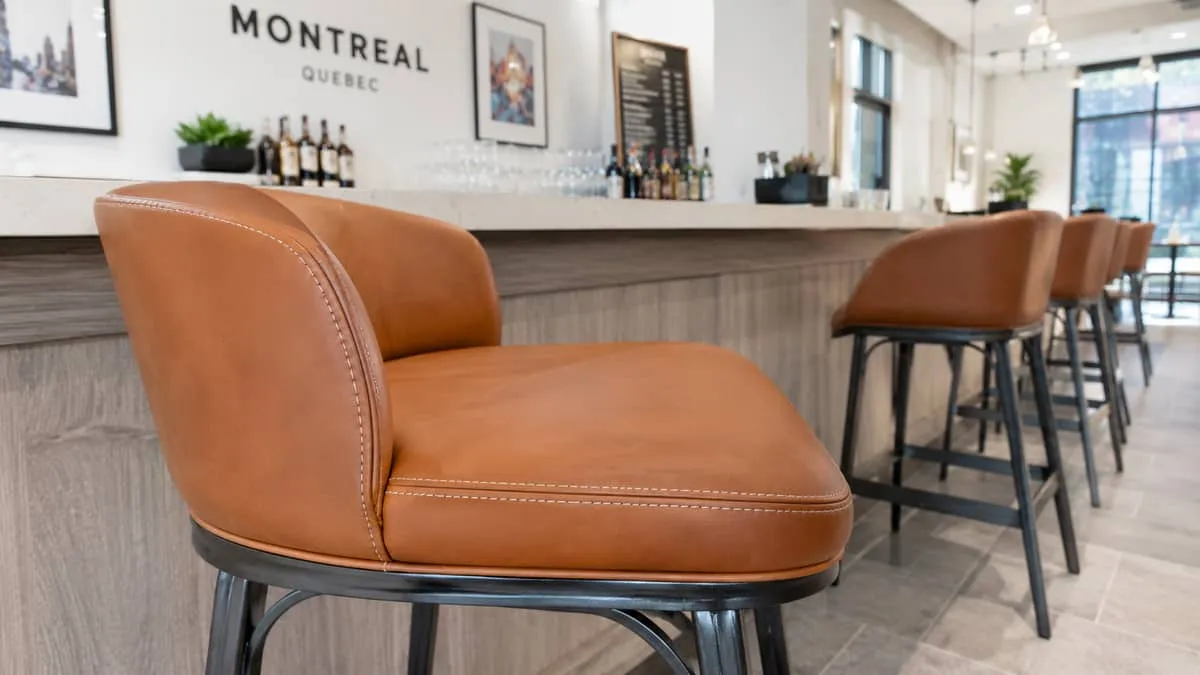
For operators in this corridor, bar lounge furniture Montreal specifications need to prioritize structural durability above all else. Frame joints on barstools and lounge chairs should be welded, not bolted. Glides need to be commercial-grade nylon or felt pads, not plastic caps, because these chairs are being moved hundreds of times per shift. Upholstery should be a vinyl or coated fabric with a Wyzenbeek abrasion rating of at least 50,000 double-rubs, ideally higher for seating adjacent to a bar rail where friction is constant.
High-top configurations work well in this corridor because they encourage standing-adjacent seating, keep sightlines open across a crowded room, and communicate to guests that the pace is social rather than slow. Counter-height stools at 28 to 30 inches for a standard 42-inch bar top are the right spec, but verify seat height against your actual bar surface, not a generic estimate. A two-inch mismatch creates a comfort problem that every guest in that seat will notice.
Old Montreal: Heritage Rooms and the Weight of the Setting
Old Montreal is one of the most visually demanding hospitality environments in the country. Hotel Nelligan, Auberge du Vieux-Port, and the boutique properties scattered through the Vieux-Port all share a common challenge: the bones of the building are extraordinary, and furniture has to hold its own against 19th-century stone walls, timber ceilings, and the particular quality of light that comes through heritage windows.
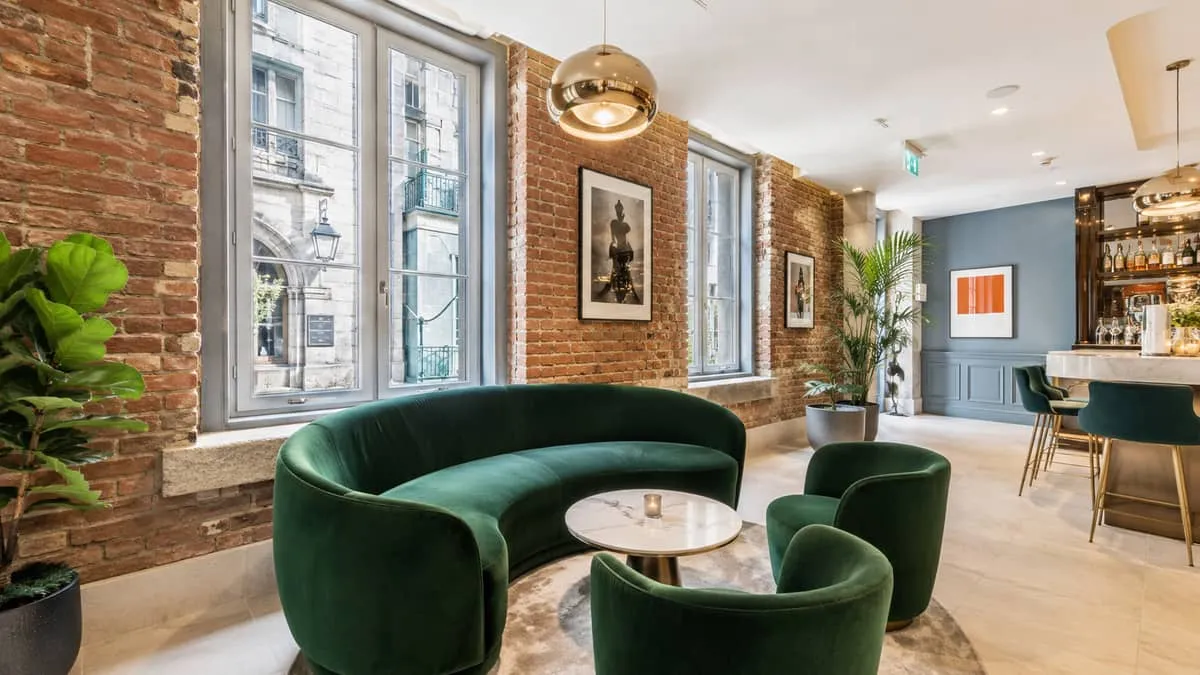
In these spaces, bar lounge furniture Montreal operators select should read as deliberate and premium, not generic contract supply. Tufted leather banquettes in deep cognac or burgundy. Low lounge chairs with solid hardwood frames and richly upholstered seats that reference the warmth of the surrounding architecture. Metal-frame bar stools with a matte black or brushed brass finish that complement the ironwork and exposed stone. The visual language is European and intentional.
French Canadian design culture leans toward warmth and texture rather than the colder minimalism that dominates some other Canadian markets. That translates directly into upholstery choices: deep jewel tones, rich leathers, layered textures that read well under low, warm lighting. Light upholstery tones and chrome-heavy frames tend to look out of place in these rooms, and they also show wear faster in a high-traffic bar environment where dark spirits and red wine are the dominant drinks.
Construction matters as much as aesthetics in heritage properties. Many of these buildings have uneven floors and tight circulation paths. Chair and stool bases need to accommodate small floor variations without rocking, and proportions need to suit tighter spacing without feeling cramped. Solid wood frames, particularly beech and oak, are the right material choice here; they are repairable, they age well, and they carry the weight of the setting.
The Village and High-Volume Weekend Nights
The Gay Village on rue Sainte-Catherine Est runs some of the highest-volume weekend nights of any entertainment district in Montreal. During the summer, with Sainte-Catherine closed to traffic and the outdoor party infrastructure in full operation, the bars along this stretch are handling crowd densities that put serious stress on furniture.
The specification priorities in the Village skew toward resilience and ease of maintenance. Frames need to be genuinely welded, not assembled with fasteners that loosen over time. Seating pads, where used, should be removable and replaceable rather than integrated, because they will need to be swapped out seasonally. Bases and glides take enormous punishment on heavily used nights; commercial-grade components here are not optional.
Color and visual identity matter in this district. The Village's bars lean toward bold, expressive interiors that photograph well and signal a specific energy. Deep jewel tones, neon-adjacent accent colors, and furniture that has a clear visual personality tend to fit the environment. The functional spec still has to be contract-grade throughout, but the aesthetic direction can be more expressive than what you would specify for a hotel lobby bar.
What Contract Grade Actually Means for a Montreal Operator

The term "contract grade" is used loosely, and it is worth being specific about what it means in practice for a Montreal bar or lounge operation. Contract-grade furniture is designed and tested for commercial environments where pieces are used by many different people, many times per day, under conditions that include spills, heavy cleaning, and physical stress that residential furniture is not built to handle.
At minimum, contract-grade bar seating for Montreal should meet the following: frames are either fully welded steel or solid joinery hardwood with no reliance on screws or staples at structural points; seat foam is high-density polyurethane at 1.8 lb density or higher; upholstery meets commercial abrasion standards (50,000 double-rubs Wyzenbeek as the floor, not the target); and the manufacturer's warranty explicitly covers commercial use. That last point is the most commonly overlooked. Retail furniture warranties universally exclude commercial environments, which means a six-month failure has no recourse.
A good commercial furniture supplier will be able to confirm all of these specifications in writing, provide documentation for warranty coverage, and offer custom upholstery options to match your specific brand palette. For Montreal projects specifically, the ability to work across French and English in documentation and communication is a practical advantage when coordinating with local contractors, ownership groups, or francophone design firms.
Lead times also matter more than operators typically plan for. A staged renovation or new opening in Montreal often has a hard deadline tied to a festival season or a hotel operating calendar. Confirm inventory levels and delivery timelines before committing to a spec, and build buffer into your procurement schedule. Furniture that arrives two weeks after your opening date is not a supplier problem; it is a planning problem.
Griffintown and the Boutique Hotel Wave
Griffintown's transformation from industrial district to Montreal's most active boutique hotel and condo corridor has created a new generation of hospitality venues that sit between the neighborhood bar and the hotel destination bar. The aesthetic is informed by the industrial heritage of the district: exposed concrete, heavy timber, black steel. The clientele is younger, design-literate, and accustomed to environments that have a considered visual identity.
Bar lounge furniture Montreal operators in Griffintown are specifying tends toward clean-lined industrial silhouettes: saddle-seat bar stools with metal frames, low lounge chairs with leather upholstery in warm neutrals, modular banquette sections that can be reconfigured for private events or buyouts. The scale of these rooms often allows for more generous spacing than a Plateau neighbourhood bar, which means furniture can have a slightly larger presence without crowding the floor plan.
The functional requirements are the same as anywhere else in the city: commercial-grade construction, appropriate durability ratings, proper seat height for the bar and table surfaces in the room. But the sourcing conversation here benefits from a supplier who understands how to match material finishes to an interior design direction rather than simply providing stock options from a catalog.
Getting the Specification Right
The overlap between Montreal's most demanding hospitality contexts, a terrasse culture running maximum capacity through summer, a festival calendar that creates extraordinary peak pressure, a heritage building stock with strict visual expectations, and a design-literate clientele with high standards, means that bar lounge furniture Montreal operators source needs to perform across multiple dimensions simultaneously.
Durability and aesthetics are not in tension here. The right commercial furniture for a Montreal bar looks as good on the first night as it does two seasons later, because the construction behind the visible surface is doing its job. That is the specification worth building to, and it is the one that separates a well-run Montreal venue from one that is cycling through replacement orders every eighteen months.
We quote bar and lounge furniture for Montreal operators against their own layouts and order sizes rather than a generic sheet. Request a quote and we will put together pricing for your property.