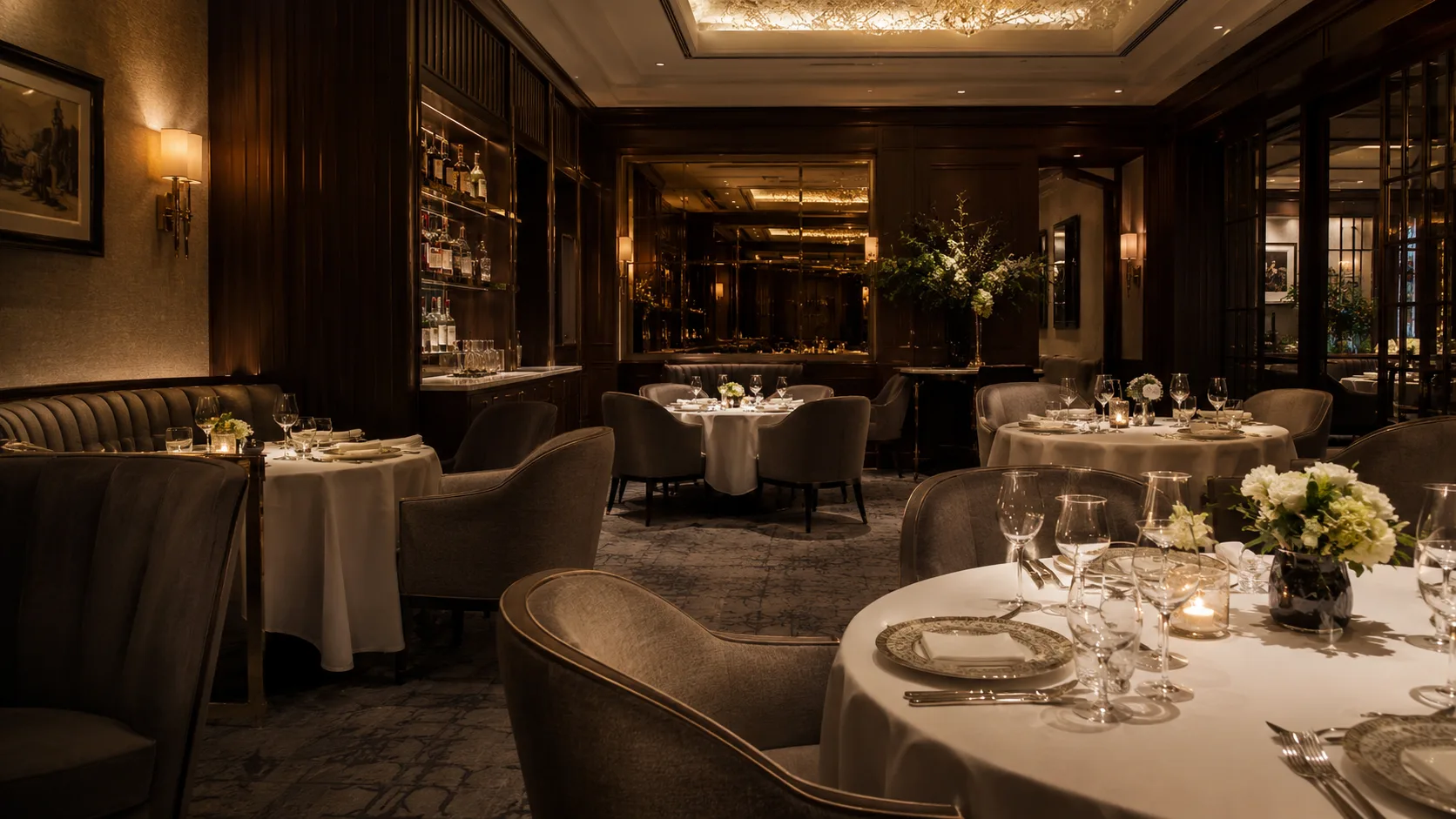
One furniture planning problem is a mismatch between the room's aesthetic and the restaurant concept. Consider that alongside fit, cleaning, budget and delivery.
Beautiful furniture that has nothing to do with the food, the neighborhood, or the brand the owner is building. A sleek modern dining room attached to a rustic comfort-food concept. Industrial metal chairs in a French bistro. The pieces are fine on their own. The combination reads as something that wasn't thought through.
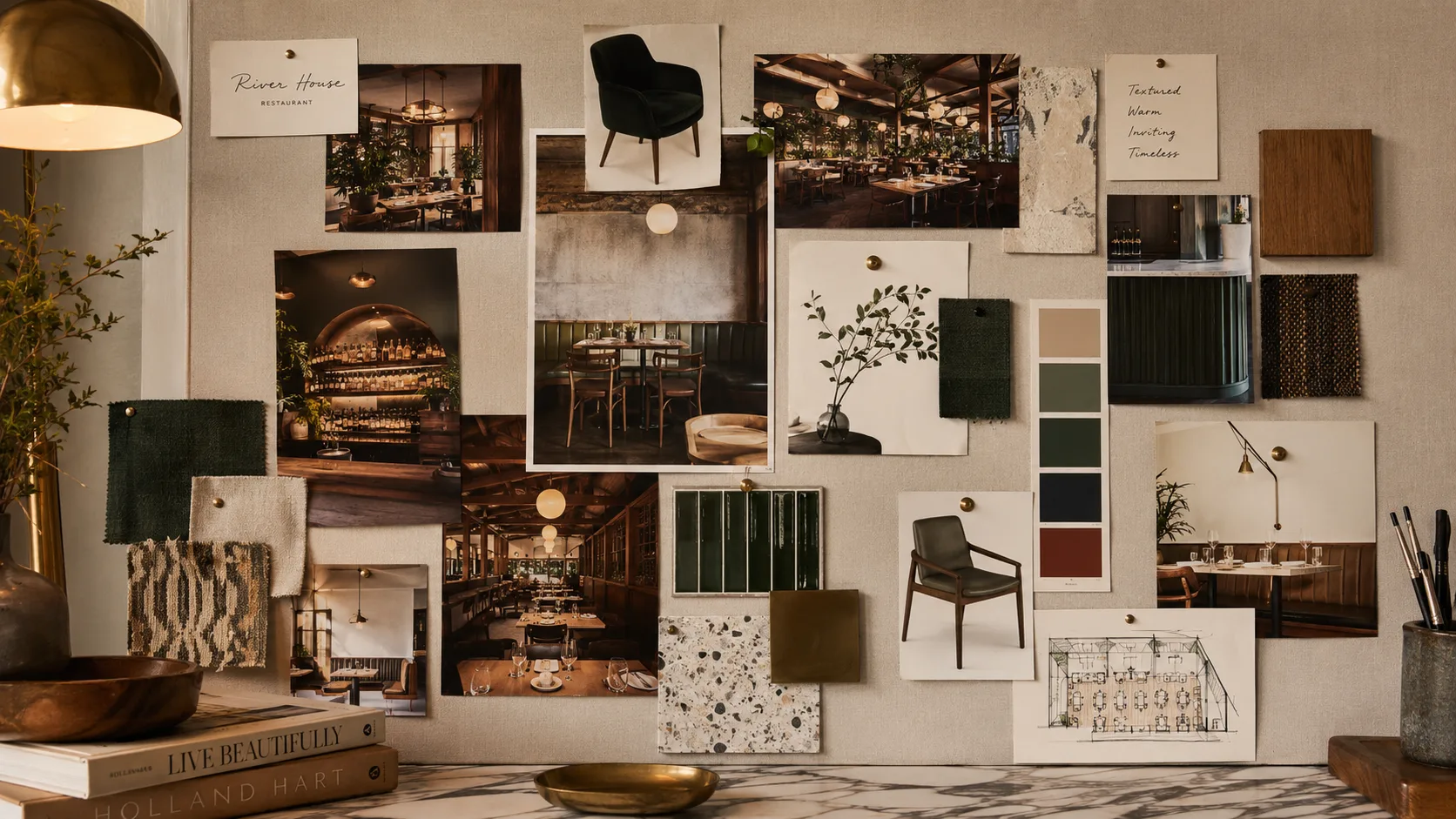
Here's how to think through furniture selection so everything in the room feels intentional.
Start with your concept, not the furniture
Before you look at a single chair or finish swatch, answer three questions.
What is the food? A taco spot and a French bistro need different furniture even at the same price point. The furniture should feel like it belongs with what's on the plate. Industrial black metal reads casual and urban. Upholstered dining chairs with rounded backs read more refined. Neither is objectively better. One is right for your concept.
Who is the customer? A neighborhood family restaurant and a destination cocktail bar serve different people with different expectations. Families with kids need furniture that's easy to clean and forgiving. A cocktail bar crowd expects a level of visual sophistication. The furniture is part of what signals which place you are before anyone looks at a menu.
What is the neighborhood? A sleek minimalist design can feel incongruous in a historic building or a neighborhood with an established character. A rustic reclaimed aesthetic looks off in a modern urban glass-and-steel setting. Work with your location, not against it.
Write down your answers before you contact any supplier. They become your filter for every furniture decision.
The main aesthetic directions and what they need
Industrial: exposed metal frames, wood tones and simple silhouettes can suggest this direction. Compare black or bronze finishes, minimal upholstery and hard-seat references for urban settings, warehouse conversions or taprooms. Verify the actual surface care and performance independently of the industrial appearance.
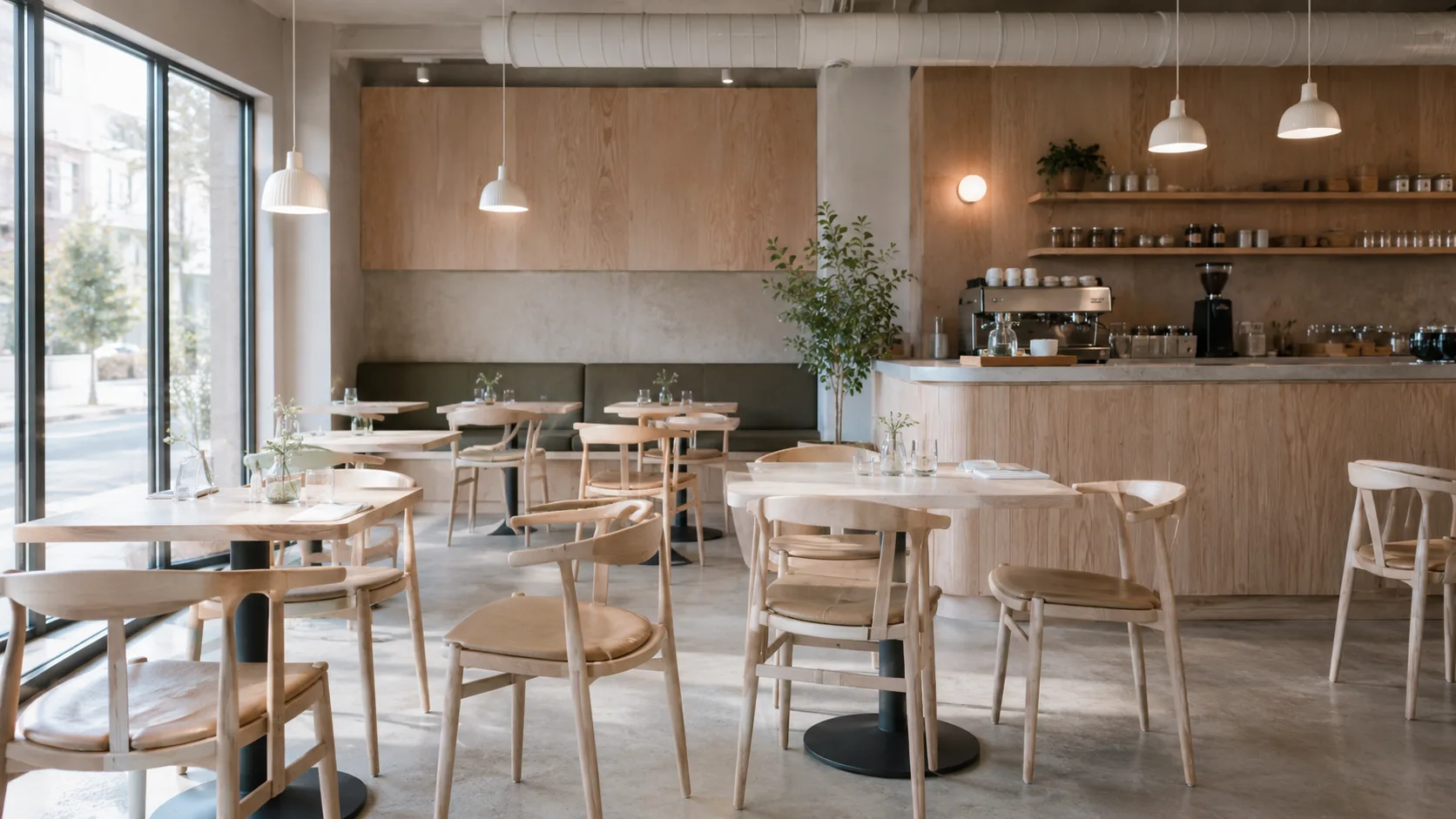
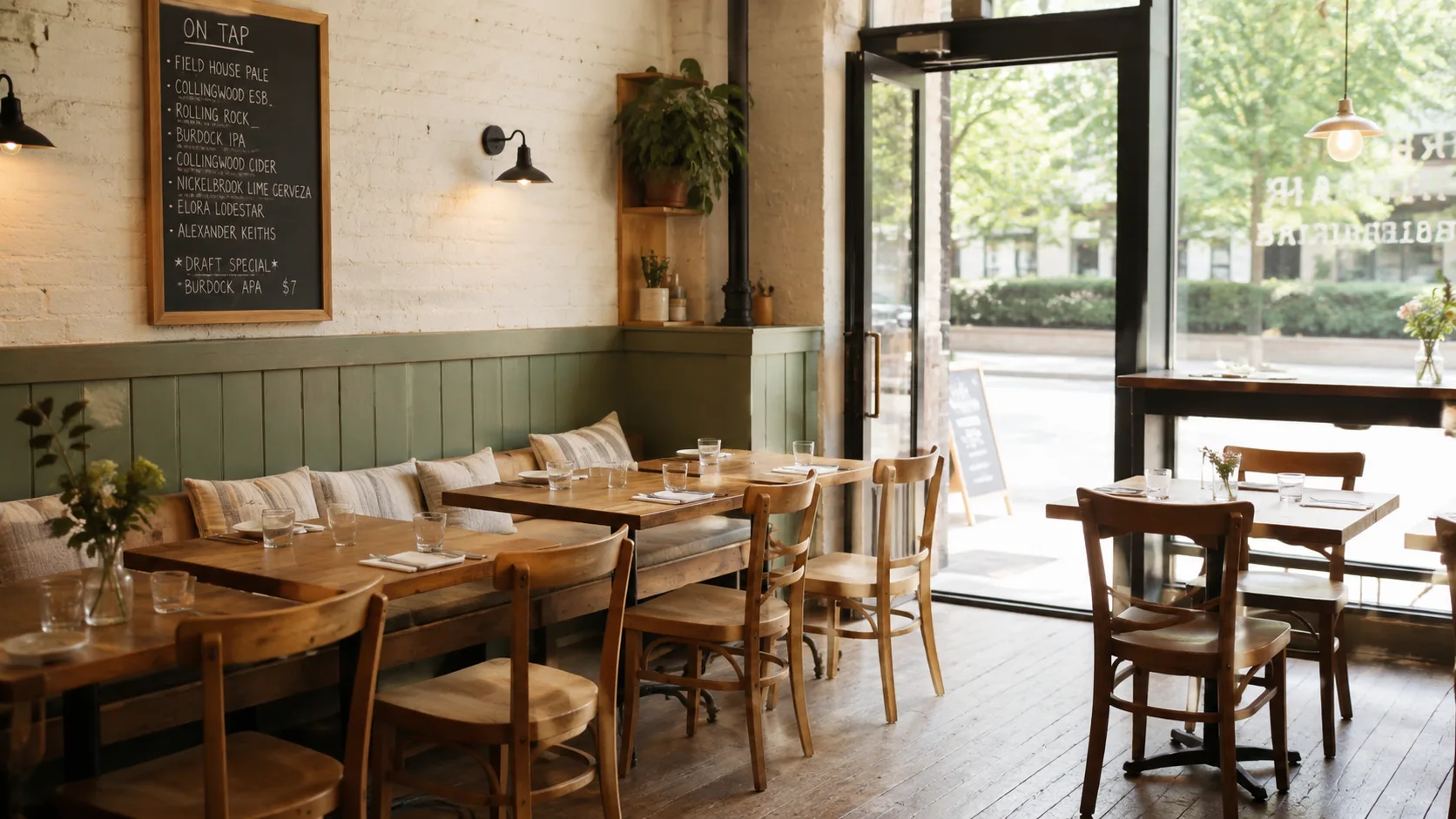
Warm casual: wood tones, upholstered seats in earth colors, rounded shapes. Communicates approachability and comfort. Works in neighborhood restaurants, farm-to-table concepts, family dining, and any concept where the goal is feeling like someone's home on a slightly elevated level.
Modern upscale: clean lines, darker palette, quality upholstery, nothing extraneous. Velvet, leather, or performance fabric in charcoal, navy, or black. Works in wine bars, fine casual concepts, modern American restaurants, and any space where the atmosphere is as important as the food.
Coastal or resort: Light finishes, natural tones, woven textures and airy shapes are possible references. Outdoor suitability requires actual product documentation; an aluminum frame or coastal look does not establish indoor/outdoor crossover.
Finish and fabric as the connector
Once you have your aesthetic direction, finish and fabric are what make the room feel cohesive rather than collected.
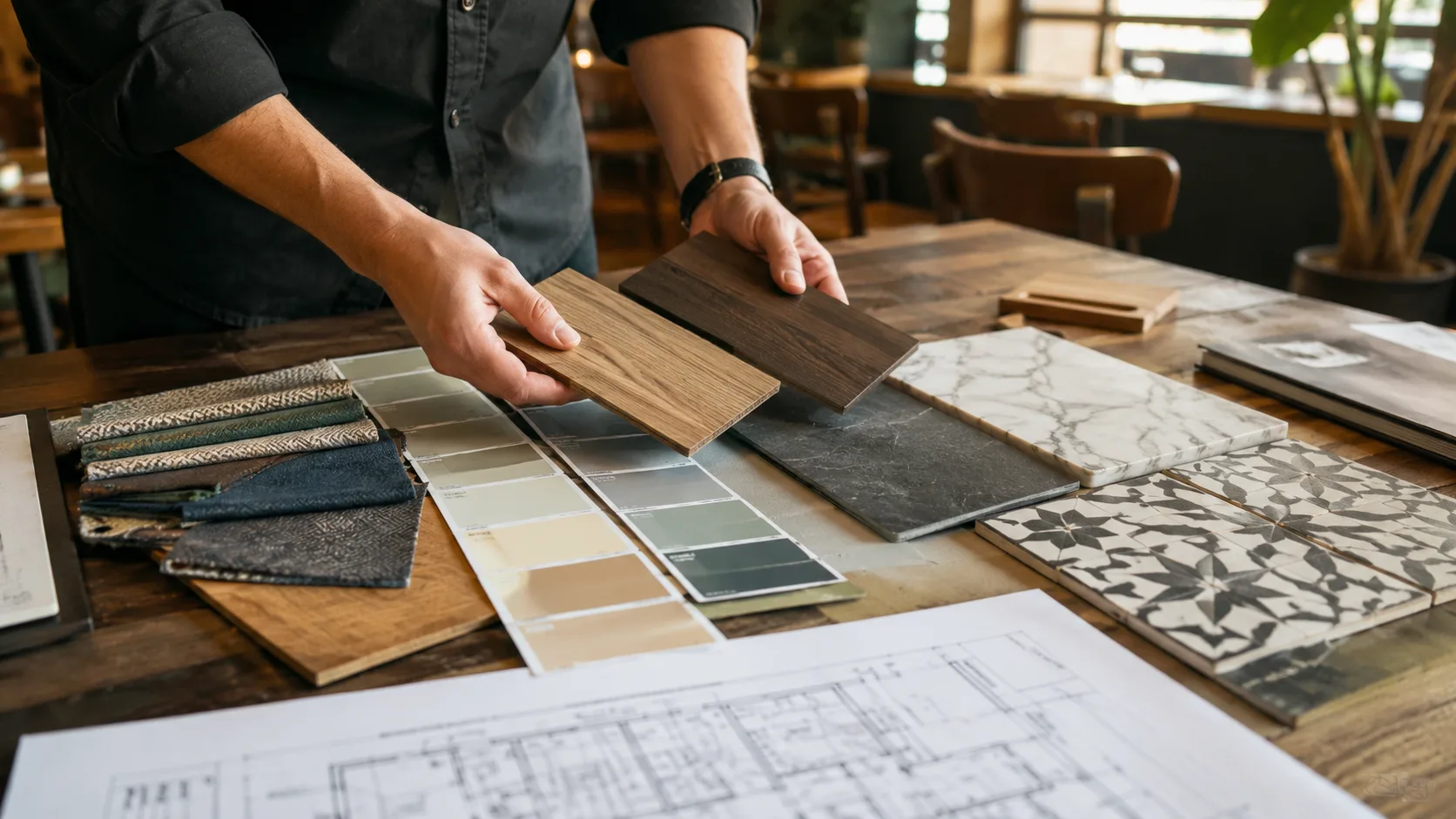
One or two frame finishes can be a useful starting palette. Compare physical samples in the room and allow additional finishes when they support the design; a third finish does not automatically make the room unresolved.
Upholstery in one or two colors that relate to your brand palette. The fabric doesn't need to match the walls, it needs to complement them. A room where everything matches too precisely reads as a hotel convention center. A room where the palette is related but not identical reads as designed.
Consistency across furniture categories matters more than people expect. Your barstool finish should relate to your dining chair finish. Your lounge seating fabric should come from the same palette as your dining upholstery. When a guest moves from the waiting area to the bar to the dining room, the furniture should feel like it belongs to the same place.
Include finish and upholstery references in the inquiry and ask prospective suppliers which standard or custom options they can document and deliver.
Where to get inspired and how to brief a supplier
Reference images are the most efficient tool in this process. Pull from Instagram, Pinterest, Dezeen, Eater, AD. Find restaurants that feel right, where the furniture matches the concept, and screenshot the furniture specifically. Note what you like about it: the material, the shape, the finish, the combination.
When you contact a supplier, send those reference images alongside your spec. It dramatically shortens the back-and-forth and gets you to the right product faster than a paragraph of description.
"We're going for a warm industrial look, like this restaurant, metal frames in warm black or bronze with natural wood seats" is clearer than any sentence description and gets you a quote you can actually evaluate.
Confirm proposed product origin, stock and custom feasibility with the actual supplier. Obtain written approval, production and freight milestones rather than assuming Chinese manufacture or a universal ten to fourteen week factory-direct window.
The bottom line
Answer the three concept questions first. Pick an aesthetic direction. Choose one to two finishes and one to two upholstery colors. Keep those consistent across categories. Bring reference images to the supplier conversation. That process produces a dining room that feels like it was designed rather than assembled.
Related reading: How to Spec Restaurant Furniture · Commercial Upholstery Fabric Guide · Restaurant Lounge Seating