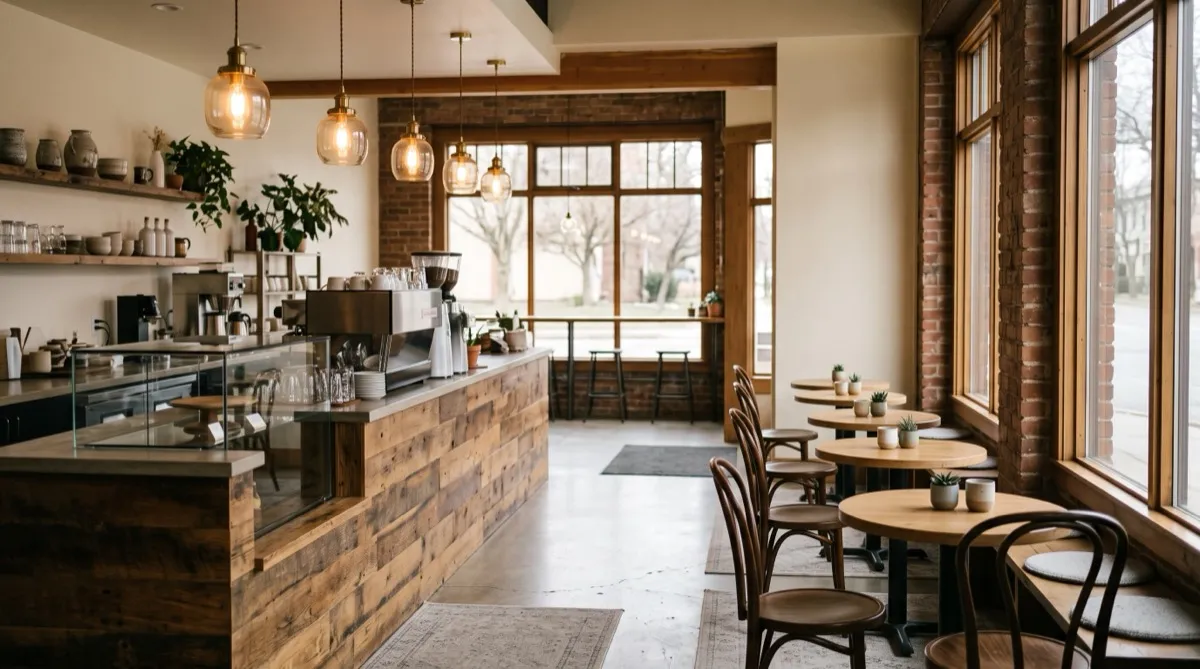
Furniture contributes to a café's atmosphere and supports how guests order, sit and move through the space. Start with the actual service and seating brief.
Here's how to get it right without overspending or buying the wrong thing.

Understand your customer and dwell time first
Compare quick-visit and longer-stay tasks without assuming every café fits one of two exclusive types.
High-turnover café: Plan around observed or forecast service flow, parties and dwell times. Smaller furniture is one layout option, but trial comfort and circulation rather than assigning a universal 30 to 45 minute comfort target.
Destination café or study spot: If longer stays are part of the concept, consider work surfaces, power access and suitable seating. Longer dwell time does not automatically establish higher spending.
Most cafés land somewhere in between. Know your concept before you spec a single piece because it determines everything from chair cushion depth to table size. A chair that's wrong for your concept is a problem every day.

The furniture mix for a typical café
Most coffee shops need four furniture categories, each with different requirements.
Counter or bar stools need fit against the actual window ledge or counter, including foot support and circulation. 24 to 26 inch seat height is a planning example, not proof that a stool fits every café counter.
Two-top tables and chairs can support different party sizes when grouping and movement are planned. Use actual or forecast turnover in the specification rather than assuming 20 to 40 seatings per chair each day.
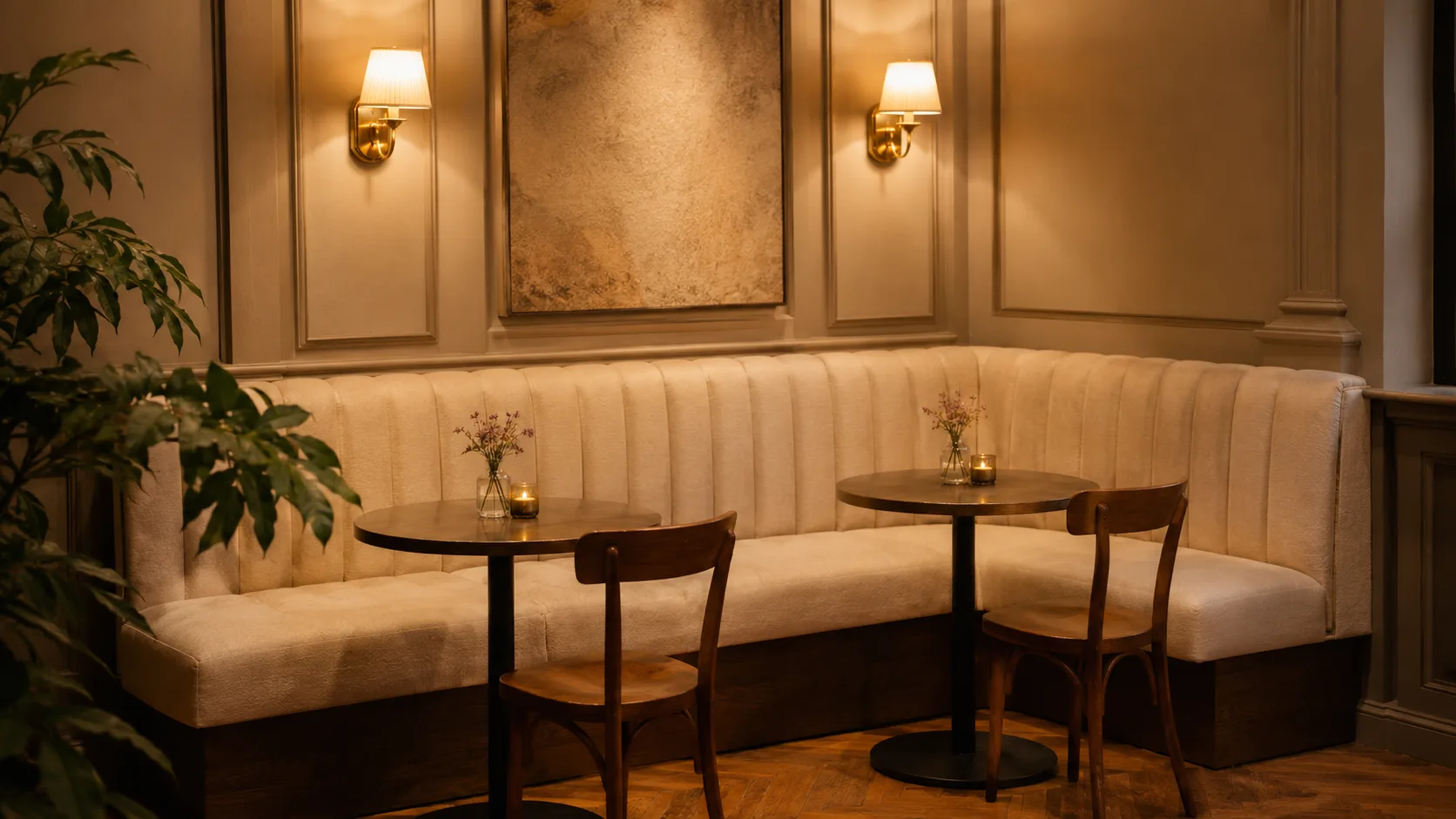
Lounge or soft seating for longer-stay customers. One or two zones of comfortable armchairs or small sofas with lower tables. This is where you can elevate the aesthetic and give your café the "neighborhood living room" feel that builds loyalty.
Community or long table for shared seating. A single long table draws solo workers and small groups together and makes a busy café feel intentional rather than crowded. Popular in cafés that attract remote workers.
What holds up in a café environment
Cafés have a specific abuse profile worth understanding: constant coffee and beverage spills, daily cleaning, furniture moved around by customers multiple times a day, laptop bags dragging on seats and legs.
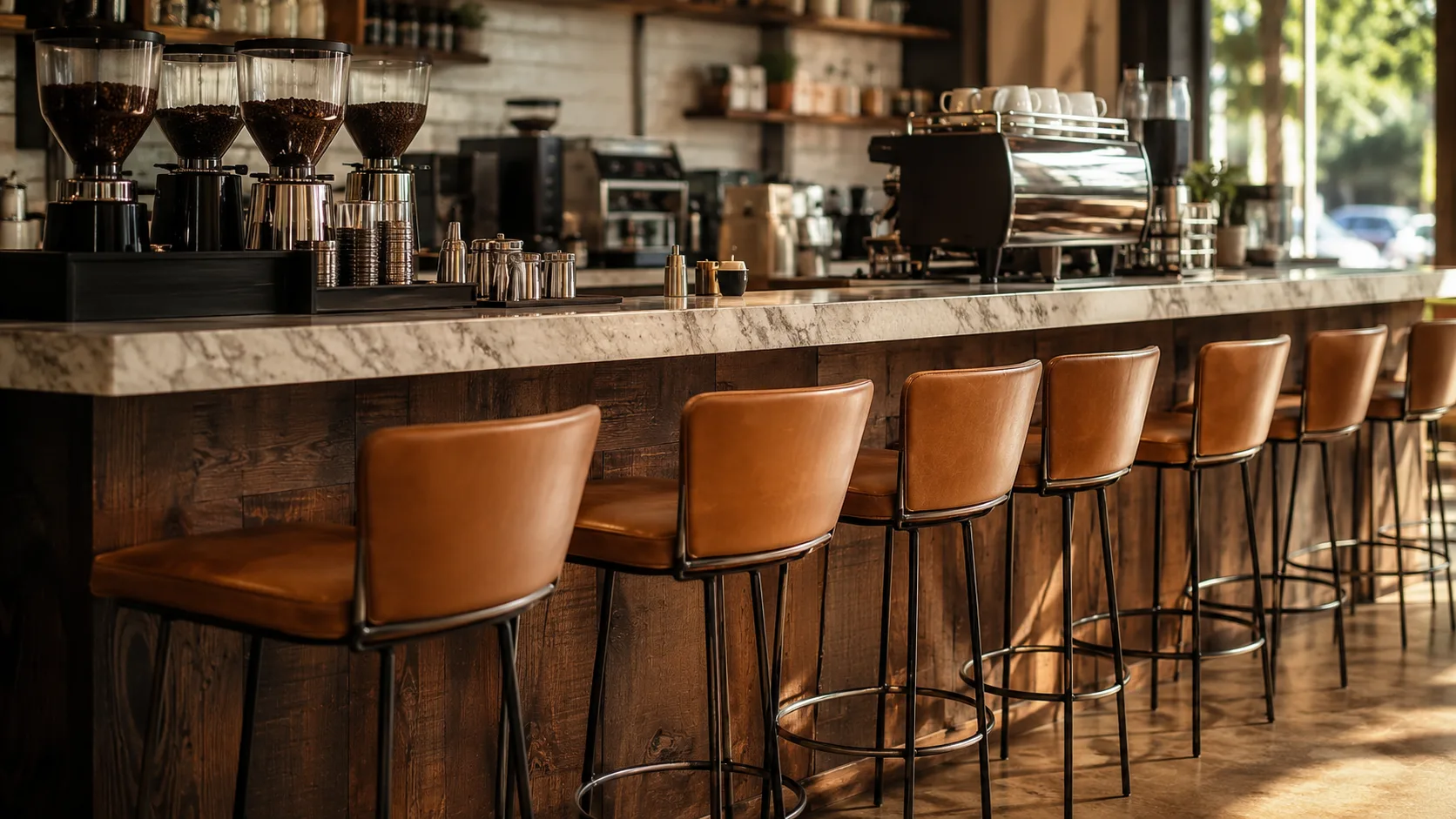
Chairs: Compare the complete frame and seat assembly, loads, care instructions and applicable test evidence. Confirm upholstery cleaning compatibility in every zone rather than assigning wood or fabric suitability by traffic label alone.
Tables: Check usable tops, surface care, joints and complete base/top stability for the actual configuration. Metal bases are not universally more stable than wood, and wood does not always need the same sealing routine.
Lounge seating: Request the exact cover, care and performance documentation. Crypton is a named option to investigate, not proof that every configuration fits the project. ACT explains why abrasion counts alone do not establish service life.
Budget and timeline
Build the budget from the actual seating schedule and current quotes for furniture, freight and installation. An $8,000 to $20,000 example or 800-square-foot layout is not a verified market price or capacity.
Ask suppliers to confirm the proposed products' origin, availability and approval, production and freight milestones. CFD connects project inquiries with independent suppliers; this guide does not establish universal Chinese manufacture or 10 to 14 week delivery.
Include finish, upholstery and dimension references in the inquiry, and ask which custom options and approvals the proposed supplier can support.
Set the order deadline from written supplier milestones and the room-readiness plan rather than a universal 14 week requirement.
The bottom line
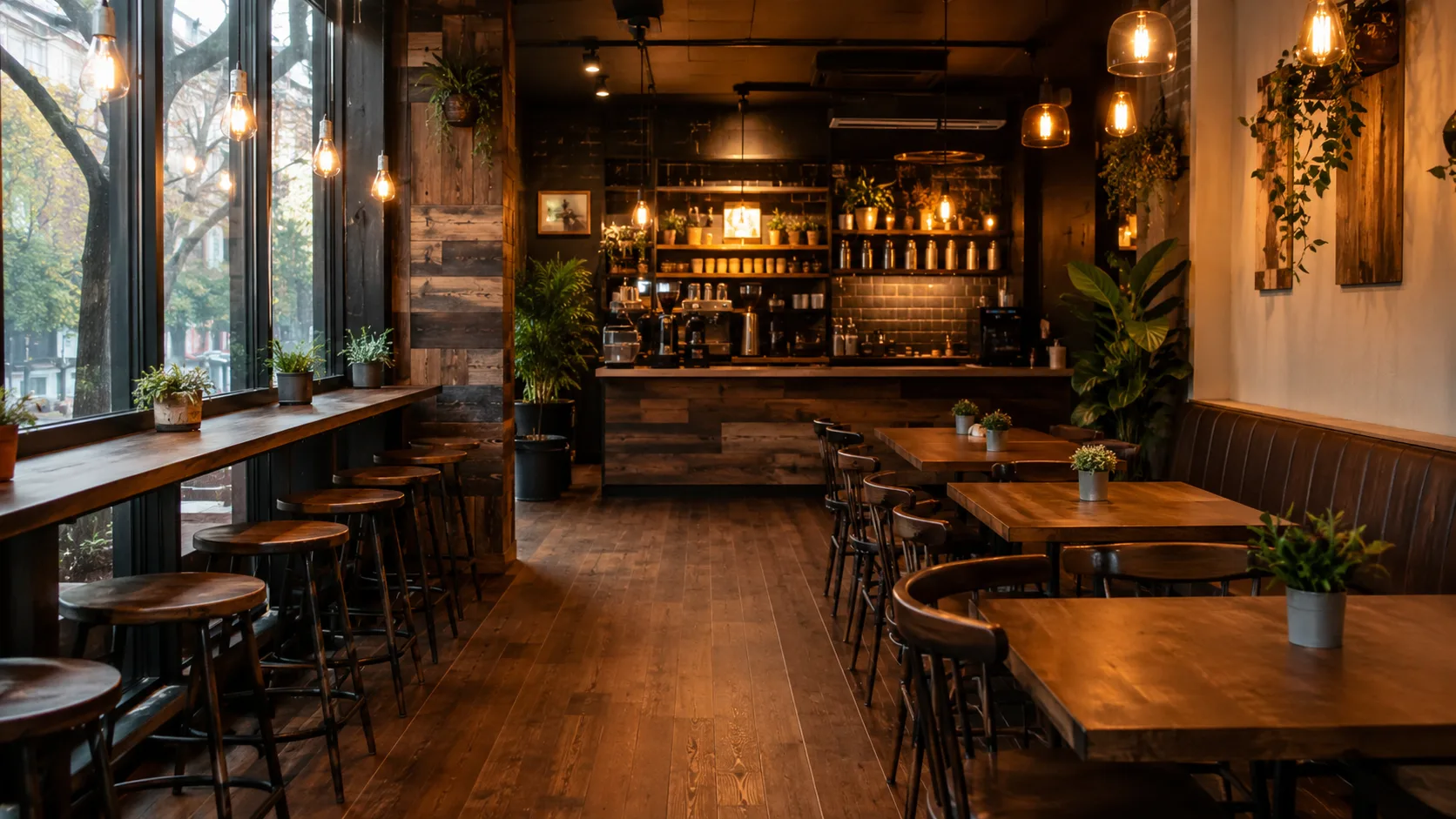
Your furniture communicates what kind of café you are before a guest orders their first drink. Get the dwell time right, match the aesthetic to your concept, and spec materials that can handle daily cleaning in a beverage environment. Those three things cover most of the decisions.
Related reading: Commercial Barstool Buying Guide · Commercial Upholstery Fabric Guide · Commercial Furniture Lead Times
Our take
The guide lists four furniture categories, counter stools, two-top tables, lounge seating, and a community table, as the standard mix for a typical cafe, but also says most cafes land somewhere between the high-turnover and destination models. Those two points together suggest the four categories are not meant to be allocated in equal measure. A cafe that leans high-turnover should weight its floor plan toward two-top density and keep the lounge zone small, while a destination cafe should invert that ratio, rather than defaulting to one of each category regardless of which model actually describes the space.
The bottom line: Decide where your cafe sits on the high-turnover to destination spectrum before allocating square footage across the four furniture categories, since the right proportion between two-top density and lounge seating follows directly from that answer.