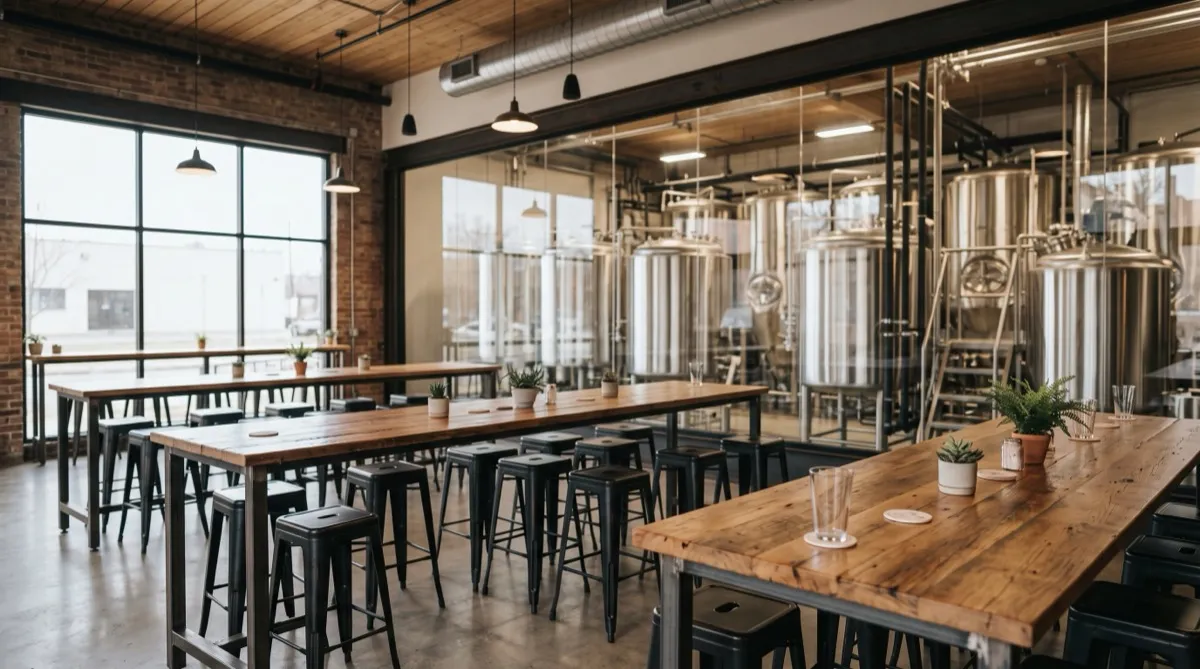
Brewery taprooms have become one of the most interesting commercial hospitality spaces of the last decade. You're part bar, part retail, part event venue. The furniture has to work for a Saturday afternoon flight crowd, a Tuesday night trivia event, and a Thursday private party.
Here's how to spec it right.
Understand how your taproom actually gets used
Before you spec a single piece of furniture, map your actual use cases. They're different from a standard bar.
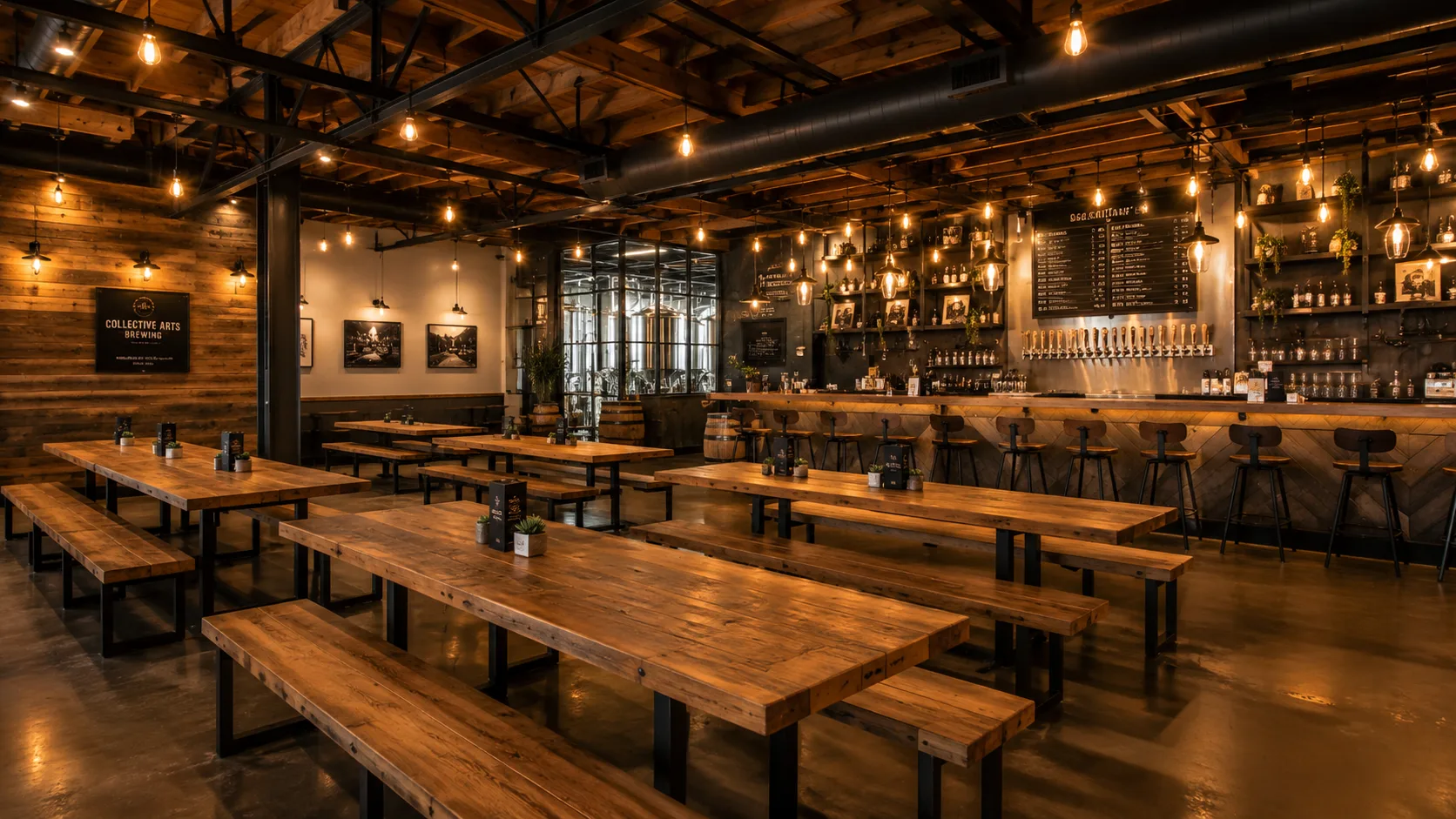
Daily tasting room: guests sitting 30 to 90 minutes sampling flights. Casual, more turnover than a destination bar, often a mix of seated and standing. The furniture here needs to handle the social flow of people moving between the bar, their table, and the tank room tour.
Events: private parties, release parties, trivia nights, live music, outdoor festivals. Furniture needs to move and stack to reconfigure the space, sometimes multiple times in one day.
Retail: if you have a to-go sales area, that zone needs to stay clear and accessible. Furniture that migrates into the retail path creates friction at checkout and on pickup.
Family-friendly vs. 21+ only: determines how you think about durability and upholstery. A family-friendly taproom needs easy-to-clean surfaces throughout. An adults-only concept can invest more in premium upholstery in the lounge zone.
The furniture mix for a taproom
Bar seating at the main bar and along any counter service area. Heavy-gauge steel frame, commercial footrest reinforcement, vinyl or easy-clean upholstered seat. Bar height at 28 to 30 inches. Minimum 20 units. Barstools in a taproom take more physical stress than most commercial environments because guests get on and off them constantly and often lean hard on the footrest.
Communal tables are one of the best furniture investments for a taproom. Long shared tables encourage the social dynamic that makes a taproom worth visiting over buying a six-pack and going home. Heavy bases, durable laminate or solid surface tops. Reclaimed wood tops look great in a brewery environment but require maintenance in a beverage setting.
High-top tables and stools for standing groups and smaller parties who want their own space. More flexible than fixed dining configurations and easy to move for events.
Lounge zone: one soft seating area with armchairs or lower sofas. Lower tables at 16 to 20 inches. This is where guests settle in for a longer visit and where you can elevate the aesthetic with better upholstery.
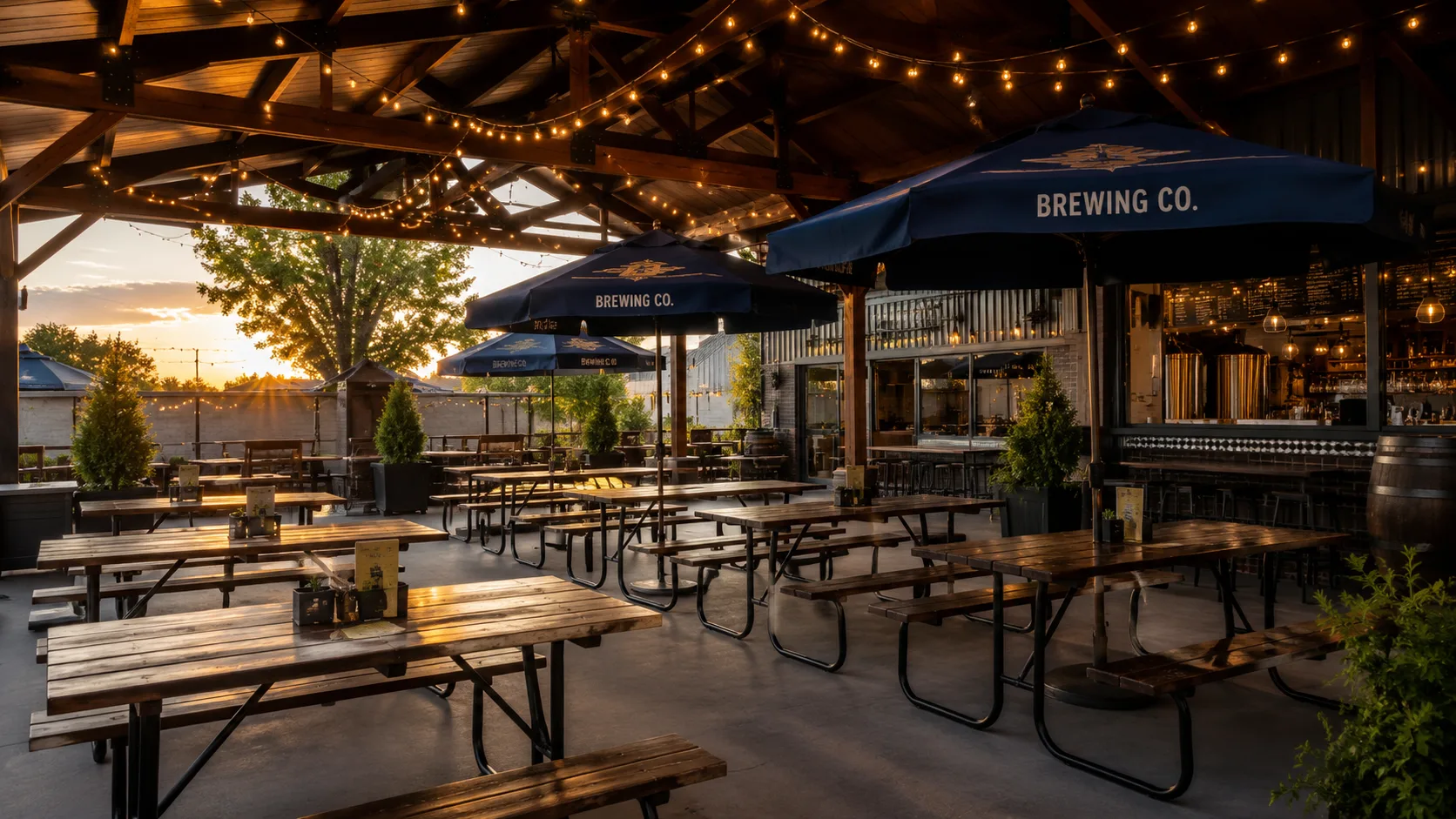
Outdoor: if you have a patio or beer garden, aluminum frames with all-weather specification. UV-resistant, rust-proof, stackable for off-season storage. Outdoor is often the most popular zone in good weather.
Durability requirements specific to taprooms
Beer is harder on furniture than most beverages. It's sticky when it dries, it's foamy, and it gets on every surface during a busy service.
Avoid fabric at the bar and high-top areas. Fabric seats in a taproom's main bar zone will absorb beer and develop odor within months. Use vinyl or hard seats at any seat that's within arm's reach of a draft line or service area.
Embrace easy-to-clean surfaces everywhere. Laminate tops, powder-coated metal, wipe-clean vinyl. Reserve fabric upholstery for the lounge zone where it's away from the main service and where the use volume is lower.
Table tops: avoid reclaimed wood with open grain or rough texture in the main bar area. The grain traps liquid and bacteria. Sealed smooth laminate or solid surface wipes clean quickly between guests and after closing.
The reclaimed wood question
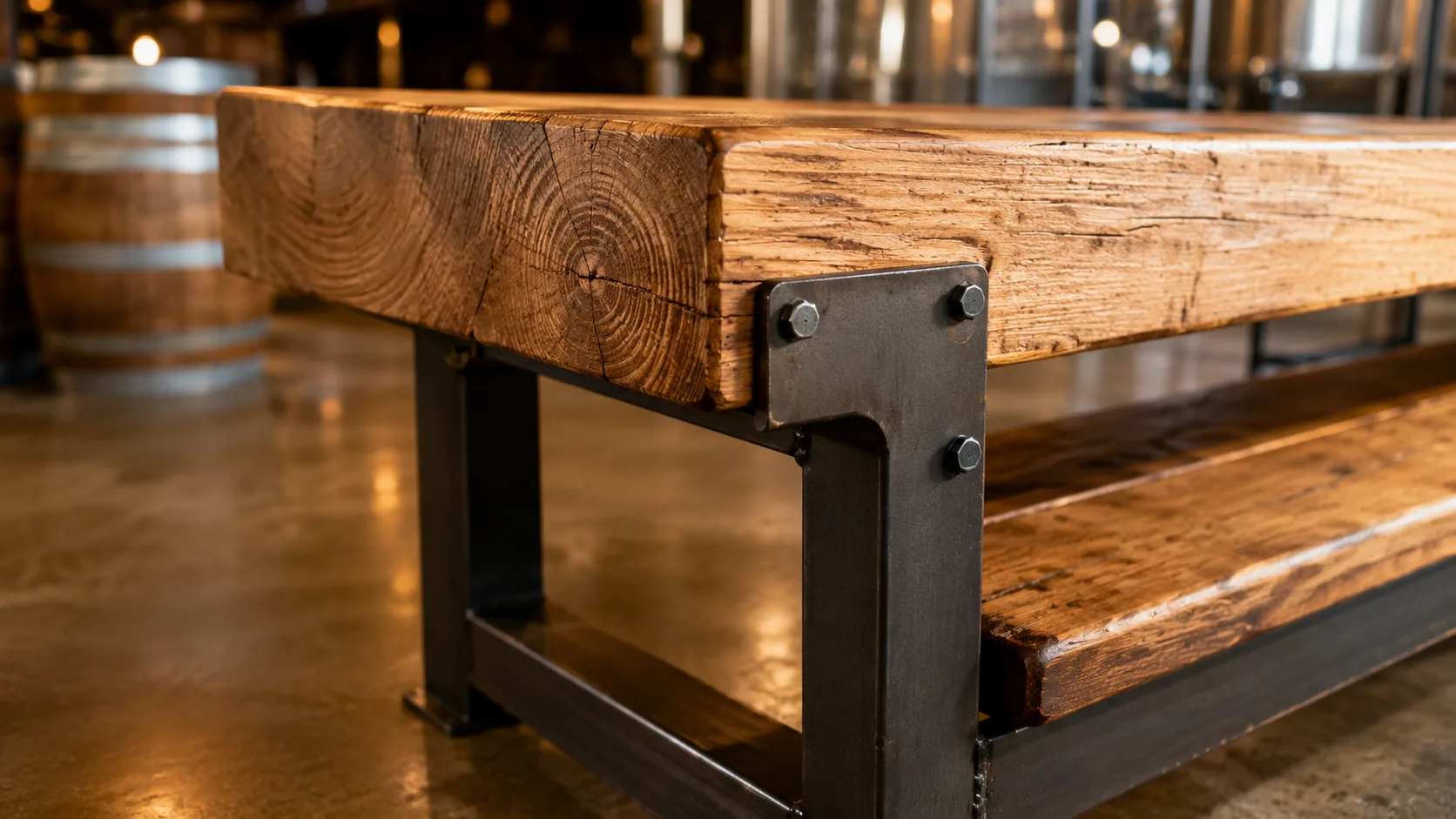
Reclaimed wood is visually compelling in a brewery and fits the aesthetic authentically. A few decisions to make before you commit.
Reclaimed wood communal tables in a lounge area where spills are less common: appropriate with a proper sealing maintenance schedule.
Reclaimed wood tops at the main bar or on high-top tables where beer is flowing: plan on significant maintenance and seal them aggressively or reconsider. Smooth solid surface or sealed laminate is a better operational choice for these surfaces.
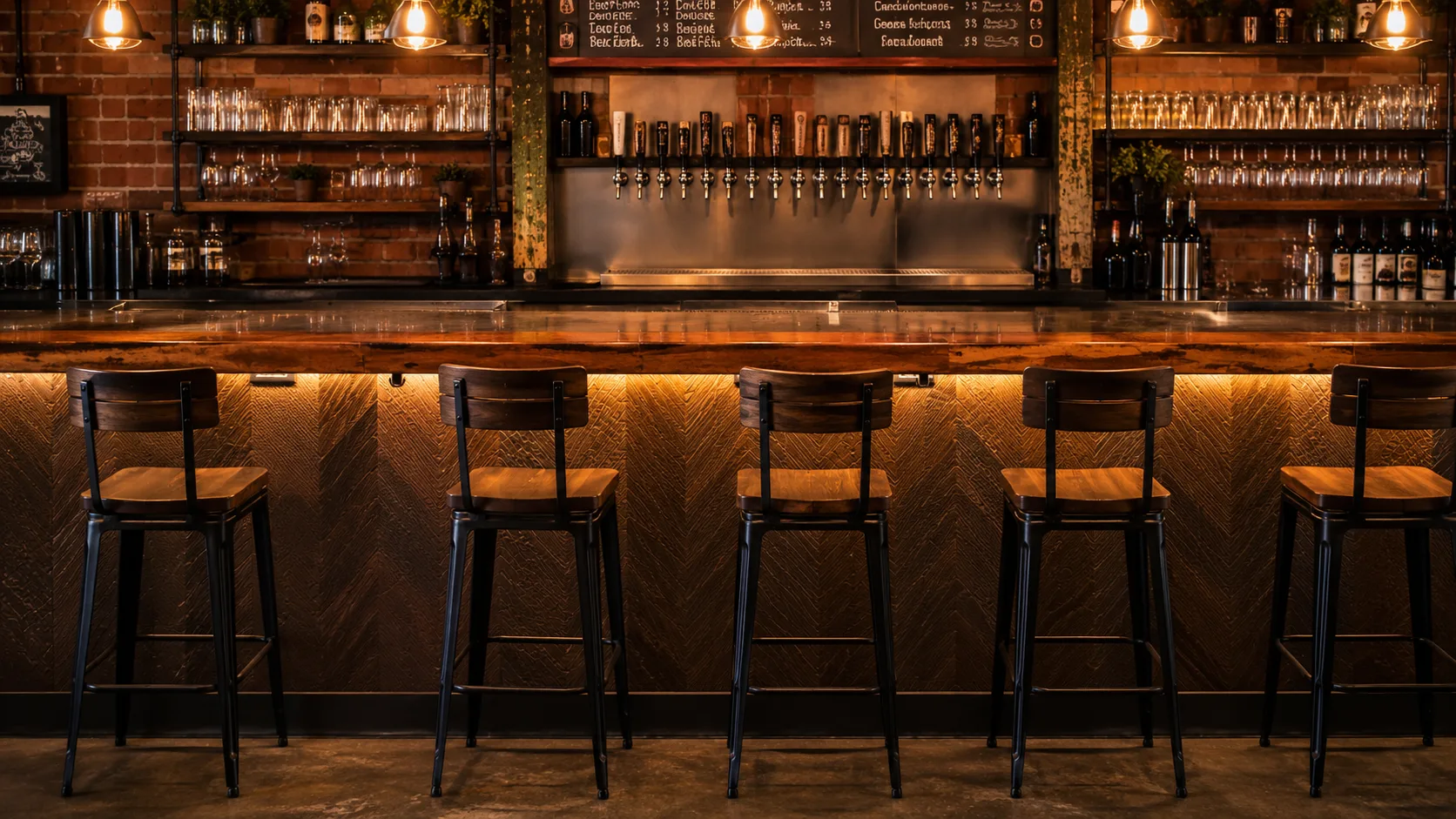
The visual warmth of reclaimed wood is real and worth preserving where it can be maintained. Just be honest about where that maintenance is realistic given your staffing and service pace.
Sourcing, custom options, and timeline
Our furniture is manufactured in China, standard across the commercial furniture industry. In-stock items ship locally and move faster. Custom specs, including specific finishes, fabrics, or communal table dimensions, ship factory-direct at 10 to 14 weeks.
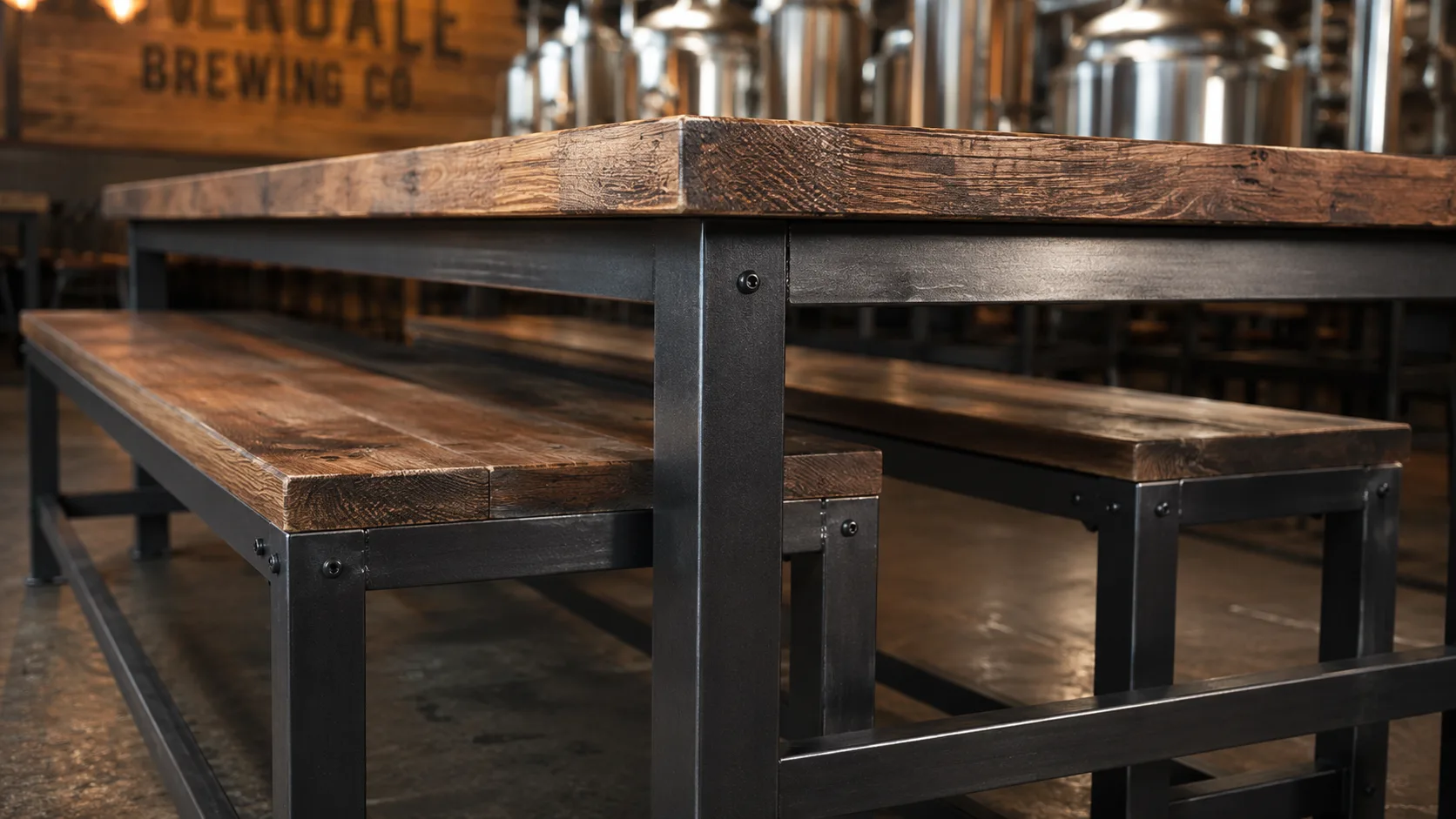
We do custom orders. Brewery taprooms often have strong brand identities and want furniture that reflects that, whether it's a specific metal finish, branded upholstery color, or custom dimensions for a long communal table. Bring us the direction with reference images and we'll confirm what's achievable.
For a taproom opening, build 14 to 16 weeks of lead time into your project schedule from the day you place your order.
The bottom line
Map your use cases before you spec anything. Use vinyl or hard seats at the bar and high-top tables where beer flows. Invest in communal tables as the social centerpiece. Keep furniture movable for events. The unique demands of a taproom environment are predictable once you think through each zone separately.
Related reading: How to Furnish a Bar or Nightclub · Commercial Barstool Buying Guide · Commercial Upholstery Fabric Guide
Check cleaning, expansion, and delivery access
Test the proposed frame finish and floor glides against the taproom's cleaning routine. Compare communal seating with smaller tables using the bookings and group sizes you expect, rather than filling every opening with the same table.
Record the approved furniture codes so a later expansion can match. Confirm the receiving area will be ready before freight arrives, and leave time between installation and opening to inspect, assemble, and correct the order.