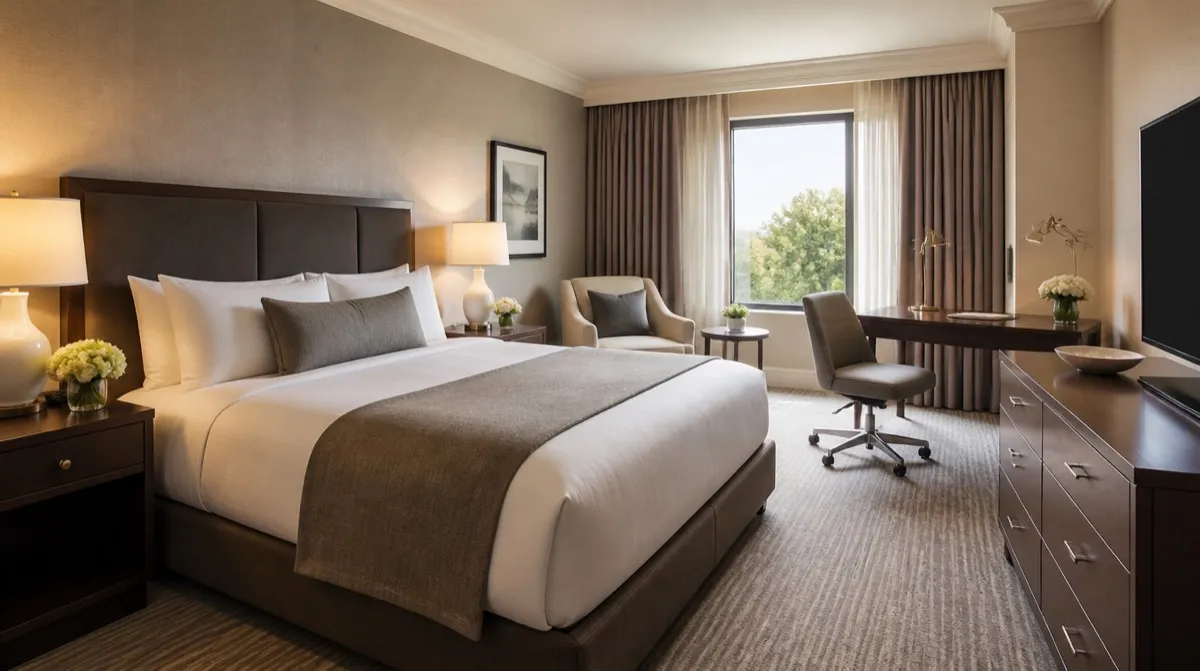
Build the guest-room purchase as a room-type schedule. Eight or nine pieces per room is an illustrative checklist size, not a universal room standard or budget ranking. Compare exact use, occupied layout, finish controls, care and parts records before extending the models across the property; matching appearance and years of service need actual evidence.
The full guest room FF&E checklist
Before you price anything, build the piece list. A standard hotel guest room typically includes:
- Headboard. Sets the visual tone of the room and protects the wall behind the bed.
- Nightstands. One or two, often with integrated power and USB.
- Dresser or credenza. Storage plus a surface for the TV or a coffee station.
- Desk or work surface. Even leisure properties need a writing or laptop surface.
- Desk chair. Check its actual work and visitor use, occupied position, condition and repair records.
- Lounge chair. The comfort seat, usually paired with a floor lamp or side table.
- Luggage rack. Small item, high use, protects other surfaces from bags.
- TV panel or media wall. Mounts and conceals cabling and connections.
Getting this list complete up front prevents the scramble of reordering a missing piece weeks later at a higher unit cost.
Case goods: headboards, nightstands, and dressers
Compare the exact casegoods core, joints, edge details, finish, drawer and hinge loads and cycle tests, care and parts. Solid hardwood, engineered wood and particleboard are component descriptions, not a verified grade hierarchy. Obtain the selected assembly's documentation rather than assume a material prevents chipping or establishes years of use.
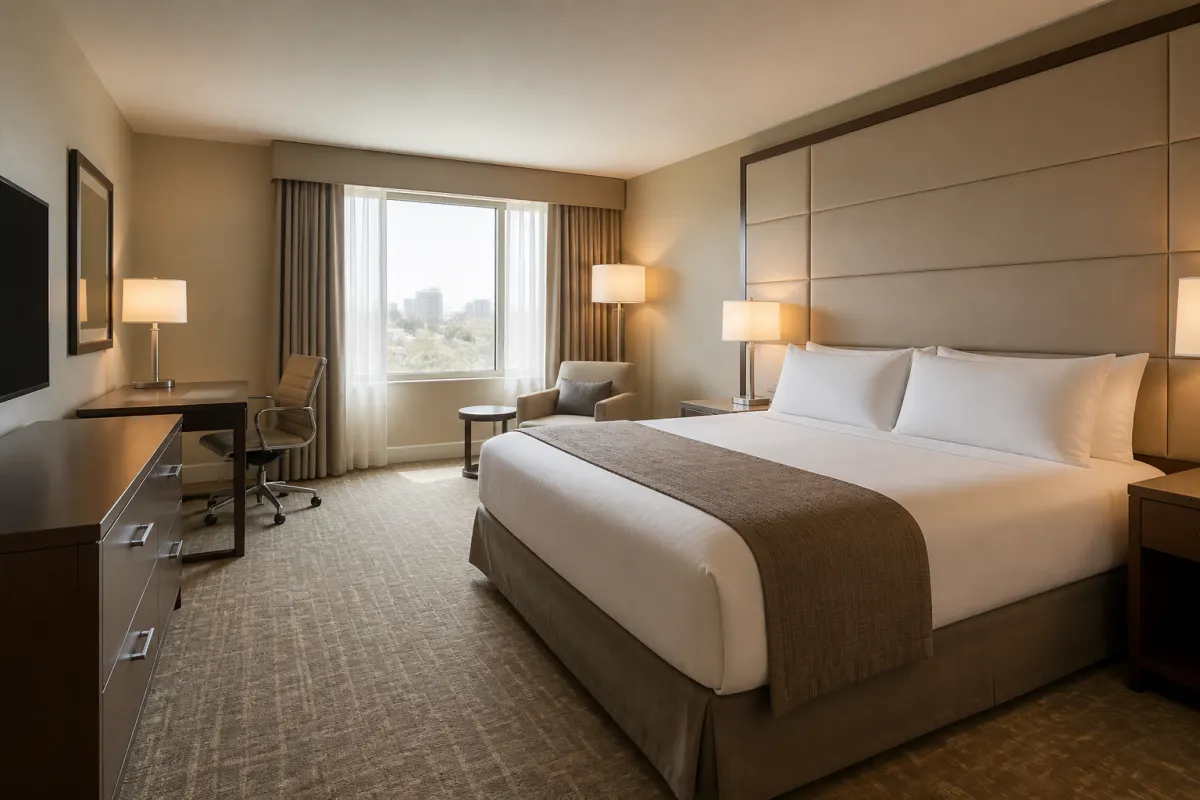
Browse headboard concepts and nightstand concepts for design discussion. Obtain approved finish and hardware samples and batch controls for selected models; one program or supplier does not by itself guarantee matching across the room.
The desk and desk chair
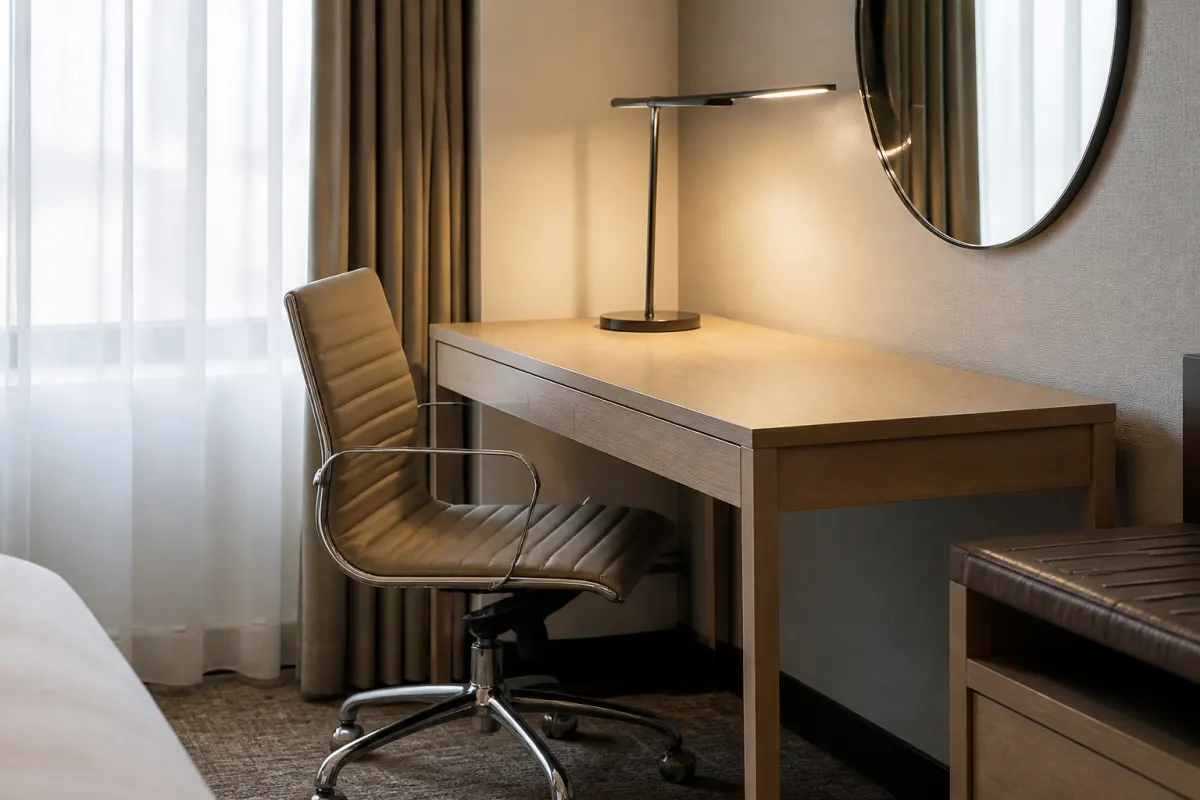
Record the room's actual work-surface dimensions, power needs, chair position, and occupied clearances. Browse desk concepts for discussion, then confirm the selected model's exact footprint, grommets or power options, and heat, moisture, scratch, and care documentation.
Check the desk chair against the actual room use and cleaning plan. The ACT abrasion guidance varies by textile type and does not predict when a cover will wear out. A proposed 35 to 40 ILD firmness range is a cushion assumption, not density or a one-year failure boundary; the Polyurethane Foam Association distinguishes those properties. Request the chosen chair's structural, cushion, textile, and warranty evidence before extending it across the property.
Soft seating and the lounge chair
For the lounge chair, test the proposed 35 to 40 ILD firmness assumption against cushion thickness and support and review density and fatigue separately. Compare exact frame and joint records, textile care and the room's actual use; hardwood, corner blocking, vinyl or a performance label does not establish easier cleaning or greater durability in an extended-stay or resort room.
Durability specs that actually matter
For each piece, collect the following documentation before comparing models; none alone establishes a lifespan:
- Upholstery abrasion. Textile-specific test evidence and the appropriate ACT application guideline, alongside approved care.
- Foam density. Mass-per-volume density recorded separately from ILD firmness and fatigue performance; no years-of-use guarantee from the ILD band.
- Frame construction. Exact joint and support details, structural test scope, load restrictions, inspection and approved repairs; no joint-label hierarchy.
- Finishes. Moisture, heat, and scratch-resistant surfaces on desks and case goods.
- Hardware. Heavy-cycle drawer glides and hinges rated for commercial turnover.
Use these records with observed condition and the owner's renewal plan; they do not establish a four- or ten-year replacement date.
Budgeting per room
Rather than pricing one chair at a time, build a per-room number so you can compare against your total room count. Anchor the big pieces first: the article's illustrative lounge-chair band is $300 to $900 per unit before freight, while case goods, the desk, and the desk chair fill out the rest of the package. Treat the figures as illustrative article budget assumptions before freight, not verified current supplier prices. An itemized room-type schedule lets the supplier confirm the actual package, quantities, finishes, and delivery cost.
Plan lead time into the budget too. A 10 to 14 week custom casegoods and upholstery duration is an illustrative preliminary assumption, so a full guest room package has to be ordered well ahead of an opening or renovation date. You can run the numbers yourself with our furniture cost calculator before you commit to a program.
Sourcing the room as one package
Compare a coordinated guest-room proposal with separate category bids using the same room-type quantities and delivery scope. Require approved finish samples or batch controls and a milestone for every product; one order does not guarantee matching, one lead time, or a lower price. Request a quote with the room schedules, required documentation, site constraints, budget, and opening milestones, and ask responding suppliers which parts of the package they can cover.
Turn the room standard into a property order
Count each room type separately and map its approved furniture to a room-by-room schedule. Confirm the mock-up, finish codes, approved substitutions, and replacement-part information before extending the order across the property.
Plan freight, temporary storage, and installation by floor or phase. Identify who receives, inspects, assembles, and signs off the furniture, and keep the approved room sample available when checking deliveries.