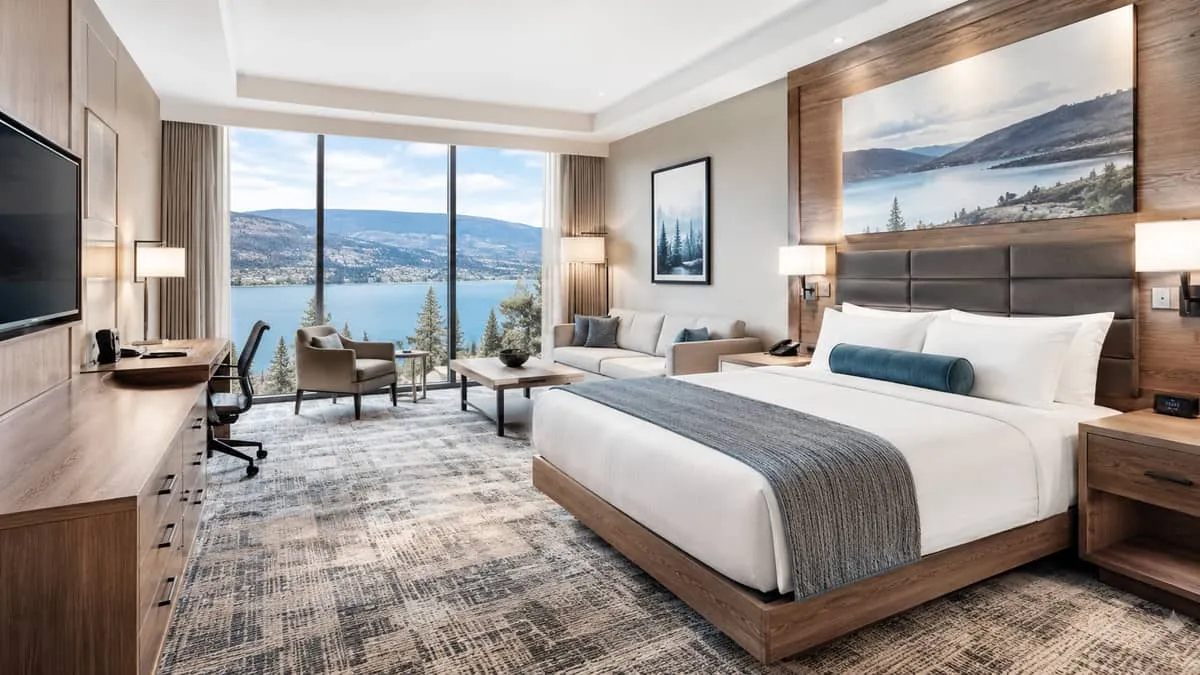
Kelowna hospitality properties are being held to a different benchmark than they were a decade ago. Guests arriving at a lakefront resort or a boutique winery property in East Kelowna have often come directly from Whistler, Napa Valley, or the Sonoma coast, and they're making mental comparisons whether you want them to or not. The furniture in your lobby, your guest rooms, and your patio areas is part of that comparison. In a market that has quietly positioned itself as Canada's premier wine country destination, the difference between furniture that fits the room and furniture that looks like it was spec'd for a highway corridor hotel is immediately visible to the guests who matter most to your revenue.
Finding the right hotel furniture supplier in Kelowna means more than sourcing contract-grade pieces at a reasonable price point. It means finding a partner who understands that your property operates on a compressed seasonal calendar, that your guests are comparing you to international wine country destinations, and that the Okanagan aesthetic , warm materials, indoor-outdoor flow, natural palette , is a deliberate design language, not a regional accident.
The Wine Country Standard Your Guests Already Know
The properties that have raised the ceiling in this market are easy to name. Mission Hill Family Estate set a design standard for winery architecture and hospitality that influenced how guests think about the entire Okanagan. CedarCreek's farmhouse aesthetic, the lakeside positioning of properties near the boardwalk, the vineyard-facing terraces at Summerhill , these have all trained your guests to expect a certain visual coherence between the setting and the space they're staying in.
What that means practically for furniture selection is that the wrong pieces read immediately as out of place. A guest who has just driven through forty kilometres of vineyards and arrived at a property with laminate-veneer casegoods and polyester upholstery in a generic corporate colourway will notice the disconnect at a subconscious level, even if they can't articulate it in a review. The guests who can articulate it will.
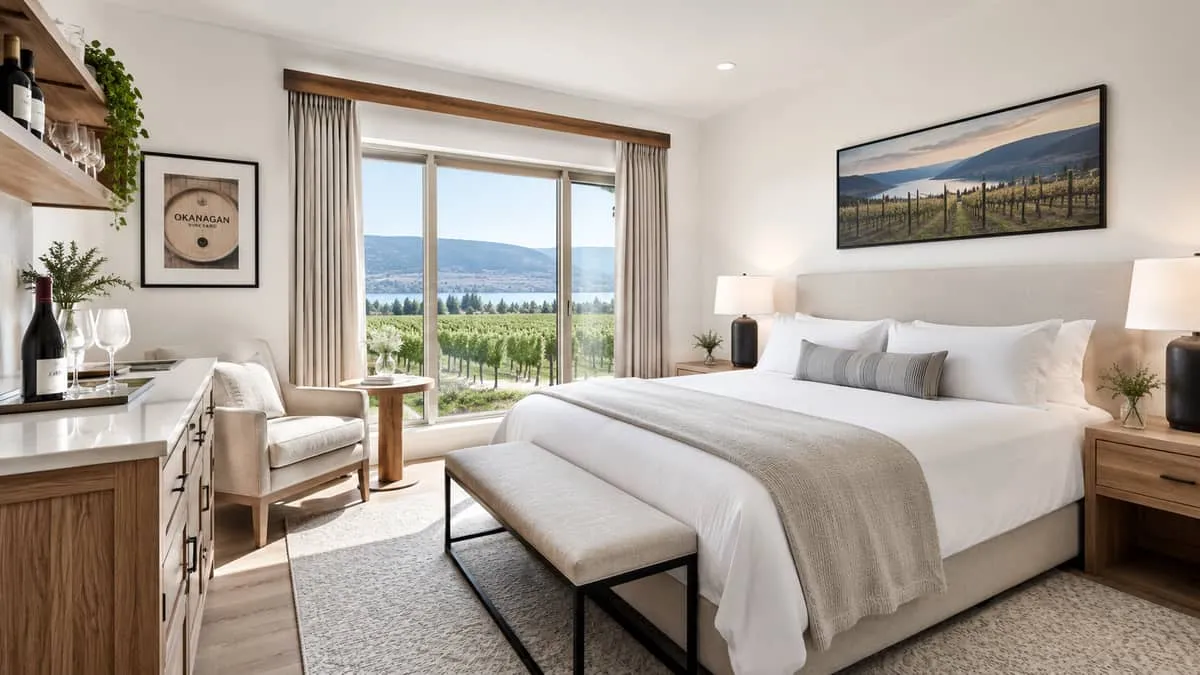
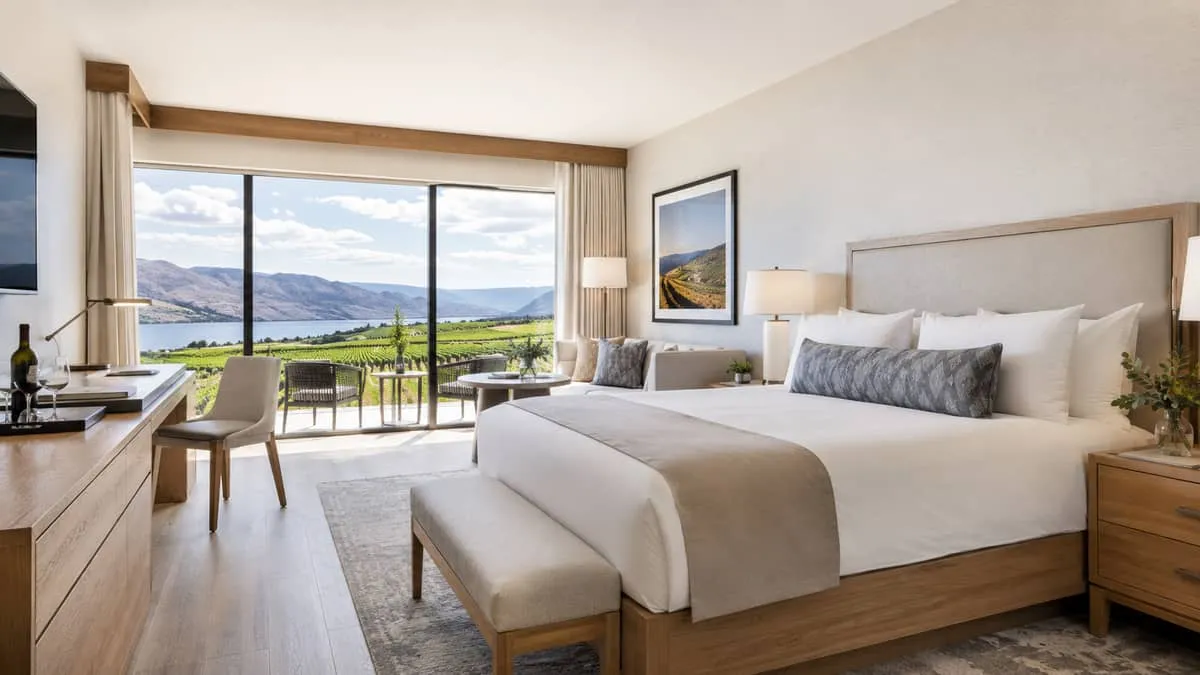
The Okanagan wine country aesthetic draws from a consistent set of materials: white oak, walnut, and reclaimed wood in warm grain finishes; linen, leather, and bouclé in natural tones that reference sand, sage, and the dry hillsides above Okanagan Lake; stone and ceramic accents where surfaces allow. Upholstered pieces should feel substantial without being heavy in scale , the rooms and suites in this market often have significant window exposure to vineyard or lake views, and furniture that competes with that view rather than framing it is a misstep.
A hotel furniture supplier with genuine Okanagan experience will recognize these reference points without you having to explain the entire design brief. If you're working with a supplier who is unfamiliar with the market, ask to see their portfolio from comparable wine country or resort lake destinations. The aesthetic logic is the same even if the geography differs.
Lakefront and Patio Requirements Are Not an Afterthought
Okanagan Lake is central to the value proposition of every property that sits near it, and the outdoor season in Kelowna runs genuinely long , May through October in a good year, with shoulder season patio use well into November when the weather holds. Hot dry summers mean outdoor furniture faces UV exposure and heat stress that would be modest in wetter coastal climates but is significant here. Temperatures on exposed rooftop terraces and pool decks can push well past 35 degrees through July and August.
Patio and outdoor furnishings for Kelowna properties need to meet a different technical spec than indoor pieces. Frame materials matter: powder-coated aluminum and marine-grade stainless steel resist the combination of direct sun, occasional wind off the lake, and off-season cold without the warping and rust that affects lower-grade alternatives. Teak and solid acacia can work in covered outdoor settings, but they require seasonal maintenance commitments that many properties underestimate. Synthetic resin wicker rated for UV resistance is a practical middle option for poolside and terrace seating that still reads as premium.
Cushion fabric is the point of failure on most Okanagan outdoor furniture within three to five seasons. Solution-dyed acrylic , Sunbrella being the category standard , holds colour through extended UV exposure in a way that standard outdoor poly will not. Thread count and seam reinforcement matter because cushion seams are the first thing to fail under the combination of heat, moisture, and constant guest use. Any supplier providing outdoor seating for lakefront properties in Kelowna should be specifying solution-dyed acrylic as a baseline, not as an upgrade.
Stackability and storage logistics are worth discussing before you commit to any outdoor furniture package. A resort running 400 outdoor seats through a May-October season and then storing half of them through the off-season needs pieces that stack efficiently and can be moved by a two-person team without specialty equipment. The properties that handle this best have specified outdoor furniture partly based on operational realities of seasonal storage, not just aesthetics.
Why the May-October Window Dictates Everything About Your Project Timeline
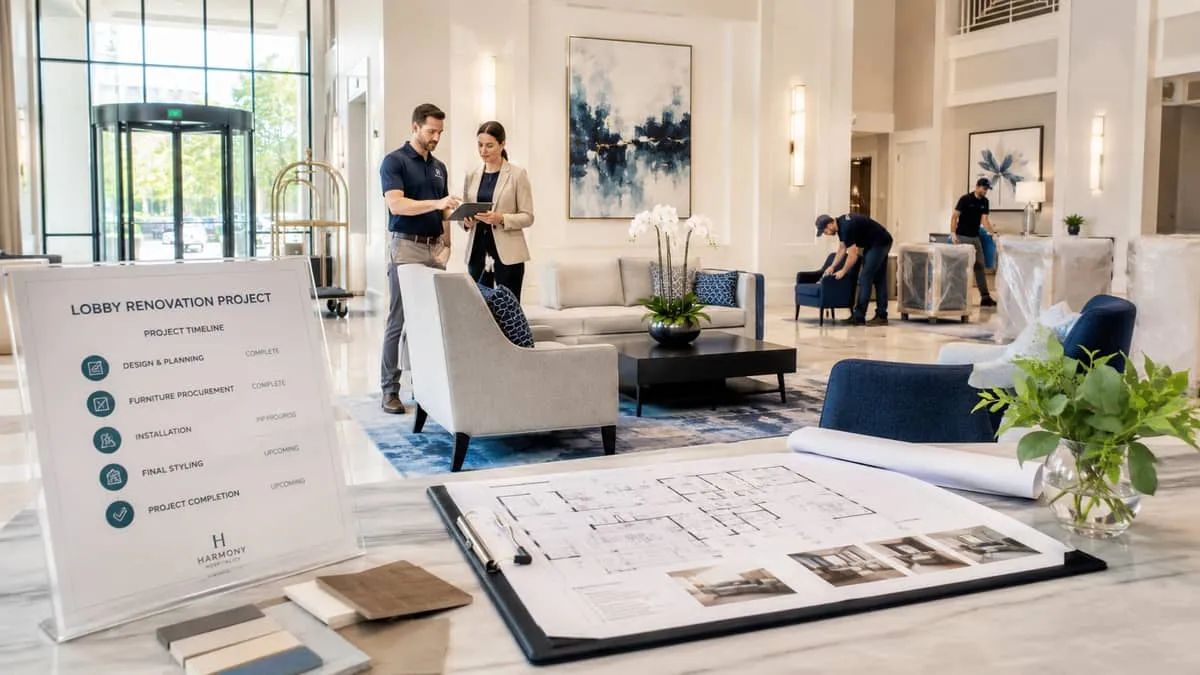
The compressed seasonality of the Kelowna market is the single most important factor in project planning conversations with any hotel furniture supplier. Properties on the waterfront, in the South Pandosy corridor, and in the North End lakefront cluster are close to fully occupied from late May through the wine festival circuit in late September. The IRONMAN Canada event draws its own wave. The shoulder months of April and October are productive but less critical. November through March is when the work happens.
That means your renovation and refresh window is typically five months long, and the backend of it , February, March, April , is when nearly every property in the region is trying to execute simultaneously. A hotel furniture supplier who doesn't understand this calendar will quote you lead times without accounting for the production backlog that builds up when the entire BC interior hospitality market is placing orders in the same narrow window.
The lead time reality for contract furniture catches first-time buyers by surprise. Custom upholstery orders from reputable North American manufacturers run 10 to 16 weeks from order confirmation to ship. Imported case goods from offshore manufacturers , where much of the category volume is manufactured , range from 14 to 22 weeks before accounting for freight transit, port processing, and the final leg of overland shipping from Vancouver or the Lower Mainland to the Okanagan. A Kelowna property targeting a May 15 opening for the summer season needs to have furniture ordered by late November to carry any meaningful buffer. Properties that wait until January are gambling.
Get written confirmation of lead times that distinguishes production time from total time to your loading dock. The freight leg from a Lower Mainland distribution point to Kelowna is not negligible , it adds time, it adds cost, and in winter months it introduces the possibility of weather delays on the Connector. A supplier who presents you with lead times without accounting for final-mile delivery to the Okanagan is showing you an incomplete picture.
Phased delivery matters for larger properties. A 150-room lakefront resort renovating in blocks , guest rooms first, common areas second, outdoor furniture last , needs a supplier who can coordinate delivery timing against a renovation schedule and absorb the logistics of staging furniture that isn't yet needed. Ask explicitly how your supplier handles this before your project is underway.
Contract Grade Specs in the Context of Kelowna's Use Patterns
The technical specifications for contract furniture exist for reasons that become concrete when you think about what Kelowna properties put their pieces through. A guest room chair that sees 180 different occupants over a May-October season , many of them arriving from beach access, wine tastings, or outdoor activities , is not a residential chair. It is a commercial piece performing at an entirely different intensity.
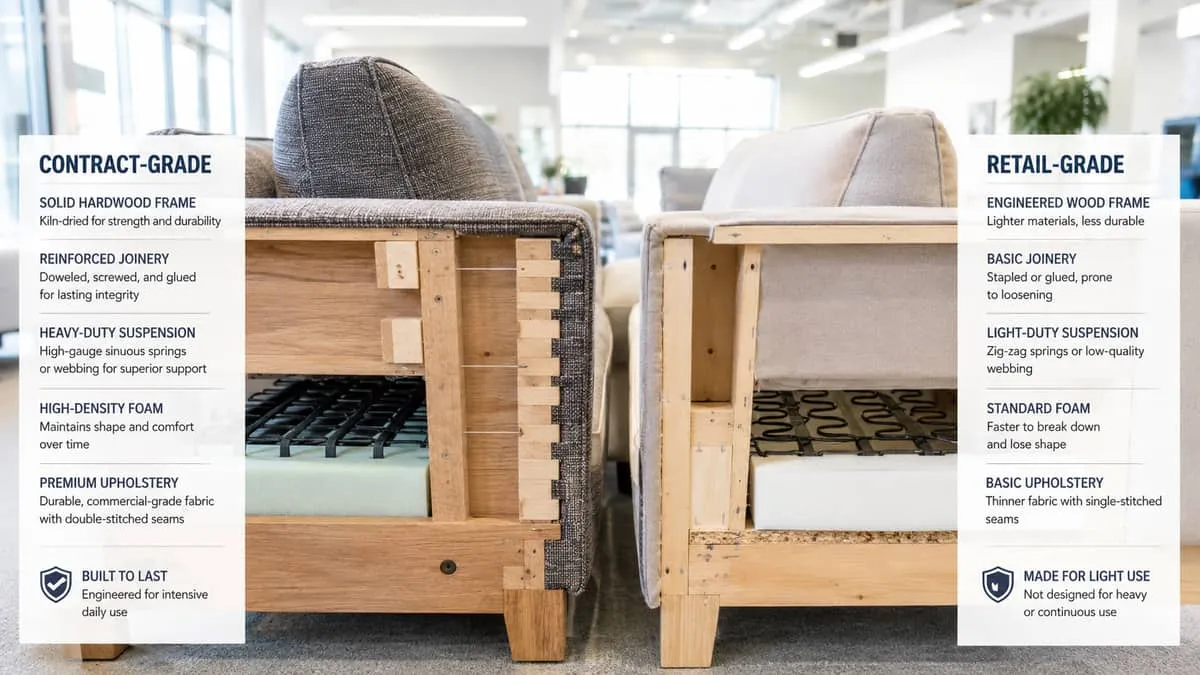
Frame construction is the foundation. Hardwood frames , kiln-dried so they don't warp as humidity varies between the dry Okanagan summers and the occasional wet shoulder season , or heavy-gauge steel are the appropriate standards for guest room and lobby seating. Particleboard, MDF, and softwood frames may survive a year or two before joint failure under this kind of use. The repairs are more expensive than the cost difference would have justified at purchase.
Upholstery abrasion resistance is measured in double-rubs. In practice, a guest room chair warrants a minimum of 30,000 double-rubs on any fabric that will see direct contact. High-traffic lobby seating, restaurant chairs, and bar stools should be specified at 50,000 or above. In Kelowna's resort properties specifically, where guests may arrive in damp swimwear, with sunscreen, or carrying wine glasses, stain resistance and cleanability are secondary specifications that matter nearly as much as abrasion rating. COM (customer's own material) orders should come with a bleach-cleanable rating where possible.
Casegoods , dressers, nightstands, desk units , take a different kind of abuse than upholstered pieces. The finish quality on drawer fronts and horizontal surfaces determines how long the piece reads as new rather than worn. Catalyzed lacquer and UV-cured finishes hold up to repeated cleaning with commercial products; standard brush-applied finishes begin to show cleaning damage within a few seasons. Drawer hardware , glide quality, soft-close mechanisms , is worth specifying correctly upfront because hardware replacement in-house is a labour cost that scales badly across a large property.
Matching a Supplier to Your Property Type
Not every hotel furniture supplier in Kelowna or the broader BC market is set up to serve every kind of hospitality project equally well. The scale, the complexity, and the aesthetic requirements of a boutique winery property with twelve guest suites are genuinely different from a 200-room lakefront resort hotel.
Boutique winery properties , and Kelowna has more of them than any comparable market in western Canada , often need smaller-quantity orders with high design specificity. The wrong supplier for this client is one with minimum order quantities calibrated for large-scale fit-outs and a catalogue oriented toward standardized corporate hospitality. The right supplier can work at the scale of a single suite refresh, bring design perspective rather than just product availability, and understand that a boutique property's competitive advantage is partly in the distinctiveness of its spaces.
Larger resort properties , the kind operating pool decks, multiple dining venues, spa facilities, and event spaces alongside guest rooms , need a supplier with project management capability, not just order fulfillment. The logistics of coordinating furniture delivery against a multi-phase renovation, managing FF&E installation with your contractor, and processing damage claims or replacements without disrupting your operational calendar require a supplier who has done this before at scale. Ask for references from comparable projects, not just a list of brand names they've worked with.
For any Kelowna property, ask specifically about experience with seasonal renovation windows and about how the supplier handles the off-season order backlog that accumulates in the BC interior market every November. The answer tells you a great deal about whether this supplier understands your operational reality.
What a Good Supplier Conversation Looks Like
The first conversation with a hotel furniture supplier should not primarily be about product. It should be about your project: timeline, property type, room count or seat count, renovation scope, aesthetic direction, and the constraints that matter most to you operationally. A supplier who moves immediately to catalogue presentation without gathering this context is not oriented toward your project , they're oriented toward their inventory.
The questions worth asking in an early conversation: What is your experience with hospitality properties in resort lake or wine country markets? Can you walk me through how you've handled phased delivery for a property that couldn't close for renovation? What is your total lead time to delivery at my address in the Okanagan, not just production time? What is your process when a piece arrives damaged and I have guests arriving in three weeks?
A supplier who answers these questions directly, with specificity, and without overpromising is a supplier worth continuing the conversation with. The Kelowna hospitality market has gotten more competitive and more design-forward over the past decade. The furniture in your property is a direct reflection of where you've positioned yourself in that market, and the supplier you choose to work with shapes that outcome more than any single piece they sell you.
Pricing for hotel furniture in Kelowna depends on quantities, finishes, and your delivery window, so a project-specific quote beats any list figure. Request a quote to get yours.