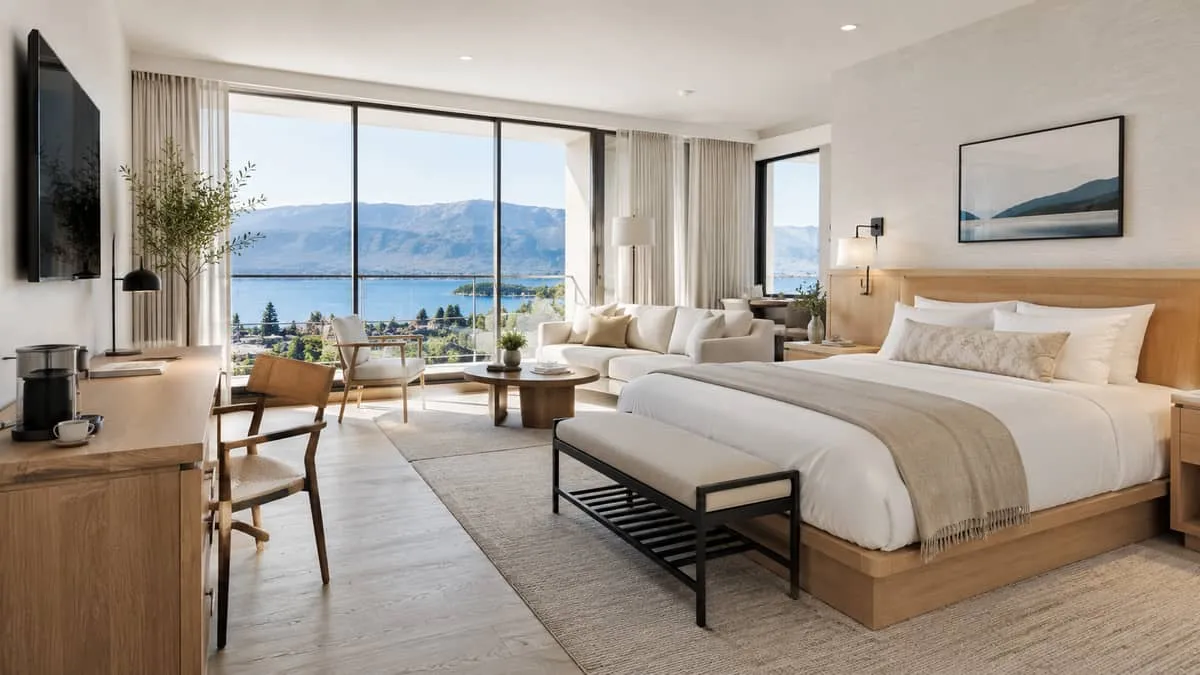
The Okanagan is no longer a regional secret. Wine tourism has turned the stretch between Kelowna and Oliver into a destination that draws comparisons to Napa and Sonoma, and the development that follows wine tourism is reshaping the hospitality landscape fast. Mission Hill-style winery restaurants, lakefront boutique resorts, vineyard guesthouses with destination wedding programs , the scale and ambition of new builds in this market has climbed significantly over the past five years, and so has the complexity of furnishing them.
FF&E procurement Kelowna is a different challenge than furnishing a hotel in Vancouver or Calgary. You are working in a mid-sized Interior BC market without direct container port access, servicing a compressed May-to-October peak season, and often equipping multiple distinct venue types on a single property. A winery resort might include guest suites, a fine dining restaurant, a tasting lounge, a private event pavilion, and an outdoor terrace , all with different durability requirements, design registers, and procurement timelines. Getting this right takes more planning than most owners expect.
The Design Language of Okanagan Resort Properties
Before you get into lead times and freight costs, you need to understand what these properties are trying to look like , because the design language of Okanagan resort development is specific, and furniture procurement has to serve it precisely.
The dominant aesthetic in serious Okanagan hospitality builds is what you might call grounded luxury: warm organic materials, a visible connection to the agricultural landscape, indoor-outdoor continuity. Rough-hewn white oak, rattan, linen, natural stone surfaces. Palette running from sand to sage to terracotta. A deliberate lack of anything that reads as urban contemporary or corporate. The goal is to feel like the terroir, not like a Marriott in a wine country costume.
This design direction creates specific procurement requirements. You are not pulling from standard contract furniture catalogues and calling it done. The pieces that work in a Kelowna winery restaurant , a solid white oak dining chair with a handwoven seat, a carved wood host stand, a custom banquette with performance linen fabric , require longer lead times, more involved specification work, and in many cases custom fabrication that further extends your timeline. Operators who budget and plan as if they are furnishing a midscale hotel will run into problems.
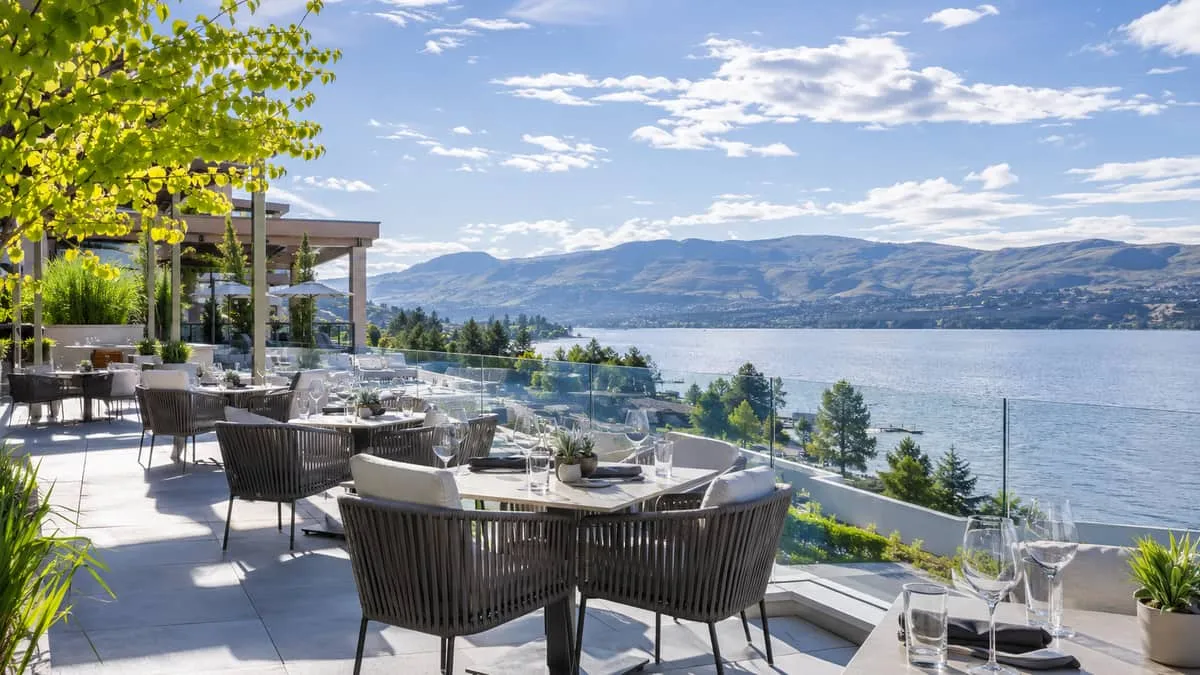
Outdoor furniture adds another layer. Kelowna summers run hot and dry, with extended UV exposure from May through September. Okanagan Lake resort terraces and vineyard patios need outdoor-rated seating that holds its finish and colour under that load, survives the occasional smoke-season haze, and still looks premium when guests who have compared this property to Napa arrive with expectations. Marine-grade aluminum frames, UV-stabilized fabrics, and powder-coated finishes are the baseline, not an upgrade.
Furnishing Multiple Venue Types on One Property
The most distinctive procurement challenge in the Okanagan winery resort market is not any single venue , it is the fact that most serious winery hospitality builds include several distinct spaces that have to feel cohesive but function very differently.
Consider a full-scope winery resort development on the Westside or in the Lakeview Heights area. The same property might include: a 20-to-40-seat fine dining restaurant where the furniture is part of the brand statement; a tasting lounge designed for two-hour seated experiences with higher traffic and more frequent turnover than the restaurant; a covered event pavilion used for weddings and corporate retreats that needs stackable or easily reconfigured seating; a pool deck or lake-view terrace; and guest suites with furniture at the boutique hotel standard.
Each of these spaces has a different durability requirement. Restaurant seating that looks beautiful but is not built for commercial use will show wear within a season , and in a venue where guests are paying $150 per person for dinner and comparing the experience to properties in Napa or Whistler, that is a brand problem. Contract-grade dining chairs should be rated to at least 250,000 double rubs for fabric, with kiln-dried hardwood or steel frames that do not rack or loosen under daily use. Tasting room seating, which sees even higher traffic and often less careful handling, should meet the same standard.
Event pavilion furniture compounds this because flexibility matters. Stackable chairs that still look refined, tables that break down and store efficiently, linens that can be changed for different event aesthetics. This is a procurement category where sourcing early gives you real options. Source late and you are choosing from whatever is in stock, which is rarely what the designer specified.
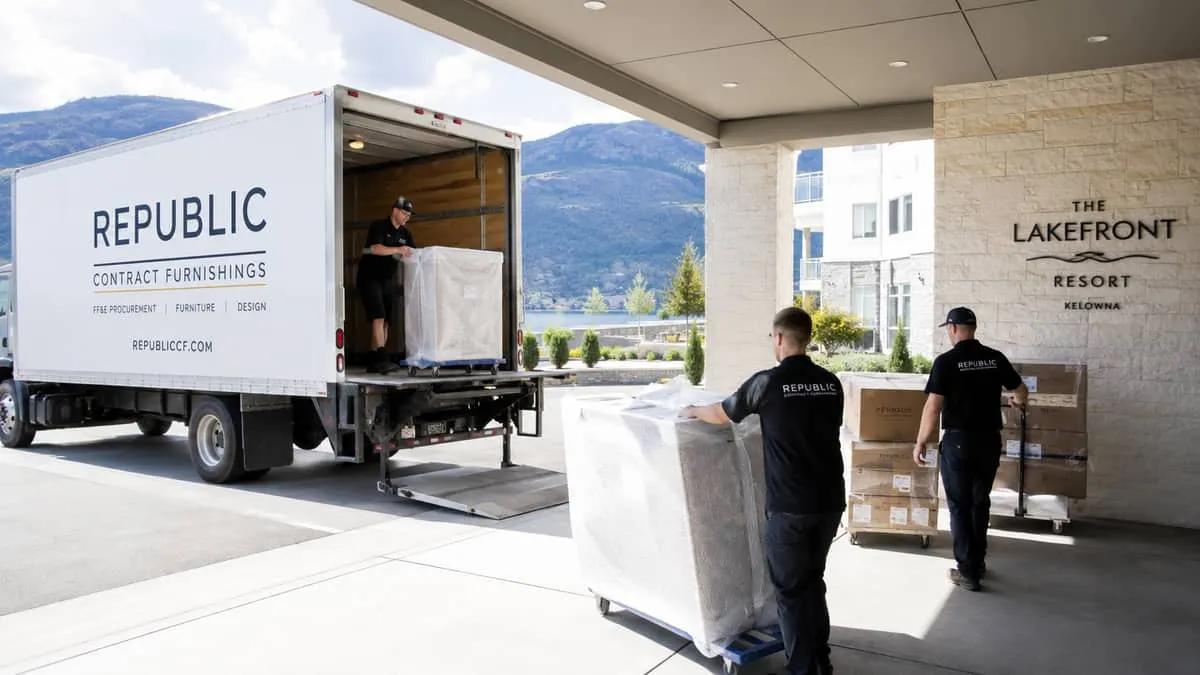
The procurement strategy that works best for multi-venue winery properties is to treat each space as a separate procurement stream with its own spec sheet, timeline, and budget line , but coordinate delivery into a single window when possible. Staggering deliveries across multiple trips adds freight cost in a market that already carries freight premiums for Interior BC.
Getting Furniture to Kelowna: The Logistics Reality
Kelowna is roughly 400 kilometres from the Lower Mainland. It does not have a container port. Large freight moves by truck, and some vendors who quote standard freight pricing to Vancouver or Calgary will apply Interior BC surcharges that are not visible until the purchase order stage. If you are specifying furniture with a Vancouver-based designer and assuming Vancouver freight rates apply to Kelowna delivery, you will be wrong.
The practical implications: get freight to your specific delivery address quoted before you finalize orders, not after. For winery properties in particular, flag your site access conditions at the purchase order stage. A resort property on a private road off Lakeshore Road, a vineyard guesthouse in the East Kelowna benchlands, a hillside restaurant accessible only by single-lane driveway , these all have delivery constraints that affect what equipment the freight carrier needs and whether a tailgate delivery is even possible. Discovering this on delivery day when a 48-foot flatbed arrives and cannot make the turn will cost you.
For large projects, consider staging delivery to a Kelowna warehouse facility if your construction timeline is uncertain. Most major furniture orders require 50 percent down at purchase order and the balance at delivery or shipment. If your space is not ready when the furniture arrives, you are paying for short-term warehousing in addition to holding costs. Build a contingency buffer , ten percent of your FF&E budget is a reasonable minimum , to absorb freight overages, damage replacements, and warehousing if the GC runs late.
Lead times in the Okanagan market require earlier ordering than most owners expect. Custom or semi-custom upholstered pieces in the organic materials that Okanagan resort properties favour , natural linen, performance textiles in muted tones, woven leather , can run 16 to 20 weeks from order to delivery. If you are targeting a June opening to catch the summer season, you need purchase orders placed in January. For properties with complex multi-venue scopes, October or November ordering for the following summer is not too early.
Budget Structure for Okanagan Wine Country Builds
The premium positioning of Okanagan resort and winery hospitality means FF&E budgets here tend to run higher than the market average for comparable room counts or seat counts. Guests who book a winery estate stay or a lakefront resort in Kelowna are making a deliberate choice to pay for quality. The furniture has to support that positioning throughout the property.
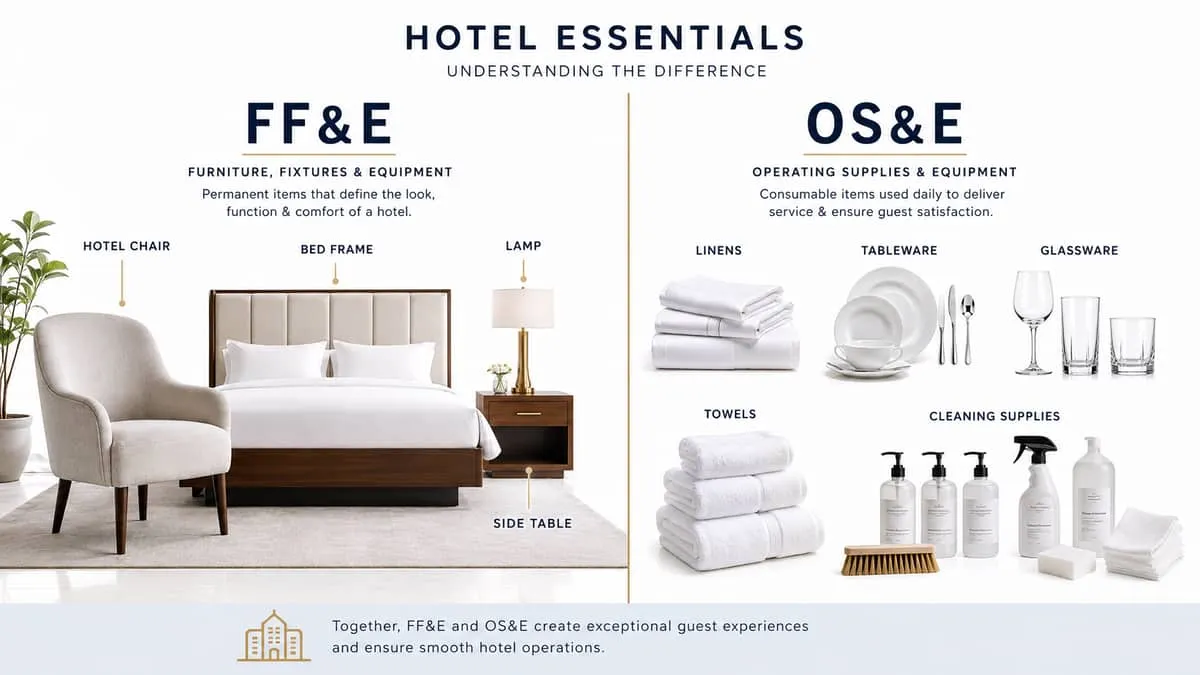
For boutique wine country accommodation , eight to twenty keys targeting the premium wine tourism demographic , expect FF&E costs of $10,000 to $18,000 per key for guest rooms. That range assumes beds, bedside and accent tables, upholstered seating, case goods, mirrors, and lighting. Soft goods and linens are OS&E and sit in a separate budget. Properties going for a higher design standard or incorporating custom fabricated pieces will be at or above the top of that range.
Restaurant and tasting room seating costs more per square foot than guest rooms because pieces take harder commercial use. A fine dining restaurant with 40 covers and a design aesthetic that needs to compete with Mission Hill's Terrace or Quails' Gate's Old Vines Restaurant should not be specified at retail pricing or residential durability grades. Budget $800 to $1,800 per seat for contract-grade dining chairs, depending on material and construction. Custom banquettes or booth seating will run higher.
Outdoor terrace furniture is a significant line item for properties with strong indoor-outdoor programming , and in Kelowna, outdoor programming is not optional. The patio season is the season. Marine-grade commercial outdoor furniture priced correctly for the Okanagan climate (UV exposure, temperature swings, occasional smoke haze) runs $400 to $900 per lounge chair or dining chair position, before cushions and accessories. Properties that try to save here by going with residential-grade or lower-spec outdoor furniture will be replacing pieces within two or three seasons.
OS&E , linens, tableware, smallwares, and front-of-house service equipment , is frequently underbudgeted relative to FF&E. A useful planning rule: if your FF&E budget for a restaurant is $X, your OS&E budget for that same restaurant should be at least 30 to 40 percent of X. This is where operators who focus exclusively on the big furniture decisions often get surprised late in the project.
Coordinating Design Specification in a Remote Market
Most Kelowna hospitality projects of scale involve a designer based in Vancouver or Calgary. The designer specifies, the local GC builds, and a furniture supplier manages procurement and delivery. This model works, but the distance between the specifying designer and the delivery site creates coordination gaps that owners sometimes underestimate.
The spec sheet produced by your designer is the foundation document for the entire procurement process. It should include item name, vendor or manufacturer, finish or fabric specification, dimensions, quantity per space, and lead time. If any of those fields are incomplete when purchase orders go out, you will have problems , wrong fabrics, wrong dimensions, pieces that conflict with site conditions you could not have anticipated from a Vancouver office.
Walk your designer through the site access conditions before purchase orders are placed. If your property has delivery constraints, those need to be in the spec. If your tasting room has a narrow staircase and you are ordering large sectional pieces, someone needs to measure before anyone orders. These are not problems that resolve themselves.

For winery and resort properties specifically, the design specification should account for the full property scope in a single document, not venue by venue. When procurement is fragmented , someone handles the restaurant, someone else handles the suites, the outdoor furniture is ordered separately , the result is a property that looks assembled rather than cohesive. The organic, grounded-luxury aesthetic that Okanagan resort development aspires to is harder to achieve when furniture is sourced piecemeal from different vendors with different interpretations of "warm natural tones."
Suppliers who have worked in the Kelowna market before understand the freight realities, know which carriers are reliable for Interior BC delivery, and can flag access or timing issues early. That regional experience is worth factoring into your supplier selection , the difference between a supplier who has delivered to a hillside winery property and one who has not is visible on delivery day.
The Okanagan hospitality market is maturing fast. Wine tourism has raised the design bar, compressed the acceptable timeline for project completion, and created a category of hospitality property that expects procurement sophistication to match its ambitions. Whether you are opening a vineyard guesthouse in Lakeview Heights, a lakefront resort north of downtown, or a destination winery restaurant that has to stand alongside the established names on the Westside, the furniture procurement process rewards operators who plan early, specify precisely, and work with suppliers who understand what Interior BC delivery actually involves. The season starts in May. The orders should be placed in winter.
Planning FF&E for your Kelowna project? Share your specs and quantities and we will build pricing around your actual program. Request a quote to get numbers for your space.