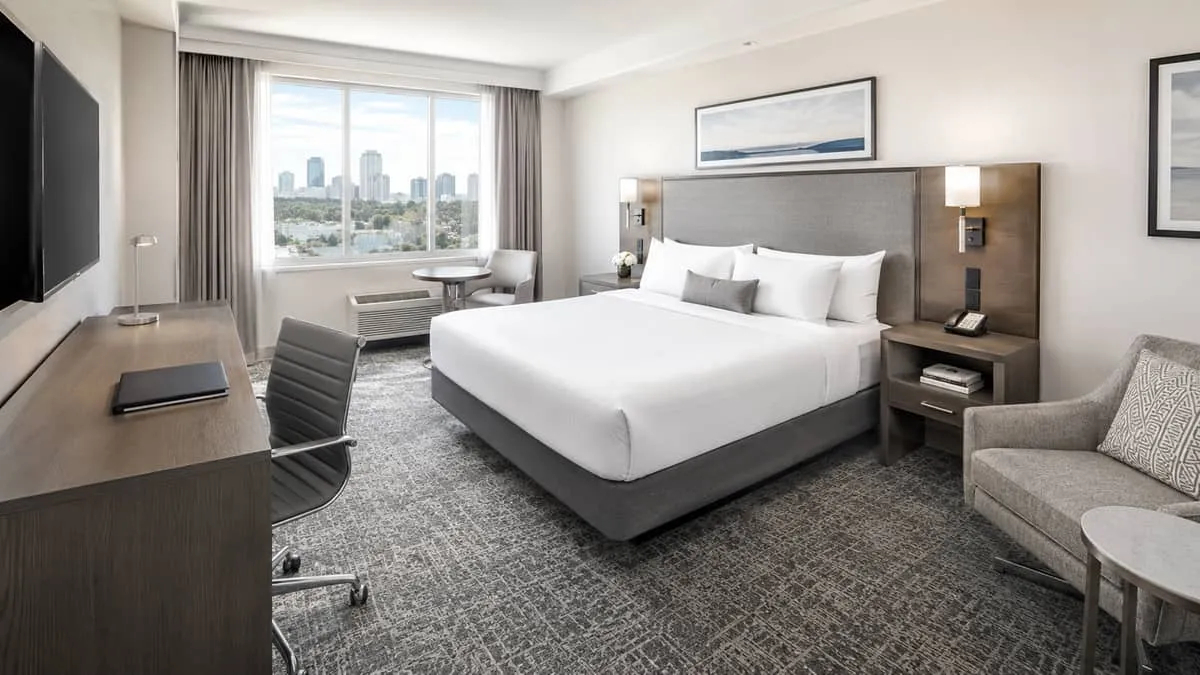
Edmonton hotels don't have the luxury of furnishing rooms for aspirational travelers. The guest profile here is mostly functional: oil-and-gas field personnel on rotating schedules, federal and provincial government delegates on per diem, convention groups booked into the downtown core around the Shaw Conference Centre, and weekend crowds arriving for events at Rogers Place. These guests are on expense accounts. They're not posting room photos to Instagram. They want a clean, functional space that doesn't embarrass them on a video call at 7 a.m. before heading into a day of meetings.
That's a different brief than furnishing a boutique hotel in a leisure market, and it shapes every decision a smart hotel furniture supplier in Edmonton should be making with you.
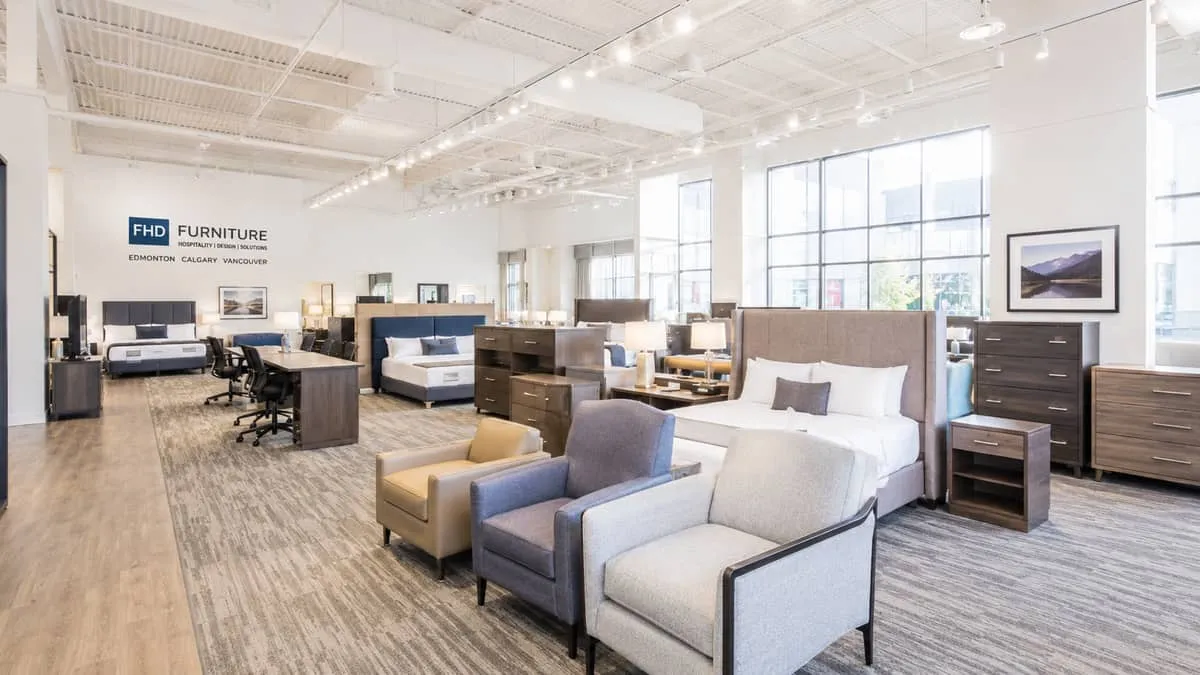
Furnishing for the Expense-Account Guest
The corporate and government traveler segment is the backbone of Edmonton's hotel revenue. Energy sector road warriors cycling between Edmonton and Fort McMurray, Grande Prairie, and the oil sands operations to the north have been staying in the same properties for years. Government employees attending hearings, legislative sessions, and inter-departmental reviews fill downtown inventory every fall and winter. Convention groups anchored by the Shaw Conference Centre bring multi-night bookings that test furniture across several hundred rooms simultaneously.
What these guests share is a specific definition of quality. They're not looking for design-forward furniture. They're looking for furniture that doesn't wobble when they set a laptop on the desk, doesn't creak when they get out of bed at 5 a.m., and doesn't show water rings on the surface after a week of room service. They want blackout blinds that actually work, a chair comfortable enough for extended calls, and a drawer that opens and closes without catching.
This is where a hotel furniture supplier in Edmonton who understands the corporate guest earns their fee. Selecting pieces that look fine in a showroom is easy. Selecting pieces that hold up to a rotating cast of engineers, government consultants, and trades workers over a five-year replacement cycle is a different discipline entirely.
For seating in this market, minimum 50,000 double rub ratings on all upholstered surfaces is the floor, not the target. Work chairs need to support a range of body types and extended sitting periods. Desk surfaces need to be rated for cleaning with commercial-grade disinfectants , an expectation that has become standard since 2020 and shows no sign of reversing. Case goods need solid corner construction and drawer glides that won't degrade after a thousand openings.
The Ice District and Rogers Place Effect
The opening of Rogers Place in 2016 reshaped Edmonton's downtown hospitality geography. The Ice District , the cluster of hotels, restaurants, and entertainment venues built around the arena , created a new category of hotel guest: the event traveler who books one or two nights around an Oilers game or a major concert, but is often also a corporate traveler extending a business trip to catch the game.
Furnishing hotels in this corridor means serving two masters. The room needs to feel polished enough that a business guest checking in on a Tuesday doesn't feel like they're staying somewhere built for hockey crowds. And it needs to be durable enough that the Friday-night crowd coming off a playoff game doesn't destroy it.
That tension is real, and it shows up in purchasing decisions. Hotels near Rogers Place tend to prioritize stain-resistant performance fabrics on soft seating, commercial-grade laminate or hardwood surfaces on case goods rather than veneer finishes that nick and chip, and beds built for heavier use patterns. Frame construction on upholstered seating matters enormously here , kiln-dried hardwood frames with corner blocking and double-doweled joints are standard, not premium, for any hotel in this zone.
The right hotel furniture supplier in Edmonton knows this corridor well and will push back on selections that look good in a rendering but won't hold up to Ice District traffic volumes.
West Edmonton Mall Hotel Properties: A Different Problem
About twenty minutes west of downtown, the West Edmonton Mall hotel cluster operates in a completely different market. Fantasyland Hotel and properties adjacent to the mall serve leisure travelers, families, and destination visitors , guests who have specifically chosen Edmonton for the WEM experience and are paying out of pocket, not on a corporate card.
The furniture challenge here is different. These properties compete on spectacle and themeliness rather than function. Durability requirements are just as stringent , high-turnover leisure properties can be harder on furniture than corporate hotels , but the aesthetic brief is completely different. You're spec'ing pieces that can survive a family of four and still look like part of a deliberate design concept.
The broader lesson for any Edmonton property is that the city's hotel market segments hard by location and guest profile. There's no single approach to furniture that works across all of it. A good hotel furniture supplier in Edmonton should be asking detailed questions about your specific property's guest mix before recommending anything.

Lead Times in a Market with Hard Renovation Windows
Edmonton's hospitality calendar creates a narrow, predictable renovation window, and it's less forgiving than in most Canadian cities. Corporate travel peaks hard from September through March, when government legislative activity, energy sector project cycles, and convention bookings drive occupancy across the downtown core. Summer brings festival season , K-Days, the Edmonton Folk Music Festival, the Fringe Theatre Festival , which keeps properties full from June through August. The practical renovation window is February through early April, when occupancy dips and the convention calendar goes quiet.
That window is roughly eight weeks. It is not wide enough to absorb sourcing mistakes.
The calculus is straightforward: if you're planning a February renovation, your purchase orders need to be finalized by August at the latest to accommodate 16 to 24 week production lead times on custom upholstery and imported case goods. North American manufacturers can sometimes deliver in 8 to 12 weeks, which gives you more flexibility, but the pricing premium is real and needs to be factored into the project budget from the start.
Any hotel furniture supplier in Edmonton worth working with will front-load this conversation. They'll ask your target installation date before they show you a single sample. If they don't, that's a signal about how they manage projects.
Local warehouse inventory is worth asking about explicitly. Some Edmonton distributors carry rolling stock on high-velocity items , standard desk chairs, platform beds, side tables in neutral finishes , that can be pulled from warehouse rather than waiting on production. If you can source even thirty percent of your room count from local inventory, you've significantly de-risked your installation timeline.
The Convention Market and Why Room Consistency Matters
Edmonton's convention business , anchored by the Shaw Conference Centre and supported by the cluster of attached and nearby hotels , creates a specific operational challenge that affects furniture procurement: groups. A convention booking 400 rooms across two hotels for five nights will produce damage patterns that a transient corporate property never sees. Luggage corridors get battered. Desk chairs move from room to room. Beds get sat on by more people than they're designed for.
Convention properties need furniture with tighter construction tolerances across the board. Every chair in every room should be identical, not just similar. Case goods should be from the same production run, not close matches sourced from different suppliers. Housekeeping needs to be able to repair or replace a single piece without ordering a custom match , which means your supplier needs to carry ongoing stock of the pieces you've spec'd, or commit to a minimum inventory hold.
This is a procurement conversation that separates experienced hotel furniture suppliers in Edmonton from order-takers. An experienced supplier will discuss replacement part availability, component stocking agreements, and what happens two years from now when you need to replace six chairs that were damaged during a particularly rough conference week.
Reading the Broader Edmonton Market
Edmonton's economy cycles with energy. When oil prices are high and the patch is running hot, corporate travel budgets expand and hotel operators have more flexibility in their renovation spend. When the cycle turns, those same properties need furniture that can serve a tighter market without looking tired.
The practical implication is that Edmonton hotel operators tend to buy for durability over design trends. A piece that looks current in 2026 and still looks respectable in 2031 is a better investment than a piece that's on-trend today but dated in three years. Neutral commercial palettes in warm greys, taupes, and muted blues have long cycles in this market. Heavy textures that hide wear patterns outperform flat weaves. Case goods in dark or medium stain finishes show cleaning easier than very light finishes.
The 124th Street dining and arts corridor, Whyte Avenue, and the river valley adjacent properties serve a slightly different clientele , more design-conscious, more leisure-oriented , and can take more risk with furniture selections. But even those properties are well-advised to keep durability specs high, because Edmonton's short intense patio season and indoor-focused hospitality calendar mean rooms work hard year-round.
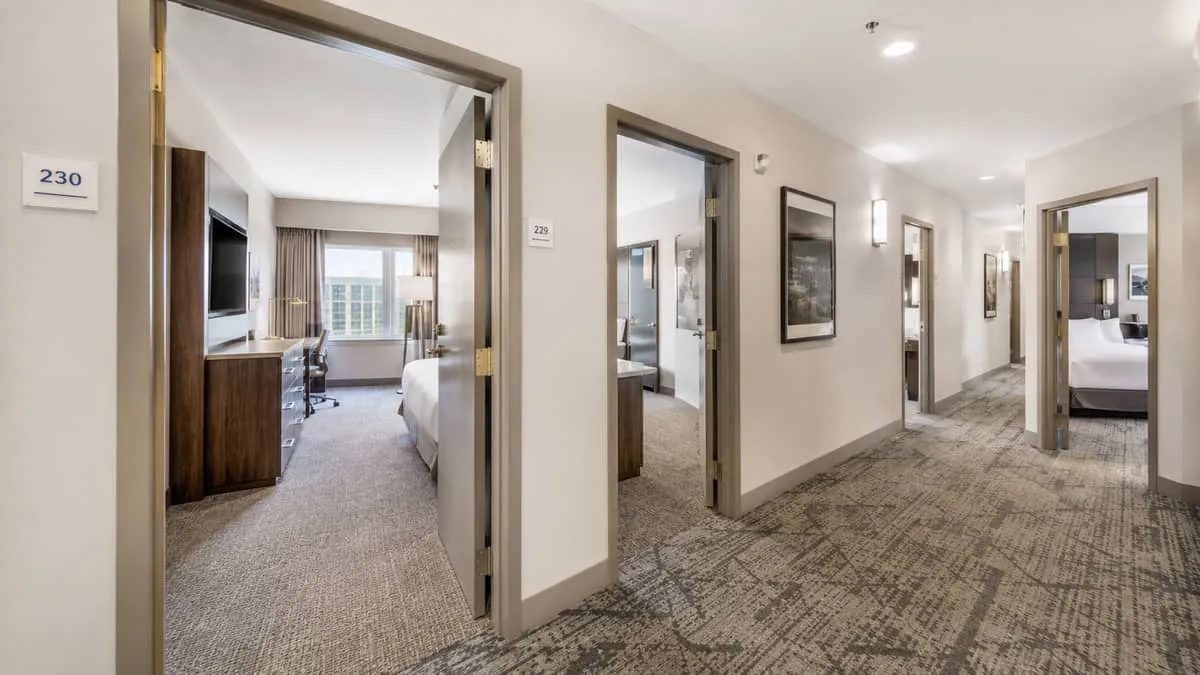
What Separates a Real Supplier from an Order-Taker
The hotel furniture supply business in Canada has a low barrier to entry. Anyone with a vendor relationship can take a hotel order. The difference is what happens when something goes wrong , a production delay, a damaged shipment, a fabric discontinuation six weeks before installation.
A capable hotel furniture supplier in Edmonton will have a track record with FF&E projects specifically, not just commercial furniture generally. FF&E work requires understanding phased delivery, coordination with general contractors and interior designers, punch list processes, and damage claim resolution. Ask any prospective supplier to walk you through a recent hotel project from purchase order to punch list. Their answer will tell you quickly whether they've actually done this work.
References matter more than catalogues. Ask for contacts at Edmonton or Alberta hotel properties they've supplied. Ask specifically about their performance when something went wrong, not just when everything went smoothly.
Minimum order thresholds are worth clarifying early. Boutique properties in Edmonton , a 30-room property in the arts district, a small extended-stay near Southgate , often get deprioritized by large suppliers whose minimum volumes assume 150-room full-service hotels. Make sure your supplier can actually serve your scale before you invest time in spec development.
Finally, get the warranty terms in writing before you sign anything. Commercial furniture warranties vary enormously. Frame construction, upholstery fabric, and finish are often covered under different terms by different parties. Understand who you're calling when a chair joint fails in year two.
Edmonton's hotel market is demanding in specific ways that a generic furniture supplier won't fully appreciate. The corporate and government guest expects professional-grade product. The Ice District crowd tests durability. The convention market punishes inconsistency. And the renovation window is short. Getting the procurement right from the start , with a supplier who understands the market , is what separates properties that look intentional from properties that look like they were assembled on deadline.
To get a quote or discuss your property's specific requirements, contact our team directly.
Tell us about your Edmonton hotel furniture needs and we will turn your quantities, finishes, and timeline into a firm quote. Request a quote whenever you are ready to compare.