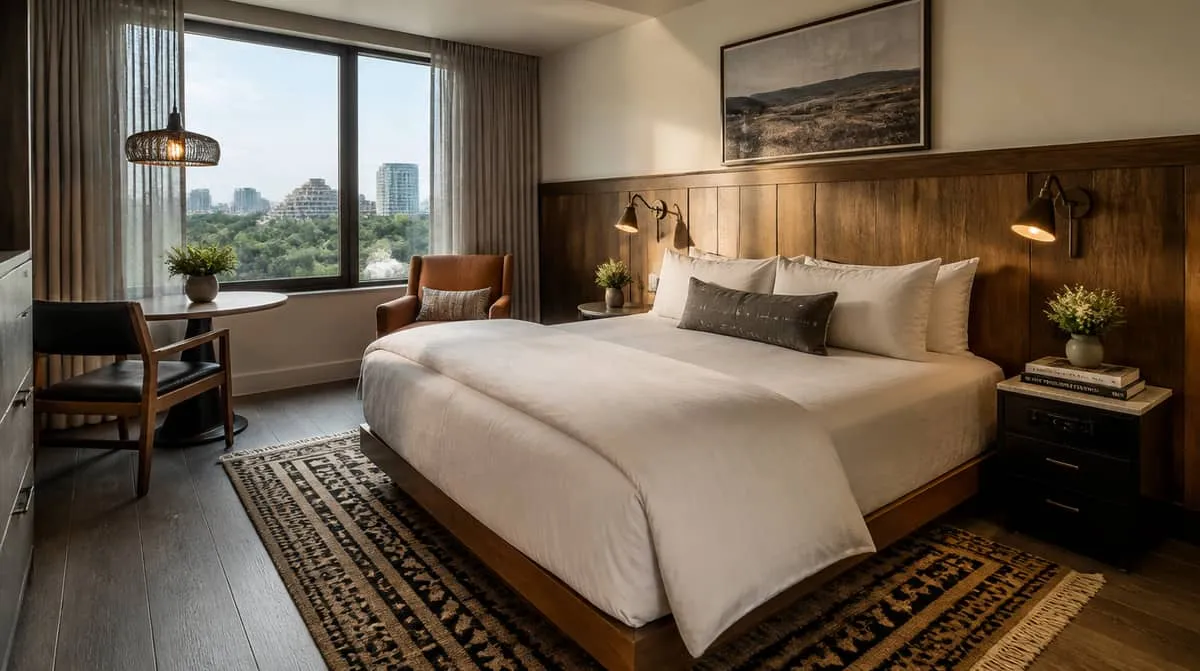
Charleston's hospitality market punches well above its size. Downtown, historic boutique hotels along King Street, Meeting Street, and the French Quarter compete for leisure travelers who book Charleston specifically for that experience, and they expect furniture that reads as authentic and high-end, not off-the-shelf. Out past the peninsula, the Charleston Area Convention Center in North Charleston anchors a meetings and events corridor with its own set of full-service and select-service properties. Add in the resort and golf-adjacent hotels serving Kiawah, Seabrook, and Isle of Palms, plus steady new development in Mount Pleasant and on Daniel Island, and you get a market where a single hotel furniture supplier in Charleston needs to cover a wide spread of property types without dropping quality on any of them.
What Makes Charleston Different for Hotel Furniture Sourcing
Charleston is a destination city first and a business travel market second, and that ordering shapes almost every sourcing decision. A boutique property tucked into a converted building near the French Quarter operates under different constraints than a limited-service hotel off I-26 near the airport. Historic downtown properties often work within tight footprints, narrow stairwells, and preservation-minded building requirements that affect everything from furniture dimensions to how pieces get moved in. Your furniture supplier needs to understand those constraints before the order ships, not discover them on delivery day.
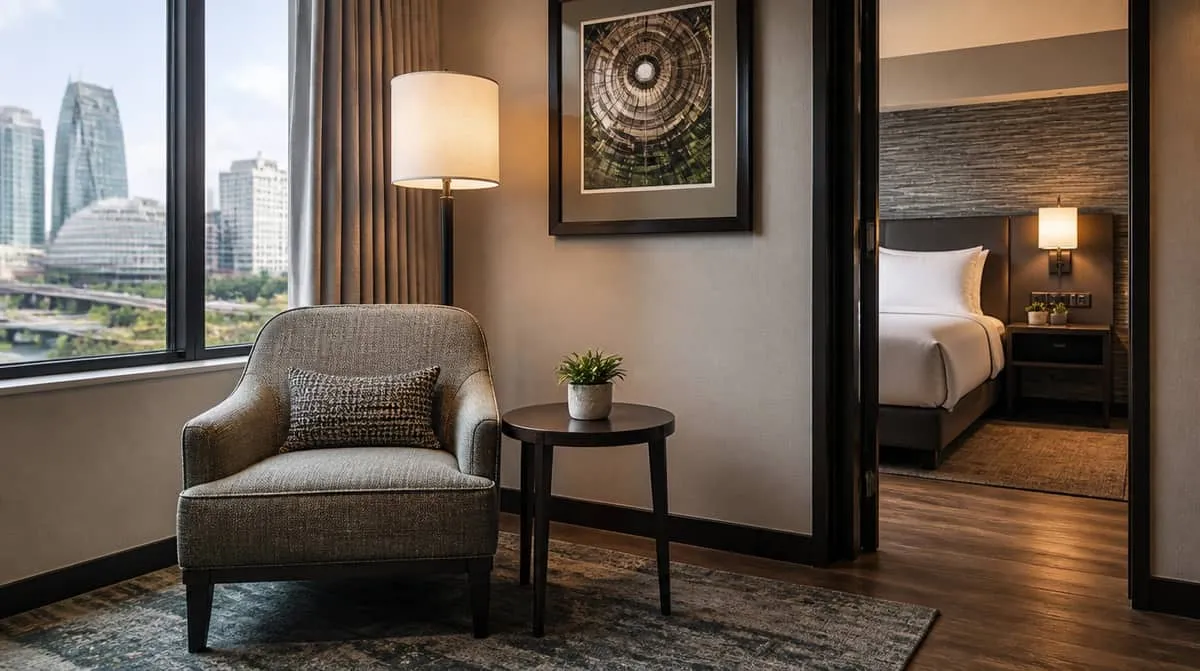
The convention and meetings segment in North Charleston carries a different set of demands entirely. Properties near the Charleston Area Convention Center see heavier, more concentrated traffic tied to event calendars, trade shows, and large group bookings. Lobby seating and meeting-adjacent furniture in that corridor absorbs more use in a busy convention week than a quieter boutique hotel sees in months. If you are sourcing for a property in that zone, ask for real specification data, foam density and ILD ratings, fabric abrasion counts, and documented frame construction. A supplier who cannot produce that data is not the right fit for a high-traffic property.
Resort-adjacent hotels serving Kiawah, Seabrook Island, and Isle of Palms sit at the other end of the spec conversation. Guests booking those properties expect a coastal, upscale aesthetic that still needs to survive salt air, humidity, and sand tracked in from the beach. A hotel furniture supplier in Charleston who only understands one segment of this market, whether that is downtown boutique, convention-corridor, or resort-adjacent, is going to leave gaps somewhere in your project.
Why Contract Grade Matters in This Market
This is the part of the conversation that saves money over the life of the property even though it costs more at the outset. Retail furniture is built for residential use, light daily wear, careful handling, and the expectation that a piece gets swapped out as a style update long before it fails structurally. Hotel furniture in Charleston lives in a different reality entirely.
A lobby chair in a King Street boutique hotel might be photographed and sat in dozens of times a day during peak tourist season. A guest room case good in a North Charleston convention property gets moved and cleaned on a commercial housekeeping schedule that residential furniture was never designed for. Coastal humidity near Mount Pleasant and the barrier islands accelerates wear on finishes and hardware that would hold up fine inland. When retail-grade furniture fails under those conditions, and it does, the cost is not just a replacement invoice. It is guest complaints, maintenance overruns, and reviews that mention the room before they mention the view.
Contract-grade furniture from a qualified hotel furniture supplier is built to BIFMA standards or equivalent hospitality benchmarks that retail product is never tested against. Frame construction is reinforced for commercial load cycles, finishes are rated for institutional cleaning protocols and, in Charleston's case, humidity and salt exposure, and fabric and foam specs are chosen for longevity under heavy, sustained use. The price gap between contract and retail furniture pays for itself well before the first replacement cycle would have hit on a retail product. Ask your supplier for that documentation up front.
Lead Times, Logistics, and Getting the Timeline Right
Charleston hotel projects run on calendars that vary sharply by segment. A downtown boutique renovation might be racing to reopen before peak spring tourist season. A North Charleston property near the convention center needs its refresh done between major event bookings without bleeding into a busy meetings quarter. A resort-adjacent property on the islands is coordinating around a tighter seasonal booking window where downtime costs real revenue.
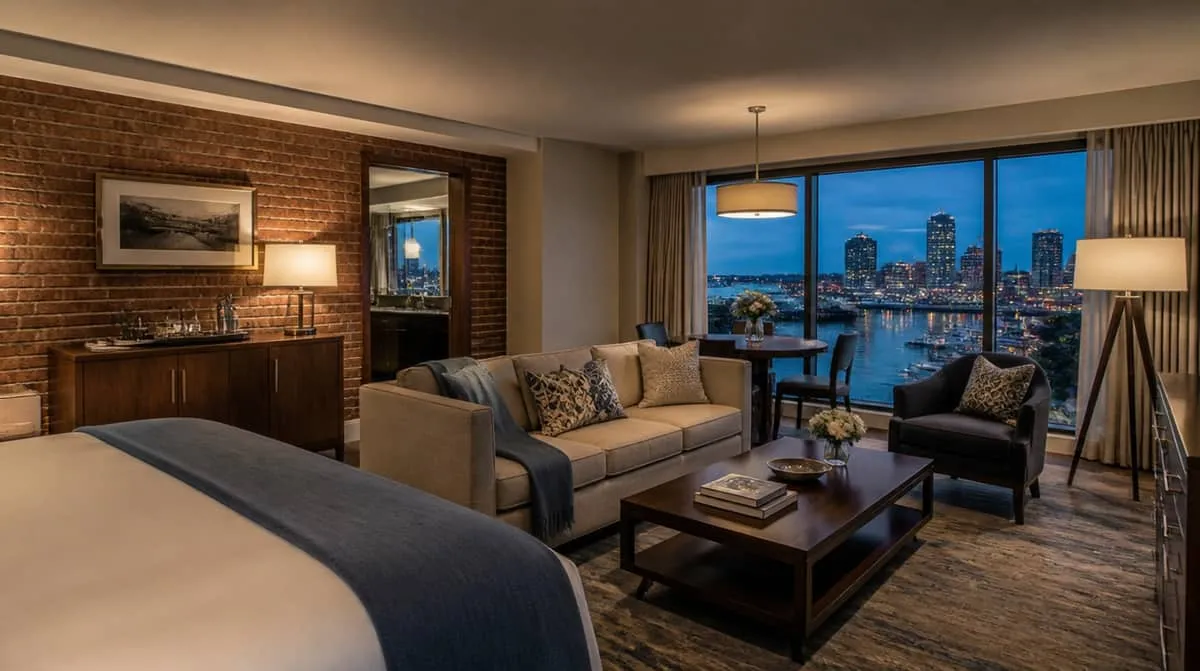
In every one of those cases, lead time is what determines whether the project lands on schedule. Standard lead times for domestic contract furniture production run 10 to 16 weeks. Imported pieces stretch closer to 20 weeks once shipping, customs, and any port delays get factored in, and that timeline does not bend for a pre-opening deadline or a lender's completion date.
Lock furniture specs at the same point you finalize interior design drawings, especially for historic downtown properties where preservation review can add its own timeline pressure on top of standard procurement. A supplier worth hiring in Charleston will turn physical samples around quickly enough to keep design approvals moving, offer phased delivery for larger renovations, and flag lead time risk early enough for you to react. They should be coordinating directly with your general contractor and interior designer, not leaving that communication to you.
Minimum order quantities matter here too, particularly for the smaller boutique properties common downtown, which might be furnishing 30 to 70 rooms rather than 200. Most contract suppliers set MOQs by piece category, with 20 to 50 units per SKU typical for upholstered furniture and more flexibility on casegoods. Custom fabrics and finishes almost always push those minimums higher. Get clarity on MOQ structure before your design team is deep into sample selection.
How to Evaluate a Hotel Furniture Supplier in Charleston
Start with actual project history in the Southeast hospitality market, and ideally in the Lowcountry specifically. A supplier with completed installations across downtown boutique, convention-corridor, and resort-adjacent Charleston properties understands the range this market demands. Ask for references comparable to your project in scale and budget, then call them.
Logistics capability matters as much as product quality here. Historic downtown streets, narrow building access, and controlled elevator or stairwell scheduling in occupied properties all add friction that a supplier needs to plan around before the truck leaves the warehouse. A supplier with in-house white-glove delivery and installation experience in commercial environments handles that friction. One who ships freight and hands off the final mile to a third party often does not, and that gap shows up on installation day.
Ask how a prospective supplier works within the broader project team. Most Charleston hotel renovations run through an interior design firm or an FF+E project manager, and a supplier already embedded in that local network is positioned to keep your project on spec and on schedule. Communication gaps between supplier, designer, and general contractor are how projects lose weeks. A supplier who already works that ecosystem prevents it.
The right hotel furniture supplier in Charleston is not a one-time vendor. In a market where historic boutique hotels, convention-corridor properties, and resort-adjacent hotels are all operating at once and all demanding something different, they function as a project partner. Evaluate them on that basis before you sign a purchase order.
Ready to spec hotel furniture for your Charleston project? Send us the details and we will price it around your requirements. Request a quote to start.
Related reading
- Commercial hotel furniture: a sourcing guide for every space
- Boutique hotel furniture: specifying a distinctive, durable look
- What is contract furniture
- Commercial furniture vs retail
- Hospitality furniture supplier guide
- Hotel lounge chairs
- Hotel headboards
- Browse full catalog
- Commercial furniture in South Carolina